How to Start an AI Business (Even If You Have a Full-Time Job)
Somewhere between your third “AI is changing everything” podcast episode and your fourteenth LinkedIn post about prompt engineering, a very reasonable thought probably crossed your mind: okay, but how does any of this actually become income?
That’s the gap nobody talks about. Not because the answer doesn’t exist — but because most AI content is designed to impress you, not to move you forward. It shows you what’s possible. It leaves you wondering what to do.
If you’re a freelancer, a creator, a 9-to-5 professional quietly wondering if there’s another way, or a woman who’s been watching others build something and finally deciding it’s your turn — this article is the practical starting point you’ve been looking for.
And yes: you can do this with no technical background, no team, and no quitting-your-job risk. Here’s how.
Why 2026 Is Still an Unusually Good Moment to Start
There’s a version of this article that wastes 400 words convincing you that AI is a big deal. You already know. So let’s skip past that to the part that actually matters for your career decisions right now.
The reason 2026 is a particularly good moment — even if you feel late — is leverage. AI tools let one person produce what used to require a small team. A solo copywriter can now handle five clients at the pace she used to handle two. A coach can build a full course curriculum in a weekend. A VA can offer content strategy services she’d never have had capacity for before. The work didn’t disappear — the labor compression changed who can do it and at what volume.
The people who built systems with AI early are already seeing that compounding. The window isn’t closed — but the gap between “early mover” and “late majority” is real and growing.
The other piece: most people still aren’t using AI strategically. They use it for a quick email draft or a blog post outline and stop there. The woman who learns to use it systematically — with real workflows, real income models, and a real plan — isn’t competing in a crowded space. She’s operating in a different category entirely.
The Two Career Pivots AI Actually Makes Possible
Before we get into the how, let’s talk about what’s actually on the table. Because “build an AI business” means very different things depending on what you’re starting with and what you want.
Option 1: Add an AI-powered income stream alongside your current job. This is the lowest-risk, highest-leverage starting point for most women. You keep your salary, you build something on the side — a freelance service, a digital product, a content business — using AI to produce at a level that would have required 30+ hours per week before. Now it fits in 10.
Option 2: Use AI to transform what you already do professionally. If you’re a copywriter, strategist, designer, consultant, coach, or marketer, AI doesn’t replace you — it lets you charge for outcomes rather than hours. You deliver better work faster. You take on more clients without burning out. You justify higher rates with better results. Same career, dramatically different economics.
Both paths are real. Both are achievable without starting from scratch. The difference is strategy — and that’s exactly what the two resources below provide.
The Honest Truth About Why Most People Don’t Follow Through
Here’s what nobody says out loud: the reason most people don’t successfully build income with AI isn’t lack of tools, lack of time, or lack of intelligence. It’s lack of a system to follow.
The internet gives you fragments. YouTube gives you tactics. Twitter threads give you inspiration. But fragments don’t compound. You need a sequence — a clear path from where you are today to a specific, achievable outcome — with someone who’s already mapped it out telling you exactly what to do in what order.
That’s what makes the two books below worth your attention. They’re not “here are 10 ways AI could theoretically make you money.” They’re the actual system, step by step, model by model.
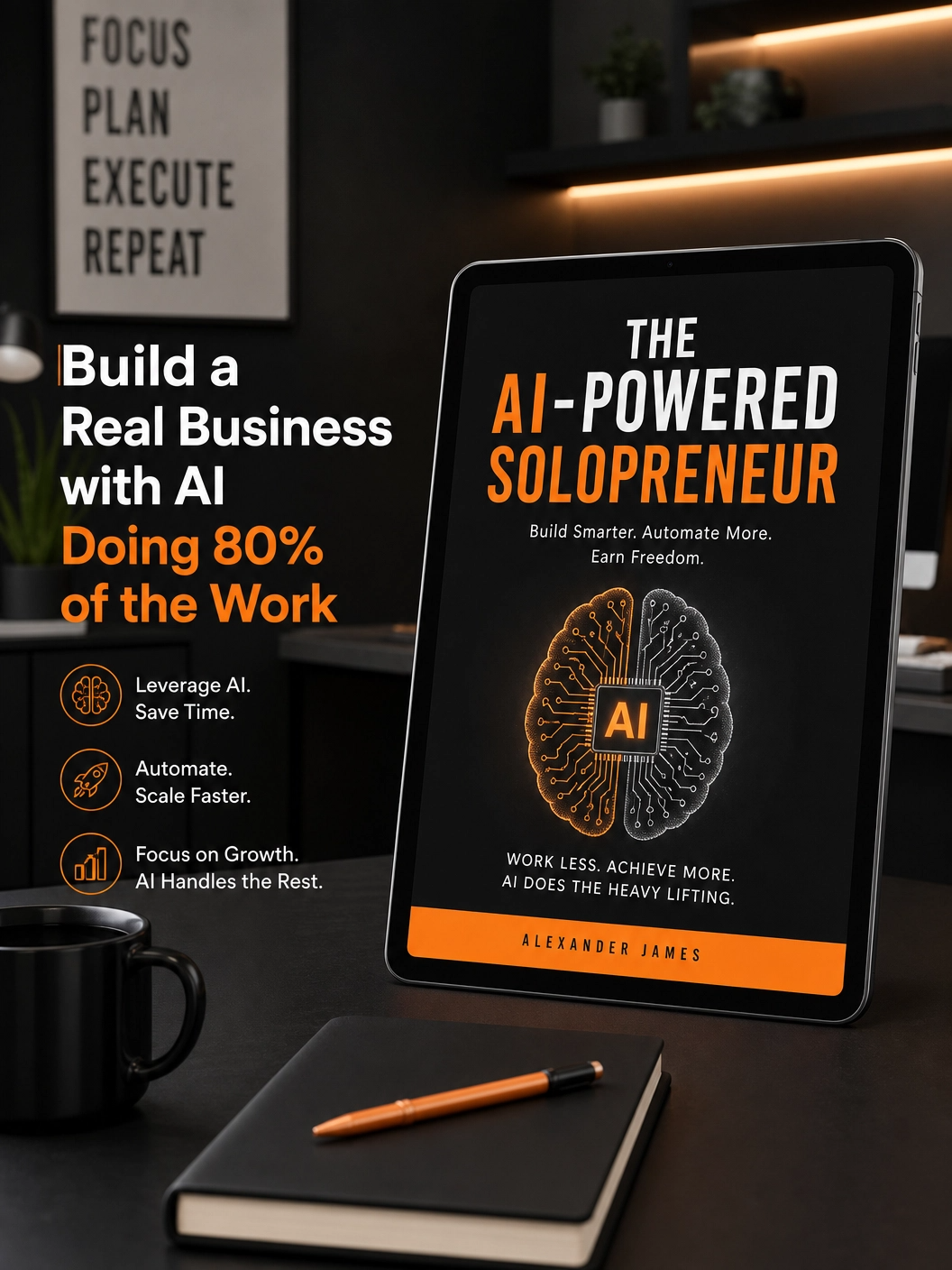
Resource 1: The AI-Powered Solopreneur — The Complete Starting Framework
→ Get it here — $47 · Instant PDF · 30-day guarantee
If you’re starting from the beginning — you use AI occasionally, you want to build income with it, and you haven’t committed to a specific tool or model yet — this is Book One.
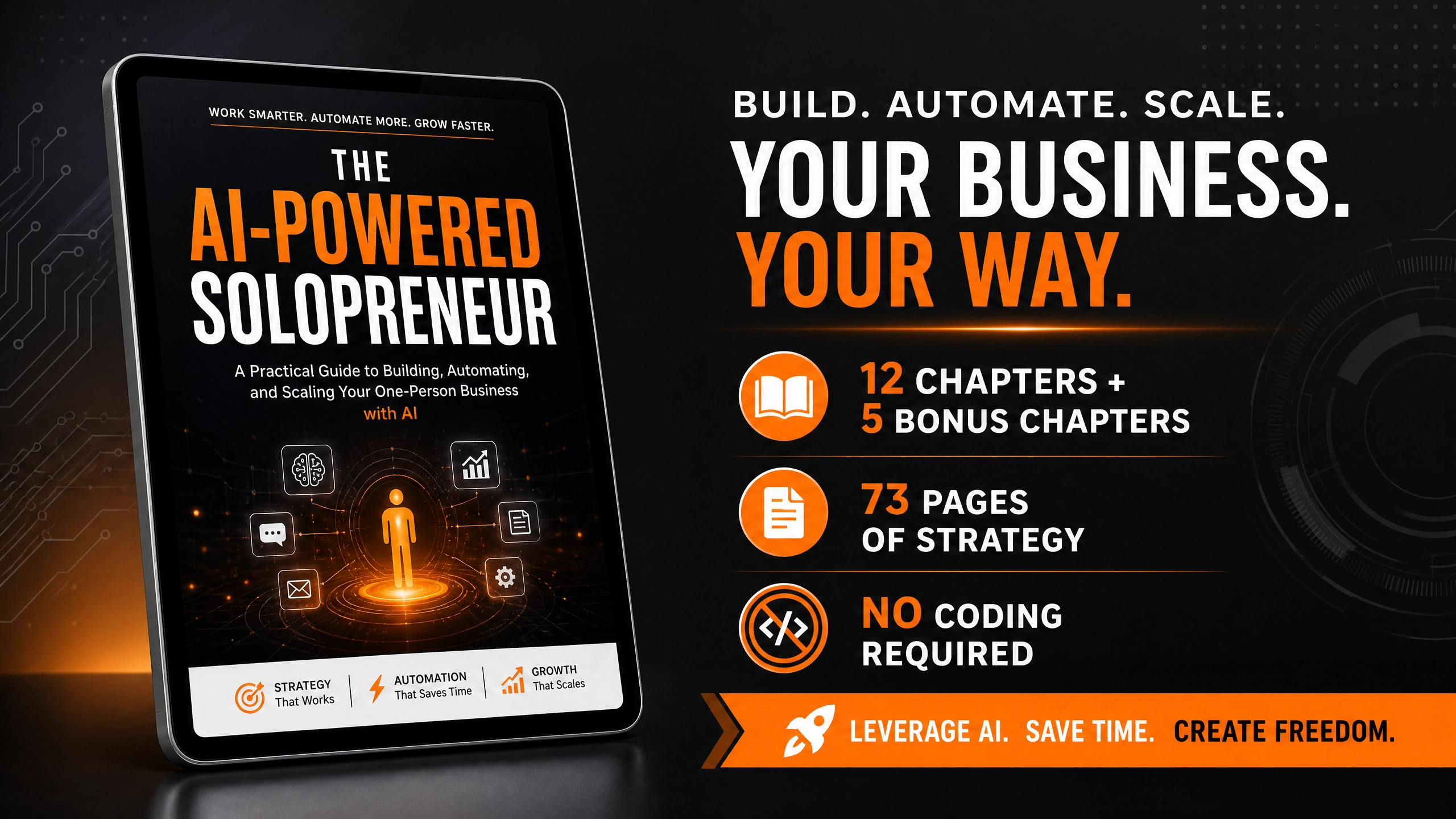
The AI-Powered Solopreneur is a 73-page roadmap across 12 chapters that covers every major AI-powered income model with real specificity: what it is, what it pays, what skills it requires, and how to start this week.
What the Income Models Actually Look Like
The book maps seven distinct paths, each with estimated earning ranges, startup costs, and required skill levels. Not vague potential — actual numbers to compare:
- AI Freelancing ($2K–$8K/month) — writing, strategy, content delivered at 4× speed, priced on outcomes not hours
- Digital Products ($500–$5K/month) — prompt packs, templates, guides, mini-courses that sell 24/7
- Content Business ($1.5K–$8K/month) — one person producing at agency volume with AI as the team
- Micro-Agency ($5K–$25K/month) — retainer clients, consistent delivery, no full-time hires
- Course Creation ($2K–$20K/month) — AI builds curriculum, workbooks, and sales pages; you record and launch
That breakdown in Chapter 2 alone is worth the price of the book. You’re not guessing which path fits your life — you’re choosing from a menu with real information.
The Career Shift Nobody Talks About: Pricing for Value, Not Hours
Chapter 4 on AI freelancing contains what might be the most important career reframe in the entire book.
If AI lets you deliver a client deliverable in 2 hours that used to take 8 — what happens to your rate? Most freelancers’ instinct is to charge less, because the work “took less time.” The book argues the exact opposite: you’re now delivering better work, faster, with higher consistency. The client’s outcome improved. Your rate should reflect the outcome, not the clock.
That single shift — from hourly billing to value-based pricing — is what separates the freelancers quietly building a $5K/month business from the ones still trading time for money with no ceiling.
The 90-Day Launch Plan
The book closes with a week-by-week, step-by-step roadmap from wherever you are today to your first $5K month. Not “here’s a general framework” — here’s what to do in week two. That specificity is what makes it actionable for people with a full-time job, a family, and a finite number of hours per week.
Best for: Anyone starting their AI income journey with no committed tool or model yet. Great if you want the full landscape before going deep on one path.
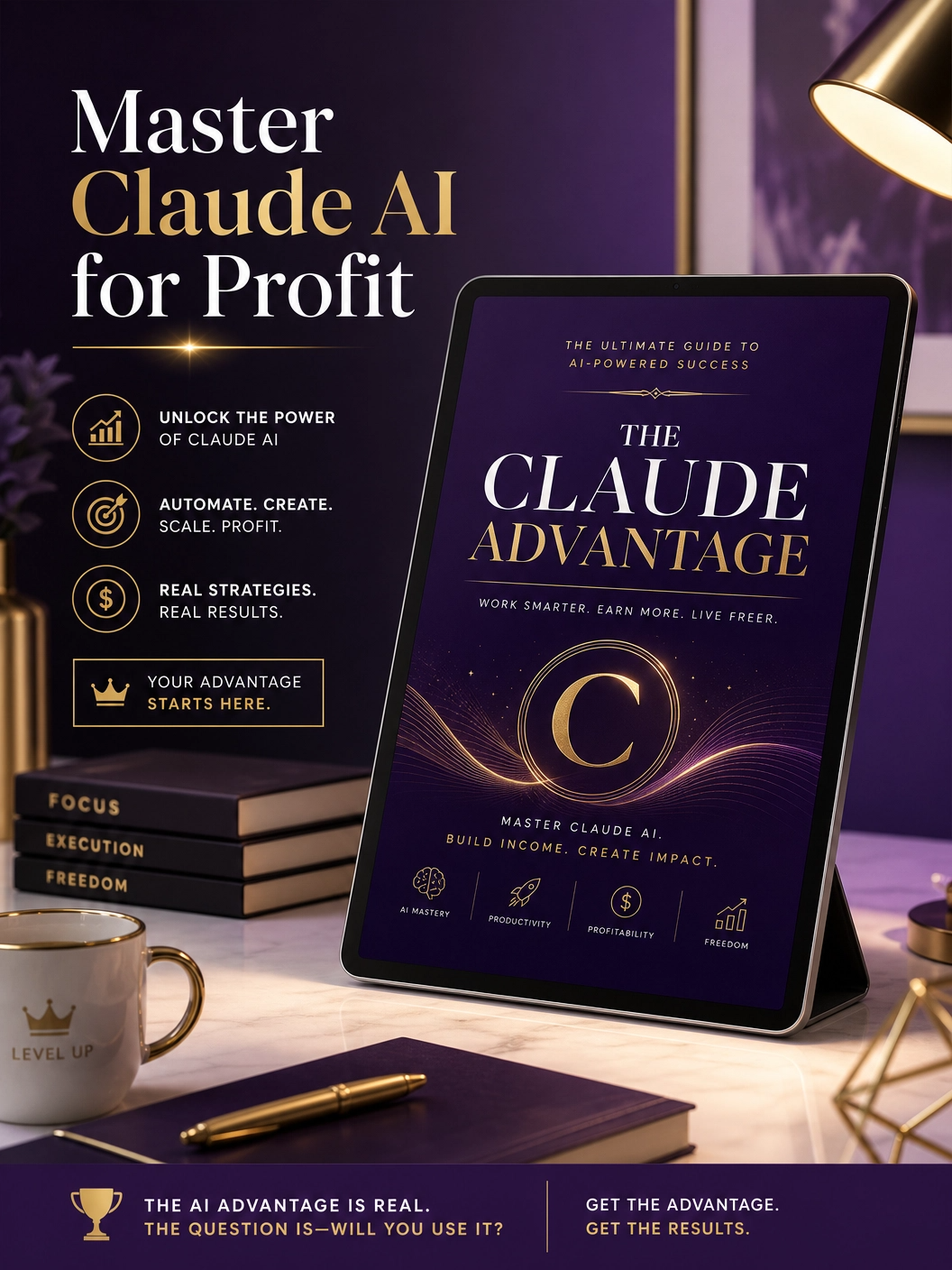
Resource 2: The Claude Advantage — For the Woman Ready to Go All-In on One Tool
→ Get it here — $47 · Instant PDF · 30-day guarantee
Once you’ve decided on your income model — or if you’re already using Claude and want to extract dramatically more value from it — this is Book Two.
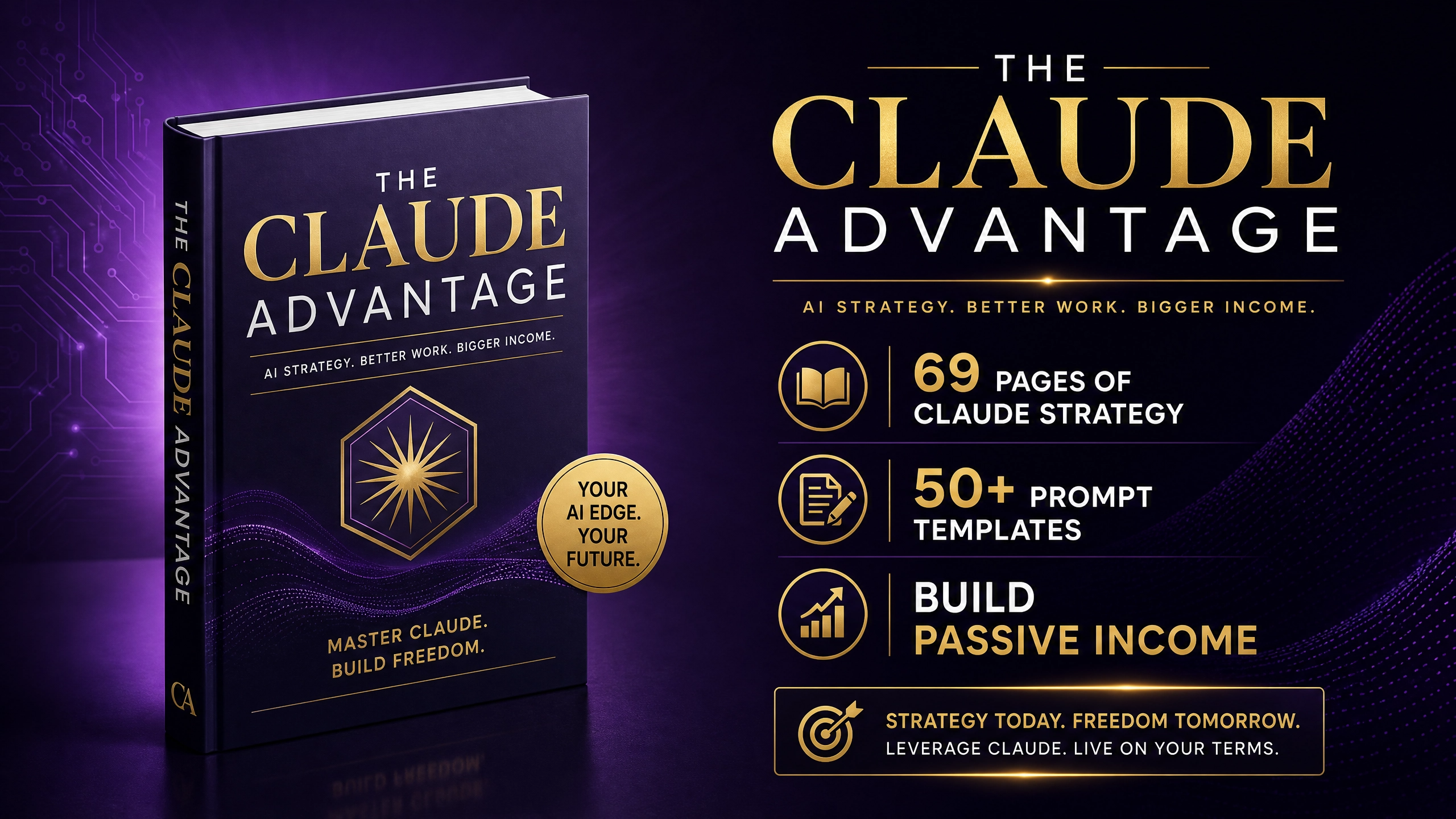
The Claude Advantage does what most AI business books won’t: it commits to one tool and goes deep. All 69 pages are Claude-specific, covering the platform’s unique features (Projects, the 200K context window, Artifacts, and the API) and building a complete income system around them.
The RACE Framework: Why Your Prompts Are Underperforming Right Now
Chapter 2 is the one readers cite most consistently as the chapter that changed everything. The RACE framework — Role, Action, Context, Expectation — is a four-part prompt structure that turns vague requests into professional, business-grade output every single time.
Most people write prompts the way they’d ask a question to a search engine: short, keyword-driven, context-free. Claude responds accordingly — surface-level, generic, fine-but-forgettable. The RACE framework treats Claude like the highly capable collaborator it actually is: you give it a role to play, a specific action to take, full context on the situation, and a clear expectation for the output format and quality.
The difference in output quality is immediate. Readers consistently describe going from “decent” to “actually impressive” within days of applying it.
The Income Model That Most Surprised Me: The Claude API for Non-Developers
Chapter 7 covers building products with the Claude API using no-code tools like Make.com and Zapier — no coding required, no technical background needed.
The model: build a niche tool that solves a specific, repeatable problem for a specific audience. Charge $29–$49/month. Get 100–200 subscribers. The math on $49/month × 200 users is $9,800 MRR — from a tool you built in an afternoon, using an API you accessed without writing a line of code.
Is that realistic for everyone? No. But is it a real, documented income model that a non-developer can pursue with the right guidance? Yes. And this chapter is the guidance.
The Claude Prompt Vault
The bonus section includes 50 tested, refined prompts organized by business function — writing, strategy, product creation, client work, and research. These aren’t generic prompts. They’re the specific templates that produce professional output for the exact tasks a solopreneur or freelancer faces daily.
If you buy the book and do nothing else except work through the Prompt Vault, your AI output quality will meaningfully improve within a week.
Best for: Anyone already using Claude (even casually), or anyone who’s read The AI-Powered Solopreneur and decided Claude is their tool. Also the right choice if you want one platform, mastered — rather than a broad overview of the AI landscape.
How to Decide Which One to Read First
The honest answer depends on where you are right now:
Read The AI-Powered Solopreneur first if:
- You haven’t settled on a specific AI tool or income model
- You want to understand the full range of what’s possible before committing
- You’re earlier in the process — exploring rather than executing
Read The Claude Advantage first if:
- You’re already using Claude and want to use it better
- You’ve decided you want to freelance, build digital products, or start a content business — and you want Claude-specific workflows for that path
- You want to go deep on one tool rather than broad across many
Read both if: You’re serious about building something. The books complement each other — one gives you the strategic landscape, the other gives you the tactical depth. Together, they’re the most complete AI business education available at this price point. At $94 total for both, it’s less than two hours of business coaching.
One More Thing: Your Environment Matters
Building something new — especially alongside a job, alongside a life — is hard enough without fighting your environment. The women who follow through aren’t necessarily more disciplined. They’ve designed their days to make showing up easier: a dedicated work hour, a clear workspace, a ritual that signals this time is different.
The details matter. Even small ones. Like what you’re drinking from while you work on the thing you’re building.
This Wild Beautiful Mom Floral Wreath Mug from omniinspo is the kind of thing that makes an early morning or a late evening work session feel like yours — not borrowed time, not stolen minutes, but an actual hour you claimed. The boho watercolor design is beautiful in a way that’s personal, not decorative. Which, honestly, is the whole point.
→ Shop it: Wild Beautiful Mom Floral Wreath Mug — $19.99
The Bottom Line
The AI career shift is real. The income models are real. The women building them aren’t uniquely talented or unusually lucky — they found the right system and they followed it.
Both of these books exist to be that system for you. They’re specific, they’re actionable, and they both come with a 30-day money-back guarantee that makes the decision genuinely risk-free.
The only thing that doesn’t have a guarantee is waiting.
→ The AI-Powered Solopreneur — $47 → The Claude Advantage — $47
Frequently Asked Questions
Do I need technical skills to build an AI business?
No. Both books are explicitly written for non-technical people — if you can use Google Docs and send an email, you have the tech skills required. The Claude Advantage even covers building with the Claude API using no-code tools like Make.com and Zapier.
How long before I can realistically earn something?
The digital products path in The AI-Powered Solopreneur is designed for first revenue within 1–2 weeks. The freelancing path typically sees first clients in 2–3 weeks. Meaningful, recurring income by 60–90 days is realistic for someone who follows the 90-day plan consistently. Results vary based on effort, existing skills, and which model you choose.
Can I do this alongside my current job?
Yes — and both books are designed for exactly this scenario. The 90-day launch plan in The AI-Powered Solopreneur assumes limited time, not unlimited availability. Most of the action steps are completable in under 30 minutes.
Is The Claude Advantage only useful if I’m already using Claude?
You can start from scratch — Bonus 3 (the 60-Minute Setup Checklist) gets you fully operational even if you’ve never opened Claude before. But if you’re a committed ChatGPT user with no interest in exploring other tools, The AI-Powered Solopreneur is the better starting point since it’s tool-agnostic.
What if I buy one and it’s not for me?
Both books come with a 30-day money-back guarantee, no questions asked. You take zero financial risk.
This post contains affiliate links. We may earn a small commission at no extra cost to you.
About the Author