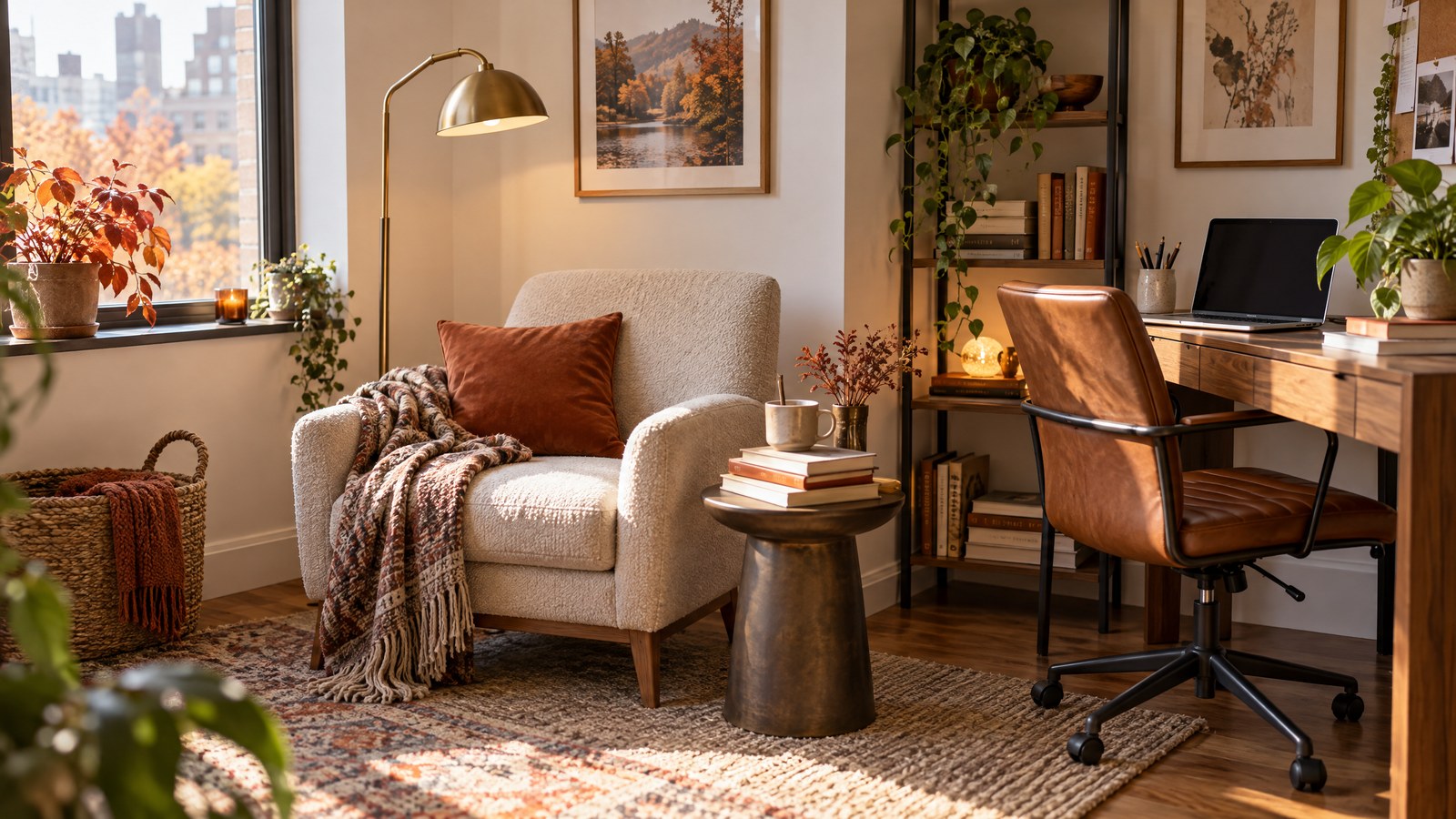
How to Create a Reading Nook Beside Your Desk: A Small-Space Study Combo
Blending a desk and a reading nook in a small space is about deliberate separation more than square footage. A good reading nook desk setup gives you two distinct modes — computer work and low-tech reading — without requiring a whole room. This guide walks through choosing the right seat, layered light, book storage and access, managing floor footprint, and creating a visual transition so the two areas feel intentional and useful.
Why bother? Separating activities helps your mind shift from focused, screen-based tasks to relaxed, reflective reading. You’ll get more comfortable reading posture, a calmer mood, and a clearer boundary between “work” and “read.” Below are practical steps and layout ideas you can implement in corners, along a wall, or even next to an existing desk.
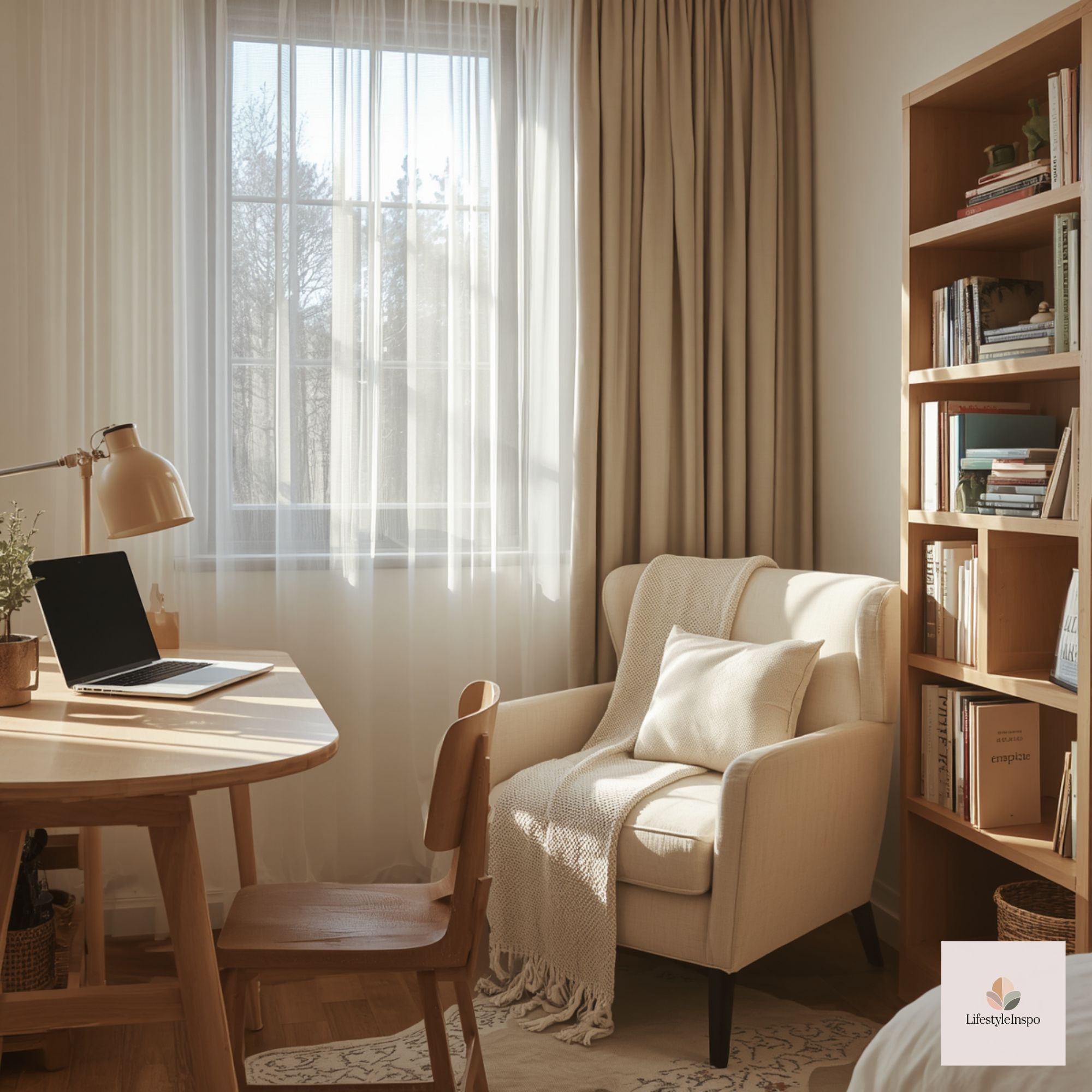
Pick a compact reading seat that reads as separate
To make the nook feel intentional, choose a seat with a different scale or silhouette than your desk chair. In a small-space reading nook desk setup, options that save floor space while signaling “reading only” include:
- A compact lounge chair with a low back: visually lighter and more relaxing than a tall, upright desk chair. Choose one with a narrow footprint (under 28–30 inches wide) for tight corners.
- A slipper chair or armless accent chair: these tuck close to a wall and won’t block pathways.
- A small upholstered bergère or tub chair: adds an enveloping feel in a modest footprint when you want a cozy posture for longer reads.
- A wall-mounted folding bench with cushions: perfect when floor space is at a premium; fold it down for reading and up when you need room.
Practical tips: measure the floor area first, including clearance for leaning back. If your desk and chair are visually similar (metal frame, dark upholstery), pick a reading seat in a warmer fabric or light wood to create contrast.
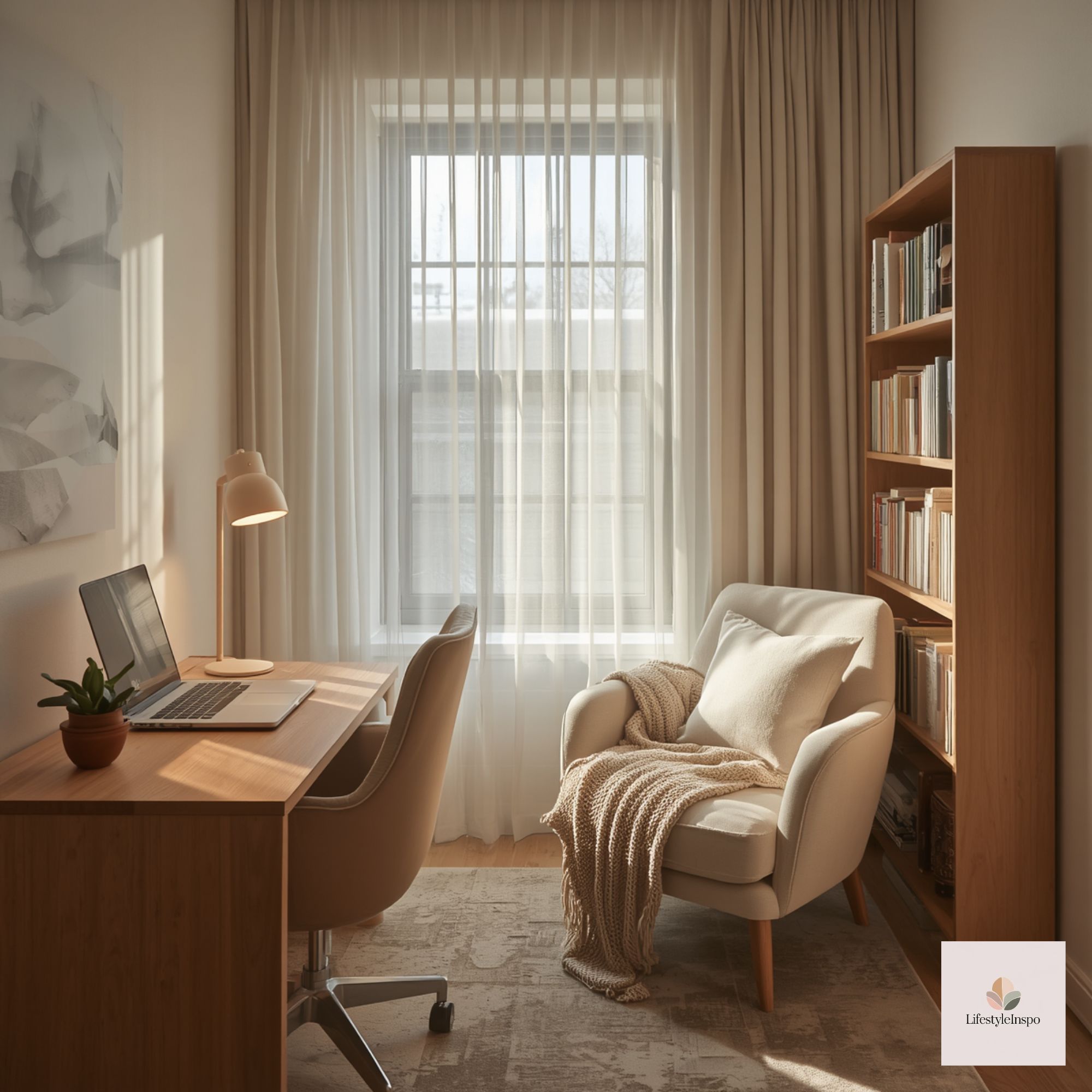
Layer lighting for reading comfort and visual separation
Lighting defines zones. Your desk likely uses directional task lighting for screen work; the reading nook needs softer, evenly distributed light that’s easy on the eyes.
- A dedicated adjustable floor lamp with a diffusing shade: place it behind or beside the reading chair so the beam falls over your lap and book without throwing glare onto your screen. A swing-arm floor lamp anchors the nook and can be angled away from the desk when not needed.
- A wall sconce above the chair: saves floor space and creates a cozy pool of light. Choose a dimmable sconce or one compatible with a lower-wattage warm bulb for reading.
- Table lamp on a tiny side table: if you have room for a 12–16 inch wide table, a short lamp gives both task light and surface space.
- Accent LEDs to mark the boundary: a soft strip light under a shelf or along the desk edge can subtly separate the zones at night without being harsh.
Aim for warm color temperature (2700–3000K) and enough lumens for comfortable reading, and include a dimmer when possible. Test the light in the evening — reading feels different than daytime ambient lighting.
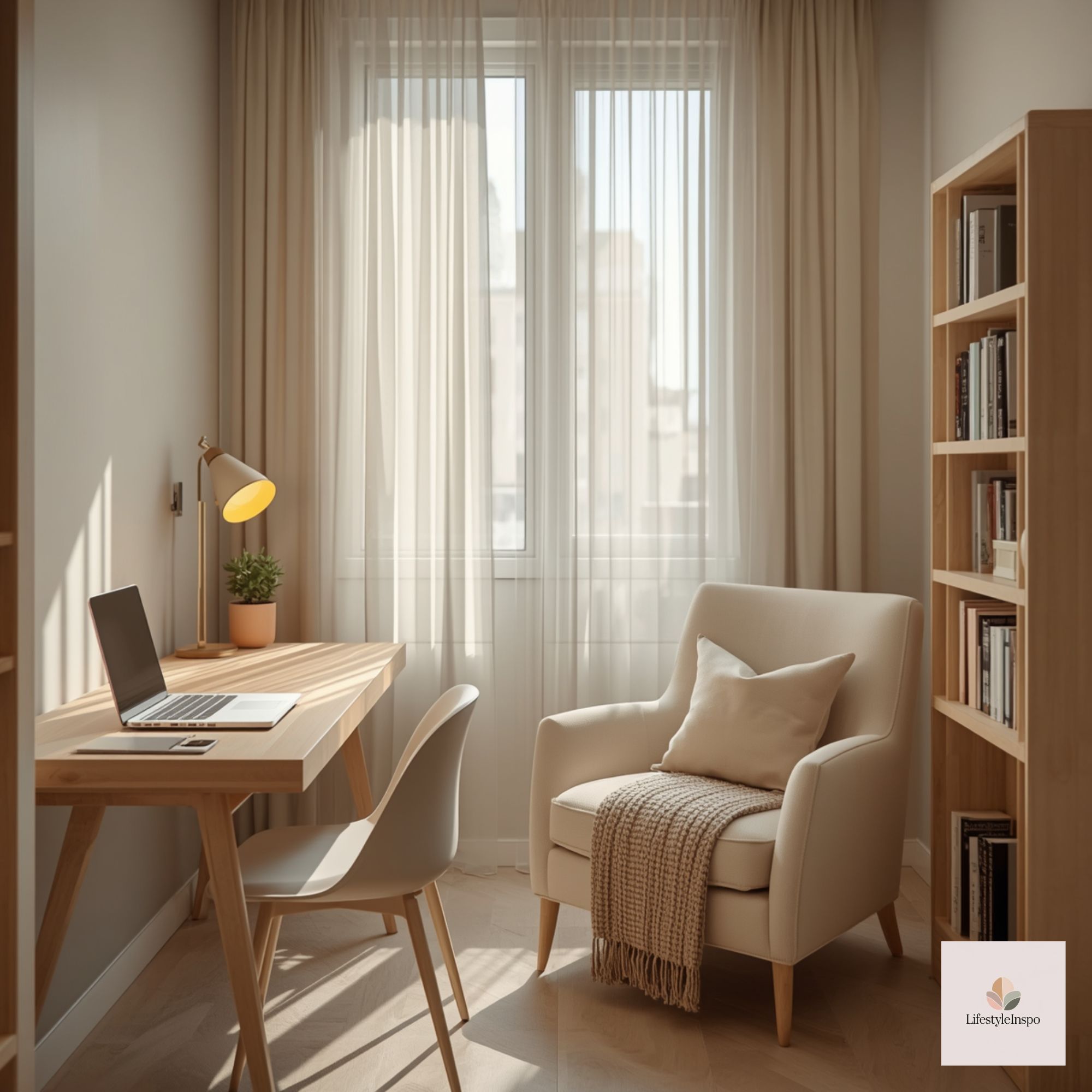
Make books and reading materials instantly accessible
Having books within reach is the heart of a reading nook desk setup. Think vertical and shallow to keep the floor footprint small.
- Narrow bookcase or ladder shelf beside the chair: vertical shelving fits more titles with a small footprint. Open shelves invite browsing.
- Under-seat storage: a slatted shelf beneath a bench or the ottoman can hold current reads without adding footprint.
- Wall-mounted picture ledges: great for stacking a short row of books horizontally at eye level. They double as display and are less imposing than deep shelves.
- Rolling cart: a slim three-tier cart on casters lets you wheel your reading collection from desk to nook and can also hold a lamp or hot beverage when needed.
- A magnetic or wire rack on the side of your desk: uses sidewall space to hold magazines and slim paperbacks.
Arrange books by “now,” “soon,” and “reference” to reduce visual clutter. Keep a small basket for bookmarks, glasses, and a notepad so you’re not tracking office clutter into your reading spot.
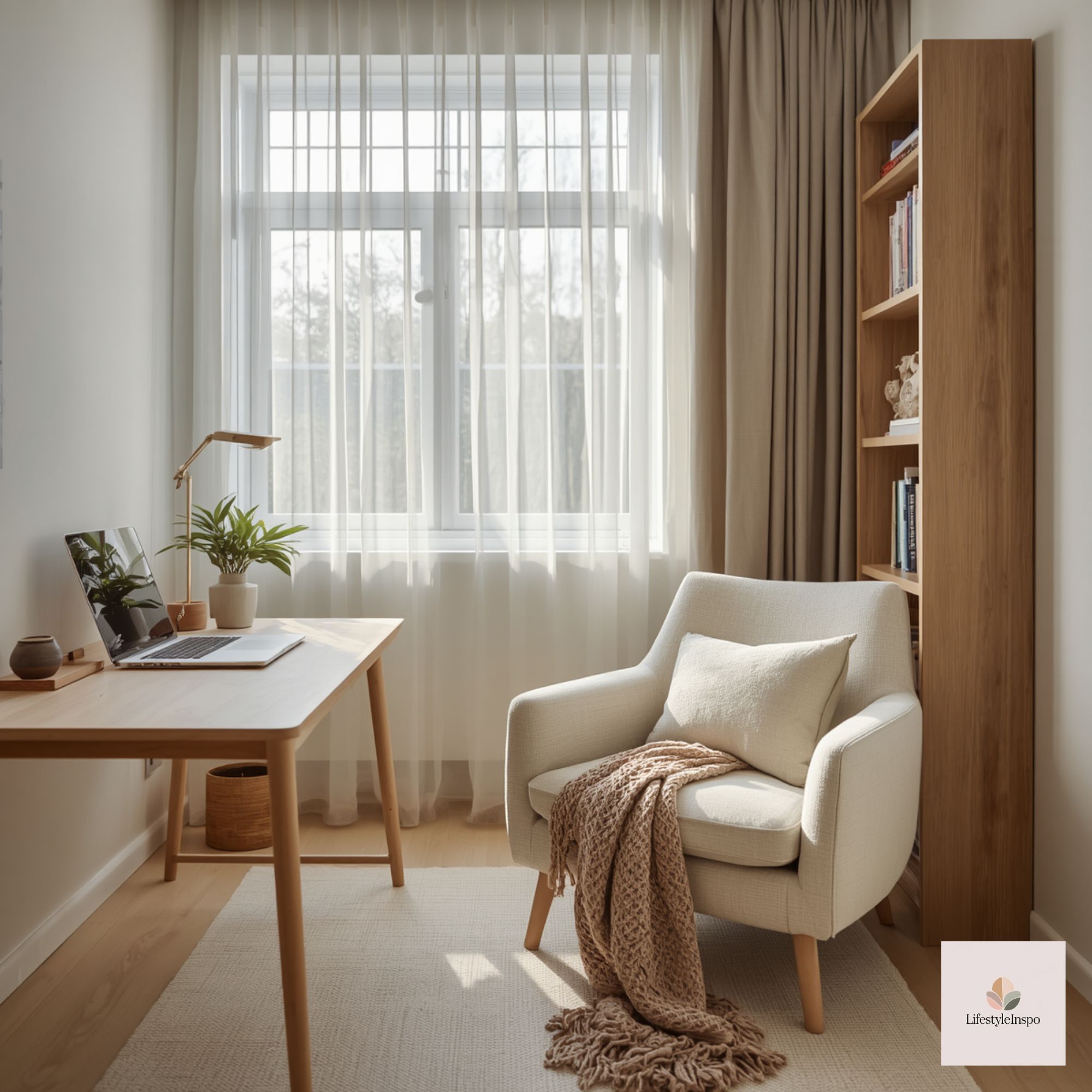
Control floor footprint with multifunction and vertical solutions
Small spaces demand smart scale decisions. Here’s how to keep the reading nook compact without compromising comfort.
- Use furniture with exposed legs: visually lighter pieces (chairs, side tables, bookcases with legs) make a small area feel airier than boxy, floor-to-ceiling units.
- Choose a narrow side table or floating shelf as a bedside surface: a 12-inch-deep shelf provides spot space for a cup and a lamp without dominating circulation.
- Swap a bulky armchair for a deep-seat slipper chair paired with a footstool you can tuck away.
- Choose a tall, skinny bookcase instead of a low wide one to free up floor area.
- Consider foldaway options: a folding camaraderie chair or wall-mounted drop-leaf shelf that functions as a small lap table keeps things flexible.
Also plan circulation: leave a 24–30 inch pathway in front of the desk and chair for comfortable movement. If you must sacrifice a few inches, prefer depth over width for the reading side — depth helps the chair feel enveloping.
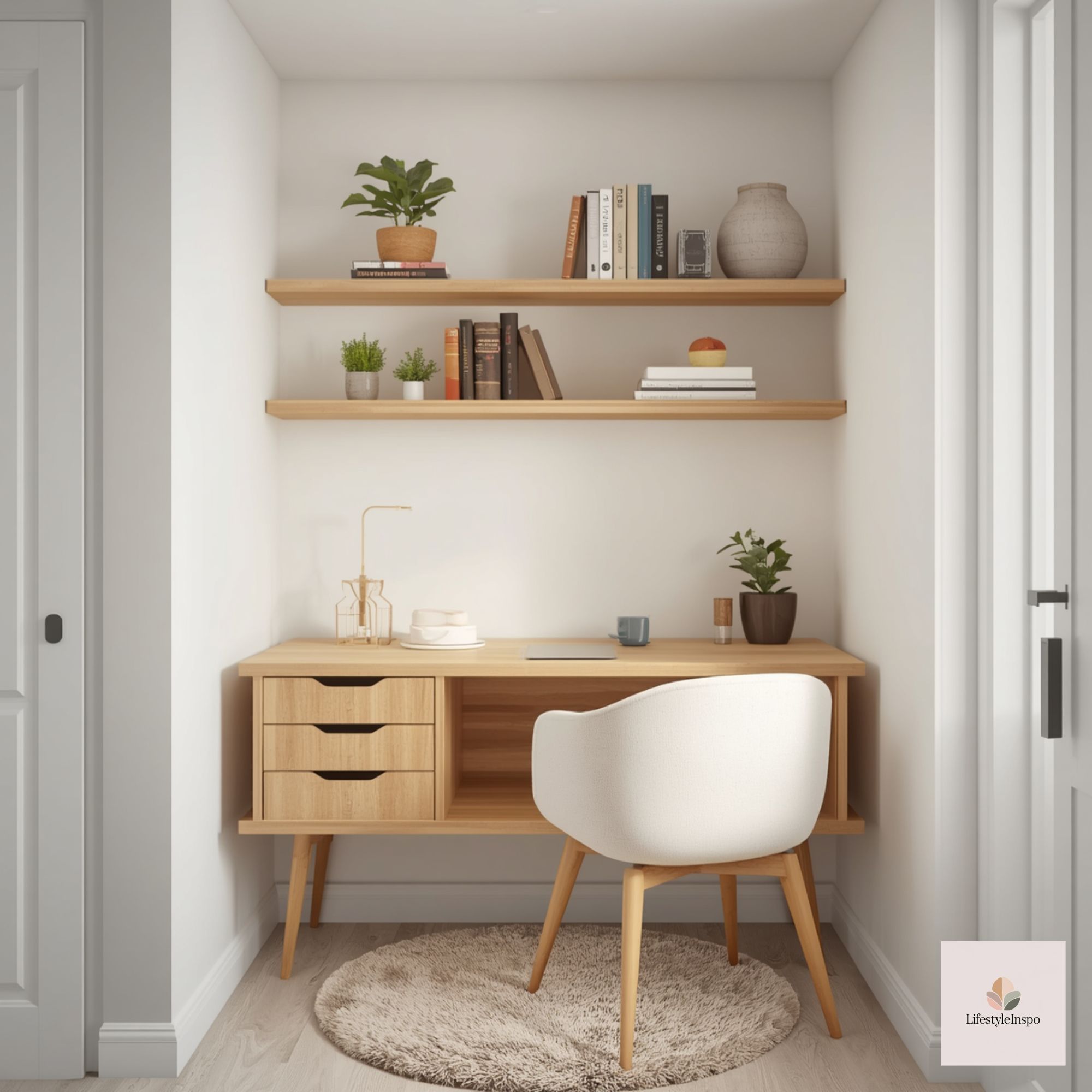
Create a visual transition between desk and nook
The simplest way to make two activities coexist is to let your eyes register a transition. Use color, texture or small architectural cues to separate zones without building walls.
- Rug layering: place a small rug under the reading chair that contrasts slightly with the desk rug or floor. Even a 4’x6’ rug is enough to ground the perch.
- Backdrop change: swap a different wall treatment directly behind the chair — a painted accent stripe, removable wallpaper, or a printed digital-paper art mockup for inspiration (for example, the warm palette in Autumn Leaf Swirls Watercolor Digital Paper can inform your fabric and pillow choices). Remember those textures are digital assets and require reviewing seller usage terms before reproducing.

- Different materials: pair a wooden reading chair with a metal-framed desk, or upholster the chair in a soft fabric while the desk area remains crisp.
- Low divider: a waist-high shelving unit between desk and chair separates sightlines while providing storage.
- Lighting contrast: cooler, task-focused light at the desk and warmer, diffused light at the reading nook signals a change in activity.
These subtle shifts help your brain accept that pressing the laptop is a different activity than opening a novel.
Use textiles and props to reinforce the ritual
Reading rituals are enhanced by tactile cues. Add a few textiles and small props to create a cozy ritual without cluttering your desk.
- A throw blanket or lightweight lap quilt: keeps the reading activity physically warm and mentally distinct.
- A lumbar pillow or small reading pillow for better posture.
- A small tray or coaster on the side table so beverages don’t threaten electronics nearby.
- A bookmarks bowl or a personal-supply caddy that lives on the reading side only.
Aim for a limited color palette so the area reads calm and intentional — one or two accent colors tied back to the desk zone will hold the whole combo together.
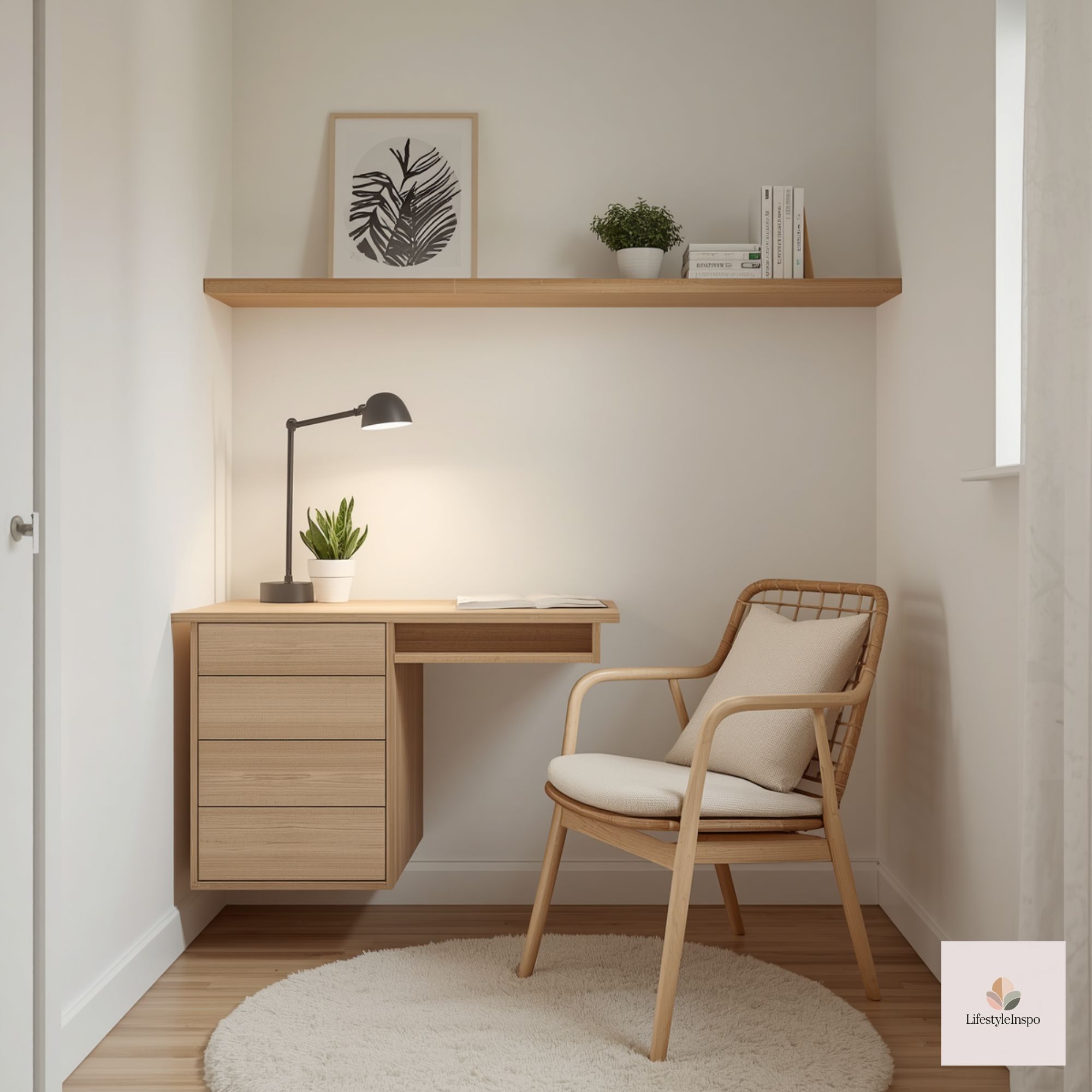
Keep screens and reading tools intentionally separate
To maintain separation, keep the reading nook a low-tech space whenever possible.
- No charging cables in sight: hide chargers in a small basket under the table or use a decorative box. This ensures the nook feels like a screen break, not a second workstation.
- Dedicated book light or lamp: avoid using the desk light to read; it makes the zones interchangeable and may invite notifications.
- If you read on tablets or e-readers, consider an “offline rule”: start a reading session by silencing notifications or placing the device in airplane mode to preserve the zone’s purpose.
The goal is a distinct ritual: sit in the reading perch, turn on the softer lamp, and pick up a physical book or an unread e-reader file — not a Slack channel.
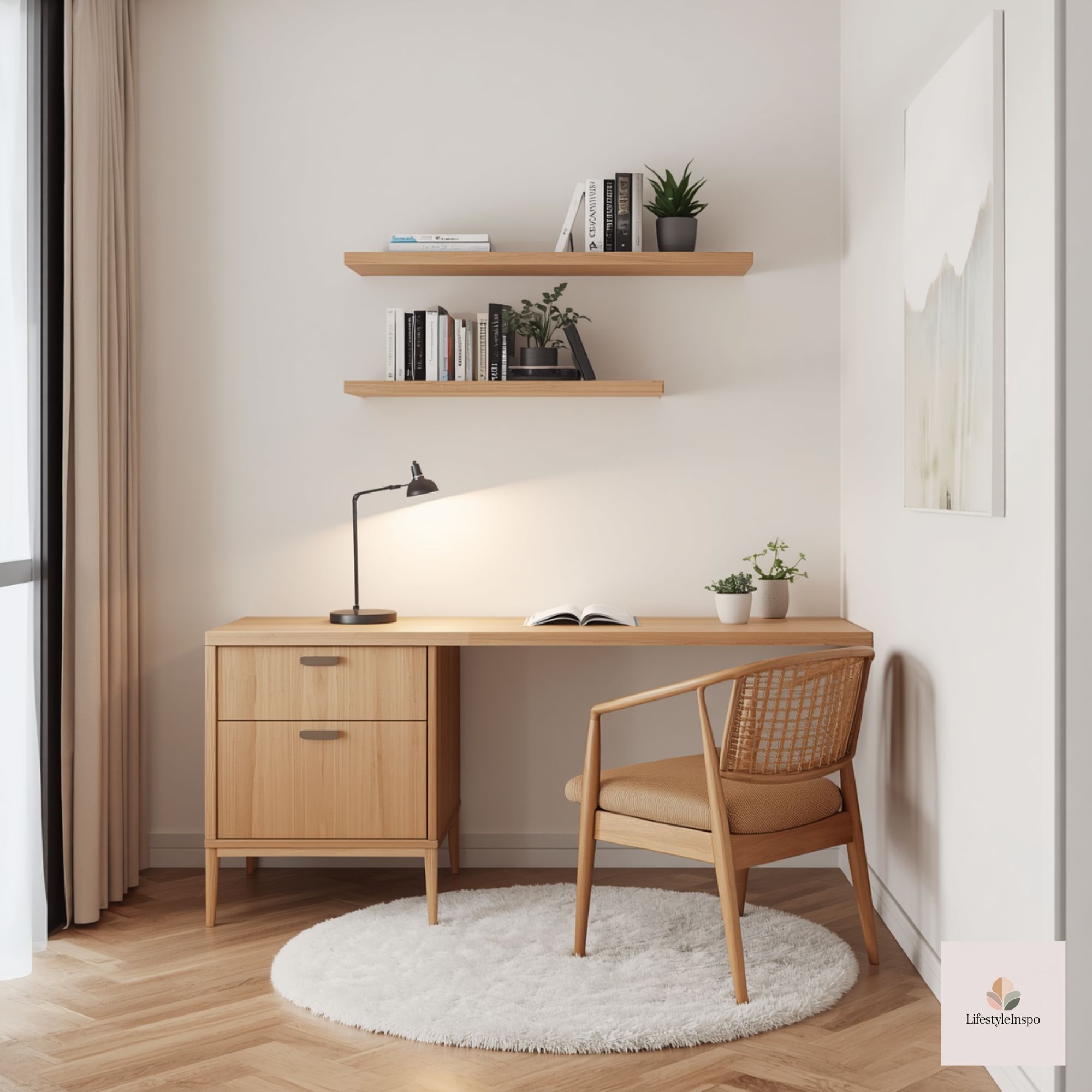
Small-space layout examples (realistic setups)
Here are three compact layout ideas for different constraints. All assume a standard small bedroom, studio, or office nook.
- Corner next to a wall-mounted desk
- Wall desk folded down on weekdays; armless slipper chair in the corner with a 12-inch side shelf.
- Wall sconce above the chair, ladder shelf beside it for books.
- Small rug under chair to visually separate the corner.
- Long wall with desk and adjacent reading perch
- Desk at one end; 26-inch wide lounge chair beside it with a slim tall bookcase behind the chair.
- Floor lamp with adjustable arm shared between chair and desk (angle away from screen).
- Low shelving unit between desk and chair to demarcate space and store supplies.
- Desk in the middle of the room with reading nook behind
- Desk faces away from the wall; a 4’x6’ rug behind it with a compact tub chair and ottoman.

- Rolling cart holds books and a lamp; an art-room-inspired digital scene pinned to a small corkboard behind the chair for visual warmth (see Art Room Background Scenes as digital inspiration). Always review seller usage terms before printing or reproducing digital assets.
Styling and maintenance for sustainable use
Sustainable use means the nook becomes part of your routine rather than a decorative afterthought.
- Limit decorative items to one or two meaningful pieces; too many objects invite desk drift.
- Rotate books seasonally or by interest to keep the selection fresh.
- Keep the reading surface clear: make clearing the side table part of your reading ritual.
- Dust and vacuum under the chair regularly to maintain comfort, especially if you use textiles and throws.
Conclusion
A thoughtful reading nook desk setup balances function and ritual in a compact footprint. Choose a seat that reads different from your desk chair, layer warm lighting, make books and supplies easy to access, and create a subtle visual transition so the space communicates its purpose at a glance. With these choices you’ll gain a small, deliberate sanctuary for reading beside your workspace — a place that invites slowing down without needing extra square footage.
About the Author





