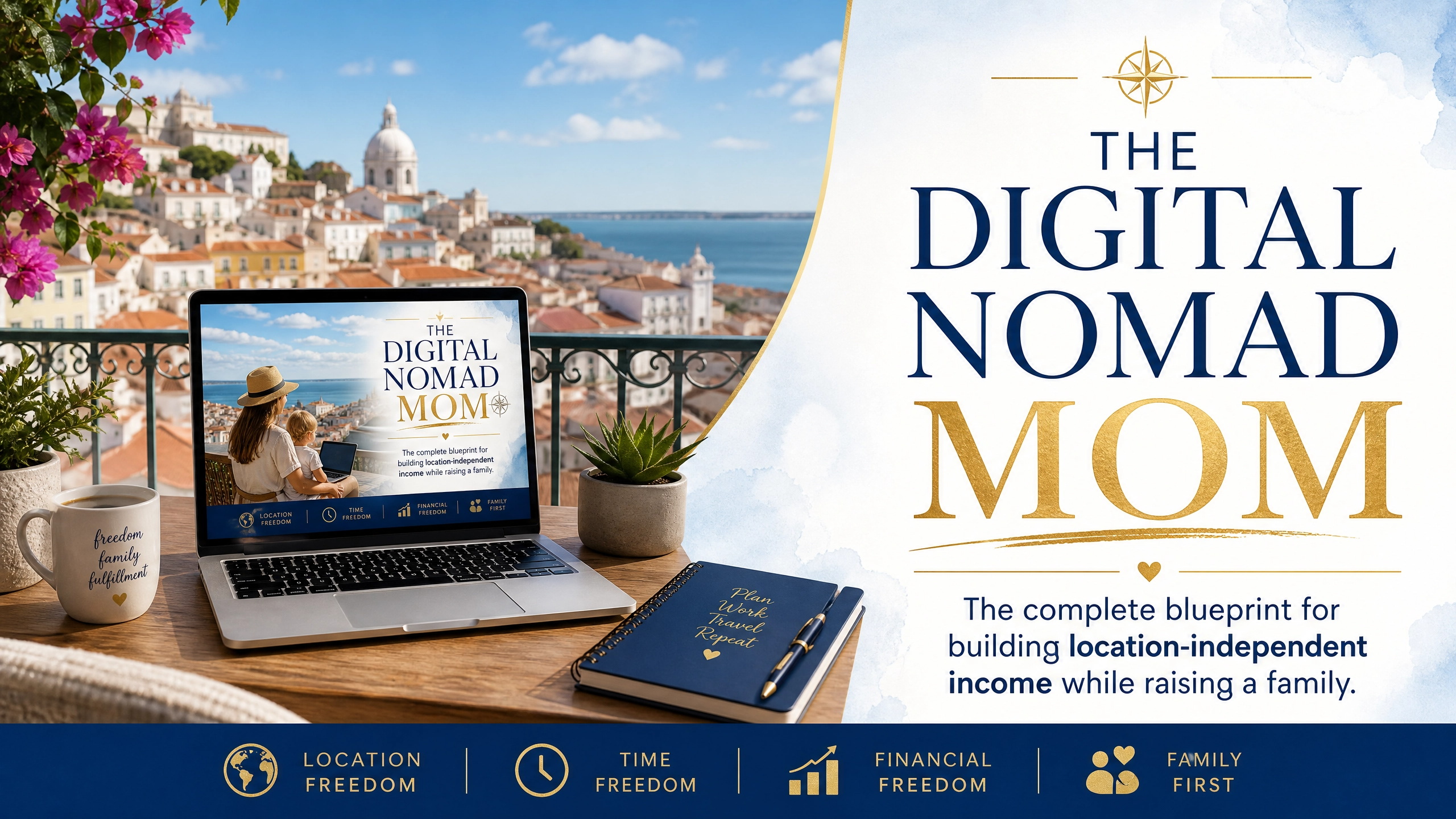
What Being a Digital Nomad Mom Is Actually Like (Not the Instagram Version)
Picture this: your laptop open on a sunny balcony, your kids sketching at the table beside you, a cup of coffee going cold because you’re too absorbed in your work to notice. Beyond the window, a city you’ve never lived in is just waking up.
For plenty of families, that picture isn’t fantasy — it’s a Tuesday. And while it takes real planning, becoming a digital nomad mom is more achievable than most of us were ever told.
Of course, there’s also the other picture: a toddler meltdown at a train station, a missed deadline, a wifi outage at exactly the wrong moment. Both are part of the story. This guide gives you the honest version — how to build remote income, prepare your family, manage money, and make the leap without losing your sanity.
What Is a Digital Nomad Mom?
A digital nomad is someone who earns a living online and isn’t tied to one location. A digital nomad mom simply does this while raising kids — whether that means living abroad for a year, spending winters somewhere warm, or traveling in short, intentional stretches.
The lifestyle isn’t one-size-fits-all. Some families:
- Move slowly, staying one to three months per place
- Choose a home base and take extended trips
- Relocate abroad to a lower-cost-of-living country
- Travel domestically while keeping a stable foundation
You decide the pace. “Nomad” can mean a few trips a year or a full-time move. Both count.

Step 1: Secure Location-Independent Income First
The single most important rule: sort out your income before you sort out your itinerary. Travel is exciting, but money stress turns paradise into pressure fast.
Remote-friendly income paths include:
- Remote employment: many roles in customer support, marketing, operations, and tech offer remote options
- Freelancing: writing, design, virtual assistance, bookkeeping, social media management
- Online business: digital products, ecommerce, coaching, content creation
- Consulting or teaching online: tutoring, language lessons, courses
If you’re employed, talk to your employer about remote or flexible arrangements, and check any policies about working abroad (taxes and legal rules can be complicated). If you’re building your own income, aim for a stable baseline before leaving.
A smart benchmark: earn consistently for several months at the level you need to cover expenses, plus a cushion.

Step 2: Build a Realistic Budget
Costs vary dramatically by destination and lifestyle. Create a budget that includes:
- Housing: short-term rentals, long-stay discounts, or house-sitting
- Transportation: flights, local transit, car rentals
- Food: groceries versus dining out
- Health insurance and travel insurance
- Childcare, schooling, or activities
- Work expenses: coworking spaces, internet, equipment
- Visa and legal costs
- Emergency fund: a bigger one than you’d keep at home
Money tip: build in a 15–20% buffer for surprises. They will happen — a delayed flight, a lost charger, a sick kid.
Step 3: Choose Your Destination Thoughtfully
Skip the dreamy Instagram search and ask practical questions:
- Visa and legal requirements: Can you stay long enough? Do you need a remote work visa?
- Safety: What are family-friendly areas like?
- Healthcare: Is quality care accessible, and does your insurance cover it?
- Internet reliability: Test speeds, and have a backup (mobile hotspot, coworking space).
- Time zones: Can you still meet client or employer needs?
- Child-friendliness: Parks, playgrounds, schools, and other families nearby.
- Cost of living: Does it fit your budget?
- Community: Is there an expat or nomad family scene?
Beginner-friendly tip: start with a short “test run” — two to four weeks somewhere relatively close and easy — before committing to anything bigger.

Step 4: Handle the Legal and Practical Basics
This part isn’t glamorous, but it protects your family.
- Passports: check expiration dates (many countries require six months’ validity)
- Visas and permits: research each destination’s rules for stays and remote work
- Taxes: where you live and work can affect your tax obligations, so consult an accountant familiar with international situations
- Insurance: international health, travel, and evacuation coverage
- Documents: keep digital and physical copies of passports, birth certificates, medical records, and any custody documentation
- Banking: notify your bank and consider low-fee cards for international spending
Rules differ by country and change often, so rely on official government sources and qualified professionals.
Step 5: Sort Out Schooling and Learning
This is a big one for families. Common options include:
- Homeschooling or worldschooling: learning through travel, supported by a curriculum
- Online schools or virtual programs: structured courses with teachers
- International or local schools: for longer stays in one place
- Hybrid approaches: blending these as needed
Check your home region’s requirements for homeschooling or school enrollment before you go. Whatever you choose, keep records of progress so transitions back to traditional school are smoother.
Step 6: Design a Workday That Works With Kids
Working remotely with children takes creativity, not perfection. Try:
- Split schedules: work in focused blocks while kids are at activities, in school, or during rest time
- Co-working with childcare: some spaces offer kids’ areas or can recommend sitters
- Routines: predictable rhythms help kids feel secure, even in new places
- Partner or family swaps: trade off work and parenting time
- Realistic expectations: you may work fewer hours at first, and that’s fine
Many nomad moms lean into “deep work” in the early morning or after bedtime and keep afternoons open for exploring.

Step 7: Pack Light, Pack Smart
Less stuff means less stress. Focus on essentials:
- Versatile clothes in layers
- A small first-aid and medicine kit
- Comfort items for each child (a favorite toy or blanket)
- Portable entertainment: books, sketchpads, downloaded shows
- Chargers, adapters, a power bank, and a reliable laptop
- Snacks and a refillable water bottle
Mom hack: assign each child a small backpack with their own “survival kit.” Independence reduces chaos.
Want a Complete Roadmap?
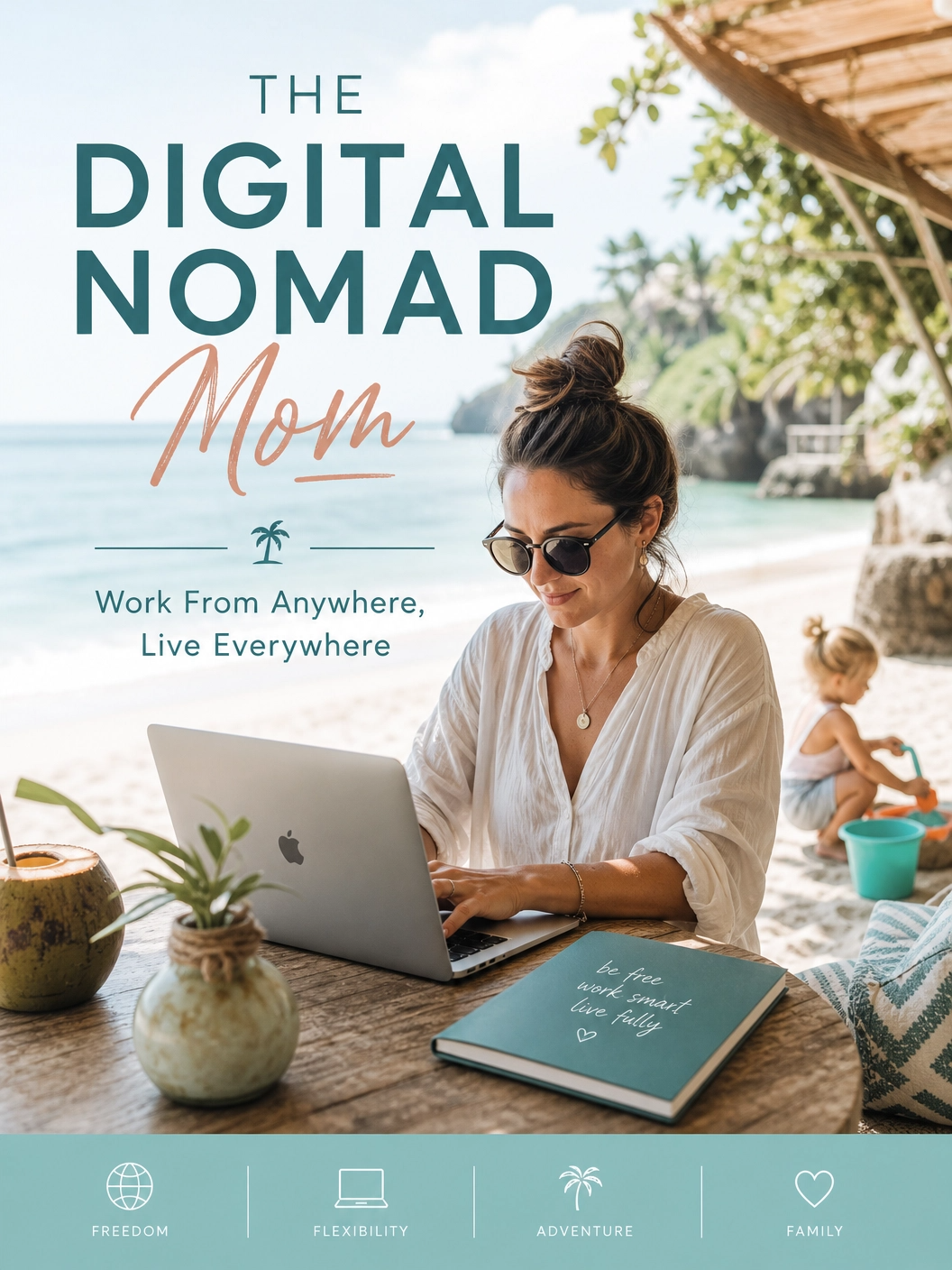
If you’d like all of this in one organized place — income strategies, travel planning, logistics, and the mindset it takes to pull it off — The Digital Nomad Mom was created for women who want to build this lifestyle step by step, without guessing their way through it.
→ Shop it: The Digital Nomad Mom
And if you’re still building the remote income side, our guide to The Stay-At-Home Mom’s Guide to Making Money Online is a natural first read.
Honest Challenges (and How to Handle Them)
Loneliness. Moving often can make friendships harder. Join expat groups, coworking communities, and family meetups.
Burnout. Constant novelty is tiring. Slow down, stay longer in each place, and schedule “do nothing” days.
Kids’ emotions. Children may miss friends or routines. Keep familiar rituals (bedtime stories, weekly video calls) and involve them in planning.
Unreliable internet. Keep backups and communicate with clients early if issues arise.
Guilt. You’ll sometimes feel pulled between work and play. Both are valid. Aim for presence in the moment you’re in.
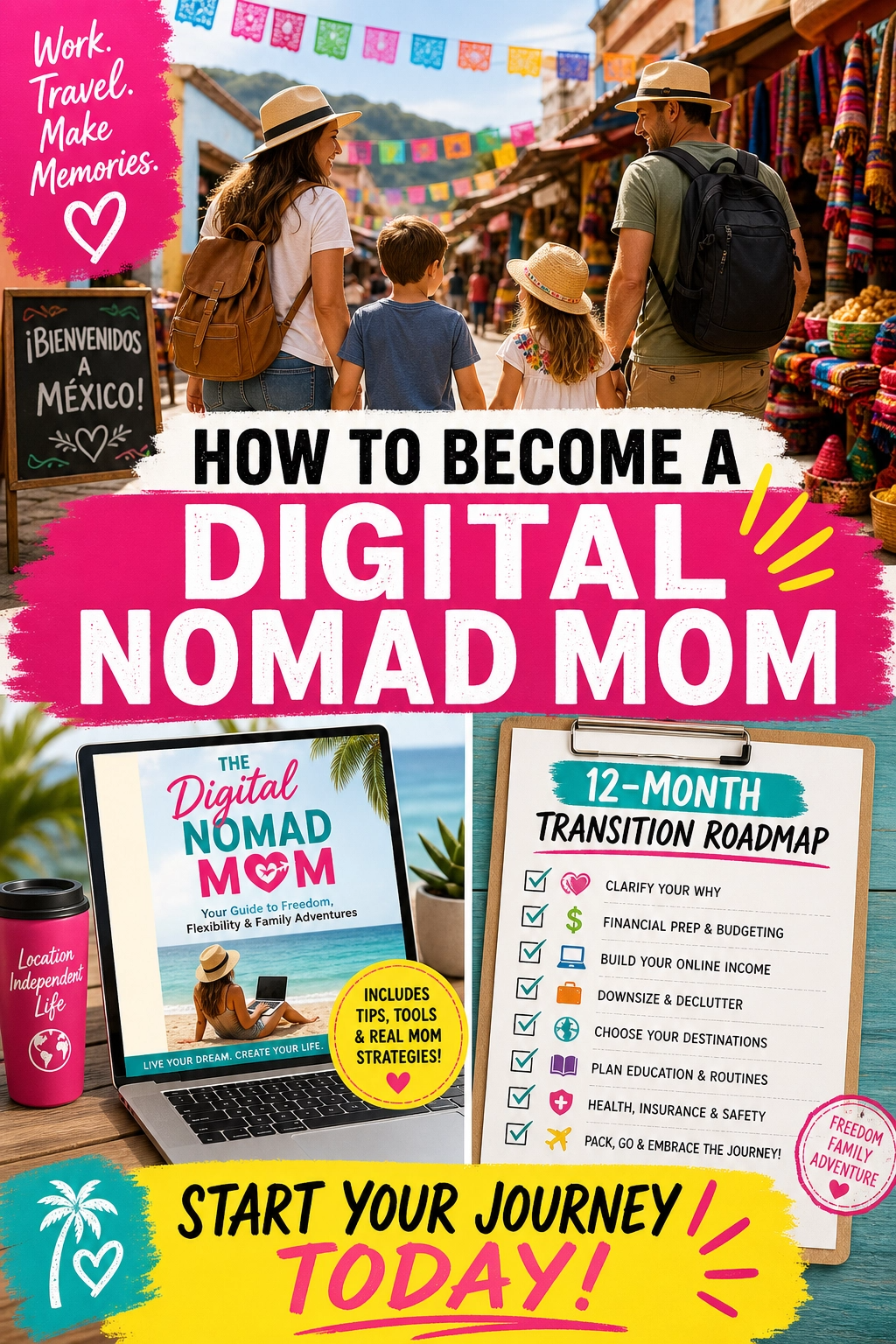
Your First Week in a New Place: A Checklist
Arrival week sets the tone. These steps help your family settle in faster:
- Get oriented. Find the nearest grocery store, pharmacy, playground, and medical clinic in the first 48 hours.
- Test your workspace. Check wifi speed, find a quiet corner, and locate a backup option like a café or coworking space before your first deadline.
- Set up a routine. Even a loose rhythm — breakfast, work block, outing, dinner, bedtime — helps kids feel anchored.
- Keep it slow. Resist the urge to see everything immediately. One outing a day is plenty.
- Learn the basics of the language. A few friendly phrases open doors and make daily errands smoother.
- Save emergency contacts. Local emergency numbers, your embassy or consulate information, and your insurance helpline should live on every adult’s phone.
- Check in on feelings. Ask your kids what they like, miss, and wonder about. Their voices should shape the adventure, too.
The first week is usually the wobbliest. By week two, most families discover their own groove.
FAQ: Digital Nomad Mom Life
Is it safe to travel with kids? It can be, with research, good insurance, and sensible choices about destinations and accommodations.
How much money do I need? It depends on your destination and lifestyle. Build a budget, then add a generous cushion.
What if my child has medical or learning needs? Plan carefully: confirm healthcare access, bring records and medication supplies, and talk with your child’s providers beforehand.
Can single moms do this? Yes, many do. Community support, careful planning, and starting small are especially helpful.

Start With a Test Run
You don’t have to sell the house or book a one-way ticket. Begin with one question: “Where could we work from for two weeks?” Then plan that trip well, learn from it, and adjust.
The nomad life isn’t about escaping your everyday world — it’s about designing one that fits the family you’re raising and the woman you’re becoming.
Save this guide for your daydream folder, and share it with a mom friend who’d love an adventure of her own.
About the Author