Budgeting for Moms: A Simple System That Actually Works
Motherhood comes with a hidden second job: chief financial officer of a tiny, chaotic company. You’re tracking diaper costs, school fees, grocery runs, birthday gifts, doctor visits, and the mysterious $14 charges that appear from nowhere — all while running on four hours of sleep.
No wonder most traditional budgets fall apart by week two.
Here’s the good news: budgeting for moms doesn’t require spreadsheets with 47 tabs or a personality transplant. It requires a simple system that fits real life, forgives mistakes, and focuses on a few moves that matter most. Let’s build one together.
Why Most Budgets Fail (And It’s Not Your Fault)
If you’ve started and abandoned a budget before, you’re in good company. Budgets usually collapse for predictable reasons:
- They’re too rigid. One surprise expense and the whole plan feels ruined.
- They’re built for a life you don’t live. Spreadsheets that ignore irregular costs (car repairs, birthdays, school trips) set you up to fail.
- They feel like punishment. If a budget has no room for joy, you’ll eventually rebel against it.
- They’re too complicated. If it takes an hour a day, it won’t survive the toddler years.
The fix isn’t more discipline. It’s a better design.

Step 1: Get Honest About Where Your Money Goes
Before you can plan, you need to see what’s happening. Pull up the last two or three months of bank and card statements and sort every expense into three buckets:
- Fixed essentials — rent or mortgage, utilities, insurance, minimum debt payments
- Flexible essentials — groceries, gas, kids’ needs, household supplies
- Everything else — dining out, subscriptions, shopping, entertainment
Don’t judge yourself here. This is a data-gathering mission, not a courtroom.
Pro tip: Look for “ghost spending” — subscriptions you forgot, app renewals, and tiny recurring charges. Cancelling just a few can free up meaningful money without changing your lifestyle at all.
Step 2: Choose a Budgeting Method That Fits Your Brain
There’s no single “correct” budget. Pick the one you’ll actually use.
The 50/30/20 Method
A popular starting framework: roughly 50% of take-home pay to needs, 30% to wants, and 20% to savings and debt payoff. Think of it as a starting point, not a law — families with high housing costs may need to adjust the ratios.
Zero-Based Budgeting
Every dollar gets a job, so income minus planned spending equals zero. It’s detailed, but wonderfully clarifying if you love control.
The Envelope (Cash-Stuffing) System
Set a cash amount (or a digital “envelope”) for categories like groceries or fun. When it’s gone, it’s gone. It’s simple and surprisingly satisfying.
“Pay Yourself First”
Automatically move money to savings the day you’re paid, then live on what’s left. This is ideal if detailed tracking drains you.
If you’re a beginner, try 50/30/20 or Pay Yourself First for three months. Simple wins.

Step 3: Build Your Safety Net (Emergency Fund + Sinking Funds)
Here’s what quietly sabotages most family budgets: expenses that aren’t emergencies but aren’t monthly either. Car registration. Back-to-school shopping. Holiday gifts. Vet bills.
Enter two powerful tools:
Your Emergency Fund
This covers true surprises — job loss, medical bills, urgent repairs. A common guideline is saving three to six months of essential expenses, but don’t let that number intimidate you. Start with a small buffer (even one week of expenses) and build from there. Progress counts.
Sinking Funds
These are small, regular savings for predictable irregular costs. Instead of panicking in December, you set aside a little each month. Examples:
- Holiday and birthday gifts
- Car maintenance
- Annual insurance premiums
- Back-to-school costs
- Family vacation
Sinking funds are a mom’s secret weapon because they turn “surprise” expenses into planned ones. No more budget-wrecking shocks.
Step 4: Automate Everything You Can
Willpower is a limited resource, and moms are spending theirs on bedtime negotiations. So let your accounts do the work:
- Automate savings on payday
- Automate bill payments to avoid late fees
- Set calendar reminders for a weekly 15-minute money check-in
- Use separate accounts or sub-accounts for savings goals, so the money isn’t sitting where you’re tempted to spend it
Automation makes the “right” choice the default choice. That’s behavioral design at its best.

Step 5: Reduce Costs Without Feeling Deprived
Cutting expenses doesn’t have to mean cutting joy. Aim for “strategic frugality” — saving where it doesn’t hurt, so you can spend where it counts.
Easy wins:
- Meal plan weekly. Planning meals around what you already have reduces food waste and impulse buys.
- Shop secondhand for kids’ gear. Children outgrow clothes and toys at lightning speed.
- Audit your subscriptions every quarter.
- Compare insurance, phone, and internet plans once a year.
- Use the 48-hour rule for non-essential purchases: wait two days before buying. Many “must-haves” lose their shine.
Remember: a budget that includes a monthly “fun” line item is a budget you’ll actually keep.
What About Increasing Income?
Budgeting gets you control; earning more gives you breathing room. Many moms pair a simple budget with a small side income — freelancing, tutoring, digital products, or selling items they no longer need.
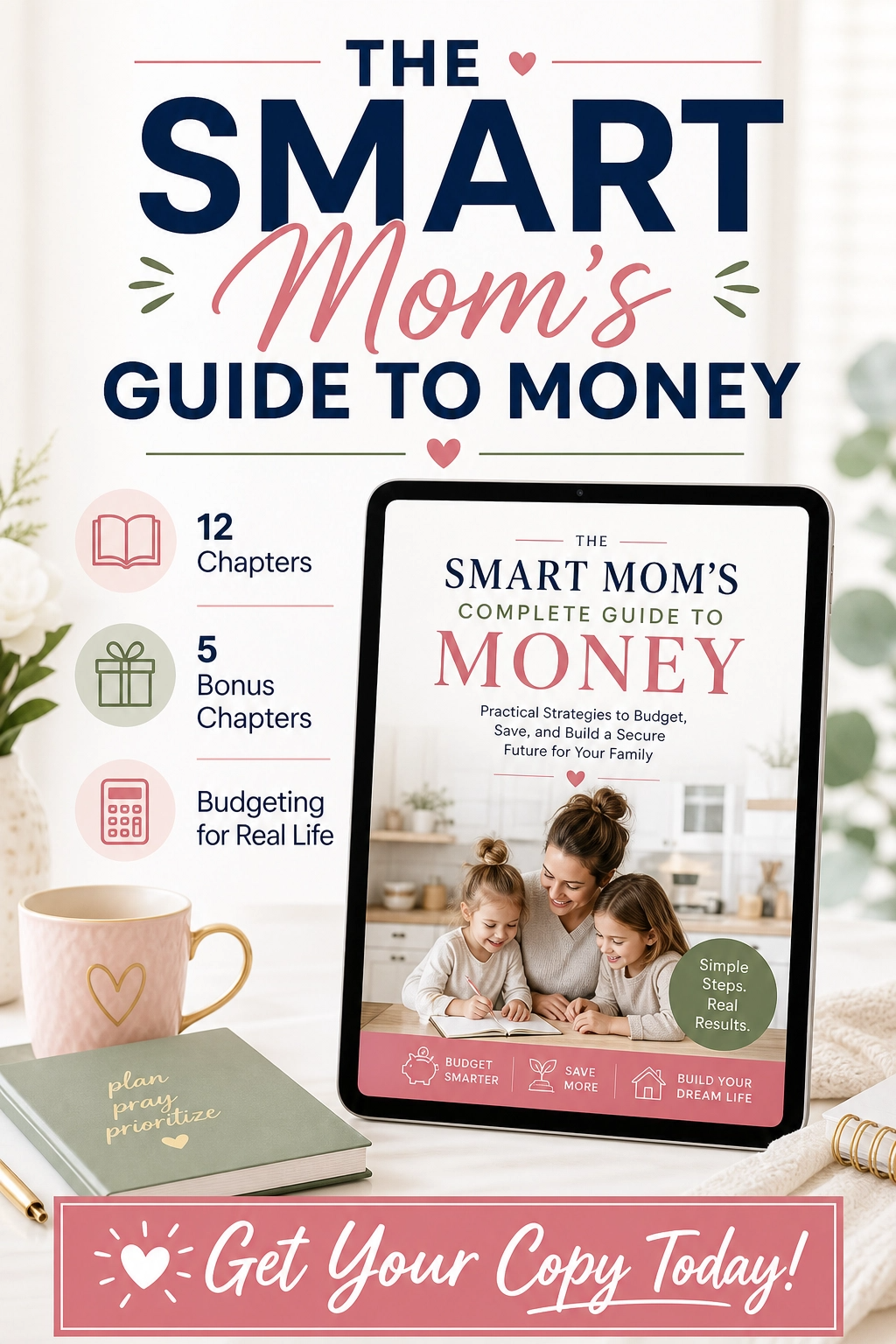
If you want a complete, mom-friendly roadmap that covers budgeting, saving, debt, and building wealth in one place, The Smart Mom’s Complete Guide to Money is built for exactly this season of life. It’s a gentle, practical way to go from “where did it all go?” to a plan you feel good about.
→ Shop it: The Smart Mom’s Complete Guide to Money
And if you’re ready to explore earning from home, you’ll love The Stay-At-Home Mom’s Guide to Making Money Online as a companion read.
A Sample Monthly Money Routine for Busy Moms
Short on time? Here’s a routine that takes under an hour a month:
Weekly (15 minutes):
- Review spending and categorize transactions
- Check upcoming bills
- Adjust your grocery plan for the week
Monthly (30 minutes):
- Compare actual spending to your plan
- Move money into savings and sinking funds
- Pick one small improvement (cancel a subscription, negotiate a bill, adjust a category)
Quarterly (30 minutes):
- Review your goals
- Audit subscriptions and insurance
- Celebrate progress — seriously, it matters
Consistency is more powerful than perfection.
Money Mindset: Be Kind to Yourself
Money stress is emotional, not just mathematical. Many of us absorbed beliefs growing up — that money is scarce, that talking about it is rude, or that we’re “just bad with it.” Those stories aren’t facts.
You’re allowed to learn this at any age. You’re allowed to start small. And you’re allowed to make mistakes without deciding they define you. Every dollar you direct with intention is a vote for the life you want your family to have.

A Sample Family Budget (Illustration Only)
Seeing numbers makes everything clearer. The figures below are purely illustrative — your costs will look different depending on where you live and how your family spends — but they show how the 50/30/20 framework can work in practice.
Imagine a household with $4,000 in monthly take-home pay:
- Needs (50% = $2,000): housing, utilities, groceries, transportation, insurance, and minimum debt payments
- Wants (30% = $1,200): dining out, subscriptions, hobbies, clothing, and family fun
- Savings and debt payoff (20% = $800): emergency fund, sinking funds, retirement, and extra debt payments
Now watch what happens when real life shows up. If housing alone eats 60% of income, the needs category will overflow — and that’s okay. The answer isn’t to quit budgeting; it’s to adjust. Maybe wants shrink to 20% for a few months while you rebuild savings. Maybe you start a small side income to widen the gap.
The takeaway: a budget is a conversation with your money, not a verdict. Revisit it whenever your life changes — a new baby, a new job, a move, a school year starting. The best budget is a living document, and the best budgeter is simply the one who keeps showing up.
FAQ: Budgeting for Moms
How much should a family save each month? There’s no universal number. Many people aim for around 20% of income, but even 1–5% is a worthy start if money is tight.
What’s the best budgeting app? The best one is the one you’ll open consistently. Try a free option or a simple spreadsheet before paying for anything.
Should I pay off debt or save first? Many people build a small starter emergency fund first, then tackle high-interest debt. Your situation is unique, so consider consulting a financial professional for personalized advice.
How do I budget on an irregular income? Base your plan on your lowest typical month, and put extra income toward savings, debt, or sinking funds.

Start Small, Start Today
You don’t need to overhaul your entire financial life this weekend. Pick one step from this guide — track a month of spending, open a sinking fund, automate $20 a week — and do it today.
Small, repeatable money habits are how families build calm. Save this post, share it with a mom friend who’s feeling the pinch, and give yourself credit for showing up.
About the Author