
The 20-Minute Creative Reset: A Simple Ritual for When Your Brain Feels Full
There is a particular kind of tired that sleep does not immediately solve. Your body may be sitting still, but your mind is sorting a work message, replaying a conversation, and remembering the appointment you have to book. Nothing is necessarily wrong. There is simply too much open at once.
That is when a 20 minute creative reset can help. Not as another wellness project to perfect, and not as a test of whether you are secretly an artist. It is a small, bounded ritual that gives your attention one gentle place to land. For 20 minutes, you make marks, shapes, colors, or arrangements without needing the result to be useful.
The point is not to become calm on command. The point is to create a transition between “everything is asking for me” and “I can choose one next thing.” Below is a simple version you can use after work, before a difficult task, or in that late-afternoon stretch when your thoughts feel overfilled.
Why a small creative ritual works better than a grand reset
When your brain feels full, an elaborate plan can feel like one more demand. A two-hour craft project requires supplies, setup, stamina, and cleanup. A 20-minute ritual has a different promise: you can begin before you feel ready, and you can stop before it becomes a commitment.
Creative activity changes the kind of attention you use. Instead of evaluating and anticipating, you are noticing edges, choosing a color, repeating a line, or filling a small space. That sensory focus can make mental noise less dominant for a while. It does not diagnose or treat stress, anxiety, burnout, or any health condition. Think of it as a practical pause, not a substitute for professional support.
The rule that keeps it restorative
Your only success metric is staying with the ritual until the timer ends—or stopping sooner if you genuinely need to. The finished page does not need to be pretty, shareable, or complete. Once the activity becomes a performance, it starts to resemble the productivity pressure you were trying to leave.

Set up a reset you can start in under two minutes
A useful ritual is visible and simple. Keep a small kit where you are likely to need it: a coloring page or scrap paper, a few pencils or markers, and a timer. A tray or zip pouch keeps supplies from becoming another visual project.
Choose a seat with enough light to see your page. Put your phone on Do Not Disturb, but keep it available if you are responsible for someone or an urgent issue. You do not need a special playlist, candle, desk, or “creative” room. The less staging required, the more likely you are to use the practice on an ordinary Tuesday.
Make a three-choice supply rule
Too many options can keep an overloaded mind in decision mode. Before you begin, choose only three colors, one drawing tool, and one surface. If you are coloring, pick the page first and set the rest aside. You can change your mind once, but not every minute.
The aim is to remove the tiny decisions that make starting feel surprisingly difficult.
The 20-minute creative reset, minute by minute
Use the sequence once, then adjust it. The structure is modest: arrive, make, notice, close.
Minutes 0–2: Mark the transition
Set the timer for 20 minutes. Before touching the page, write one sentence on a separate scrap of paper: “I am carrying…” and finish it with a few words. You might write “three unanswered messages and a noisy afternoon” or “the urge to solve tomorrow tonight.” Do not explain the situation or turn it into a journal entry.
Put the note face down. It is a parking place for the thought, not a problem to solve. Notice three physical details: the tool in your hand, the room’s temperature, and the color in front of you. You are telling your attention where to look next.
Minutes 2–12: Repeat one uncomplicated action
Choose a low-stakes action and repeat it. Fill one shape. Draw parallel lines. Make small loops along a border. Shade from light to dark. Add dots to a blank area. If you are using a coloring page, begin with the largest shape or the one that looks most welcoming.
When a thought interrupts, do not argue with it. Silently label it “later,” then return to the next mark. The return is the practice, even if it happens 30 times in 10 minutes.
Keep your hand moving at an almost-boring pace. If a color choice feels high stakes, choose the nearest pencil and continue.
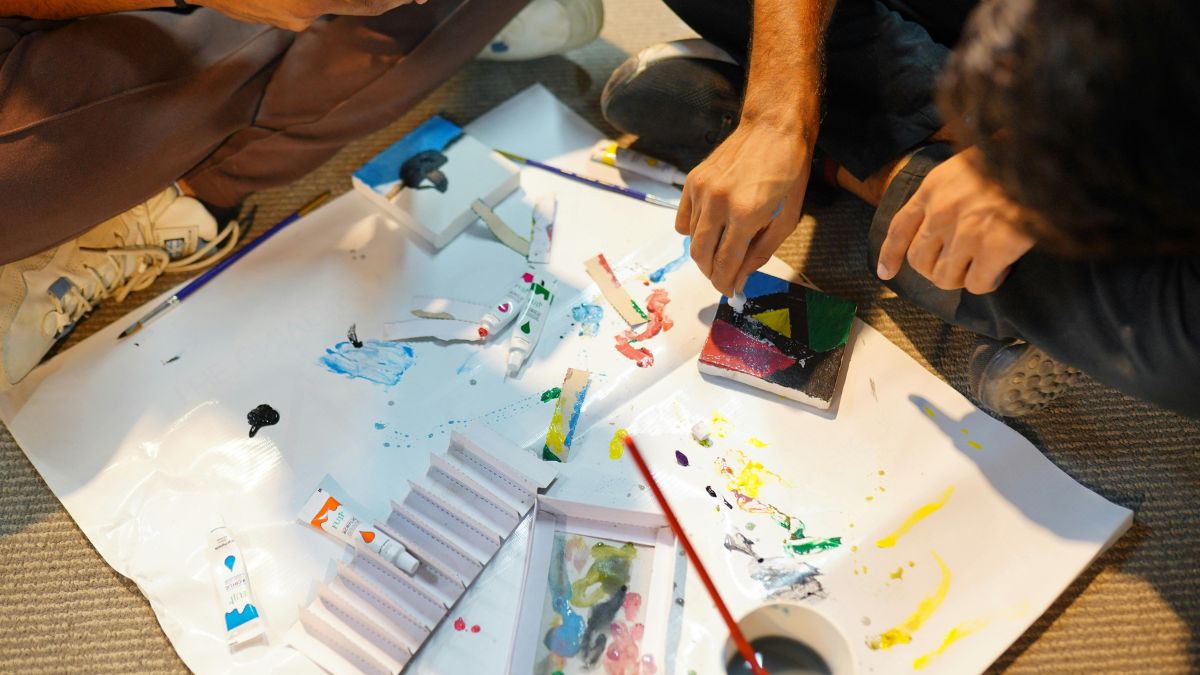
Minutes 12–17: Add one intentional detail
Now make the page more personal. Add one contrast, small pattern, unexpected color, or detail that would not appear if you were seeking the “correct” choice. Try “Make one corner brighter,” “Use a color I avoid,” or “Add something that feels like evening.”
A narrow prompt gives creativity a handle. “Be creative” can sound like an exam question when you are already depleted.
Minutes 17–20: Close without evaluating
When three minutes remain, finish the section you are in rather than racing to complete the page. At the end, name one neutral observation: “There are three shades in the leaves,” or “I stayed with the same shape for a while.”
Do not grade the work or expect a sudden mood transformation. Ask, “What feels one notch more available now?” It might be an email, a shower, or five more quiet minutes.
Pick prompts that lower the pressure to perform
A prompt should make beginning easier, not demand an original concept. Keep a short list inside your coloring book so you are not searching for inspiration while overwhelmed.
Prompts for a crowded workday
Try “three colors for the kind of afternoon I want,” “a pattern that matches my current energy,” or “fill the page from orderly to playful.” These give shape to the transition out of work without asking you to analyze every feeling.
Between meetings, use a single shape and color. A five-minute version can separate one role from the next.
Prompts for emotional static
Try “make a border for the thought I keep revisiting,” “choose colors that feel steady,” or “draw the weather inside my head, then add one clear patch.” The language is expressive without requiring a polished interpretation.
If a prompt makes you feel activated, drop it and choose a repeating pattern. The ritual should offer room, not force you into a feeling you are not ready to examine.
Prompts for an evening reset
Try “use only the colors already on the table,” “make the smallest section the most detailed,” or “create a quiet-looking corner.” These work well when you want to unwind without starting another screen-based activity.
Use coloring pages as a ready-made doorway
A blank page is liberating when you have energy and oddly intimidating when you do not. A pre-drawn page removes the pressure to invent a subject, compose a scene, or decide when the work is finished. You can simply enter through one shape and let the next choice follow.
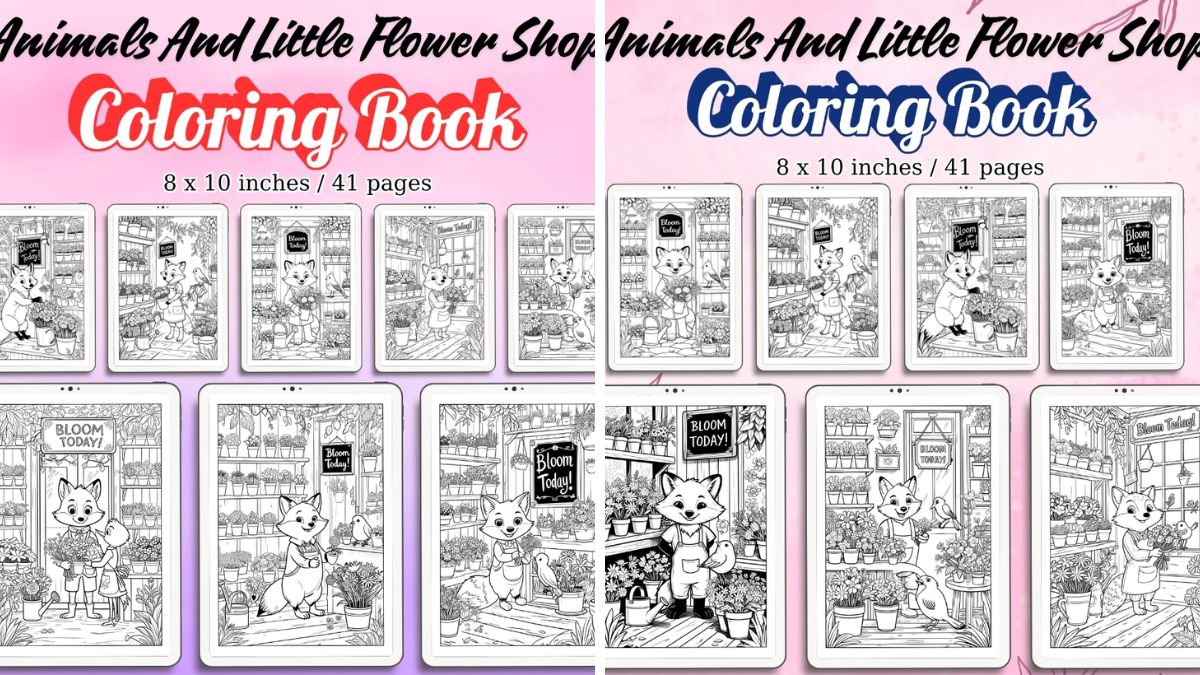
For a home-friendly option, see Animals And Little Flower Shop Coloring Pages / Sheets of Animals And Little Flower Shop Coloring Book. The linked listing presents it as a coloring-pages product with animal and little flower shop imagery. Review the listing for current details before purchasing.
This is a practical starting point, not a transformation promise. A coloring page cannot fix an overloaded schedule or guarantee an emotional result. If buying for a child, supervise according to age, materials, and household safety needs; coloring is not developmental treatment or professional guidance.
Make the ritual fit real life
The best reset is not the one that looks beautiful on a social feed. It is the one you can repeat when your kitchen is untidy, your inbox is waiting, or you only have a corner of the table available.
After work: create a clean handoff
Keep supplies near the place where you put down your bag or keys. Change clothes, pour water, and start the timer before opening personal messages. The sequence gives your workday a deliberate ending.
Before a demanding task: warm up attention
Use the reset before writing, studying, planning, or making a difficult call. End by writing one next action on the back of your parking note: “Open the document and draft the first heading,” not “sort out the project.”
In a shared home: make the boundary visible
Tell the people around you, “I am taking 20 minutes to do something quiet, then I will be available.” If that is not possible, place the page on a tray as a visual signal. A reset does not require a perfectly silent house.
When 20 minutes is not available
Use the same four phases in miniature: one sentence, one repeated action, one detail, and one neutral observation. Even three minutes can become a transition if you treat it as complete.

Common mistakes that make a reset feel like work
Choosing a project that is too ambitious
A detailed illustration or page you want to frame may invite perfectionism. Begin with something you can leave unfinished without regret.
Turning the timer into a productivity test
Measuring page completion turns a sensory practice into a race. The timer marks a container, not a quota; slow coloring and pauses count.
Reaching for a phone between every decision
Searching for color palettes or “relaxing” videos can replace the reset with more input. Choose any prompt before the timer starts.
Expecting an instant mood makeover
A creative pause may leave you calmer, unchanged, or briefly aware of feelings you had been outrunning. None of those responses means you did it incorrectly. If creative activities consistently bring up distress, stop and consider talking with a qualified mental-health professional.
Frequently asked questions
Is a 20 minute creative reset the same as meditation?
No. Meditation varies, but often involves observing attention, sensations, or thoughts. This ritual keeps attention on making. It may suit people who find stillness frustrating, but it is not a replacement for meditation or clinical care.
What should I do if I am not artistic?
Choose an action that does not depend on drawing skill: color one shape, make stripes, add dots, or repeat a mark. Artistic ability is not the goal.
Can I do the reset with my children?
Yes, if it suits their age and your available time. Offer safe material choices, let each person work differently, and keep participation optional. Do not promise developmental or behavioral outcomes.
Give your next 20 minutes somewhere to land
The next time your brain feels full, do not wait for a perfectly calm day or a burst of inspiration. Put a page on the table, choose three colors, and set a timer. Start with one shape. Let the ritual be small enough to trust and ordinary enough to repeat.
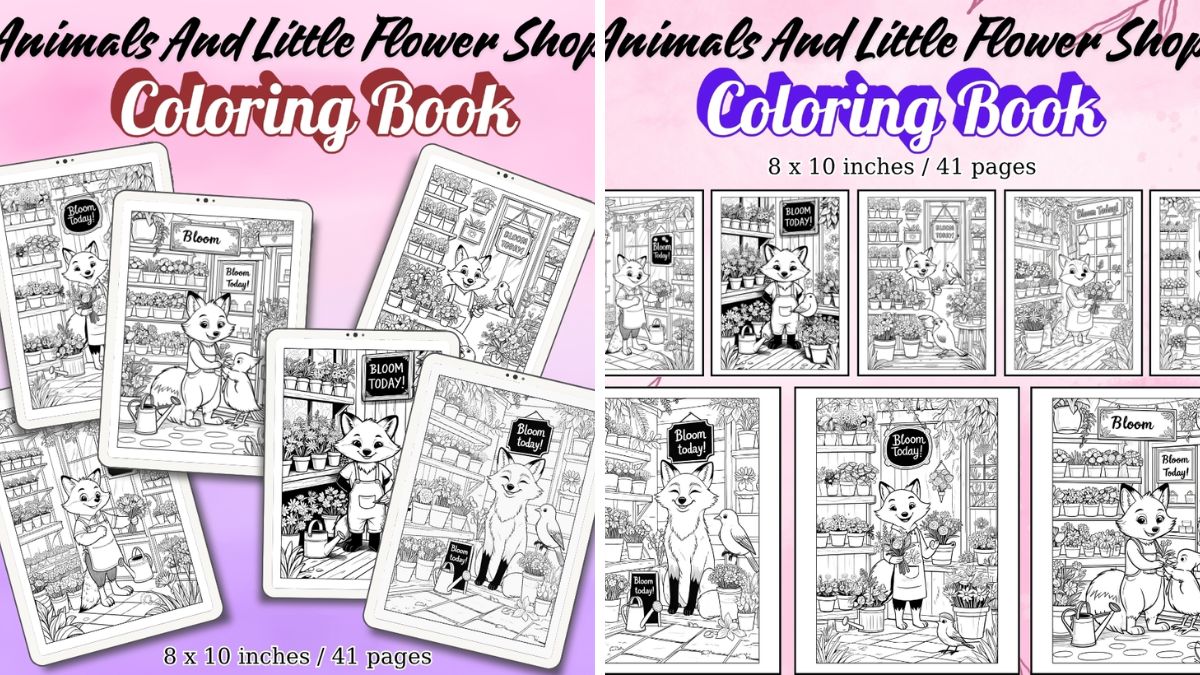
Save this guide for the next crowded afternoon, or explore the Animals And Little Flower Shop Coloring Pages / Sheets of Animals And Little Flower Shop Coloring Book as a ready-made starting point. Twenty minutes will not solve everything. It can, however, give the next thing you do a little more space.
About the Author