
Your First AI Offer: Turn One Skill Into a Paid Service Without Coding
There is a particular kind of pressure around starting an AI business. Every week brings another tool and pressure to build an automation agency. If you are good at writing, organizing, teaching, designing, selling, or making people feel understood, that noise can make your experience feel irrelevant.
It is not irrelevant. It is the starting point.
The most approachable way to learn how to start an AI service business is to take one skill you already use and pair it with AI to create a specific result for a specific person. You are not selling “AI.” You are selling a clearer newsletter, a more organized knowledge base, a week of social content, a polished customer FAQ, or a faster way to turn rough notes into useful documents.
That shift matters because clients rarely want another dashboard to learn. They want a problem handled.
Start with the skill you can already prove
Before you choose a tool, make a list of tasks people already trust you to do. A former teacher may be excellent at explaining complicated ideas. A community manager may know how to turn scattered conversations into themes. A beauty professional may be especially good at making personalized recommendations. A parent who coordinates a busy household may have quietly developed formidable systems skills.

Look for evidence, not fantasy. Ask yourself:
- What do people ask me to fix, write, plan, summarize, or simplify?
- Which task can I repeat without resenting it?
- What result have I created at work, for a friend, or in my own life?
- Where do I notice mistakes or inefficiencies that other people overlook?
Your first AI service should sit close to that evidence. If you are a strong writer, a content-repurposing service may feel natural. If you are highly organized, you could help a small business turn a messy folder of information into a searchable set of standard operating procedures. If you are visually minded, you might create a simple brand-content workflow using existing design tools and AI-assisted drafts.
Turn one skill into one clear outcome
A skill is not an offer yet. An offer tells a client what changes after they pay you.
Compare these two descriptions:
“I use AI to help businesses with content.”
“I turn one long interview, webinar, or voice note into a week of ready-to-review LinkedIn posts and email ideas for small service businesses.”
The second version names the input, transformation, and likely customer. You are not promising that a machine will magically create perfect work. You are promising a defined process and a useful deliverable.
Use this simple offer formula:
I help [specific customer] turn [raw material or recurring problem] into [specific result] within [reasonable timeframe], with [clear human review or support].
For example, “I help independent coaches turn recorded calls into a reviewed monthly content bank within seven days, so they can publish consistently without starting from a blank page.”
Keep the first version narrow. A small offer is easier to explain, price, deliver, and improve. It also protects you from the exhausting trap of promising every possible AI service at once.
Make the boundaries part of the value
Write down what is included and what is not. A starter content offer might include one source file, ten draft posts, two revision rounds, and a short handoff document. It might not include posting, brand photography, strategy consulting, or unlimited edits.
Boundaries are not cold. They are how a client knows what they are buying and how you prevent a “quick favor” from becoming an unplanned second job.
Build a no-code workflow before you sell it
You can create an AI freelancing workflow without coding. The essential pieces are usually an intake form, a place to collect source material, an AI tool for first-pass assistance, a document or design tool for editing, and a simple delivery method. Brand names matter less than sequence.

A dependable workflow might look like this:
- Intake:Ask about the client’s audience, voice, goal, examples, deadlines, and approvals.
- Preparation:Clean and label the source material. Remove private information that does not need to be processed.
- First pass:Use AI to sort, summarize, outline, or generate options.
- Human edit:Check facts, tone, repetition, accessibility, and fit for the client’s audience.
- Review:Send a clearly labeled draft and ask focused questions instead of “What do you think?”
- Handoff:Deliver final files, explain how to use them, and note any decisions the client should make.
This is where your value becomes visible. The tool may accelerate a portion of the work, but you are designing the brief, choosing the right inputs, recognizing weak output, and taking responsibility for a professional result.
For privacy, do not paste confidential client data into a tool unless you understand its settings and have permission. Do not use AI to make high-stakes medical, legal, employment, or financial decisions for a client. This article is business education, not legal, financial, or professional advice; check the rules that apply to your location and industry.
Test the workflow on your own material
Run the service from beginning to end using an old project, a mock business, or your own notes. Track the minutes spent on intake, preparation, editing, revisions, and delivery. The test will reveal whether the offer is genuinely efficient or simply sounds efficient in a sales post.
Find your first clients through conversations
You do not need a large audience; you need people who recognize the problem you solve.
Start with warm, relevant conversations. Contact former colleagues, professional peers, local businesses, community members, or people whose work you already follow. Lead with curiosity and a concrete observation.
You might write:
“I noticed you publish thoughtful workshops but rarely have time to turn them into follow-up content. I am testing a small service that transforms one recording into a reviewed set of posts and email ideas. Would it be useful if I showed you a sample based on a public workshop?”
That message is specific without pretending you know the person’s entire business. It invites a conversation rather than forcing a pitch.
You can also create a small demonstration. Choose a public piece of content, make a short before-and-after sample, and label it clearly as a sample. Explain the decisions you made during review.
A pilot needs a fixed scope, deadline, and price or agreement. “Pilot” should not mean “free until you are exhausted.” A complimentary sample should be tiny and limited.
Price the result, not the novelty of the tool
Pricing can feel uncomfortable when you finish faster than expected. Faster delivery is not a reason to make your judgment free. Clients pay for the outcome, process, reliability, and time saved.
For a first offer, choose one of three straightforward pricing structures:
- Fixed project:Best when the inputs and deliverables are predictable.
- Package:Best when you can repeat a set of deliverables each month.
- Hourly or day rate:Useful for exploratory work, strategy sessions, or projects whose scope is genuinely unclear.
Begin with a price that covers your real labor, including onboarding, editing, communication, payment fees, and revisions. If the number feels too high, reduce the scope before you automatically reduce the price. A smaller package is usually healthier than an unlimited promise at a low rate.
Your proposal can be simple: the client’s goal, deliverables, timeline, revisions, price, payment schedule, and next step. Put assumptions in writing.

A practical first-offer checklist
Before you invite someone to buy, confirm that you can answer “yes” to most of these questions:
- Can I describe the customer in one sentence?
- Does the offer solve one recurring problem?
- Are the inputs, outputs, timeline, and revisions written down?
- Have I tested the process on a realistic example?
- Can I show a sample without exposing private information?
- Do I have a way to collect feedback and approval?
- Have I set a minimum price that respects the full work involved?
If several answers are “no,” refine the offer before adding more tools.
Deliver well, then improve one variable at a time
Your first client is not only a sale. It is a research opportunity, when you treat the person with respect. Notice where they hesitate, which part of the deliverable they value, what they ask you to explain, and where revisions tend to cluster.
Ask for useful feedback after delivery. “Which part saved you the most time?” is more informative than “Did you like it?” Ask whether the scope felt clear and whether the handoff made the work easy to use. Record the answers.
Then improve one variable: the intake form, editing checklist, package name, or client profile. Do not rebuild the entire business after every comment.
As demand becomes clearer, you can add a second package, a recurring option, or a related service. First make one result dependable, then expand.
Common mistakes to avoid
Selling the tool instead of the transformation. Clients do not need to understand every model or workflow step. They need to understand what they will receive and why it helps.
Making the offer too broad. “Anything AI-related” sounds flexible but creates confusion, scope creep, and weak referrals.
Skipping the human review. Unchecked output can contain errors, tired language, invented details, or a tone that does not belong to the client. Review is not optional when your name is on the work.
Underpricing to prove you are serious. A bargain can attract people who want unlimited access rather than a defined service. Start with a manageable scope and a fair price.
Collecting tools instead of practice. You can begin with a small, familiar stack. More subscriptions will not replace a strong brief or careful editing.
Ignoring consent and confidentiality. Ask before using client material for examples, and remove sensitive details from demonstrations. Trust is an asset you cannot automate.
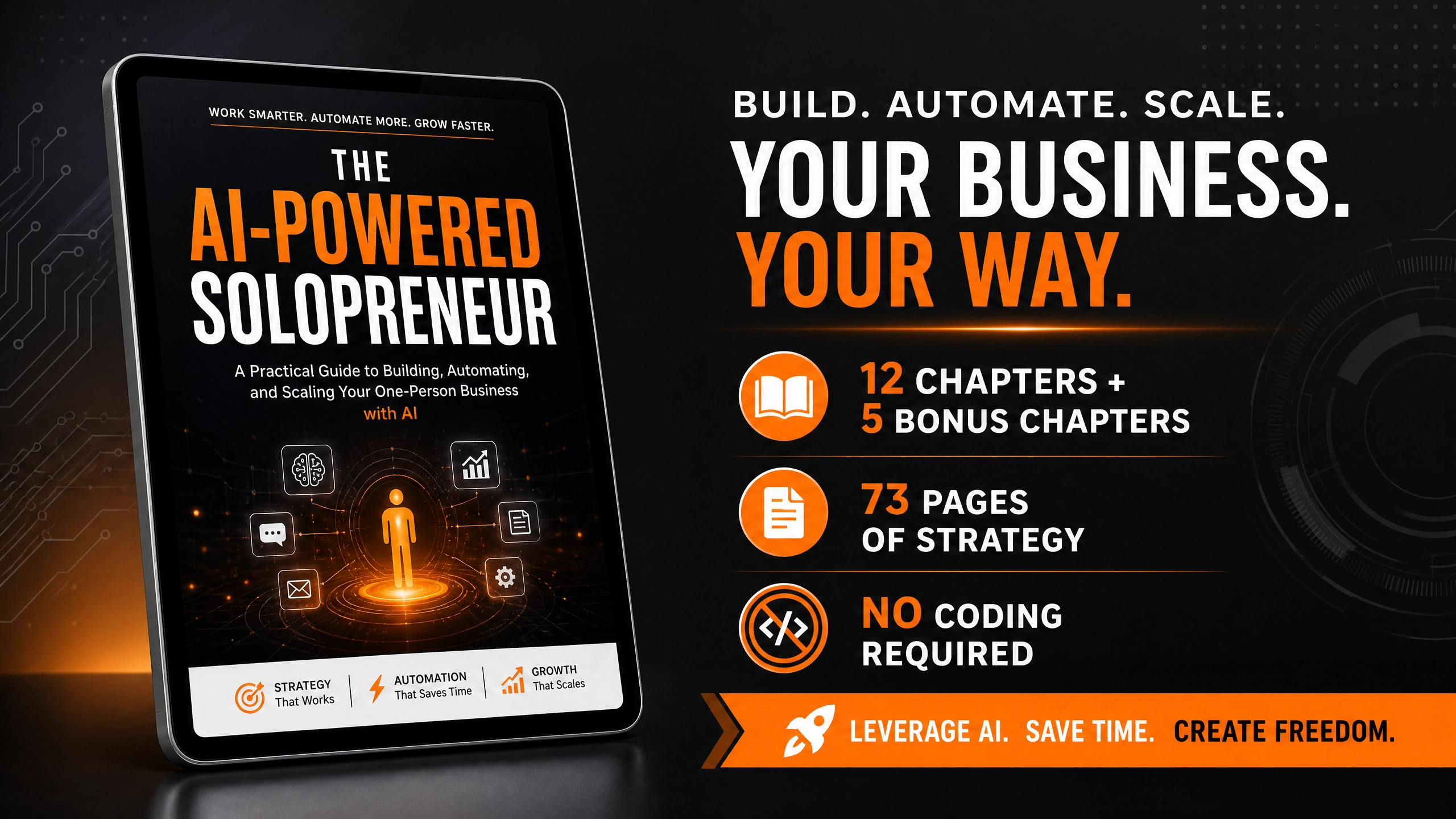
If you want a clearly titled resource to keep beside your planning notes, you can also explore The AI-Powered Solopreneur. Read the page for its current description and decide whether it fits the stage you are in; it should complement your own testing, not replace conversations with real clients.
FAQ: Starting an AI service business
Do I need to know how to code?
No. Many beginner-friendly AI services use no-code tools and depend more on your subject knowledge, editing, organization, communication, and quality control. Coding can become useful later, but it is not a requirement for a focused first offer.
What is the easiest AI service to sell?
There is no universal easiest service. The strongest starting point is usually a repeatable task you already understand, such as content repurposing, research organization, inbox or knowledge-base cleanup, or document drafting. Choose the problem you can explain and check well.
How do I know when my offer is ready?
It is ready for a small pilot when you can state who it helps, what you deliver, how long it takes, what it costs, and what the client must provide. You do not need a perfect website. You do need a process you can follow and boundaries you can honor.
Your next step: make it small enough to start
This week, choose one skill, one customer, and one outcome. Write the offer sentence. Create one sample. Test the workflow on your own material. Then have three honest conversations with people who might recognize the problem.
That is a real beginning. You are not promising to build the next big technology company, and you do not need to pretend that AI can replace your judgment. You are creating a useful service around work you already know how to do, with better leverage and clearer boundaries.
If the conversations reveal a genuine need, invite one person into a paid, fixed-scope pilot. Deliver carefully, learn what worked, and improve from evidence. The most sustainable no-code AI business is rarely the loudest one. It is the one that makes a client’s day easier and gives you a service you can confidently stand behind.
About the Author