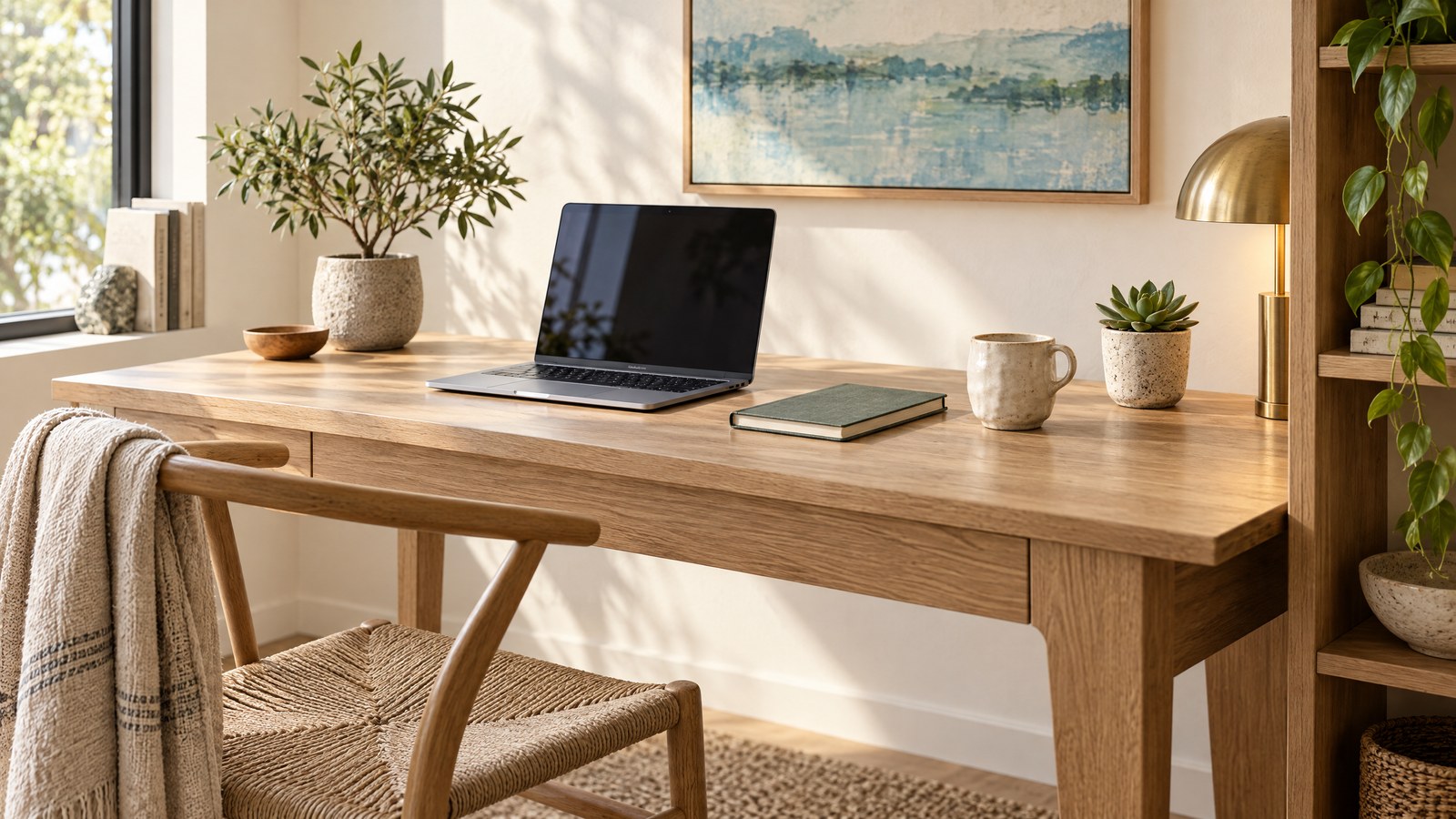
A Warm Minimalist Desk Setup: Keep the Surface Clear, Not Your Personality
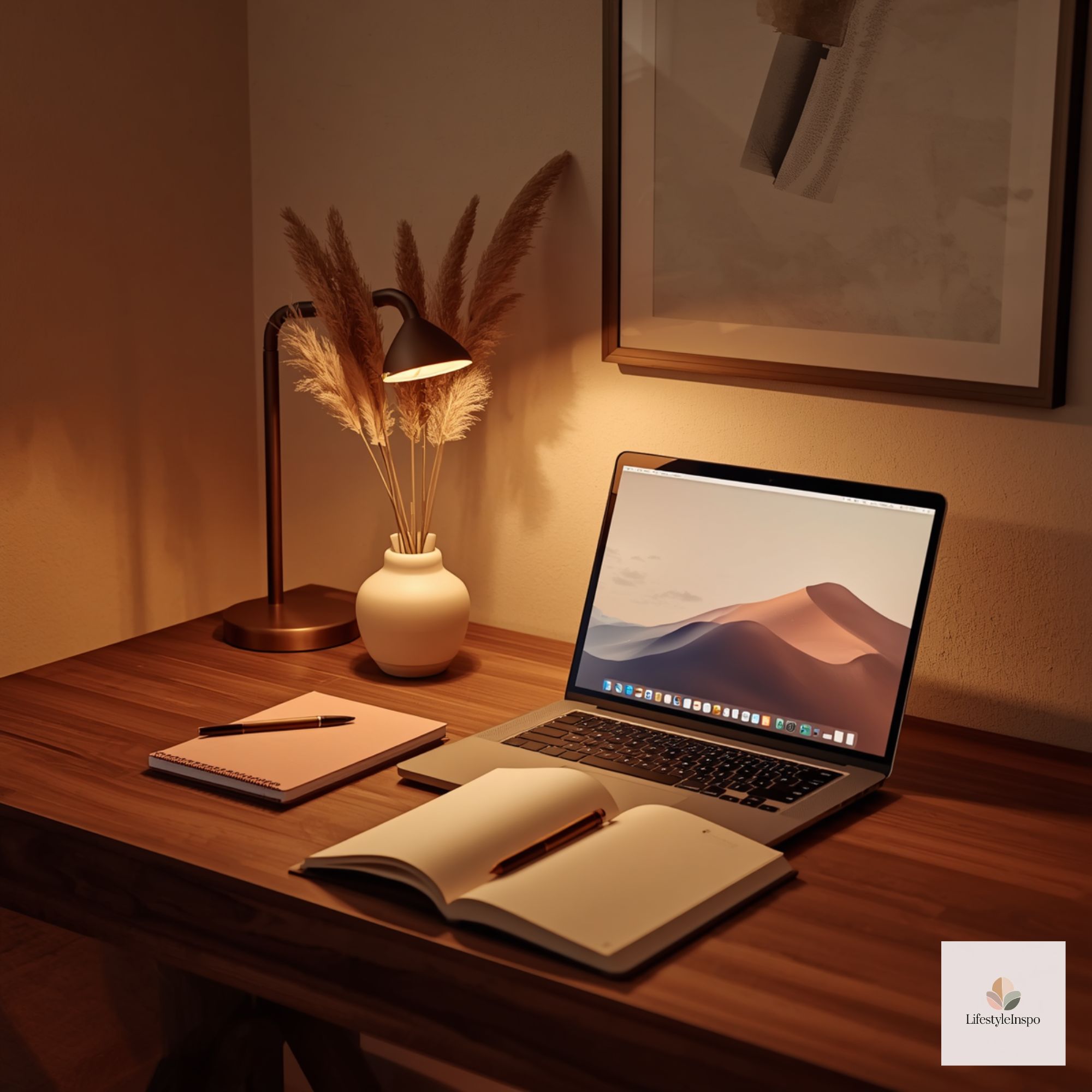
Minimalist desk setup doesn’t have to mean stark, hospital-white surfaces or empty shelves. A warm minimalist desk setup trims the visual clutter while keeping what matters close and tactile. The goal is a surface that feels calm and intentional—where objects have homes, materials are layered for comfort, and a single meaningful accent anchors the space. Below are practical steps, styling ideas, and examples to help you create a clear yet characterful workspace that supports daily use.
Why this matters: you’ll spend time at this desk. Prioritizing function while inviting warmth keeps the area sustainable—both for your routine and your sense of well-being.
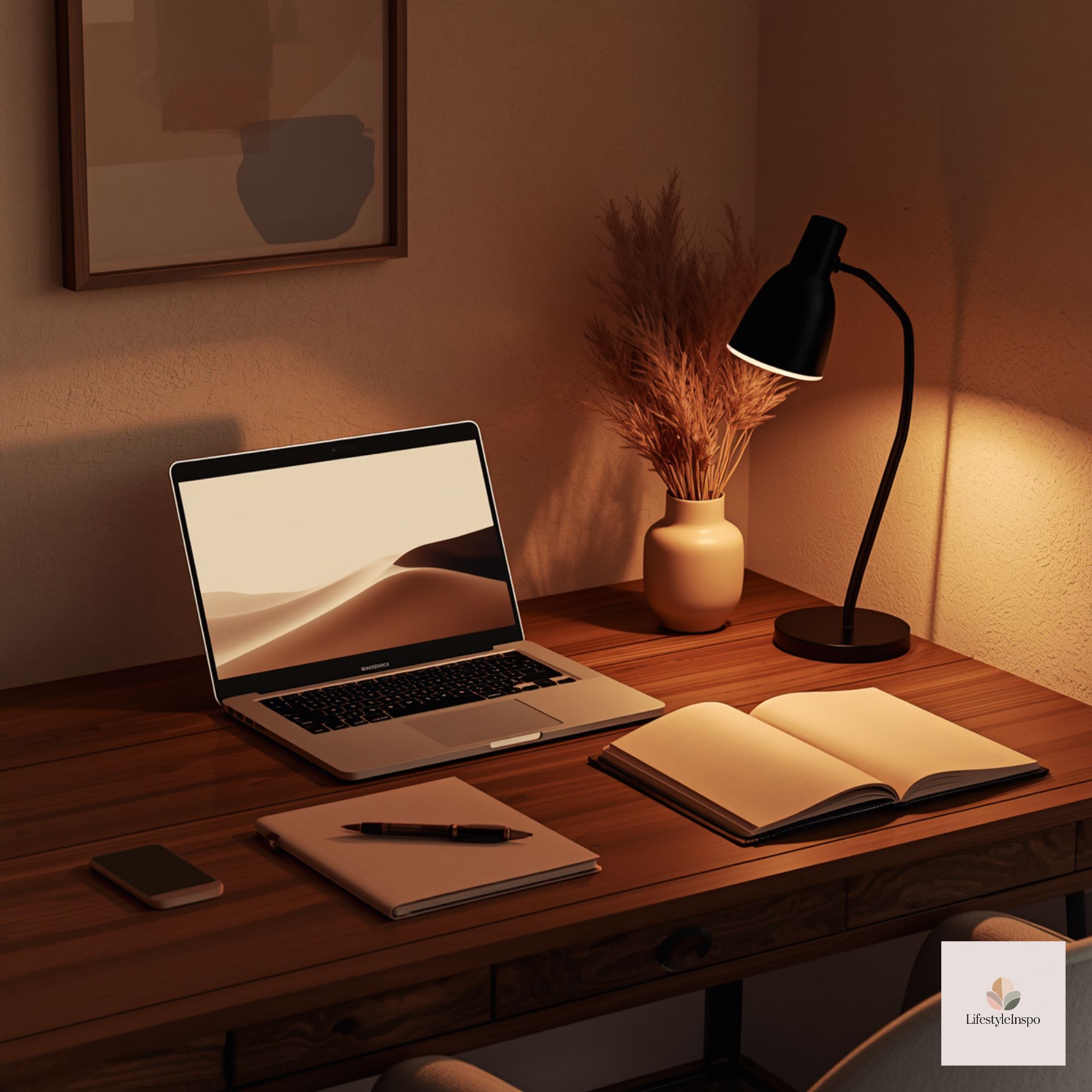
Start by editing your desk by use, not by fear
The first edit is practical: remove items that don’t support how you actually work.
- Make three piles: Daily, Weekly, and Rare. Daily items stay on or very close to the desk. Weekly items go to a nearby drawer or basket. Rare items get archived elsewhere.
- Limit daily items to essentials: device(s), notebook, one pen you love, and whatever tool you reach for multiple times a day. If you’re a frequent paper person, give paper a specific tray; otherwise, move it off-surface.
- Consider a “one-in, one-out” rule for décor: when you bring a new decorative object in, remove another so the desk doesn’t accumulate visual noise.
Editing by use shrinks the amount of stuff to manage while ensuring your desk remains useful. This is how minimalism becomes a warm, lived practice—not an aesthetic you can’t maintain.
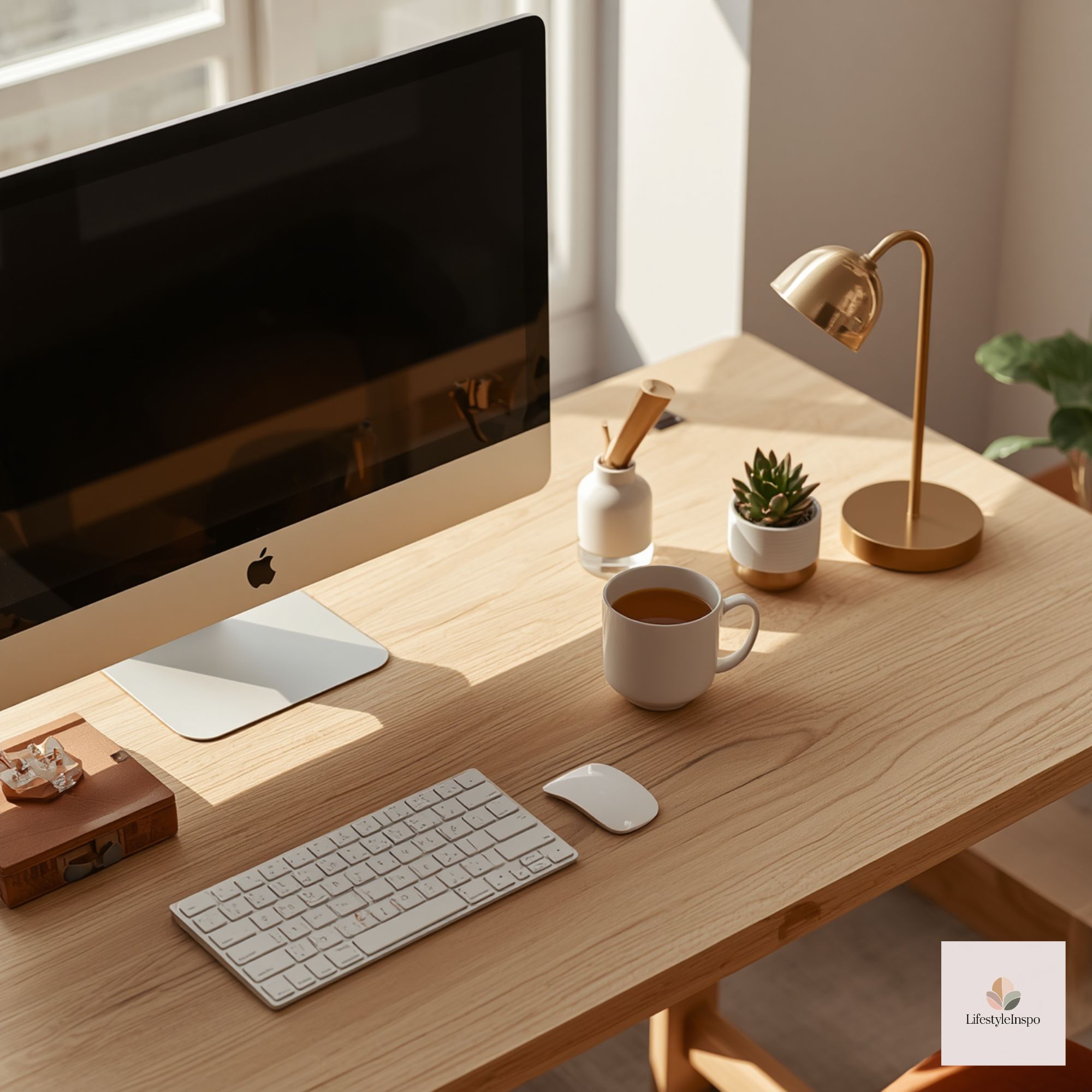
Give everyday objects clear homes
Minimalism thrives on order. Instead of hiding everything away, give everyday objects a designated, attractive place so the surface looks thoughtful, not empty.
- Use a shallow tray for loose items: keys, glasses, sticky notes, or a small hard drive. A warm wooden or leather tray reads softer than metal.
- Keep pens and tools in a short ceramic cup or a low-profile desktop organizer. A tall container can feel like a column; opt for squat shapes that keep sightlines open.
- Mount or tuck frequently used tech: a vertical monitor stand, a compact laptop riser, or a docking station. Cord channels and short braided cables prevent messy tangles.
The idea: each item has a visual home. That home can be visible (a tray) or partially hidden (a narrow drawer). When everything has a place, the desk remains usable and calm.
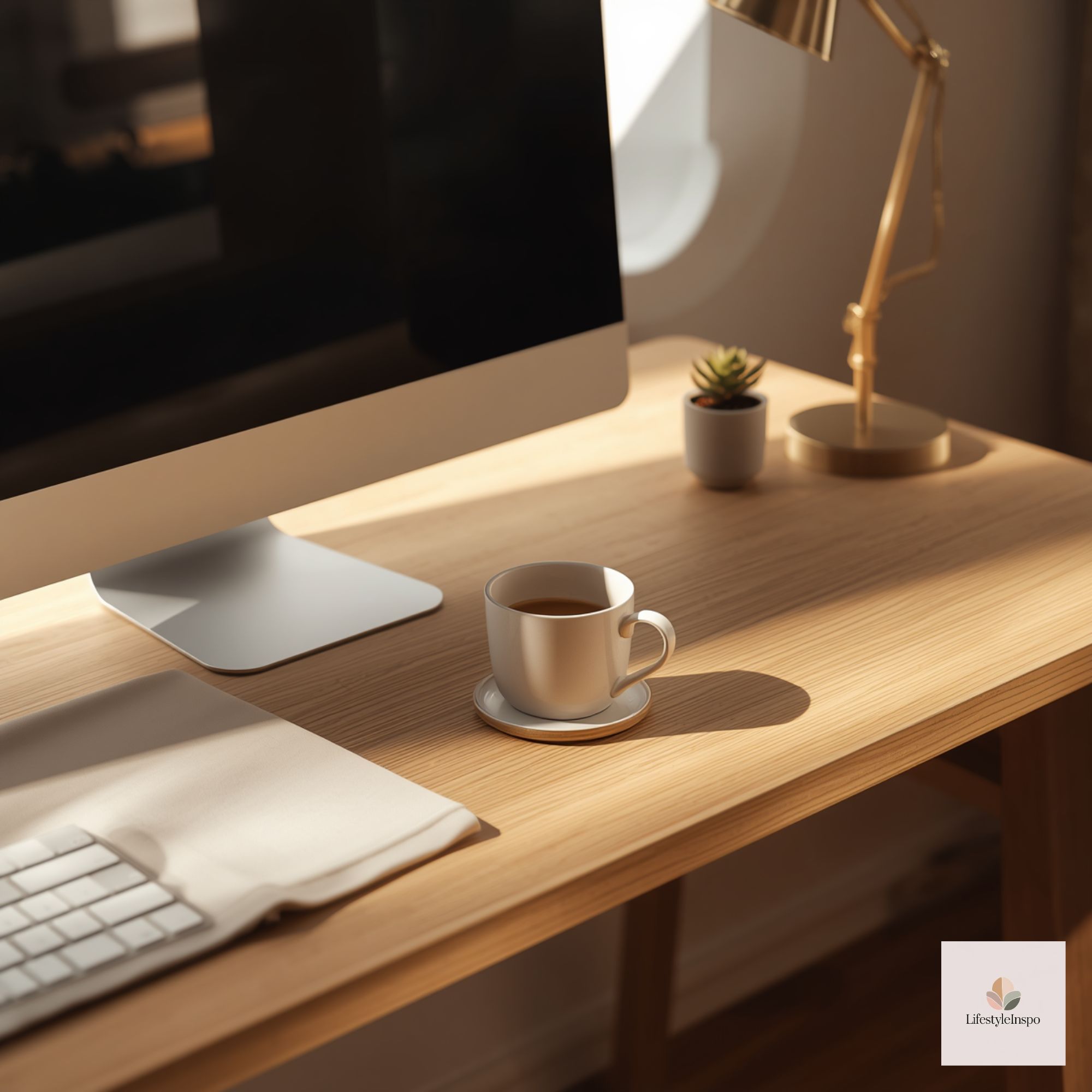
Layer materials and textures for warmth
Warm minimalism relies on tactile contrast. Layering materials—wood, woven fibers, matte ceramics, and soft textiles—adds depth without clutter.

- Desk surface: if your desk is laminate or metal, add a slim wooden desktop panel or a textured desk pad in leather or wool blend. This instantly warms the visual field and is comfortable under your forearms.
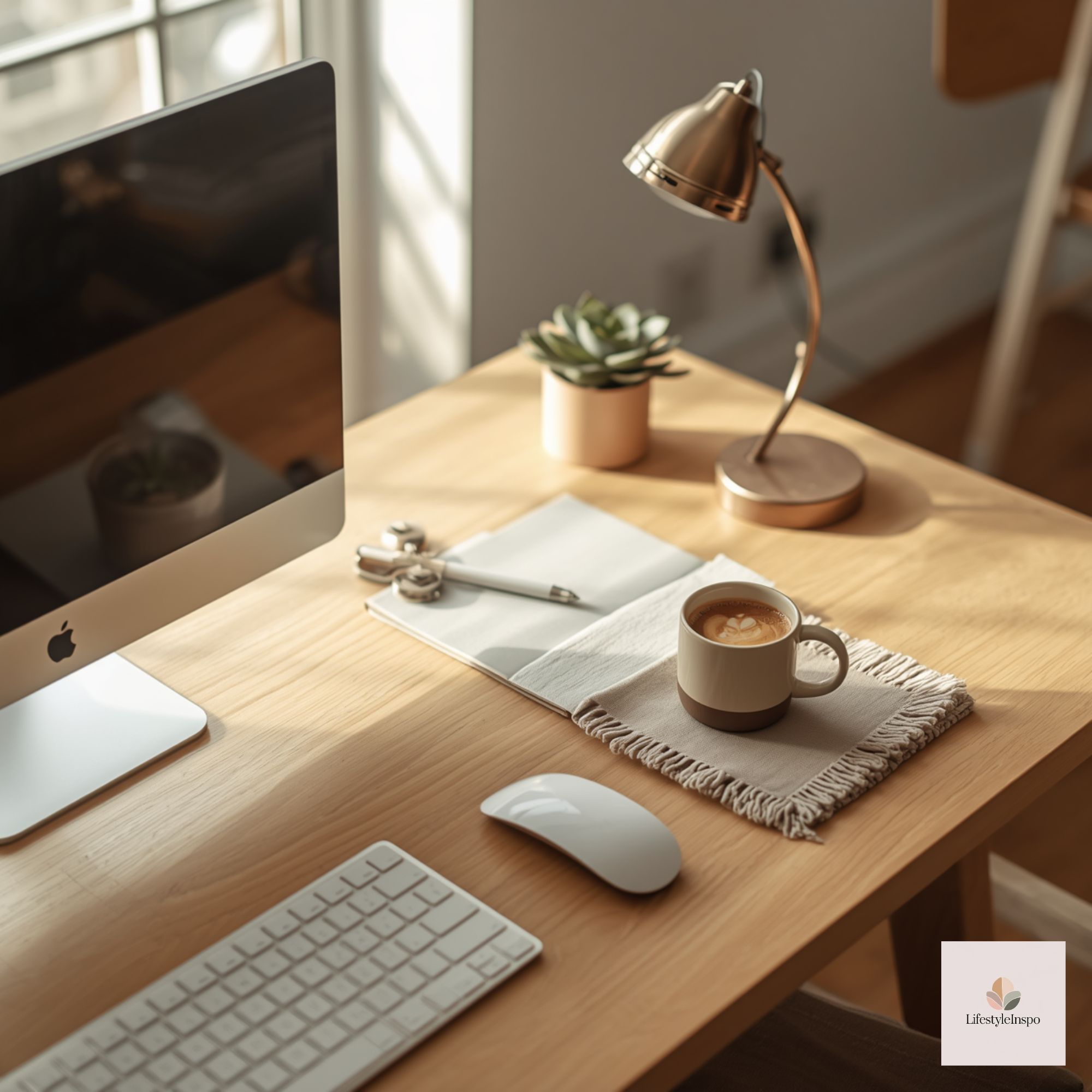
- Soft touchpoint: place a small woven coaster or felt pad for your mug. It functions and brings a cozy note.
- Functional decor: a cork or fabric pin board behind the monitor provides texture and is genuinely useful for quick notes, receipts, or inspirational swatches.

- Plant life in small doses: a low-sill planter or a tiny potted succulent adds life. If you want a visual without a live plant, consider using digital clip-art on an inexpensive stand. For instance, a downloadable, high-resolution print such as these Blue Green Watercolor Backgrounds can be used as a color study or desk-screen wallpaper to add soft, organic color without creating more physical objects; review the seller’s usage terms before reproducing files. Similarly, a whimsical digital image like this Cartoon clipart style graphic of aesthetically pleasing succulents might inspire color choices or be printed under the correct license for a small desk card—again, check usage rights first.
Layering should be subtle: two to three textures are sufficient to keep things warm and cohesive.
Blue Green Watercolor Backgrounds | Digital Paper Clip Art for Teachers & Students (PNG)
Cartoon clipart style graphic of aesthetically pleasing succulents
Choose one meaningful accent and keep it intentional
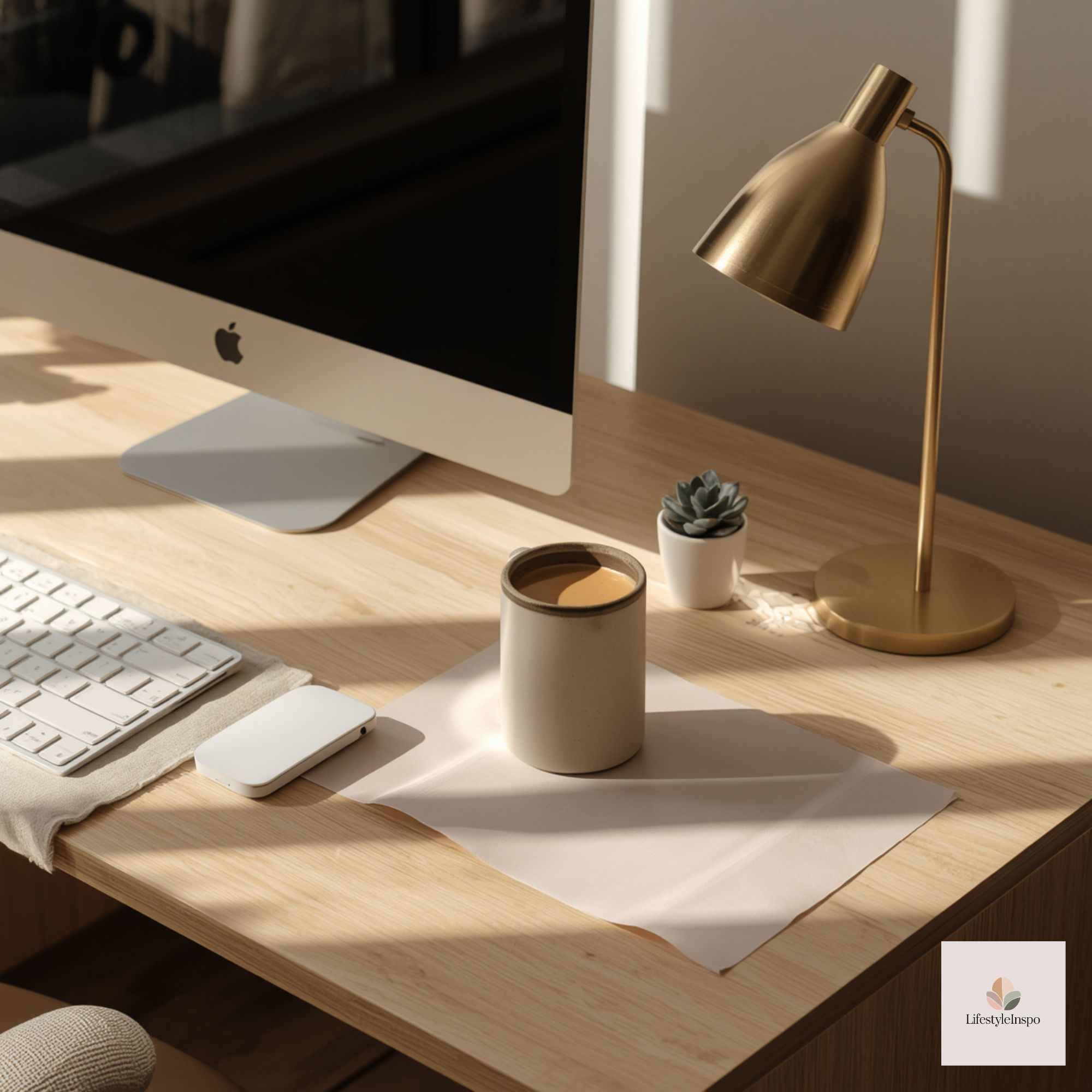
A warm minimalist desk is anchored by a single, meaningful accent. This could be an heirloom pen, a framed family sketch, or a hand-thrown ceramic cup. The accent should be personal and selected—not an afterthought.
- Placement matters: position the accent slightly off-center or at a diagonal from your primary working zone so it’s visible but not distracting.
- Scale and color: one small-to-medium object in a color that contrasts softly with the dominant palette (for instance, a terracotta cup on a neutral desk) makes a statement without competing for attention.
- Rotate thoughtfully: swap the accent seasonally or monthly to keep the setup fresh without accumulating more objects.
This single accent gives personality to the space and prevents a sterile, uniform look while preserving the minimalist principle of “less, but better.”
Keep everyday workflows visible, aesthetics unobtrusive
Your desk should support how you actually work, with visual cues that are subtle and unobtrusive.
- Use low-profile storage that reveals workflow at a glance: a single open tray for in-progress documents or a slanted letter holder for active files. These items keep the surface tidy while representing what’s currently happening.
- Bookmark or index with subtle tabs: colored tabs on the edge of a notebook or a small magnet on a metal tray can serve as reminders without paper stacks.
- Designate a “launch area”: a clear corner where devices are placed when you stand up, or where you keep a charging puck. This reduces scatter and keeps the main workspace free.
Think of the desk as a storyboard—your tools should tell you what you need to do next without shouting for attention.
Curate lighting and scale, not excess
Warmth is often perceived through light, but lighting choices should be purposeful.
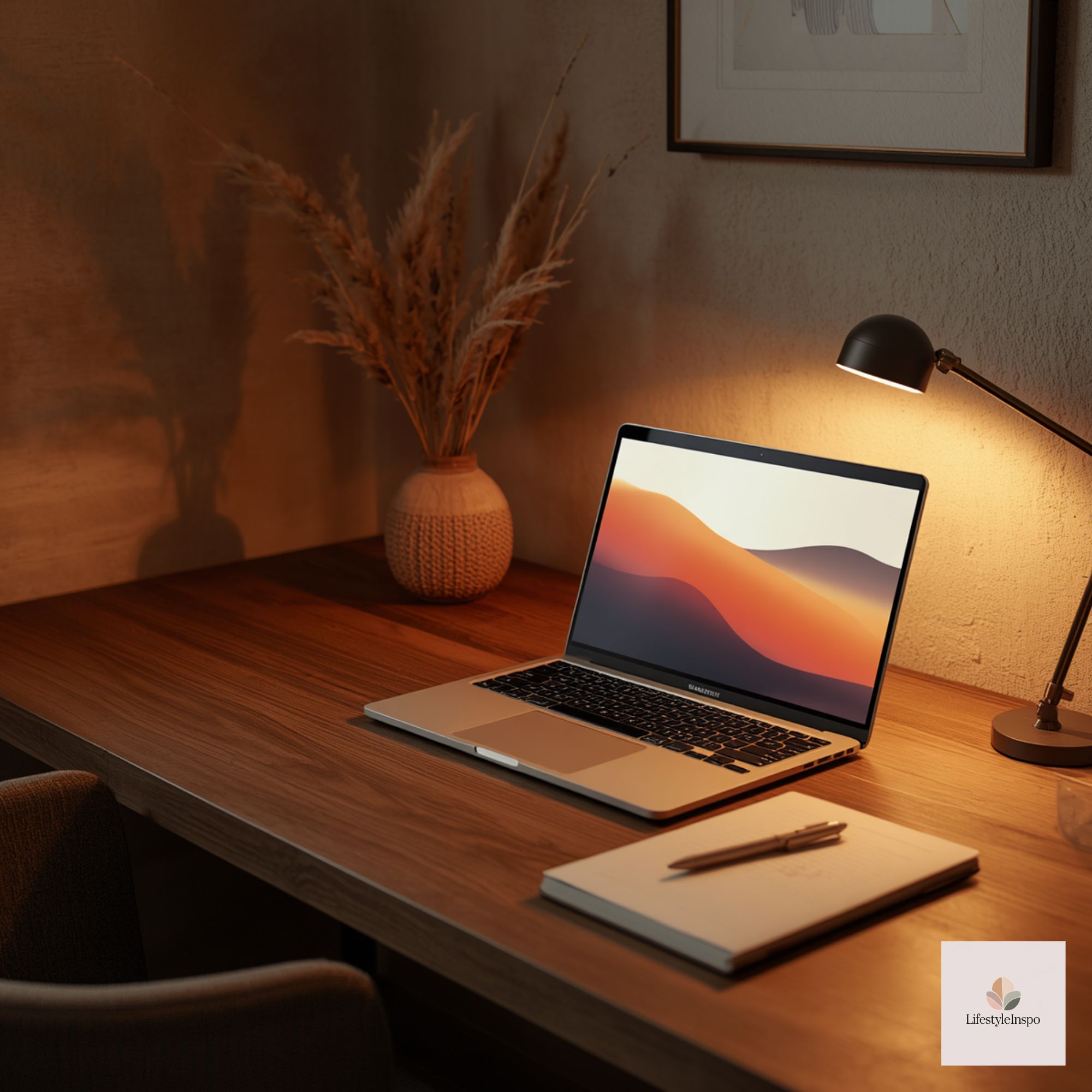
- Choose a light with a warm color temperature (around 2700–3000K) and adjustable output. A directional task lamp that you can angle avoids blanket brightness and keeps the desk intimate.
- Balance scale: if you have a large monitor, counter with lower-profile accessories so the screen doesn’t dominate. If the desk is small, favor compact, multifunctional objects—like a pencil cup that doubles as a phone cradle.
- Consider indirect light: place a small table lamp a little off the desk edge or use a dimmable floor lamp. This adds ambient warmth without adding more items on your immediate surface.
A single, well-chosen light source does more for warmth than multiple small fixtures.
Practical styling cues for different routines
Concrete setups that fit different workflows help you apply the warm-minimalist approach with ease.
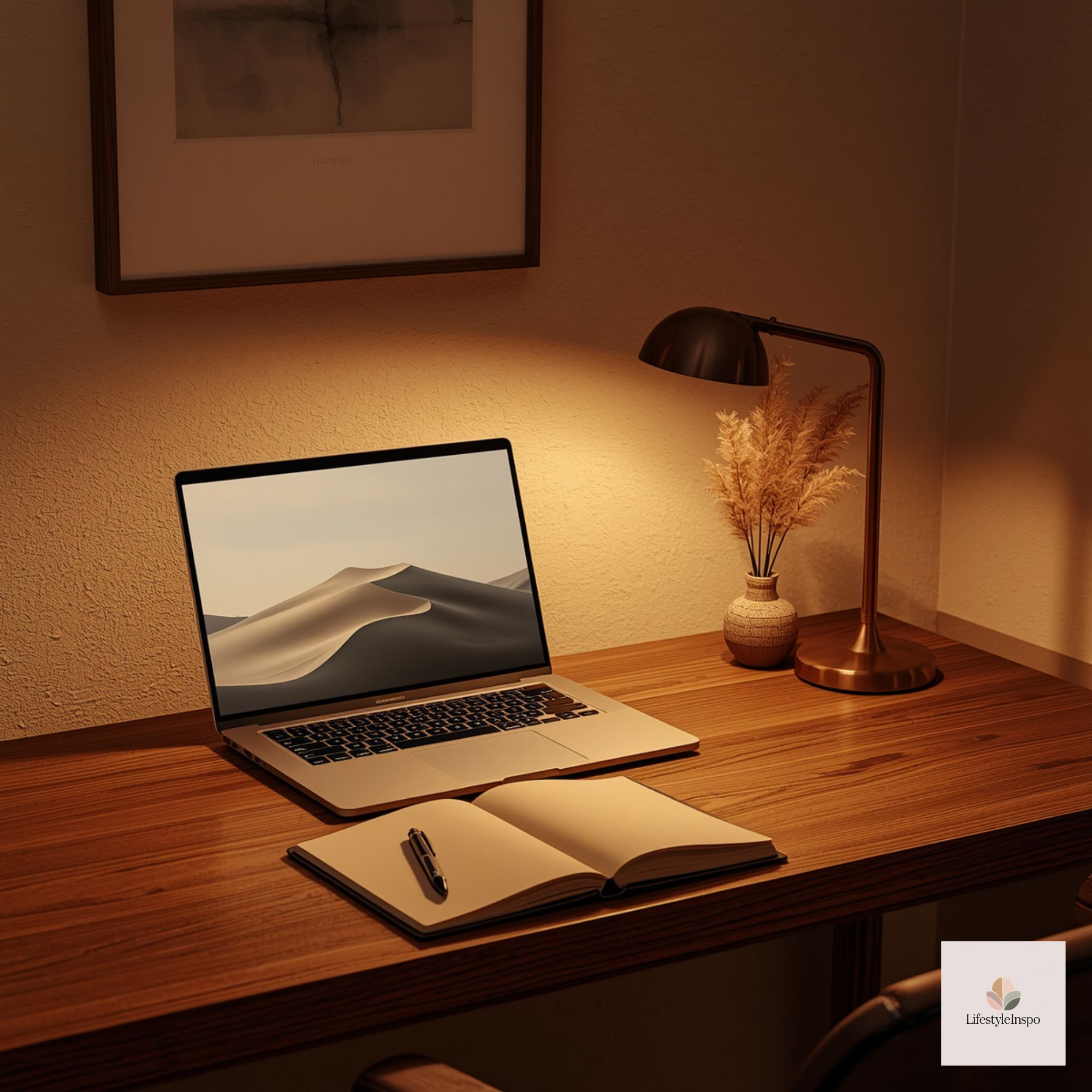
- For note-heavy work: keep a slim notebook always at the top-right (or top-left) corner, an open tray for active papers, and a weighted pen on a small leather pad. Use a clipboard hung nearby for daily lists.
- For digital-first work: hide peripherals when not in use with a small, retractable keyboard and a compact monitor stand. Keep a tactile object (like a wooden worry stone or a small ceramic cup) near your dominant hand to ground you during breaks.
- For creative work: keep a mood card or tear-sheet in view pinned to a cork fragment, and a shallow organizer with only the pigments or pens you use most. Replace inspiration quickly—use a downloaded watercolor background for desktop wallpaper or quick color reference rather than printing dozens of images; check the seller’s usage terms for any digital assets you use.
These examples show how to marry function and warmth without excess.
Maintenance habits to keep the setup living, not frozen
A warm minimalist desk tolerates real life if it’s easy to maintain.
- Daily five-minute reset: before you finish work, clear dishes, return items to their homes, and empty the in-progress tray only as needed. This habit preserves clarity.
- Weekly edit: once a week, scan the desk for items that have accumulated and decide if they belong in Daily, Weekly, or Rare piles.
- Seasonal refresh: swap the single meaningful accent or change a desk pad’s texture. Minimal rotation keeps things feeling new without adding objects.
Simple rituals make a minimalist desk approachable and sustainable, rather than austere.
Conclusion
A warm minimalist desk setup focuses on editing by use, giving everyday objects intentional homes, layering tactile material and texture, and keeping one meaningful accent. This approach creates a surface that’s clear, functional, and unmistakably yours. Small choices—like a shallow tray, a soft desk pad, a single family piece or a digital watercolor file used as inspiration—maintain personality without clutter. With routine maintenance and a few tactile layers, you’ll have a workspace that feels calm, inviting, and curated for how you actually work.
About the Author





