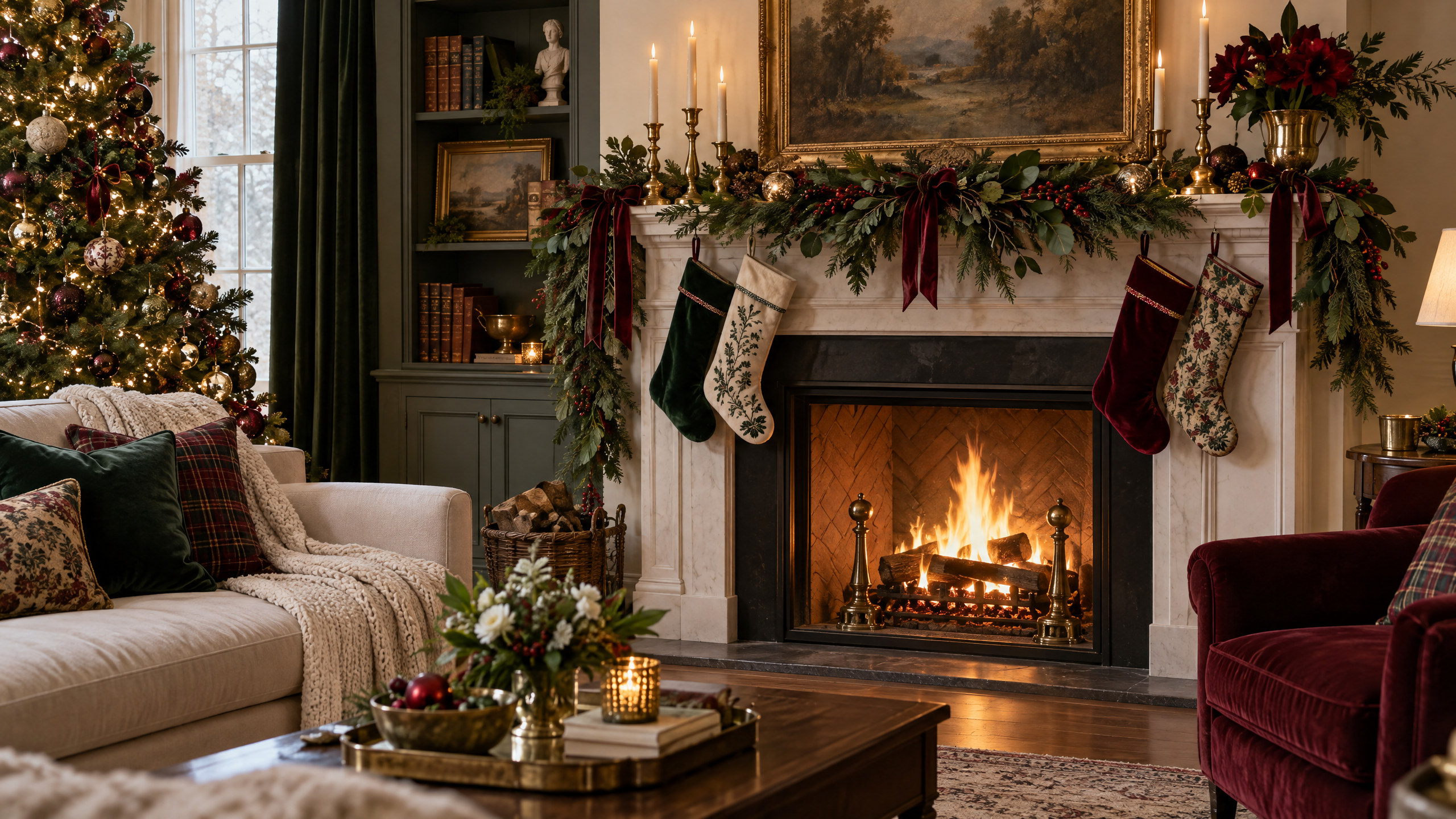
The Christmas Mantel Edit: Build a Warm Focal Point Without Overdecorating
The mantel is the room’s natural exhale: a single plane that anchors the sofa, frames conversation, and often carries the heaviest holiday expectations. Yet it’s easy to smother that small stage with too many competing bits—an avalanche of stockings, a forest of candles, and fifty tiny ornaments waving for attention.
This guide narrows the task to a few design moves that make mantels look edited, intentional and cozy without feeling holiday-minimalist austere. Think of it as a zone-specific recipe: arrange by visual triangle, respect scale and negative space, embrace asymmetry, tighten the palette, check safety, and adapt when the fireplace is only decorative. Practical tips and a tidy styling checklist let you finish the mantel in an hour, not an all-day project.
Why a zone-specific mantel approach beats “more is more”
A mantel is a shallow stage with a frontal view. Treating it like a gallery wall or a tabletop leads to overcrowding because depth is limited. A zone-specific approach considers how the eye reads across a single horizontal plane and how each piece negotiates vertical height. That means fewer objects, smarter placement, and a calmer result that still feels festive.
Instead of stuffing every holiday object you own onto the shelf, choose a primary focal point, support it with two purposeful anchors, and give the composition breathing room. Your mantel will look layered and considered—never frenetic.
Start with the visual triangle: three heights that guide composition
The visual triangle is a simple organizing principle: a low-to-mid anchor, a mid-high focal point, and a tall accent. Map these three heights across the mantel to create balance without symmetry.
- Low anchor: This is close to the mantel’s surface—a cluster of candles, a small bowl of ornaments, or a stack of books.
- Mid-high focal point: A framed print, mirror, or wreath centered or slightly off-center becomes the composition’s heart.
- Tall accent: A single branch, a candlestick, or a sculptural object adds vertical lift and keeps the eye moving.
Place these on an imaginary triangle so each element feels related. If the focal point sits centered, stagger the low and tall accents to opposite sides to avoid static symmetry.

Scale and layering: build depth without clutter
Scale defines whether a piece reads as important or peripheral. Small items should remain secondary; large items demand more empty space.
- Rule of thumb: the central piece should occupy about one-third to one-half the width of the mantel for a commanding but not overpowering presence.
- Layer deliberately: place taller things at the back and smaller, textured pieces in front. A framed print backed by a garland or a pair of taper candles behind a small ceramic tree gives depth while keeping the surface tidy.
Tradeoffs: too many layered objects can make the mantel look dense. If you love ornaments and figurines, cluster them into one contained vignette on one side rather than sprinkling them across the entire shelf.
Negative space and asymmetry: the power of letting things breathe
Negative space is the most underrated decorating tool. Leaving a portion of the mantel deliberately empty creates contrast and highlights the pieces you do choose.
- Favor asymmetry: place the main focal point slightly off-center and balance it with a cluster on one end and an airy accent on the other. Asymmetry reads modern, relaxed and more intentional than forced mirroring.
- Use pauses: leave clear horizontal gaps between groupings—about the width of the low anchor or a visual arm’s length. This prevents a crowded look and makes each vignette more legible.
An asymmetrical mantel that keeps generous negative space feels curated, like a quiet still life rather than a thrifted collection spread thinly across the shelf.
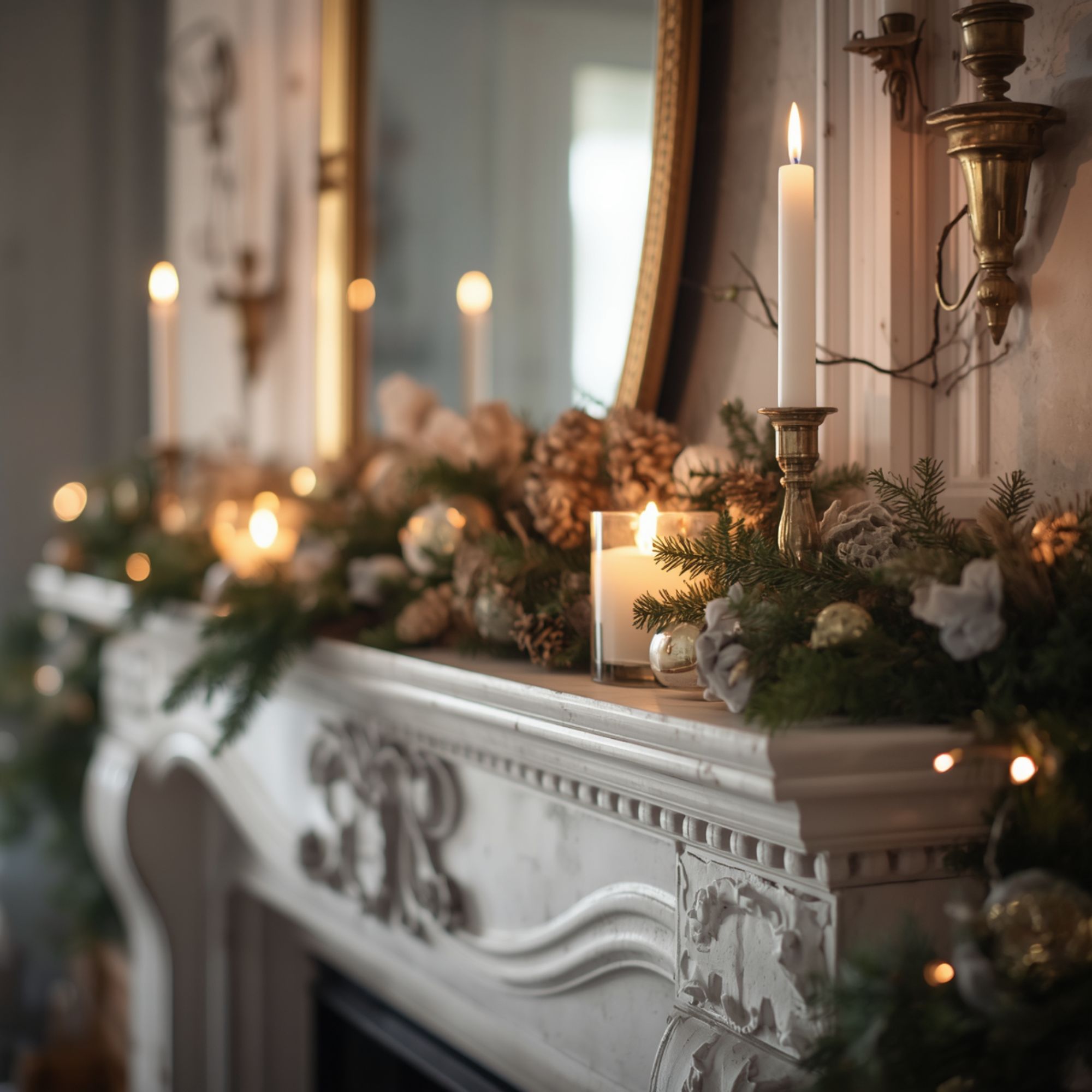
Palette editing: fewer colors, more cohesion
Editing your color choices is as powerful as editing object count. Limit the palette to two neutrals plus one accent color, and use texture and material to keep things interesting.
- Neutrals build the base: wood tones, linen, cream, and brass give warmth without shouting.
- Accent color: choose one holiday hue—deep green, cranberry, or a warm gold—and repeat it in two or three places (a ribbon, an ornament, and a book spine).
- Texture wins over matching: a velvet ribbon, a woven garland, and a matte ceramic candleholder offer variety without competing color-wise.
If you want to introduce whimsical elements—say, printed clip art for printable tags or tiny decorative prints—keep them in the accent color family so they read as part of a single story. For example, a digital bundle of holiday illustrations can be printed as small frames or gift tags; just verify license terms before printing or reusing digital artwork.
Safe clearance and practical checks (candles, garlands, and electronics)
Decoration must share space with function and safety. Before you stylistically commit, make a short safety sweep.
- Heat clearance: If you’ll light candles or have a working fire, keep flammable materials—fabric stockings, paper decorations, and fresh greenery—at a safe distance from heat. Check manufacturer guidance for candle holders and any real-fire instructions relevant to your fireplace.
- Electronics: If your TV hangs above the mantel, leave at least a 6–12 inch gap between the top of the TV and any decorative objects that could trap heat. Avoid placing items that could obscure ventilation.
- Stability: Anchor taller, heavier items so they won’t tip if bumped (pets, kids, or a broom swing by). Museum putty is a low-profile option for securing light objects.
- Candles vs. LED: A cluster of real candles is gorgeous but demands attention. Long-burning LED candles give that glow with less risk; mix a few real ones with LEDs if you prefer authenticity while minimizing hazards.
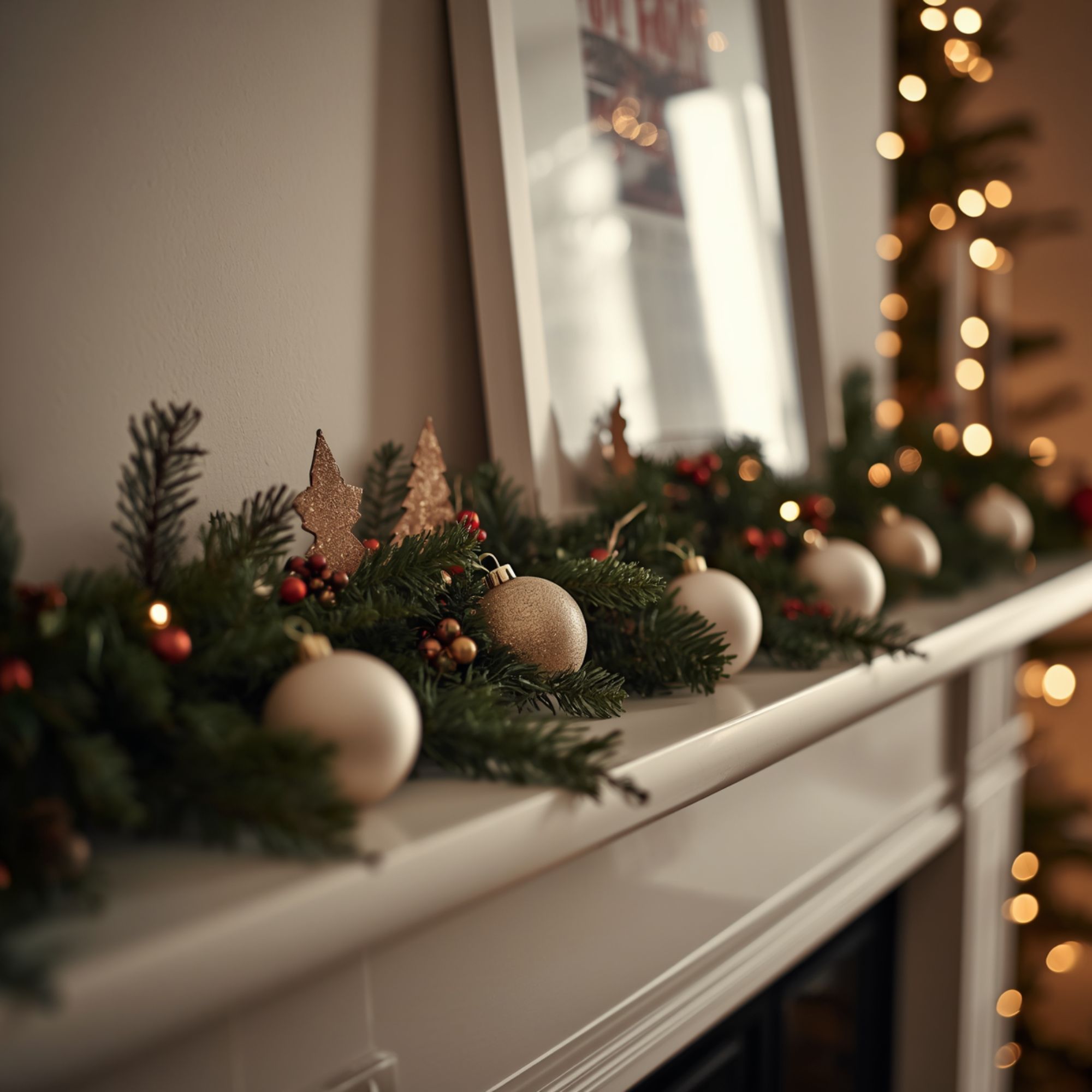
Adapting the mantel when the fireplace is nonfunctional
A nonworking fireplace becomes a design opportunity: the empty cavity can be a stage rather than a void. Treat it as a built-in cubby rather than a missing function.
- Insert a focal object: a large framed print, a round mirror, or a trio of basket-lined logs for texture. If you favor greenery, install a simple garland looped inside the cavity rather than along the mantel shelf to avoid crowding.
- Layer with lighting: string lights or a set of battery-operated candles inside the hearth creates a warm glow without heat. Use diffused bulbs and keep wiring tidy and away from flammable decor.
- Create depth: stack a couple of wooden boxes or folded blankets inside the cavity, then top with a sculptural object to echo the mantel’s composition.
- Use it seasonally: when the hearth is decorative, you can rotate bold seasonal props into that space—an evergreen-filled urn, a collection of vintage skates, or artwork framed in the fireplace’s scale.
Quick styling checklist and a 30–45 minute mantel plan
If you’ve got an hour, follow this timed plan to edit and style your mantel like a pro.
- 0–10 minutes: Clear everything off and wipe the mantel. Stand back and measure roughly the mantel width. Decide on your focal piece.
- 10–20 minutes: Place the focal object and the tall accent to establish the visual triangle. Step back—adjust so the triangle reads as balanced.
- 20–30 minutes: Add a low anchor vignette. Keep it contained—a tray with a candle cluster, a small bowl, or a stack of two books topped with a tiny ornament.
- 30–40 minutes: Introduce texture and the accent color in 2–3 small spots—ribbon, a sprig, or a single ornament. Ensure there’s negative space between groupings.
- 40–45 minutes: Safety check—clearances, stability, candles/LEDs. Make one asymmetrical tweak if needed, then declare it done.
Quick-edit checklist (portable)
- One focal piece, one tall accent, one low anchor.
- Two neutrals + one accent color.
- At least two clear gaps/negative-space zones.
- Secure tall or breakable items.
- Final safety sweep for heat and wiring.
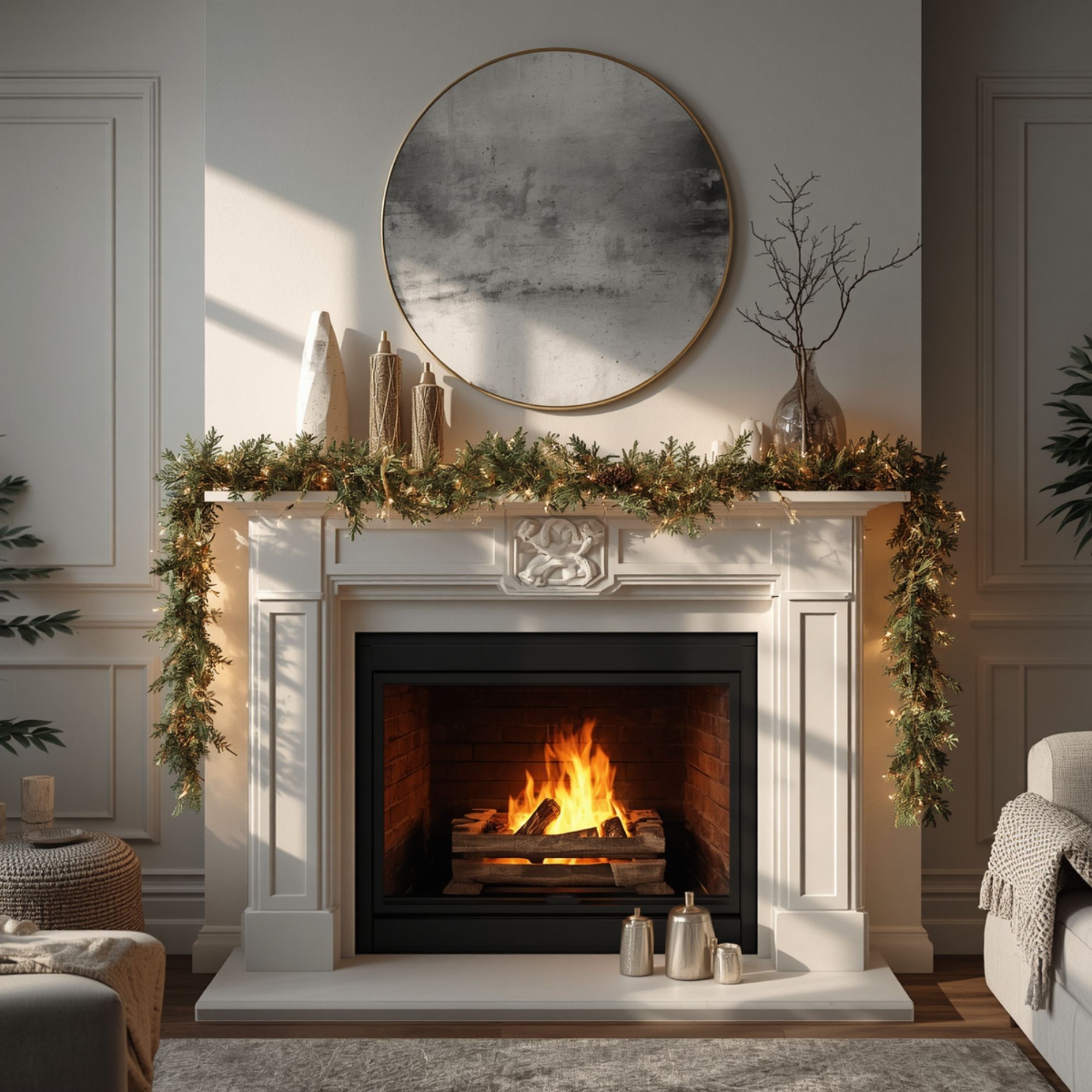
Small stylistic swaps that make big differences
- Swap bulky stockings for slim linen ones to reduce clutter.
- Replace a long garland with a single suspended swath of greenery over the focal piece to lift the eye.
- Use repetition—three brass candlesticks or a row of three identical frames—for a tidy look that still feels abundant.
- If sentimental items threaten to overwhelm the aesthetic, create a small mantel-side tray for rotating keepsakes so the overall composition stays edited.
Closing: The mantel as a calm, festive stage
Styling a Christmas mantel doesn’t need to be a maximalist feat or an exercise in restraint for its own sake. With a visual triangle, attention to scale, generous negative space, a restrained palette, and a practical safety check, you can craft a mantel that reads warm and considered. Whether your fireplace is working or simply pretty, the goal is the same: a focal point that invites people to gather without shouting for attention. Keep one small element that feels uniquely yours—an heirloom, a tiny print, or a favorite cinnamon-scented candle—and let everything else support it.
A digital accent, if you want one

For a small creative detail to complement physical greenery, the listing for Christmas Clip Art – Vol.2 describes 30 transparent-background PNG designs, including holly, bells, fireplaces, and ornaments. It is a digital asset rather than a ready-made mantel decoration, so check the current license and permitted uses before printing or reusing any image.
Frequently Asked Questions
How high should my focal piece be for the visual triangle to work?
Aim for a triangle that reaches about two-thirds of the mantel’s height for the top element; the focal mid-point should sit roughly at eye level for a seated person. Adjust based on ceiling height and room scale—larger rooms can carry a taller focal piece.
Can I use live greenery if my fireplace is functional?
Yes, but use caution. Keep fresh greenery away from direct flames and heat sources and check for dry, brittle sections that could ignite. Consider using clipped pieces stabilized in water picks and positioning them outside the immediate heat path, or choose fire-safe faux greenery if the mantel is very close to flames.
How do I style a mantel above a TV without causing heat issues?
Maintain clearance between the TV and any decorative elements that could trap heat; ensure the TV’s vents are unobstructed. Favor low-profile, heat-resistant materials on the mantel and avoid draping anything directly over the TV. When in doubt, choose LED candles and battery lights rather than open flames.
About the Author





