
How to Do a Brain Dump When Your Mind Feels Completely Full
There is a particular kind of tired that comes from carrying too many open loops. You are answering a work message while remembering that the laundry is still in the washer, replaying a conversation from yesterday, planning dinner, and trying not to forget a birthday next week. Nothing is necessarily catastrophic, yet your mind feels as if every tab has sound on.
A brain dump is a simple way to move that mental traffic onto paper or a blank digital page. It is not a test of neat handwriting, a perfect planning system, or a demand to solve your whole life before lunch. It is a temporary landing place for everything asking for your attention. Once the thoughts are visible, you can decide what needs action, what can wait, and what was never yours to carry in the first place.
If you are wondering how to do a brain dump, start with permission to be incomplete and unpolished. The goal is not to produce a beautiful list. The goal is to create enough space to think.
What a brain dump actually does
When you try to hold every obligation in your head, part of your attention stays busy rehearsing reminders. Writing those reminders down does not magically finish them, but it gives your mind a reliable place to return instead of asking it to keep circling.
It also reveals that “I have too much to do” is often a bundle of different things: a five-minute errand, a decision you are avoiding, a feeling that needs acknowledgment, and a vague project with no defined next step. Those items require different kinds of care. A single undifferentiated worry list cannot tell you which is which.
Think of the first pass as collection, not organization. You are not prioritizing while you write. You are making the invisible visible.
How to do a brain dump in 15 minutes
Choose a container and a short window
Use whatever you will actually open: a notebook, a notes app, or a blank document. Set a timer for 10 to 15 minutes. A time limit keeps the exercise from becoming an all-evening attempt to document every detail of your life.
Write the prompt that unlocks the list
At the top of the page, write: “Everything taking up space in my mind right now is…” Then keep going.
Include tasks, questions, plans, worries, ideas, physical reminders, emotional reactions, and things you think you should want. “Book dentist appointment” belongs beside “I feel behind.” So does “look up the school form,” “I need a night alone,” or “idea for the kitchen shelf.”
Do not edit for grammar or importance. Use fragments. Repeat yourself if you need to. If you freeze, ask:
- What am I afraid I will forget?
- What decision am I postponing?
- What am I carrying for someone else?
- What would make tomorrow morning easier?
- What keeps appearing in my thoughts when I try to rest?

Follow the mental trail instead of forcing an order
You can write in a long list, scattered clusters, or a page of arrows. If a thought feels too private to write in full, use a discreet phrase such as “the family conversation.” The point is to release the thought, not create a record you would be uncomfortable keeping.
Stop when the timer ends and take a clean pause
When the timer rings, put the pen down even if the page is imperfect. Take a few slow breaths, drink water, or look out a window. This pause marks the shift from unloading to deciding.
If you feel more activated rather than steadier, do not force a deeper planning session. Close the page and return later, or choose one gentle action that helps you feel grounded. A brain dump is a planning tool, not a substitute for professional support when distress is persistent, severe, or interfering with daily life.
Sort the page without turning it into another project
Use four headings: Do, Decide, Defer, and Release. You can draw four columns or mark each line with a letter.
Do: name the next physical action
“Handle taxes” is too broad to guide you. “Find the tax folder and email the accountant one question” is a next action. “Get healthier” is an ambition, not a task. “Put a water bottle beside my laptop” is a small action you can complete.
For each item marked Do, ask: What is the smallest visible step? If it takes two minutes, do it now only if doing so will not derail your day. Otherwise, place it on a realistic time block.
Decide: give choices a home
Some mental clutter is not a task at all. It is a choice waiting for a boundary. Decide when you will choose, what information you need, and what “good enough” looks like.
For example: “Choose a wedding guest outfit by Thursday; check the weather and wear the navy dress if it fits.” A decision becomes less noisy when it has a deadline and a simple rule.

Defer: schedule a return, not a vague someday
Deferring is not failing. It is acknowledging that an item matters but does not belong in today’s limited attention. Write a date or review point beside it: “Research weekend class on Sunday,” or “Revisit patio furniture after the rent payment.”
Release: remove what is not an obligation
Some lines are feelings, fantasies, old expectations, or other people’s preferences. They may deserve compassion, but not a task slot. You can write “I am worried they are disappointed” and then decide that you do not need to solve that feeling tonight.
Release can also mean crossing out duplicate reminders, deleting an outdated idea, or admitting that a “should” no longer matches your current season. A clear page is not the page with the most completed items. It is the page that reflects what is truly yours to carry.
Make the brain dump useful for real life
Create a “today” list with three anchors
Choose no more than three meaningful anchors for the day: one must-do, one maintenance task, and one action that supports you. For example:
- Send the revised proposal by 3 p.m.
- Pick up groceries for tonight.
- Take a 20-minute walk or sit quietly with tea.
The third item is not a reward you have to earn after becoming productive. Rest and replenishment are part of a sustainable plan. Keep the list small enough that completing it feels possible on an ordinary day, not only on your most energetic day.
Turn recurring chaos into a routine
If the same items appear every week, they may need a system rather than more willpower. Add “check school calendar” to a weekly review. Keep a running grocery list. Set a reminder for bills. Put frequently used documents in one folder.
A brain dump is the reset; a light routine keeps the same clutter from rebuilding immediately. You do not need an elaborate productivity system. One dependable place for capture and one recurring time for review can be enough.
Separate emotional processing from logistical planning
A line such as “I am hurt by what happened in the meeting” should not be forced into a checkbox. Give it a different response: journal for five minutes, talk with a trusted person, ask for clarification, or wait until you are less charged before replying.
Planning can support emotional clarity, but it cannot replace care. If a worry involves ongoing anxiety, low mood, trauma, safety, or another health concern, consider speaking with a qualified mental-health professional. This article offers general organization ideas, not diagnosis or treatment.

A worked example for a full mind
Imagine your page includes: “return package,” “presentation feels weak,” “call Mom,” “buy sunscreen,” “I keep saying yes to everything,” “idea for a newsletter,” and “book annual checkup.”
Under Do, you might write “print return label” and “email the doctor’s office.” Under Decide, you could put “choose the presentation’s main message by 11 a.m.” Under Defer, place the newsletter idea in a note titled “Later projects” and schedule a Sunday review. Under Release, put “I should be available to everyone immediately.”
Your final plan might contain only three actions: print the label, write the presentation’s opening slide, and call Mom during your commute. The rest has not disappeared. It has been placed somewhere intentional, which means you no longer need to rehearse it every few minutes.
Common brain-dump mistakes to avoid
Mistake 1: Editing while you unload
Ranking every thought as it arrives interrupts the release. Capture first. Sort second. If you notice yourself debating whether an item is “important enough,” write it down and move on.
Mistake 2: Making the list too broad
“Fix my life” cannot become a plan. Narrow it to a context, a result, or a next action. Replace “deal with money” with “open the bank app and list the two bills due this week.”
Mistake 3: Treating every item as urgent
Urgency is not the same as importance, and someone else’s last-minute request is not automatically your emergency. Mark genuine deadlines, then choose what can wait.
Mistake 4: Building a color-coded system before using the page
Mistake 5: Keeping the page as a guilt archive
Your list should help you make choices, not prove that you are behind. If it grows, edit it. Delete stale items. Move long-term ideas to a separate place. Your capacity changes from day to day, and a useful system can change with it.

FAQ: Brain dumps when you need clarity
How often should I do a brain dump?
Do one whenever your thoughts feel crowded or you are repeatedly forgetting small things. Many people find a weekly reset useful, while others prefer a short evening capture. Keep the practice flexible. A five-minute list you repeat is more valuable than an elaborate ritual you avoid.
Should a brain dump be on paper or digital?
Choose the format that is fastest and most private for you. Paper can feel physically separate from the mind and may make free-writing easier. A digital note is convenient when your phone is always nearby. The best container is the one you can trust to hold the thought without creating extra friction.
What if my brain dump makes me feel more overwhelmed?
Stop sorting and reduce the scope. Circle one item that is time-sensitive and one action that would make the next hour easier. If the page brings up intense or persistent distress, step away and seek support from someone you trust or a qualified professional. Organization should create a little more choice, not pressure you to solve everything immediately.
Your mind does not have to be the storage system
A full mind is not proof that you are disorganized. It may be a sign that you have been managing many roles, decisions, and emotional details without enough places to set them down. A brain dump gives those details a landing spot, then helps you choose what deserves attention now.
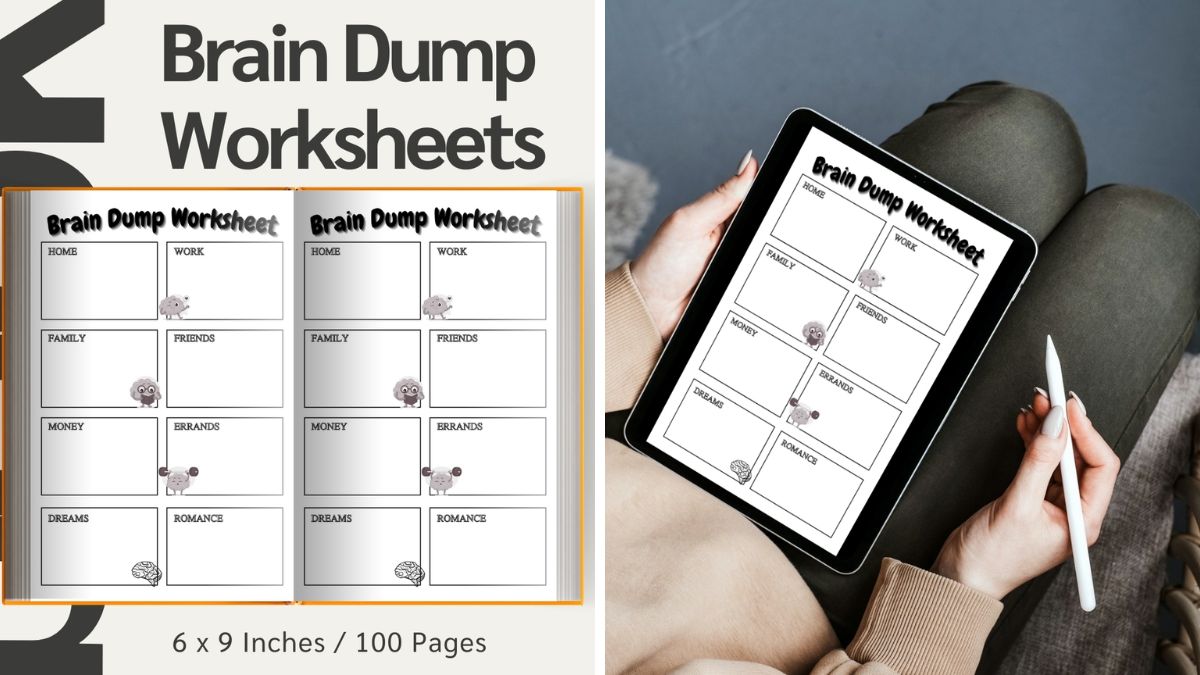
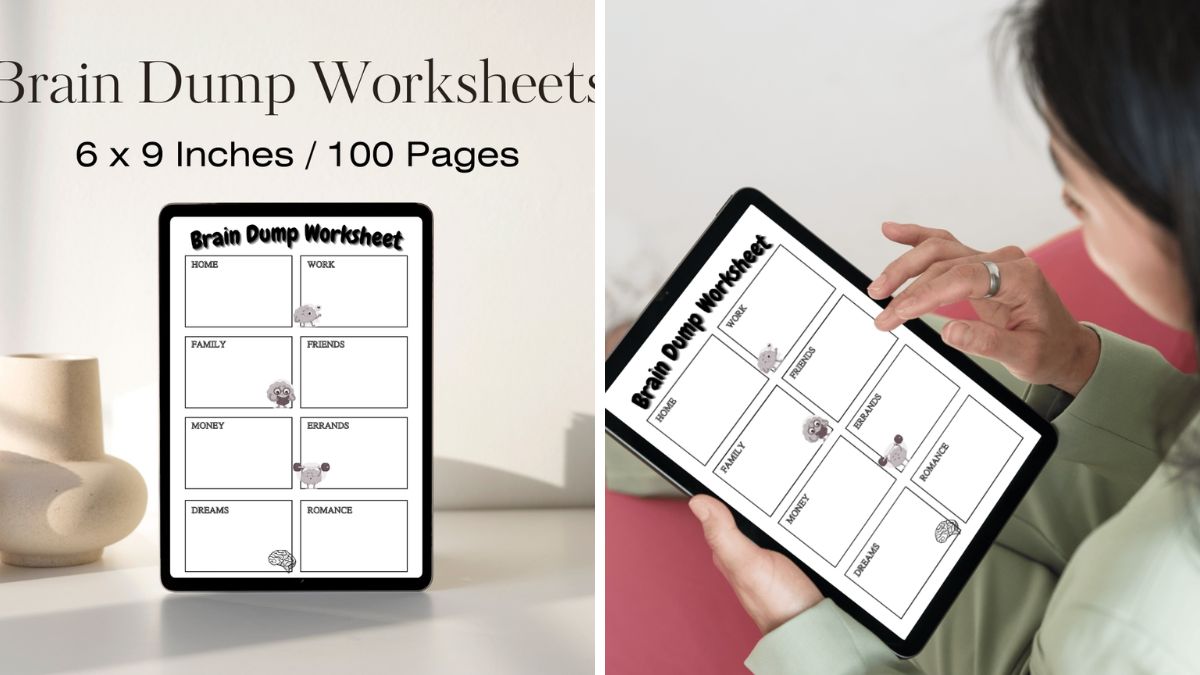
If you like having a guided place to begin, take a look at Brain Dump Worksheets / Editable Canva Template. The listing describes it as a journal/template designed for organizing thoughts and tasks, with editable Canva templates and categories such as home, work, family, friends, money, errands, dreams, and romance. It may be useful if a ready-made structure feels easier than starting with a blank page; review the listing to decide whether it suits your preferences before purchasing.
Tonight, set a 15-minute timer and write the sentence you keep postponing: “Everything taking up space in my mind right now is…” You do not need to finish your whole life. You only need to give your thoughts somewhere to land, then choose the next kind step.
About the Author