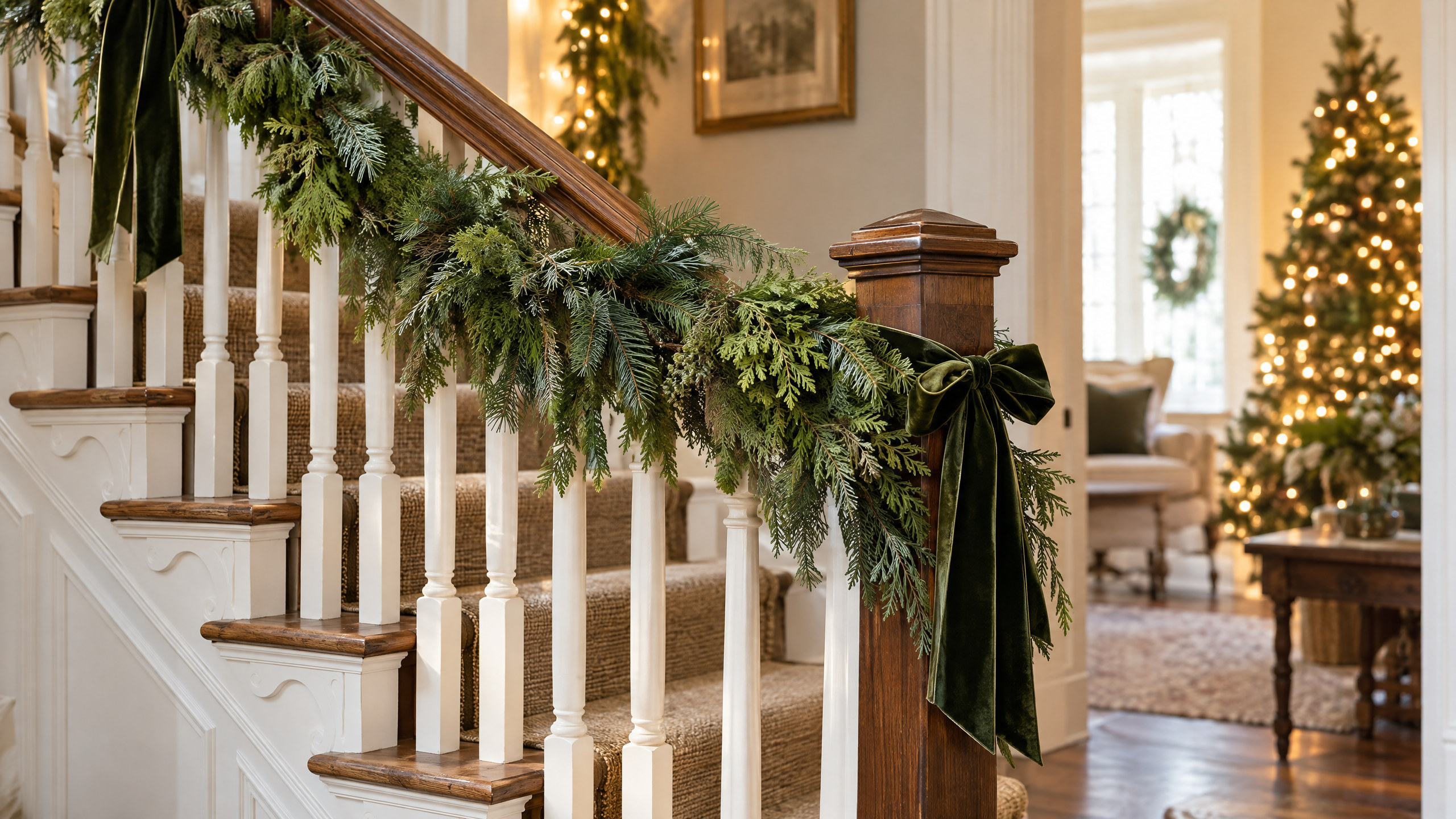
How to Decorate a Christmas Staircase Without Blocking Handrails or Treads
There’s something undeniably cozy about a staircase dressed for the holidays: a soft green swag, a row of tiny lights, a ribbon that bounces as you ascend. But beauty shouldn’t come at the cost of safety or daily function. This guide gives you concrete, room-by-room-ready steps and creative alternatives for Christmas staircase garland ideas that keep handrails usable, treads clear, and attachments discreet and secure. We’ll also cover thoughtful tweaks if you live with children, older adults or pets.
Why plan before you drape
A quick slap-on approach looks charming for a minute, but a thoughtful plan prevents sagging, dangling ornaments, tripping hazards and the need to repaint after heavy adhesive removal. Before you buy a single sprig or string of lights, measure, visualize reach zones and pick attachment points that avoid the places people instinctively grab or step.
First things first: measure and map
- Measure the railing length, number of balusters, and the rise and run of the stairs. Add 15–30% extra garland length for natural swags or bows.
- Note where people naturally grab the handrail. A helpful quick test: ask an adult to place their hand where they usually steady themselves as they climb—mark those spots. Leave them clear.
- Mark tread edges and risers on one side so you avoid any decorations brushing against feet.
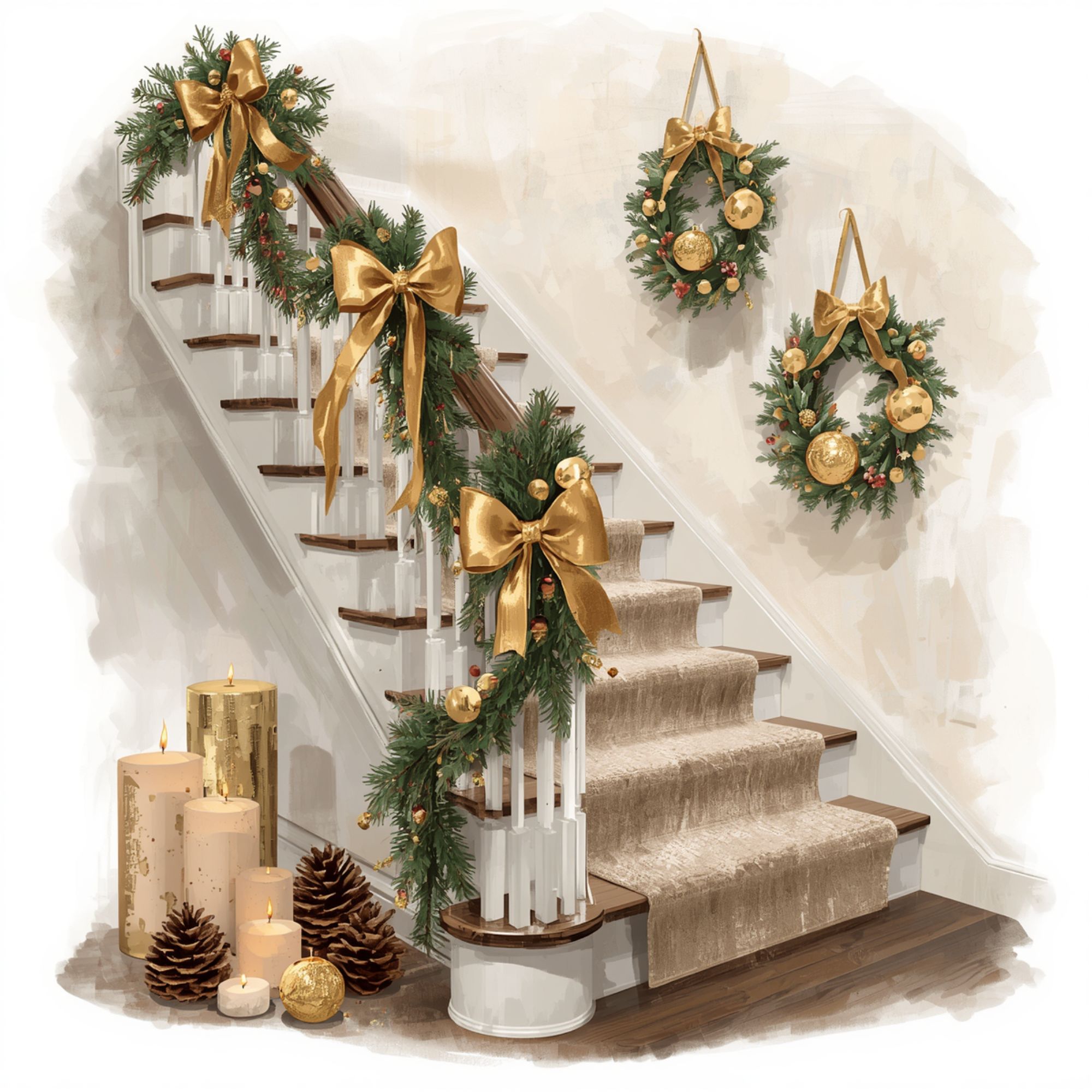
Material list (practical and minimal)
- Lightweight faux garland or individual greenery clusters (avoid oversized, heavy pieces for rail-mounted looks).
- Battery-powered micro LED light strings (smaller battery packs sit discreetly away from the handhold).
- Clear zip ties, floral wire, or thin clear cord for attaching greenery behind balusters.
- If a rated attachment is permitted, use only hardware approved for that surface and load and follow its instructions; do not rely on adhesive on a handrail or stair edge.
- Ribbon, felt ornaments, or paper cutouts if you want low-risk, low-weight accents.
- Optional: a set of felt pads or tubing to protect glass rails or painted surfaces.
How to keep decorations out of grab zones and off treads
- Keep the entire handrail surface and graspable area clear. Do not drape or attach decor where anyone reaches for support; if there is any doubt, decorate the wall or newel-post area instead.
- The safest default is to keep garland off the handrail and balusters and use wall-mounted or freestanding decor beside the stairs. Only attach items to stair components when the manufacturer or a qualified installer confirms a suitable method.
- Avoid draping that reaches the floor or treads. If your garland needs swag points, place them well above the tread or anchor each swag so it doesn’t extend inward toward the walking path.
Step-by-step installation (for an open baluster staircase)
- Lay out your garland on the floor and pre-shape it into swags—this helps prevent surprises when you lift it onto the stairs.
- Start at the newel post or top anchor point. Use a hidden zip tie or floral wire to secure the end behind the first baluster rather than looping over the top rail. This keeps the handhold clear.
- Move down the stairs in sections: anchor the garland beside each baluster, not across it. Use ties on the inside or back edge of the baluster so the tie point stays out of sight and out of the hand zone.
- If you need swag loops between anchors, make them shallow and high—no more than an inch or two of inward projection—to avoid tempting hands.
- If you add lights, run battery packs at the base of the bannister or tucked behind a newel post, securing them out of reach. For plug-in lights, route the cord along the wall or under the baseboard and check that cord pathways never cross treads.
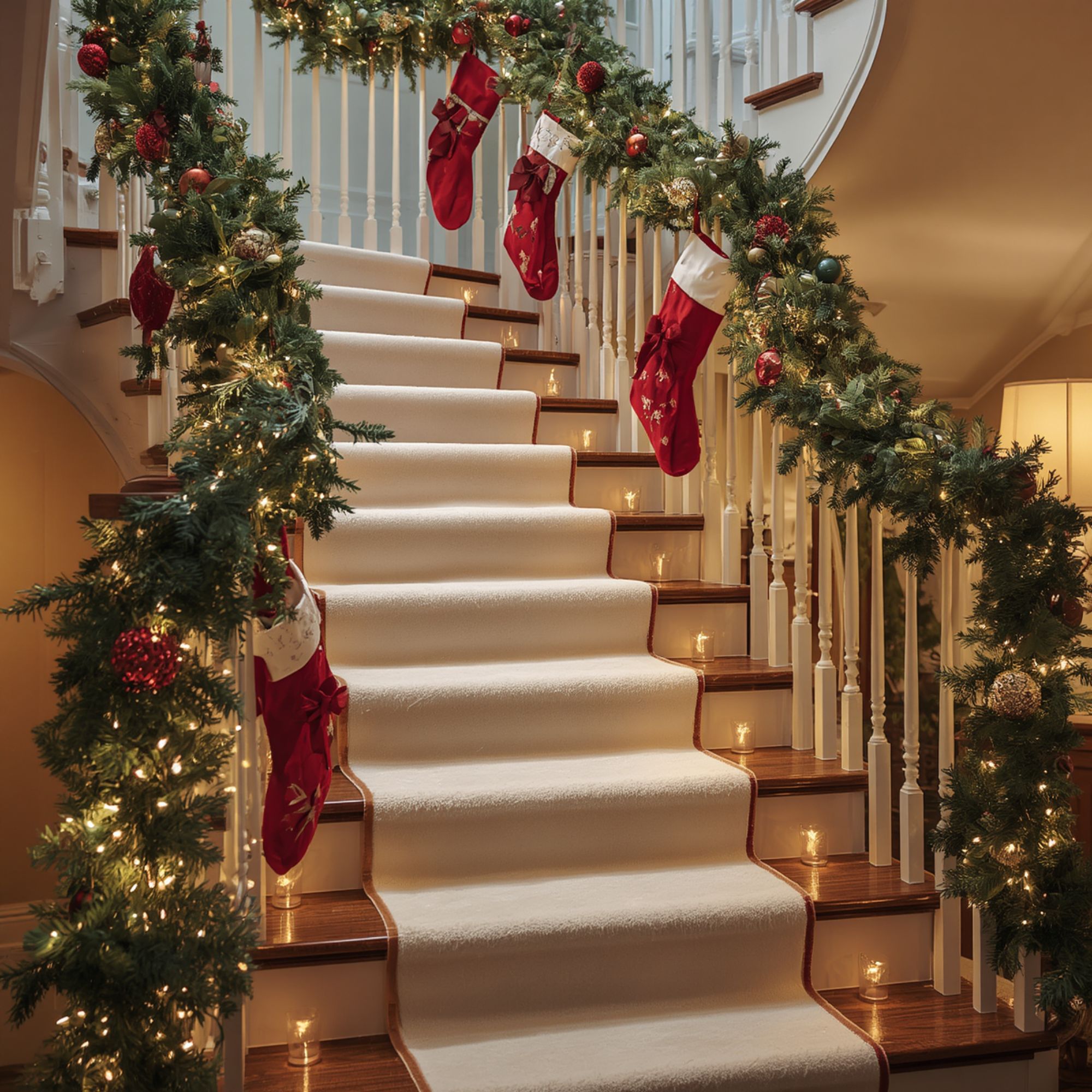
Attachment alternatives by stair type
- Open balusters: Prefer not to attach decor. If you use an approved method, ensure it cannot loosen, snag clothing, or affect the handrail; seek installer guidance when unsure.
- Glass panels: Do not assume suction cups or adhesive hooks are safe for a railing. Follow the glass/railing manufacturer’s instructions or use a wall-based decoration instead.
- Closed stringer or walled stairs: Use wall decor only with hardware appropriate to the wall and weight; keep the handrail and walking surfaces unobstructed.
- Spiral/compact stairs: Use small individual clusters attached to the side of each spindle; they read holiday-festive without creating long swags that could snag.
Design ideas that keep function top of mind
- Side-cluster look: Instead of a continuous garland, attach clusters of greenery every few balusters. It lowers weight and gives a modern, airy look while preserving grip and sightlines.
- Ribbon-only swags: Fold wide ribbon and stitch or tie small loops to the side of the baluster. Lightweight and elegant, this keeps everything away from handholds.
- Miniature wreaths or felt ornaments: Hang small rings on the outer face of each baluster for a playful, symmetrical display. Felt and fabric ornaments are soft and safer around kids and pets.
- Newel-post focal points: Dress only the newel posts with larger arrangements and keep the rest minimal for a tidy, high-impact design.
Lighting without compromising safety
- Choose battery-powered micro LEDs with thin wire and small battery packs that can be tucked out of reach. They’re lighter and avoid trip hazards from cords.
- If you must use plug-in lights, plan an unobtrusive cord run along the wall or under molding and use cord clips. Never run a cord across a tread.
- Position switches and batteries where adults can access them easily but out of reach for toddlers and curious pets.

Adapting for children, older adults and pets
- For homes with toddlers: Avoid small, detachable ornaments. Secure clusters with a second tie and use soft, larger ornaments that can’t be swallowed. Keep lights and batteries out of reach and fasten battery packs behind newel posts.
- For older adults or limited-mobility residents: Prioritize clear, uninterrupted handrails and consistent, high-contrast visual cues on stair edges (no decorations near edges). Keep garland weight light to prevent sudden sagging that might surprise someone using the rail. Consider skipping lights on the rail itself and instead add ambient lighting nearby for visibility.
- For pets: Avoid dangling or edible decorations. Pets love to bat at swags; choose sturdy, chew-resistant materials and secure fastenings. If your dog or cat is persistent, place decorations higher, use single clusters instead of long garlands, or create a pet-free zone with a simple gate for the holidays.
Aesthetic trade-offs and realistic expectations
There’s often a tension between the classic draped look and the safest setup. A very full, luxurious garland will demand heavier anchors and more surface coverage. Lighter, spaced clusters or ribbon may be less dramatic but far safer and easier to maintain. Decide which values—max impact or everyday usability—matter most, and design from there.

Quick checklist before you call it done
- Handrail: top surface clear for comfortable grip.
- Treads and risers: no adornments touching walking surfaces.
- Fastenings: secure, hidden from hands, and tested for weight.
- Lights: battery packs or cords tucked away and inaccessible to children/pets.
- Test-run: have a family member climb the stairs while you observe for any rubbing, snagging or instability.
Creative printable tags and subtle signage

For a digital design option, Christmas Clip Art – Vol.2 is listed as a 30-image bundle with holly and bell motifs. It is not a physical garland; verify license terms before printing, sharing, or selling anything made with it.
Maintenance during the season
Check fastenings periodically—temperature and people tugging at garland can loosen ties. Ensure lights remain functional and battery packs are secure. Remove decorations promptly if you notice wear or if family members express discomfort reaching the rail.
Final flourish: alternatives that deliver the mood without the fuss
If safety and function are paramount, consider a pared-back plan: a stair runner with a festive pattern, clusters at each post, or wall-mounted framed holiday prints running up the stair gallery. These options give your staircase a seasonal update without altering the rail’s function.
Wrap-up: make a plan, keep the grip clear, and enjoy
A festive staircase needn’t be a hazard. With simple planning, modest anchors and a few aesthetic compromises you can have a holiday look that’s beautiful and fully usable. Measure first, attach to the side or back of balusters, tuck lights and batteries away, and choose materials suited to your household’s needs—especially if children, older adults or pets live with you. When in doubt, less is more: small clusters and ribbon can look intentional and sophisticated while letting your stair do what it was built to do.
Frequently Asked Questions
How can I safely add lights to a banister without covering the handrail?
Choose only lighting rated for the location and install it as instructed. Keep battery packs and wires away from children and pets, never cross a tread with a cord, and skip stair-mounted lights if they interfere with the handrail.
Are adhesive hooks safe on painted handrails or newel posts?
Adhesive products can fail or damage finishes. Check the railing and adhesive manufacturers’ instructions; the lower-risk choice is a freestanding or wall-based display that does not alter the handrail.
What’s the simplest kid- and pet-safe garland idea?
Attach felt or fabric clusters to the outside face of each baluster, spaced evenly. These are lightweight, soft if chewed, and avoid long swags that invite batting or pulling. Secure each piece with double ties for extra stability.
About the Author





