From Expertise to Ebook: A Beginner's Product Ladder for Turning Knowledge Into Income
You do not need a bestselling book, a huge audience, or a perfectly polished personal brand to turn what you know into a useful digital product.
The opportunity is not to package every piece of your life into a course. It is to identify one specific problem you can help someone solve, then make the next step easy to buy.
That is the heart of a product ladder. An ebook can be the welcoming first rung: affordable, focused, and genuinely helpful. From there, readers can choose a deeper resource, a service, or simply return when they need your expertise again. If you have been searching for how to create an ebook and sell it, start with the smallest useful version—not the most impressive one.
Start with the problem, not the title
A tempting first move is to brainstorm clever ebook names. A stronger move is to listen for repeated questions: What do people ask you to explain? Where do beginners lose time, confidence, or money? What transformation have you made practical?
Use the “specific person, specific moment” test
An idea becomes more sellable when it meets a reader at a recognizable moment. “How to become more organized” is broad. “A Sunday reset for women who work from home and start Monday already behind” gives you a reader, a situation, and an emotional need.
Try this sentence:
I help [a specific person] do [a specific task] when [a specific situation] gets in the way.
For example: “I help first-time freelance designers set up a simple client workflow when they are juggling projects from their kitchen table.” The ebook does not need to solve freelancing. It needs to solve that workflow problem.

Validate before you write
Validation does not require a formal research study. Review questions in email replies, community groups, comments, or conversations with colleagues. Notice phrases such as “overwhelmed,” “where do I start,” and “is there an easier way?” Then ask five potential readers what they have tried and what remains difficult. You are checking whether the problem is real enough to deserve your attention.
Build a small ebook that earns trust
Your first ebook should be narrow enough to finish and substantial enough to create a result. A practical 25-page guide can be more valuable than 100 pages of general encouragement.
Choose a promise you can demonstrate
A good promise describes a change the reader can recognize. “Feel more confident” is meaningful but hard to measure. “Create a three-part weekly content plan in one afternoon” is concrete. Be honest about the scope: a guide can offer a process, not guarantee an outcome.
A reliable beginner structure looks like this:
- The starting point:Who this is for and what problem it addresses.
- The simple framework:The few principles that make the solution work.
- The walk-through:Steps in the order a reader should take them.
- The tools:Prompts, checklists, examples, or templates you created.
- The next decision:How the reader can maintain the result or go deeper.
Each chapter should answer one question and lead naturally to the next. If a section is interesting but does not support the promise, save it for a future product.
Make it feel easy to use
Readers are buying clarity, not a wall of text. Use descriptive subheads, short paragraphs, generous spacing, and examples that show the process in context. Add a one-page checklist or a “do this today” box at the end of each major section.
Draft in a familiar document tool, create a clean PDF, and test it on a phone before publishing. Check links, page breaks, headings, and accessibility. A simple cover with a readable title is enough; your content should do the convincing.

Design the product ladder
An ebook is not the whole business. It is an entry point that helps a new reader decide whether your approach suits them.
The four useful rungs
Free introduction: A short checklist, email series, or sample chapter lets people experience your teaching without a purchase. Its job is to attract the right reader, not to give away your entire method.
Starter ebook: This is the focused, self-paced solution. Price it according to the specificity of the problem and the usefulness of the outcome—not the number of pages.
Expanded resource: Once readers ask for more, consider a workbook, template bundle, mini workshop, or audio companion. Create this only after you see a repeated need.
Personal support: A consultation, small group, or implementation service can help readers who want feedback and accountability. It should be a genuine next step, not a forced upsell.
You do not need all four rungs on day one. Start with a free way to find interested readers and one paid ebook. Let real questions shape whatever comes next.
Keep the ladder connected
Every rung should solve the next logical problem. If the ebook helps someone build a weekly meal plan, a later workshop might focus on adapting it for a busy season. If it helps a new freelancer organize clients, a consultation might review their actual workflow.
Avoid adding unrelated offers simply because they are popular online. A small, coherent ladder is easier to explain and kinder to your audience.
Decide how to create an ebook and sell it
The practical question is not only how to create an ebook and sell it, but how to create a buying experience you can manage. Choose a delivery method that handles payment and file access without making you maintain a complicated system.
Pick a simple sales path
You can sell through a digital storefront, a landing page connected to a payment processor, or a platform that delivers files automatically. Compare transaction fees, customer support, tax features, email capture, and how easily you can update the file. Read the current terms before committing, since pricing and features change.
Your sales page only needs a few essential elements:
- The reader and problem the ebook is designed for.
- The specific result or process it helps them pursue.
- What is included, including format and approximate length.
- A brief preview, sample page, or table of contents.
- The price, delivery details, and refund terms in plain language.
- A clear note about who may not need this product.
That last point builds credibility. State whether the guide is for beginners and whether it assumes a particular tool or level of experience.

Price for clarity, not apology
A low price is not automatically easier to sell. Consider the problem’s specificity, the time saved, the practical assets included, and any support that comes with the purchase.
Start with a price you can explain in one sentence. You can offer a limited launch price to early readers in exchange for useful feedback, but always show the regular price and the end date honestly.
Launch without becoming a full-time promoter
A launch can be a calm conversation rather than a dramatic countdown.
Use a three-part launch rhythm
Before: Share the problem you are solving. Talk about a common mistake, a small win, or a behind-the-scenes decision. Invite questions and use them to improve the sales page.
During: Open sales with a direct invitation. Show a page or a small exercise, explain what the reader will be able to do, and answer practical questions. Repeat the details more than once; people miss announcements for ordinary reasons.
After: Thank buyers, collect feedback, and note where they get stuck. A short, respectful follow-up can ask what was most useful and what remained unclear. Those responses are product research for the next version.
Choose promotion channels you can sustain
One reliable channel is better than five abandoned ones. Try a useful newsletter, short educational posts, a complementary partner, or a small free session. Teach one piece, then make the ebook the natural place for the complete process.
Do not confuse constant posting with a marketing strategy. Track visits, purchases, replies, and recurring questions. The goal is learning, not performing busyness.

Common mistakes that make an ebook harder to sell
Trying to help everyone. A broad audience makes it difficult to write a specific promise. Choose the reader you understand best first; you can broaden later.
Writing before validating. Months of drafting cannot compensate for a problem nobody is actively trying to solve. Have conversations and test the outline early.
Hiding the transformation. A poetic title can be beautiful, but the subtitle and sales page should make the practical benefit obvious.
Overbuilding the first version. Fancy design, bonus videos, and endless templates can delay the product and overwhelm the reader. Launch the useful core, then improve it.
Treating launch feedback as rejection. A quiet launch may mean the audience did not see the offer, the promise was unclear, or the timing was wrong. Review the evidence before rewriting your entire identity.
Making income promises. Your experience can inform a process, but no ebook can guarantee sales or financial results. Be precise about what you teach and transparent about what depends on the reader, market, and circumstances.
A beginner’s product-ladder checklist
Before you publish, confirm that you can answer “yes” to these questions:
- Can I name the reader and the moment this product serves?
- Have I heard this problem from real people, not only imagined it?
- Does the ebook promise one focused, honest outcome?
- Can a reader follow the steps without needing private context from me?
- Is there at least one checklist, example, or action that makes the guide usable?
- Can I deliver the file and handle a customer question without a scramble?
- Does the sales page explain the fit, contents, price, and limits clearly?
- Do I know how I will invite the first readers and learn from their feedback?
If you can check most of these, you have enough to create a first version. Perfection is not a prerequisite for usefulness.
FAQ
How long should a beginner ebook be?
Long enough to guide a reader to the promised next step, and no longer. A focused guide may be 20 pages or 80 pages; clarity and usability matter more than length.
Do I need an audience before I create an ebook?
You do not need a large audience, but you do need evidence that the problem matters. Start with conversations, a small email list, or a helpful free resource, then use reader questions to refine the paid guide.
What should I sell after my ebook?
Choose the next step readers are already requesting. That might be a workbook, a workshop, or personal feedback. Do not build it until the ebook reveals a clear, connected need.
Your knowledge does not have to become a sprawling online business overnight. Pick one recurring problem, outline the simplest path, and invite a small group to test the first version. Their questions will show you what to clarify and what deserves a future product.
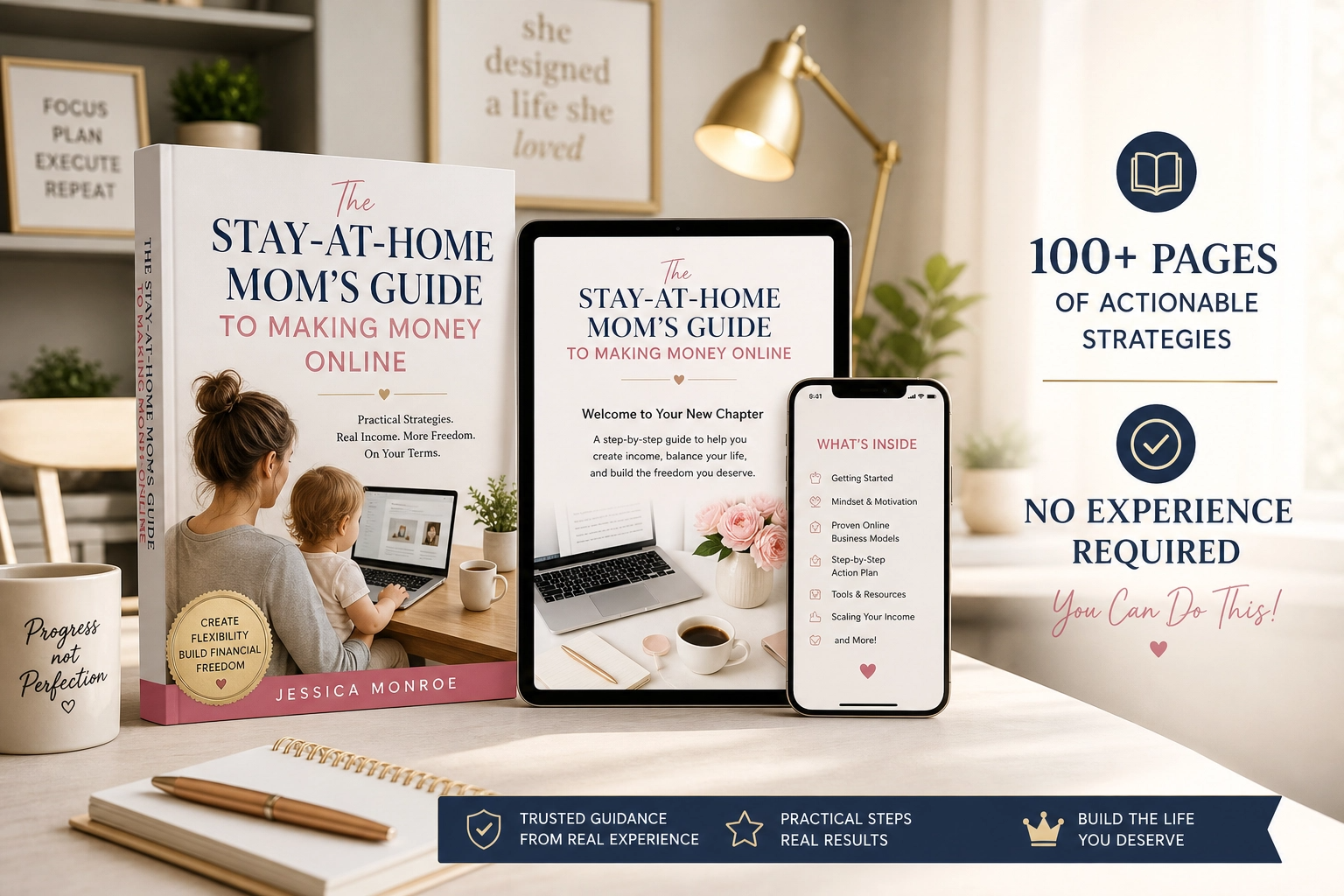
If your broader goal is exploring online income as a stay-at-home mom, you may also want to read The Stay-At-Home Mom’s Guide to Making Money Online. Treat it as an additional resource to review alongside your own goals and circumstances—not as a promise of earnings or a substitute for personalized financial advice.
Start with the useful thing you can finish. A well-made ebook is not a shortcut to guaranteed income; it is a clear invitation for the right reader to benefit from what you know. Choose one problem, build one honest solution, and let the next rung reveal itself.
Disclaimer: This article is for general educational purposes only. Results from selling digital products vary, and nothing here guarantees income or constitutes financial, legal, tax, or business advice.
About the Author