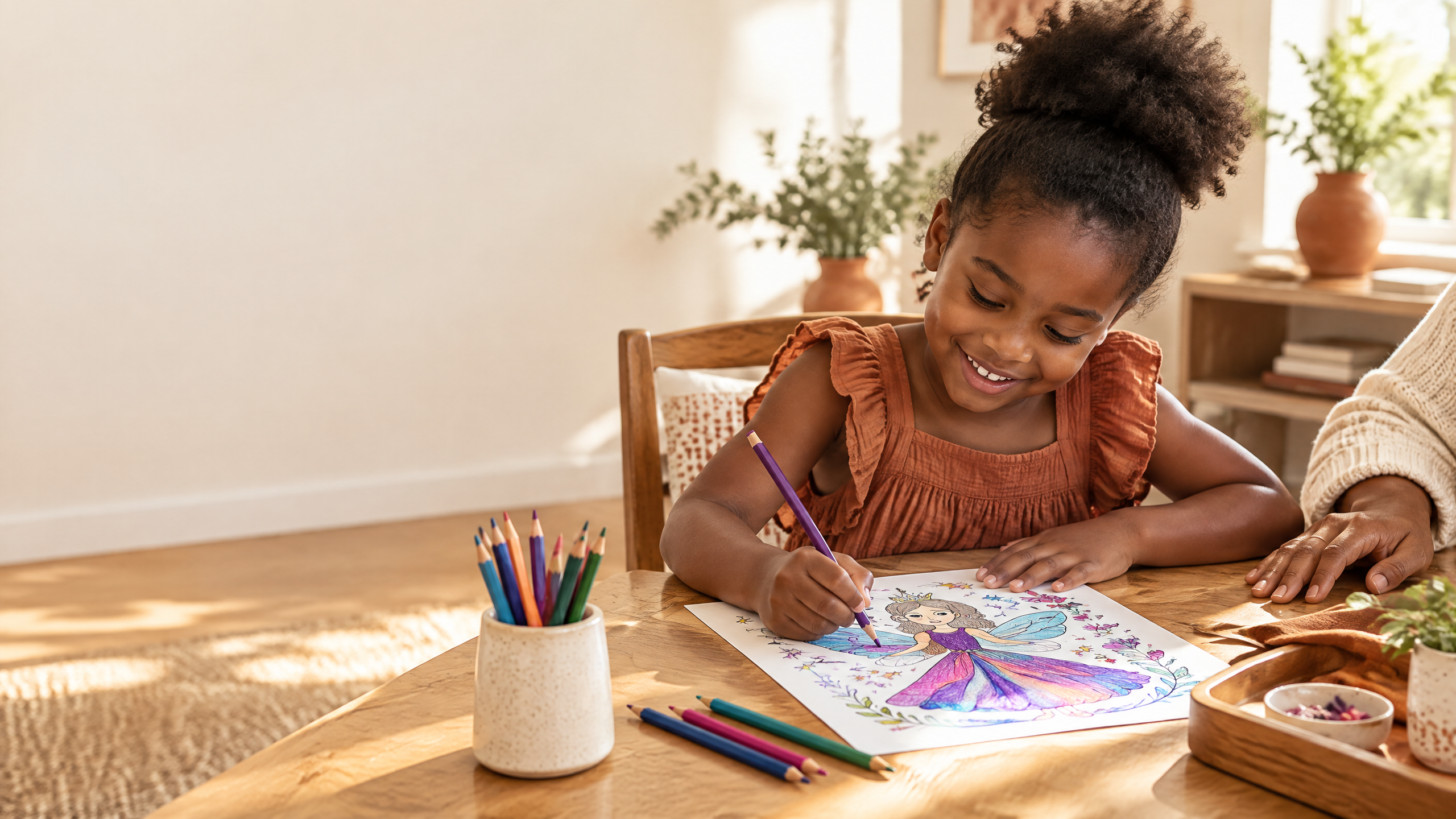
How to Build Creative Confidence in Kids Without Making Art Feel Like Homework
A child sits down with a clean sheet of paper, draws one wobbly line, and looks up for approval. “Is it good?” they ask. It is an ordinary question, but it carries a surprisingly big worry: Am I doing this right?
That moment is an invitation, not a verdict. When adults rush to praise the result, correct the shape, or demonstrate the “better” way to draw, children can quietly learn that art is a performance. The safest choice becomes copying someone else. The brave choice—trying an odd color, inventing a character, starting over—can feel too exposed.
Learning how to build creative confidence in kids is less about producing impressive art and more about making experimentation feel normal. You do not need a dedicated studio, an elaborate curriculum, or a child who already calls themselves artistic. You need a little time, accessible materials, and an adult who can stay curious when the picture takes an unexpected turn.
The goal is not to turn every afternoon into a craft project. It is to help a child trust their own ideas. That trust can show up in a drawing, a costume, a science project, a new recipe, or a solution to a problem that has not been solved before.
Start with a creative climate, not a craft schedule
Confidence begins before the crayons come out. Children notice whether the adults around them treat mistakes as embarrassing interruptions or useful information. A home does not have to be spotless or quiet to support creativity; it simply needs a few signals that making things is welcome.
Make materials easy to reach
Place a small basket of paper, washable markers, colored pencils, glue sticks, and recycled cardboard somewhere your child can access with reasonable independence. Keep the selection manageable. Twenty kinds of supplies can become a decision-making problem, while a thoughtfully chosen handful feels inviting.
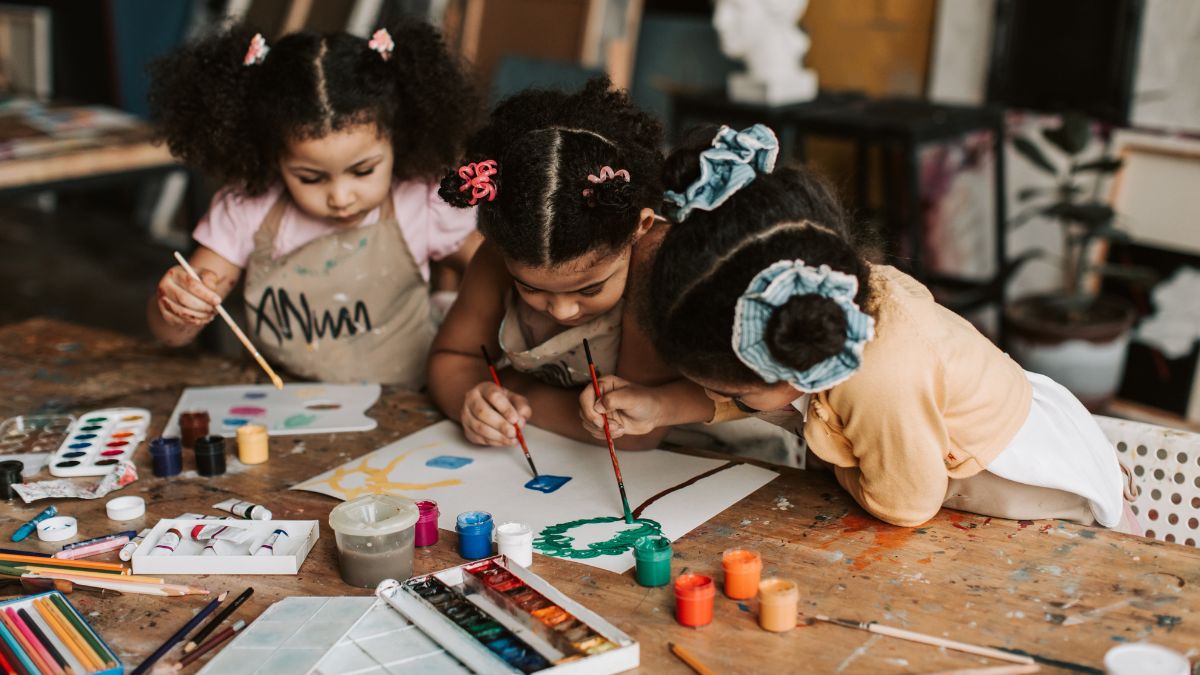
Let creativity happen in short bursts
A ten-minute drawing after breakfast may be more useful than a two-hour weekend project that everyone dreads. Offer an open invitation rather than a demand: “I am going to sketch for a few minutes. Want to join me?” Your participation communicates that creativity is a normal part of life, not a test assigned to children.
Replace performance praise with specific noticing
“Beautiful” is kind, but it is too broad to help a child understand what they did or what they might try next. It can also make a child feel that they have to repeat whatever earned the compliment. Specific observations keep the conversation grounded in their choices.
Try language that names the decision
You might say:
- “You used three shades of blue for the sky. What made you choose that?”
- “I notice the tiny windows on your house. You thought about what might be happening inside.”
- “You changed the dragon’s wings after you started. Tell me about the new plan.”
- “That line is very light here and bold there. You made the movement feel different.”
These comments do not pretend every image is a masterpiece. They show the child that attention belongs to the thinking, not just the finished appearance.
Ask before interpreting
A child’s purple sun may be a sunset, a magic signal, or simply purple. Instead of guessing, ask, “What would you like me to know about this picture?” If they shrug, let it remain partly private. Creative confidence includes the right not to explain every choice.
When a child asks, “Do you like it?” answer warmly and honestly. “I love seeing how your idea grew. My favorite part is the tiny boat. What part feels most like you?” This gives encouragement without making your taste the final authority.
Offer prompts that open doors instead of prescribing outcomes
An art assignment becomes homework when the answer is already decided. “Draw a perfect princess in this exact style” leaves little room for ownership. A good prompt provides a starting point, then gets out of the way.
Use the “what if?” test
Open-ended prompts work because they invite many valid directions. Try asking:
- What if a garden could walk around at night?
- What would your pet pack for a trip to the moon?
- Design a bedroom for someone who lives under the ocean.
- Draw a place where the weather changes every ten minutes.
- If your favorite snack had a personality, what would it wear?
There is no need to present all five at once. Offer one, then follow the child’s detour. If the ocean bedroom becomes a submarine school, that is not a failure to follow instructions. It is the creative part working.
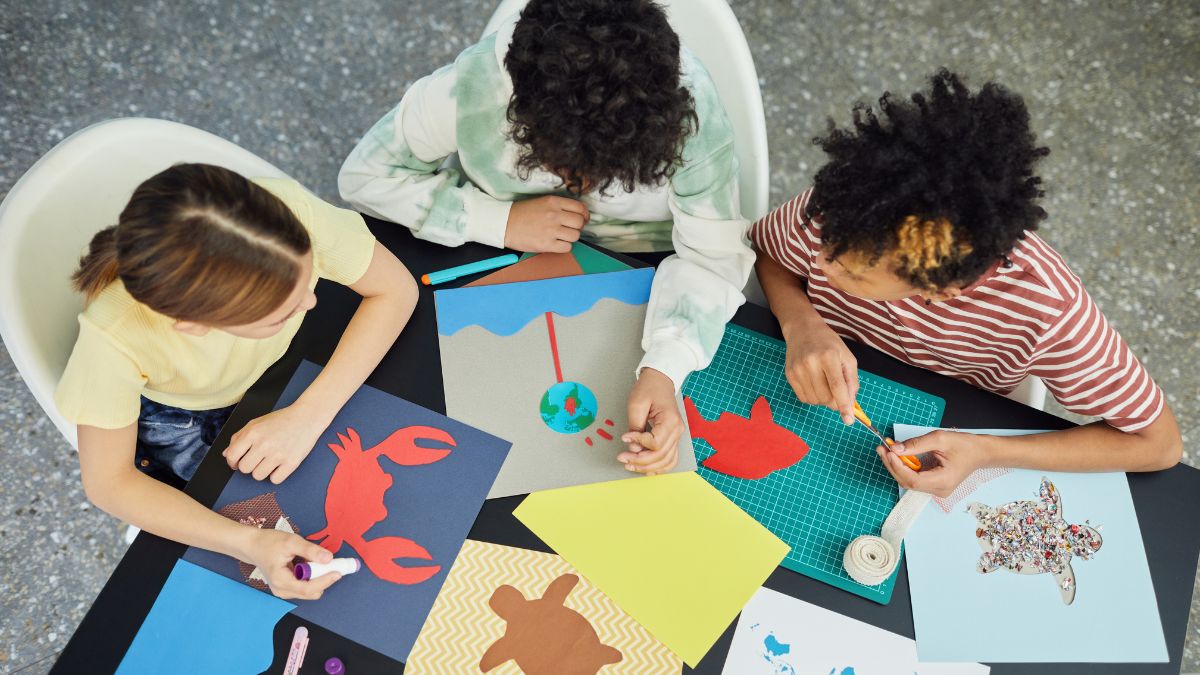
Build confidence through tiny, finishable experiments
Children can lose confidence when every project becomes a major undertaking. A project with a clear, modest finish line gives them repeated experiences of starting, adjusting, and completing something on their own terms.
Let children make real choices—and live with some of them
Confidence cannot grow if the adult quietly controls every important decision. Offer choices that matter, then resist the urge to rescue the project when the result is unusual.
Give two or three meaningful options
Ask, “Would you like to use markers or collage?” “Should the character live in a tree house or a train?” “Do you want the background to be busy or mostly empty?” A few options prevent overwhelm while making the child an active decision-maker.
If they choose a combination you would not have made, let it stand. A green face, a lopsided crown, or a house with no walls may be exactly the experiment they need. You can ask about the choice without correcting it: “What happens in this house if there are no walls?”
Make revision optional, not corrective
Some children love to revise. Others hear “fix it” when an adult suggests changes. Instead of pointing out what is wrong, offer a second sheet or invite an alternate version: “Would you like to try another way, or are you finished with this one?” The word or matters. It protects the child’s authority over the work.
If a practical problem needs solving—such as paint dripping onto the floor—address the environment, not the child’s imagination. “Let’s move the paper to the tray” is different from “That is too messy.”
Use representation and story to widen the invitation
Children often engage more deeply when creative materials reflect a broad range of identities, features, families, and possibilities. Representation is not a guarantee of confidence, but it can make the invitation feel more personal: There is room for someone like me in this imaginative world.
Pair images with questions about possibility
When looking at an illustration or coloring page, ask, “What might this character be good at?” or “Where could she be going?” Keep the focus on agency, personality, and story rather than appearance alone. A fairy can be a mechanic, a quiet observer, a big sister, or the person who maps the whole forest.
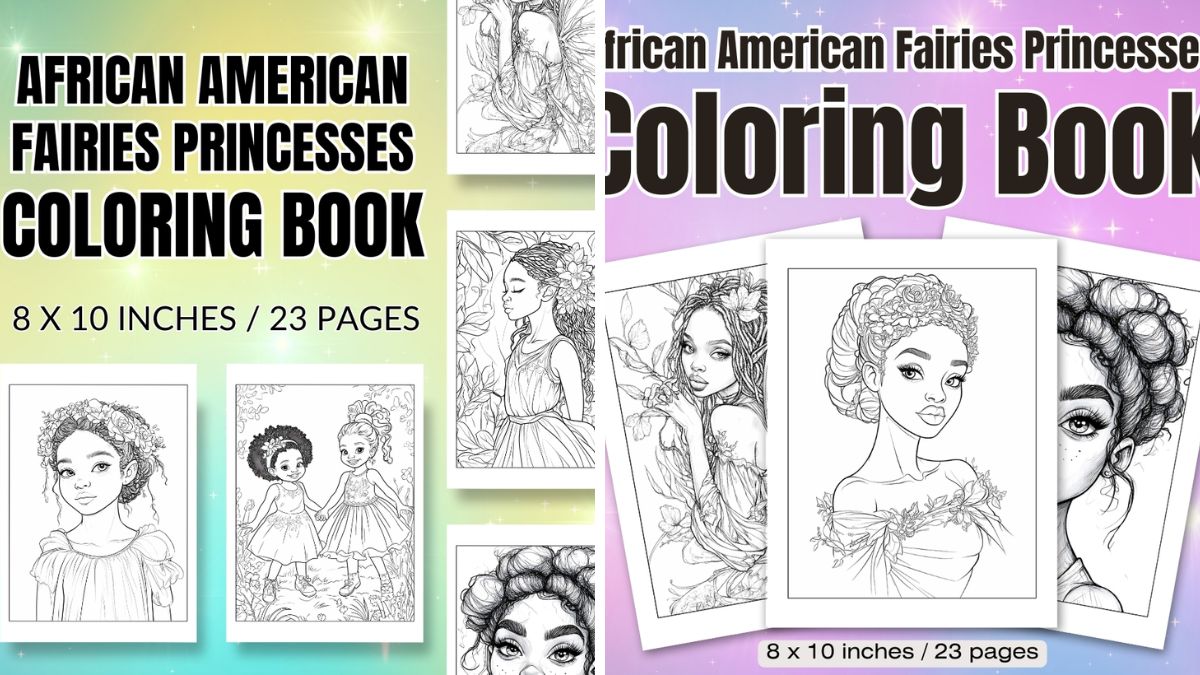
For a ready-to-color option, consider African American Fairies Princesses Coloring Pages / Sheets of African American Fairies Princesses {Coloring Book}. The linked listing describes it as a coloring-pages product. It can be a simple starting point for a conversation about color, character, and imaginative worlds, while your child remains free to interpret the pages in their own way. Review the listing directly for the current product details before purchasing; do not assume features that are not stated there.
Know what to do when confidence wobbles
Even an enthusiastic child may crumple a page, compare their work with a sibling, or announce, “I cannot draw.” The most helpful response is calm and specific. Start by acknowledging the feeling: “It is frustrating when the picture does not look the way you imagined.” Then offer a choice: “Do you want to pause, change the idea, or try one small part again?”
If comparison is the problem, move attention from ranking to difference. “Your picture and your brother’s are telling different stories. What did you want yours to show?” If the child is genuinely finished, let them be finished. Rest is part of a sustainable creative life.
Common mistakes that make art feel like homework
Demonstrating too much
A grown-up example can become an invisible standard. If you need to show how a tool works, demonstrate the technique on a separate scrap of paper and then step back. Do not redraw the child’s work for them.
Asking for a neat result
Neatness can matter when paint is near a laptop, but it is not the same as creative quality. Protect the table and clothing without demanding that the artwork look controlled. Some ideas arrive through mess.
Treating every creative moment as educational
Not every drawing needs a lesson about color theory, vocabulary, or fine-motor development. Those benefits may appear, but they do not need to be announced. Sometimes the healthiest message is simply, “You made time for something you wanted to make.”
A brief note on child development: Creative activities may support opportunities for expression, decision-making, and practice, but they are not a substitute for individualized educational, developmental, or mental-health guidance. If you have concerns about a child’s development or emotional well-being, speak with a qualified pediatric or child-development professional.
FAQ: Building creative confidence in kids
What if my child says they are not creative?
Take the statement seriously without treating it as a fixed fact. Ask what feels difficult, then offer a non-drawing entry point such as building, music, storytelling, cooking, or arranging objects. You can say, “You do not have to call yourself creative today. Would you like to experiment for five minutes?” Identity often follows repeated experiences of choice and discovery.
Should I correct a child’s coloring or drawing technique?
Correct only when safety, materials, or a clearly requested skill is involved. If your child asks how to draw a hand or mix a color, demonstrate one option and invite them to adapt it. Otherwise, ask about their intention rather than fixing the result. An unusual choice may be deliberate, even when it is not obvious to you.
How much art time is enough?
There is no universal number of minutes. A short, voluntary ritual that your family can repeat is more useful than a long session that creates resistance. Keep supplies available, follow your child’s energy, and stop while the experience still feels manageable. Creative confidence grows through many low-pressure returns, not one perfect afternoon.
Make room for the next idea
The simplest way to build creative confidence in kids is to show them that their ideas do not have to earn permission by looking polished. Offer materials. Ask curious questions. Notice decisions. Let them change direction, make a mess within clear boundaries, and walk away when they are done.
Tonight, put a few supplies on the table and try one prompt: “What would you make if nobody needed you to get it right?” Then listen. The answer may be a picture, a story, a pile of cut paper, or an enthusiastic “I do not know yet.” All of those can be beginnings.
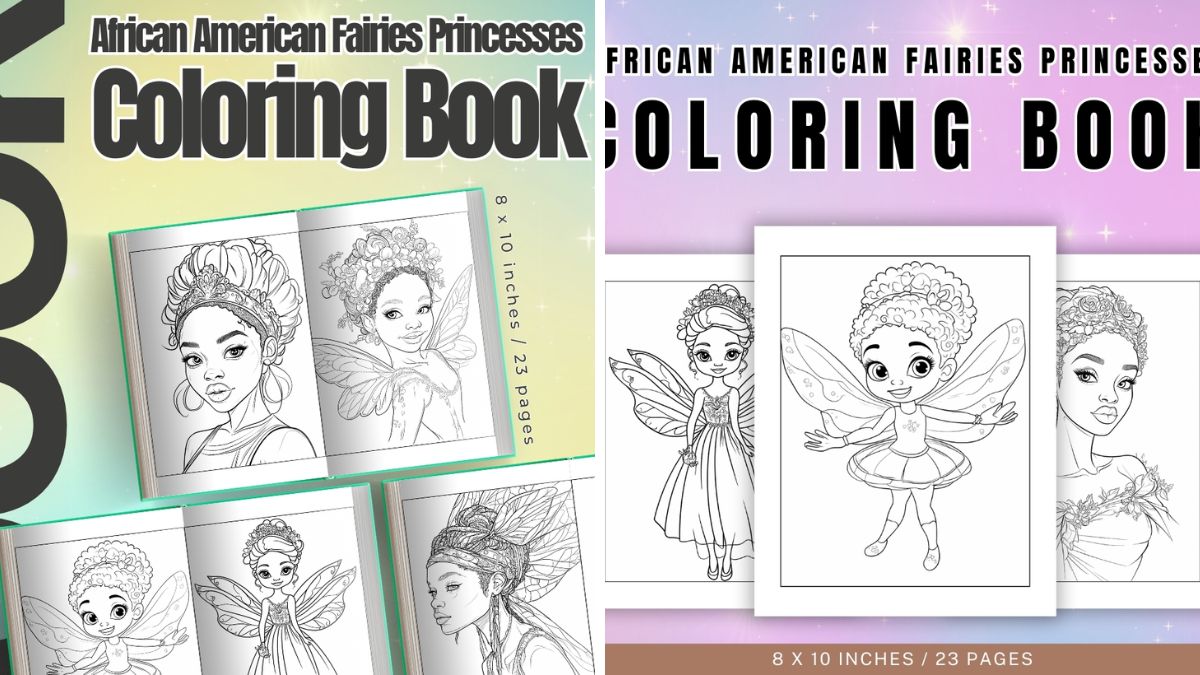
If you want an easy, story-rich starting point, explore the African American Fairies Princesses Coloring Pages / Sheets of African American Fairies Princesses {Coloring Book} listing and let your child decide what the characters become. Keep the invitation light, keep the choices theirs, and make the process more important than the product.
About the Author