SEO, Social, and Everything Else: A No-Overwhelm Guide to Digital Marketing for Small Businesses
You’ve built something good. A service, a product, a blog, a business idea you believe in. And then comes the part nobody warns you about: getting people to actually find it.
Marketing can feel like standing at a buffet with 400 options and one plate. SEO! Reels! Newsletters! Ads! Pinterest! Podcasts! No wonder so many beginners freeze, try everything for two weeks, and burn out.
Here’s the better approach. This guide to digital marketing for beginners cuts through the noise with seven channels worth knowing, how to choose the right ones for your goals, and a simple 30-day plan so you’re taking action instead of just reading about it.
What Is Digital Marketing?
Digital marketing is any effort to promote a product, service, or brand using online channels. Its core purpose is simple: put the right message in front of the right people, and give them a reason to act.
The big advantage over traditional marketing? You can start small, test cheaply, and see what’s working through data. The big challenge? There’s no shortage of distractions.
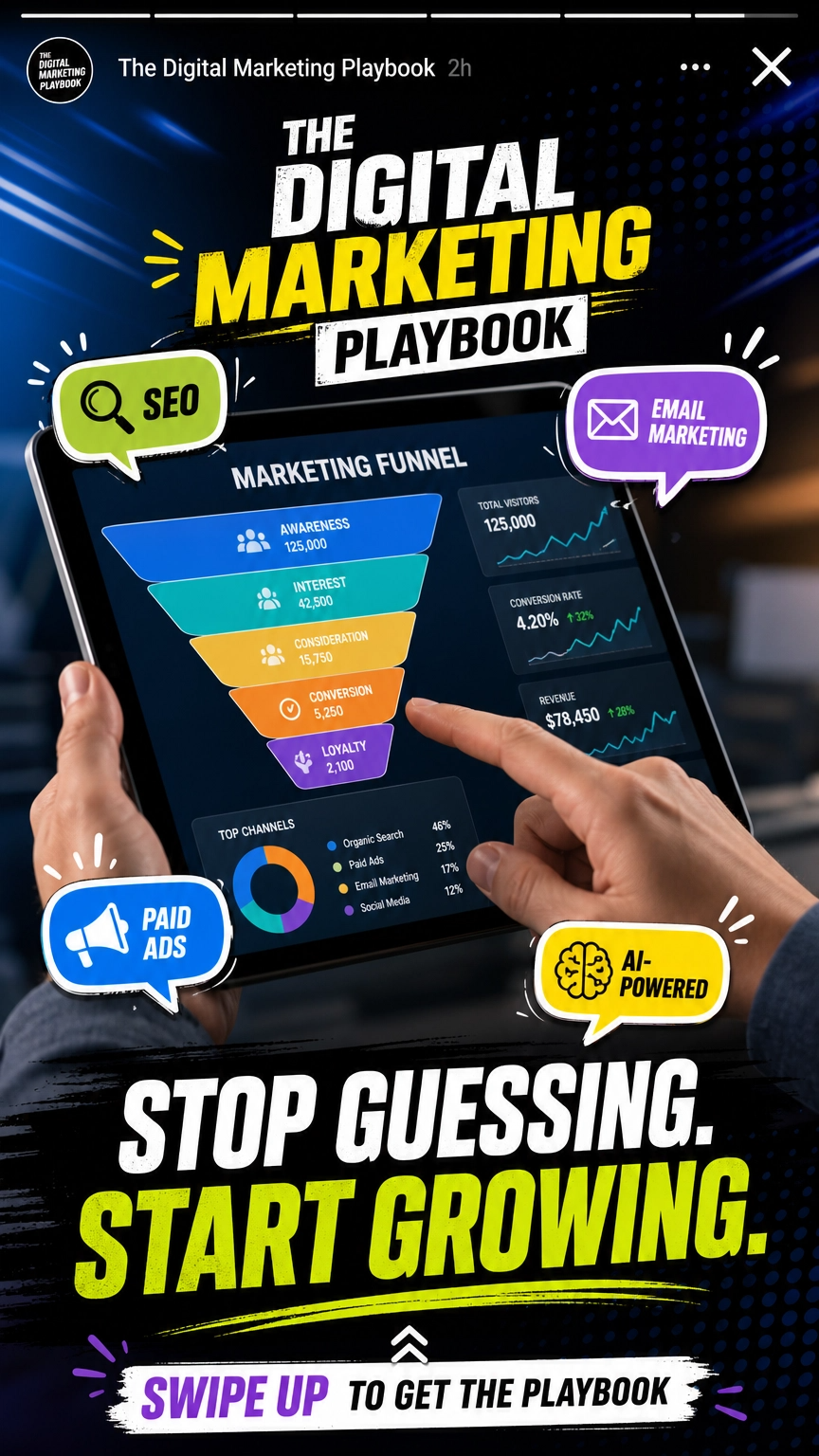
A helpful mental model is the marketing funnel:
- Awareness: people discover you exist
- Consideration: they learn whether you can help them
- Conversion: they buy, subscribe, or book
- Loyalty: they return, refer, and repeat
Great marketing supports every stage — not just the flashy first one.

Before You Pick a Channel: Three Questions
Skipping this section is the most common beginner mistake.
1. Who is my customer? Get specific: age range, interests, problems, where they spend time online.
2. What’s my goal? More email subscribers? Sales? Bookings? Brand awareness? Different goals call for different channels.
3. What can I realistically sustain? A channel you can maintain for six months beats five you abandon after three weeks.
Write your answers down. They’ll guide every decision that follows.
Channel 1: Search Engine Optimization (SEO)
SEO is the practice of making your website and content easier to find in search engines like Google. When someone types a question you can answer, you want to show up.
Why it’s worth your time: Search traffic can build over time and keep working long after you hit publish.
Beginner basics:
- Research phrases your audience actually searches
- Create genuinely helpful content that answers those questions
- Use clear titles, headings, and meta descriptions
- Make your site fast and mobile-friendly
- Earn links by creating content worth sharing
Best for: blogs, service providers, and anyone with a long-term mindset. Trade-off: results take months, not days.

Channel 2: Email Marketing
Email is still one of the most dependable ways to reach people, because you own the list. No algorithm decides who sees your message.
How to start:
- Offer a freebie (checklist, mini-guide, template) in exchange for sign-ups
- Choose a beginner-friendly email platform
- Send a warm welcome email introducing yourself
- Commit to a regular schedule (even once or twice a month)
- Mix value (tips, stories) with occasional offers
Best for: nearly everyone. Trade-off: you need to build the list first, and writing consistently takes discipline.
Channel 3: Social Media Marketing
Social platforms are where people discover, connect, and engage. The key is to choose one or two platforms where your audience actually spends time, rather than trying to be everywhere.
Quick platform guide:
- Instagram and TikTok: visual, creative, and lifestyle-driven niches
- LinkedIn: professional services, B2B, and career topics
- Facebook: community building and local audiences
- YouTube: tutorials, long-form teaching, and evergreen content
Beginner tips:
- Show your face, story, and process — people connect with people
- Use a simple content mix: educate, entertain, and invite action
- Engage with comments and other creators’ posts
- Repurpose one idea across formats to save time
Trade-off: reach depends on algorithms, so use social to build relationships and guide people to your email list.

Channel 4: Content Marketing (Blogs, Video, Podcasts)
Content marketing means creating valuable material that attracts and serves your audience — building trust long before they buy.
Simple ways to start:
- Write blog posts answering your customers’ top questions
- Record short videos explaining your process
- Share case studies and behind-the-scenes stories
- Create a resource library that new visitors can explore
It pairs naturally with SEO and email, forming a powerful trio. Trade-off: it requires consistency and patience.
Channel 5: Pinterest
Often misunderstood as a social network, Pinterest works more like a visual search engine. People go there to plan and discover — recipes, home ideas, fashion, wellness, business tips — which makes it a strong fit for evergreen, how-to, and lifestyle content.
How to start:
- Create a business account
- Design clear, attractive vertical pins
- Use descriptive titles and keywords
- Link pins to helpful pages on your site
- Pin consistently
Best for: bloggers, product sellers, and creative businesses. Trade-off: it’s visual-heavy, but design tools make it approachable.

Channel 6: Paid Advertising
Ads (on search engines or social platforms) can deliver faster visibility, but they require testing and a clear offer.
Beginner rules:
- Start only when you have something that already sells. Ads amplify what works; they rarely rescue what doesn’t.
- Start with a small budget and test one variable at a time
- Track results so you know what you’re paying for
- Send traffic to a focused page with a clear call to action
Best for: established offers and businesses with a defined budget. Trade-off: costs can add up quickly if you’re not tracking.
Channel 7: Collaborations and Partnerships
You don’t have to build an audience entirely alone. Partnering with others — guest posts, podcast interviews, joint giveaways, affiliate relationships — can introduce you to new people who already trust the host.
How to begin:
- List five creators or businesses with similar audiences (not direct competitors)
- Reach out with a specific, generous idea
- Offer value first
Best for: anyone willing to build relationships. Trade-off: it takes outreach and follow-up.

How to Choose Your First Two Channels
Use this quick decision guide:
- Want long-term, free traffic? → SEO + content marketing
- Want direct relationships and sales? → Email marketing
- Visual product or lifestyle brand? → Pinterest + Instagram
- Service provider or B2B? → LinkedIn + email
- Have a proven offer and budget? → Add paid ads
A winning beginner combo: one traffic channel (SEO, Pinterest, or social) plus email to capture and nurture those visitors.

A Simple 30-Day Digital Marketing Plan
Week 1 — Foundation
- Define your customer, goal, and offer
- Set up (or tidy) your website or landing page
- Choose your two channels
Week 2 — Create
- Make your freebie or lead magnet
- Set up your email platform and welcome email
- Create your first batch of content (five pieces)
Week 3 — Publish and Promote
- Publish consistently on your chosen channels
- Engage daily with your audience and peers
- Send your first email
Week 4 — Measure and Adjust
- Review: What got clicks, replies, or sign-ups?
- Double down on what’s working; drop what isn’t
- Plan the next 30 days
Remember: marketing is an experiment loop — try, measure, improve.
Ready for a Complete Playbook?
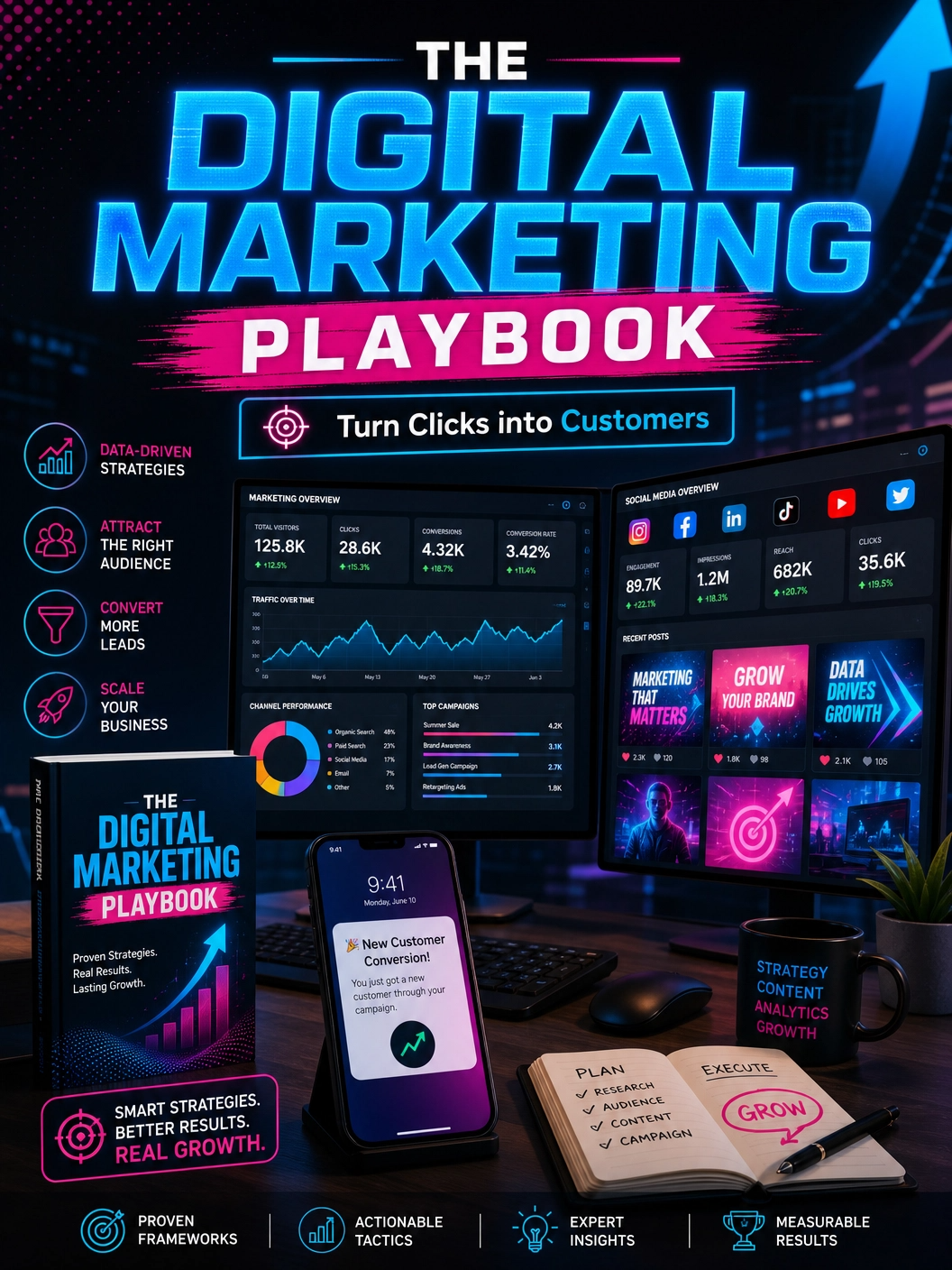
If you want every piece in one place — strategy, channels, content, and systems explained clearly for beginners — The Digital Marketing Playbook is designed to take you from scattered tactics to a plan you can follow.
→ Shop it: The Digital Marketing Playbook
Beginner Mistakes to Avoid
- Doing everything at once. Depth beats breadth.
- Skipping the email list. Don’t build your whole business on borrowed platforms.
- Ignoring data. Even basic analytics reveal valuable patterns.
- Selling too hard, too soon. Build trust, then make clear offers.
- Giving up too early. Many channels need months before results show.
- Copying competitors blindly. Learn from them, but find your own voice.
Tools to Make Life Easier
You don’t need a big tech stack. A beginner-friendly toolkit might include:
- A design tool for graphics
- A scheduling tool for social posts
- An email platform
- A free analytics tool for your site
- A notes app or spreadsheet for planning
Add tools only when a task becomes a bottleneck.
FAQ: Digital Marketing for Beginners
How much should I spend to start? You can begin with very little. Many effective channels (SEO, email, organic social) cost mostly time.
Which channel works fastest? Paid ads and collaborations can bring quicker visibility, while SEO and content build momentum more slowly.
Do I need a website? It’s strongly recommended, even a simple one, since it gives you a home base you control.
How long until I see results? It varies. Plan on steady effort over several months, and track small wins along the way.
Keep It Simple, Keep It Going
Digital marketing isn’t a magic trick — it’s a habit. Choose two channels, show up consistently, listen to your audience, and refine as you go.
You don’t need to be everywhere. You need to be somewhere, helpfully and consistently. Save this guide, share it with a fellow business owner, and pick your first channel today.
About the Author