Your Personal Brand Is Worth More Than Your Resume Right Now — Here's Why
Here’s a slightly uncomfortable truth: you already have a personal brand. Right now. It’s what people say about you when you’re not in the room — the things they trust you for, the way you show up in emails, the impression your LinkedIn profile leaves at 11 p.m. when a recruiter is scrolling.
The only question is whether it’s intentional.
If the phrase “personal brand” makes you picture someone in a blazer posing in front of a bookshelf, relax. Learning how to build a personal brand isn’t about turning yourself into a product. It’s about getting clear on who you are, what you offer, and how to communicate it with confidence. Here’s your seven-step plan.
What Is a Personal Brand (and Why Does It Matter)?
A personal brand is the combination of your skills, values, personality, and reputation — and how you communicate them to the world. It’s the “why you?” behind every opportunity.
A strong personal brand can help you:
- Stand out in a competitive job market
- Attract clients, collaborators, and opportunities without constant chasing
- Build credibility in your field
- Create options, from promotions to side businesses to speaking invitations
- Feel more confident because you know exactly what you stand for
It matters whether you’re an employee, freelancer, founder, or somewhere in between. Opportunities tend to find people who are easy to understand and easy to remember.

Step 1: Get Clear on Who You Are
Authenticity is the foundation. Before you design anything, answer these questions in a notebook:
- What are my top three strengths?
- What are my core values — the things I won’t compromise on?
- What topics could I talk about for hours?
- What do friends and colleagues come to me for?
- What kind of work makes me feel energized?
- Where do I want to be in three to five years?
If you’re stuck, ask five people who know you well: “What three words would you use to describe me professionally?” Patterns will emerge — and they’re often both flattering and illuminating.

Step 2: Define Your Audience and Niche
You can’t speak to everyone. Decide who you’re trying to reach:
- Who is my ideal audience? (employers, clients, peers, followers)
- What problems do they have?
- How do I help solve them?
- What makes my perspective different?
Your niche is the intersection of what you’re good at, what you care about, and what people need. A narrower focus makes you more memorable. “I help first-time managers communicate with confidence” beats “I do leadership stuff” every time.
Step 3: Write Your Personal Brand Statement
This one sentence is your anchor. Use this simple formula:
“I help [audience] achieve [result] through [your unique approach or strength].”
Examples:
- “I help small wellness brands tell their story through warm, strategic copywriting.”
- “I help busy women simplify their finances so they can build lasting confidence.”
- “I help early-career designers land their first clients through portfolio coaching.”
Don’t aim for perfect. Write three versions, say them out loud, and keep the one that sounds like you on a good day.

Step 4: Craft Your Voice and Visual Identity
Consistency makes you recognizable. Decide on:
Your Voice
Are you warm and encouraging? Direct and no-nonsense? Playful and witty? Pick three adjectives and use them as guardrails for everything you write — posts, emails, bios, captions.
Your Visuals
Keep it simple:
- Two or three colors that feel like you
- One or two fonts used consistently
- A professional, approachable headshot — natural light and a genuine smile go a long way
- A consistent style for graphics and photos
You don’t need a designer to start. Free design tools are plenty for a polished, cohesive look.
Step 5: Build Your Online Home Base
Social platforms are rented land; you want a place you control. Prioritize:
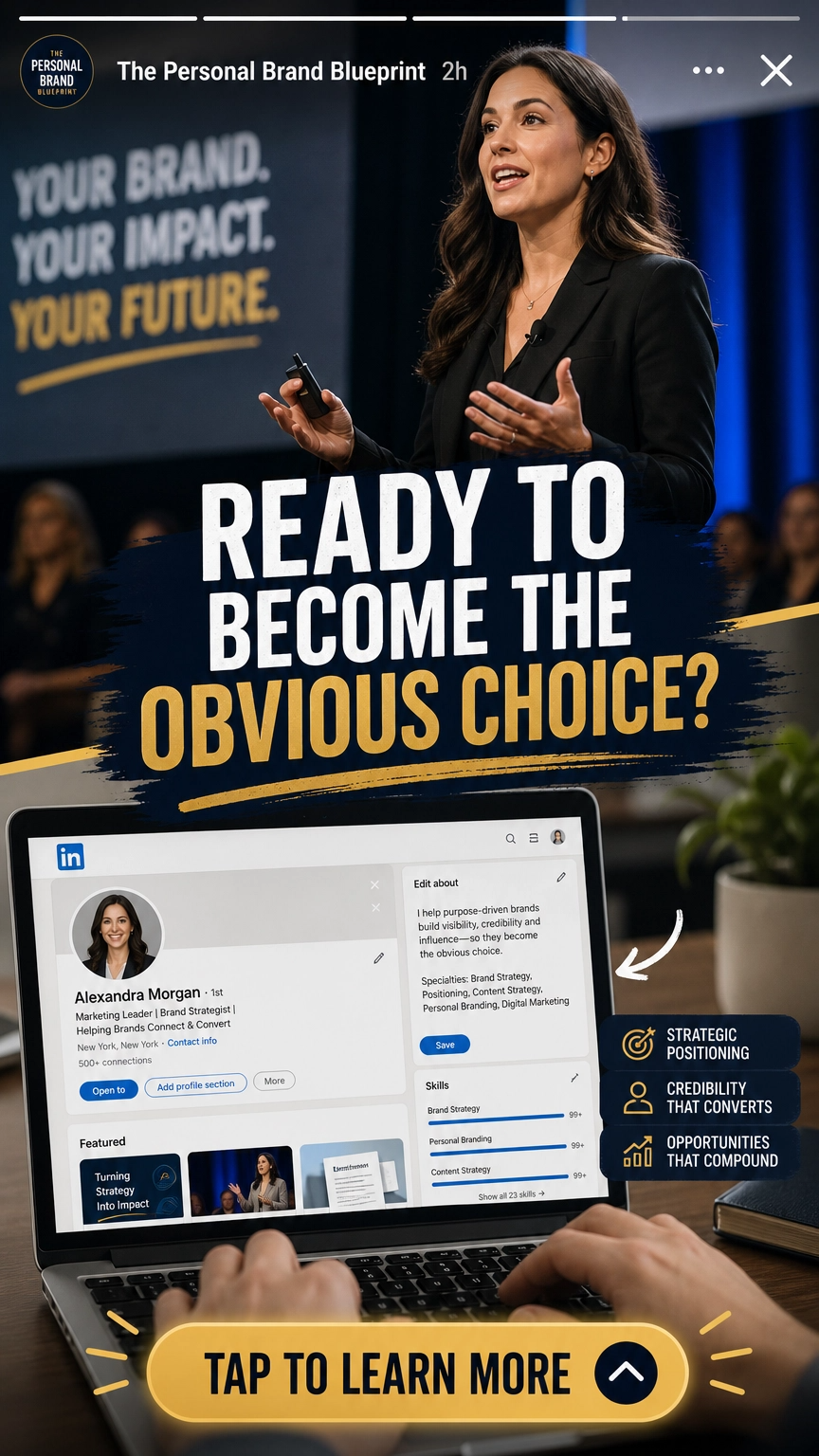
- A strong profile on the platform your audience uses most (LinkedIn for professional audiences, Instagram or TikTok for creative and lifestyle niches, etc.)
- A simple website or portfolio with an About page, your work, and a way to contact you
- An email list — the one audience nobody can take away from you
Profile checklist:
- Clear, friendly photo
- Headline or bio that states what you do and who you help
- A short summary telling your story
- Links to your best work
- A call to action (subscribe, book, connect)

Step 6: Create Content That Shows What You Know
Content is how your brand becomes visible. You don’t have to be everywhere, and you don’t have to go viral. Choose one or two formats you enjoy:
- Short posts and carousels
- Articles or a blog
- Newsletters
- Video or podcasts
- Case studies and project breakdowns
A simple content framework (rotate through these):
- Teach: share a tip, lesson, or how-to
- Show: share your work and behind-the-scenes process
- Tell: share a story or lesson learned
- Connect: ask questions and spotlight others
Aim for helpful over perfect. Your audience cares more about whether you’re useful and real than whether your posts look flawless.
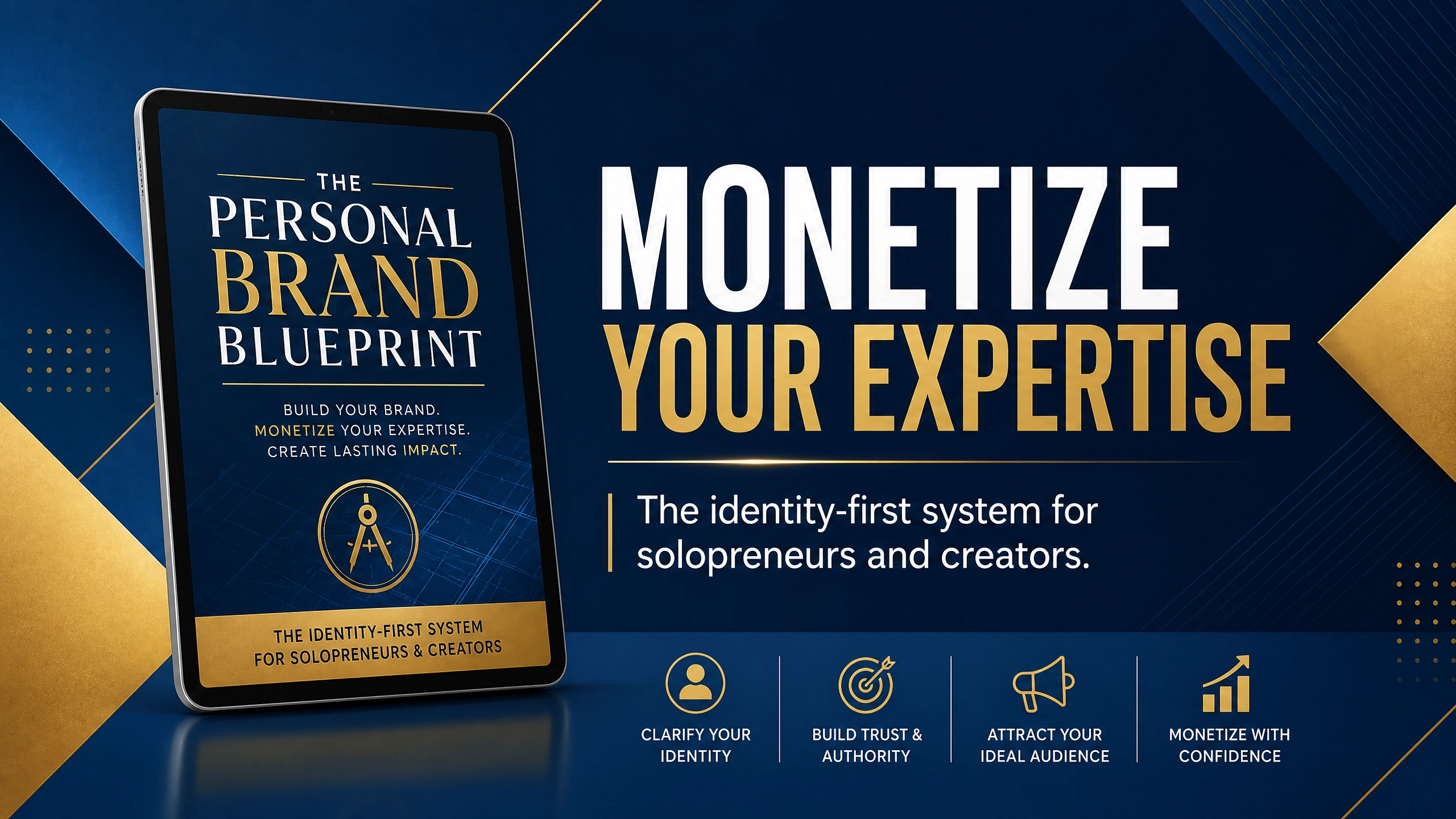
If you’d like a complete, structured system for defining your message, designing your presence, and building momentum, The Personal Brand Blueprint walks you through the process in a clear, practical way.
→ Shop it: The Personal Brand Blueprint
Step 7: Show Up Consistently and Build Relationships
Brands are built through repetition and relationships. Choose a sustainable rhythm — maybe two posts a week and one newsletter a month — and stick with it.
Relationship habits that matter:
- Engage genuinely. Comment thoughtfully on others’ content.
- Reach out. Send a kind message to someone you admire.
- Collaborate. Guest posts, podcasts, and joint projects extend your reach.
- Say yes selectively. Choose opportunities that align with your goals.
- Ask for testimonials. Social proof builds trust.
Your network is your net worth, as the saying goes — but it grows through generosity, not self-promotion.
How to Build a Personal Brand Without Feeling Fake
The biggest fear most women have is coming across as boastful or inauthentic. A few reframes help:
Reframe 1: Sharing your work is service, not bragging. If you can help someone, they deserve to know you exist.
Reframe 2: Authenticity doesn’t mean oversharing. You choose what to share. Boundaries are part of a healthy brand.
Reframe 3: You can evolve. A personal brand isn’t a tattoo. It can grow as you do.
Reframe 4: Imperfect action beats perfect hesitation. Your first posts might feel awkward. Keep going — everyone’s did.
Common Personal Branding Mistakes
- Trying to appeal to everyone. Specific beats generic.
- Copying others. Inspiration is great; imitation is exhausting and forgettable.
- Inconsistency. Disappearing for months erodes momentum.
- Neglecting the basics. A blurry photo or outdated bio can undermine great work.
- Ignoring your reputation offline. Reliability and kindness are part of your brand, too.
- Chasing followers over relationships. Ten engaged people beat a thousand silent ones.
Pair Your Brand With a Business
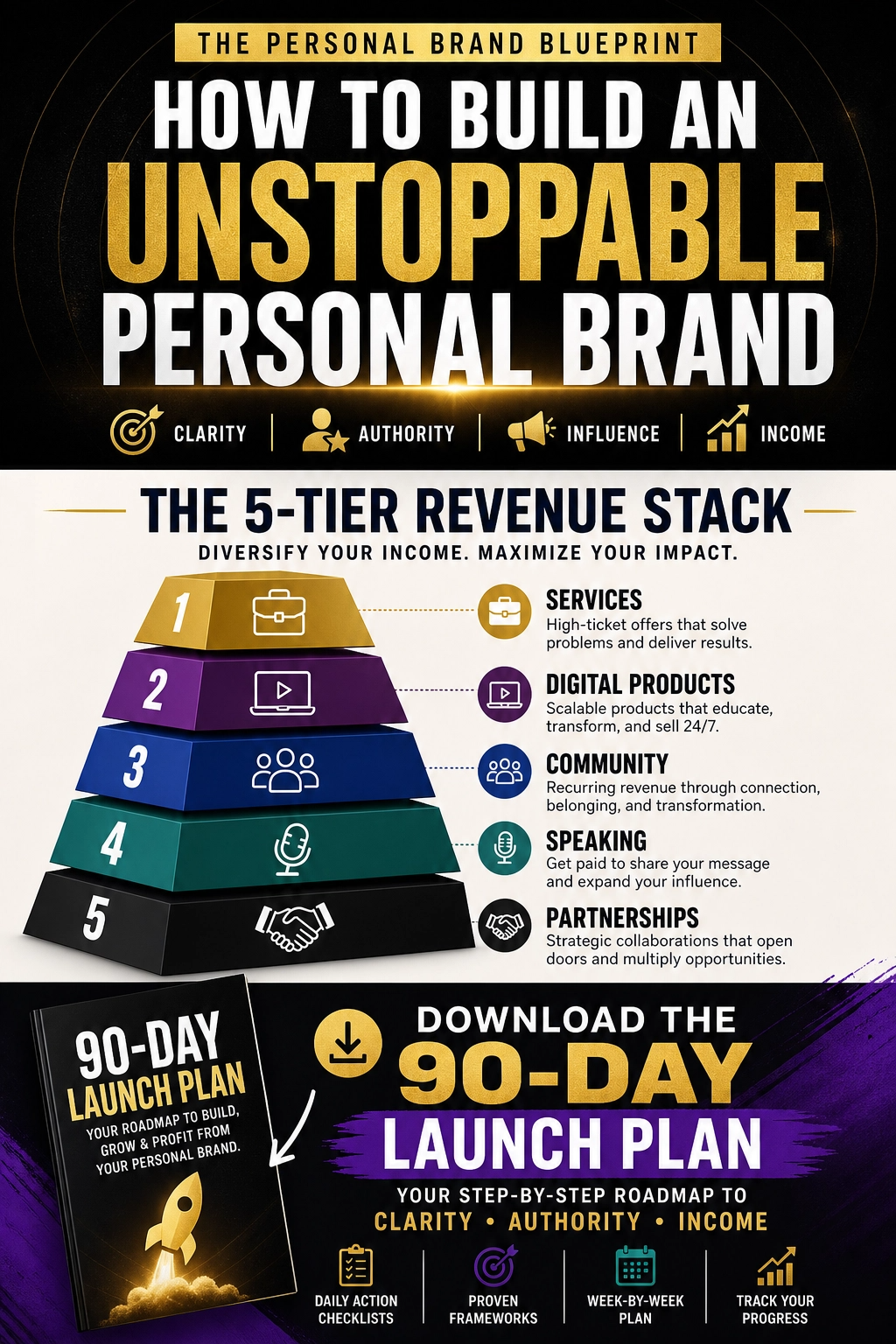
A personal brand becomes especially powerful when it supports something — a freelance practice, a product, a service, or a creator career. If you’re ready to turn visibility into income, explore our guides on digital marketing and building an influencer career — both pair beautifully with a strong foundation.
A 20-Minute Personal Brand Audit
Not sure where you stand today? Set a timer and run through this quick audit:
- Google yourself. What shows up? Does it reflect who you are now?
- Review your top profile. Does your headline say what you do and who you help? Is your photo current and friendly?
- Read your last five posts or updates. Do they share a clear theme, or feel scattered?
- Check your bio on every platform. Is it consistent?
- Ask one trusted person: “What do you think I’m known for?” Compare their answer to what you want to be known for.
- Spot the gaps. Where is there a mismatch between your reputation and your goals?
Choose the biggest gap and fix only that this week. Tiny, targeted improvements compound quickly.
FAQ: Building a Personal Brand
Do I need a big following? No. A small, engaged audience in the right niche can open real doors.
How long does it take? You can set foundations in a few weeks, but reputation grows over months and years of consistent effort.
What if I’m shy? Start with writing or smaller communities. Visibility can be quiet and still effective.
Do I need a website? It’s strongly recommended since it gives you a space you control, but you can begin with a strong LinkedIn profile.
Begin With One Sentence
You don’t have to launch a website, a podcast, and a newsletter next week. Start with your brand statement. Then update one profile. Then share one helpful post.
Your story, your strengths, and your perspective are worth sharing — and the right people are waiting to find them. Save this guide, send it to a friend building her own path, and take your first small step today.
About the Author