
The Grocery Journal Method: Plan Better Meals Without Obsessing Over Food
There is a particular kind of Sunday anxiety that starts with a blank refrigerator and a long week ahead. You want to eat well, spend thoughtfully, and avoid the expensive takeaway spiral. Yet the moment meal planning looks like a spreadsheet with rigid rules, the whole exercise can feel like another job.
A grocery planning journal offers a softer alternative. Instead of demanding seven perfect dinners, it gives you one place to notice what you have, sketch possibilities, and shop for the week you are actually about to live. The aim is fewer frantic decisions, more useful ingredients, and flexibility for a late meeting, a low-energy evening, or an unexpected invitation.
Think of the method as a brief weekly conversation: What sounds good? What needs using? How much energy will I have? What would make the next few days kinder? Here is how to build it into a practical routine.
What a grocery planning journal is—and is not
A grocery planning journal connects meals, ingredients, and the shopping trip. It can be a notebook, digital document, or template you adapt to your life. The useful part is the pause between imagining meals and buying food.
Replace perfection with a weekly shape
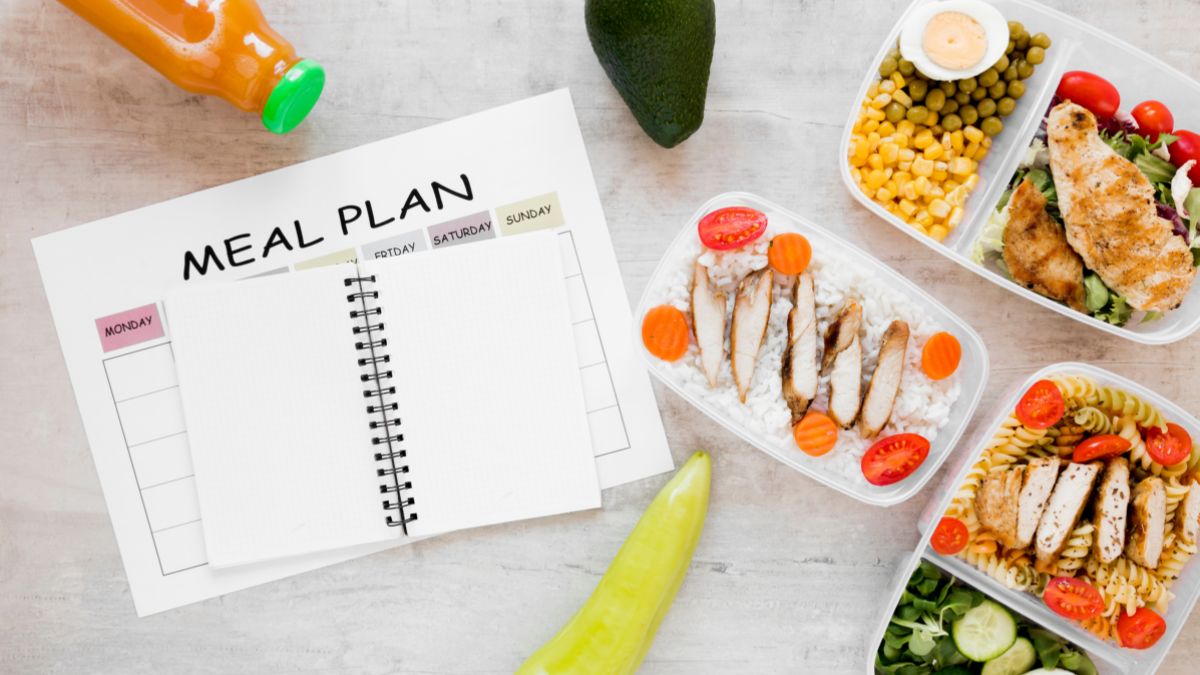
Rather than assigning every meal to a precise day, create a loose shape. Note two meals you are excited to cook, two quick options, one leftover night, and a few easy breakfasts or lunches. This gives direction without turning Tuesday into a test you can fail.
A flexible plan might look like this:
- Cook:lemony chickpea pasta and a tray of salmon with vegetables.
- Assemble:grain bowls using prewashed greens, beans, and a favorite dressing.
- Quick:eggs on toast, soup with bread, or a freezer meal.
- Stretch:leftovers repurposed into wraps or a lunch bowl.
- Wildcard:one open night for plans, cravings, or a meal that did not happen earlier.
The categories are broad. Your journal should reduce decision fatigue, not remove spontaneity.
Keep food neutral and personal
This method is about logistics and enjoyment, not earning, compensating for, or policing food. If food planning brings up anxiety, guilt, or a history of disordered eating, skip any approach that feels restrictive and consider speaking with a qualified health professional. Nutrition needs vary, and this article is not medical or dietary advice.
The 15-minute reset before you shop
The most effective journal entry often takes less time than scrolling through delivery apps. Set a timer for 15 minutes and use the same four prompts each week.
Take inventory without judging it
Look in the refrigerator, freezer, and pantry. Note food that needs using soon, such as soft herbs, an open carton, or a half-full jar. Do not inventory every grain of rice. You are looking for anchors, not a museum catalog.
Try the sentence: “What can become useful this week?” A few mushrooms can become toast topping, pasta filling, or a side dish. A container of cooked rice can support fried rice, a bowl, or a burrito. One ingredient does not have to dictate the entire week.
Read the calendar
A meal plan that ignores your schedule is a wish list. Mark nights when you will be home late, working from home, hosting someone, or eating elsewhere. Note when you have more energy, then place involved cooking on those days and reserve low-effort meals for the nights that cannot hold it.
Choose a small set of meal anchors
Pick three to five meals or components. “Taco night” is enough; you do not need every topping in advance. “Roasted vegetables plus a protein and a sauce” is also enough. Buy ingredients that can work across more than one meal.
Write the shopping list by store area
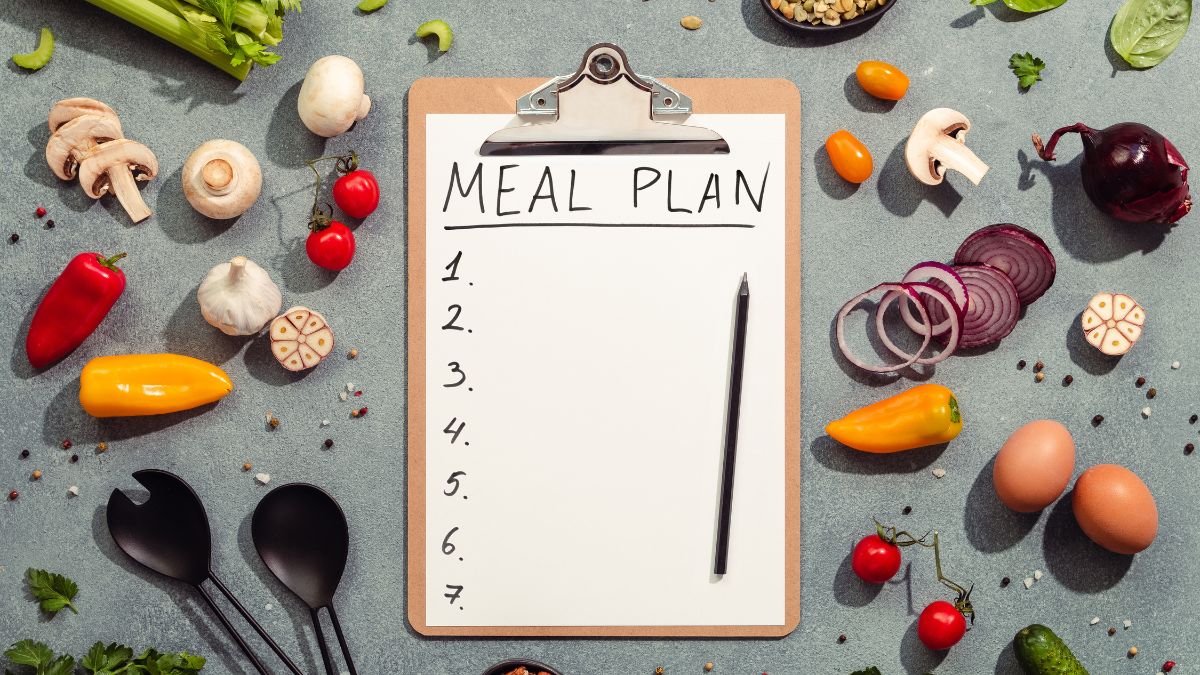
Group the list into produce, chilled foods, pantry, bakery, freezer, and household. This turns the list into a route instead of a scavenger hunt. Leave space for substitutions, because a sustainable plan can change when the store is out of strawberries or a favorite item is expensive.

Build meals from a few repeatable formulas
You do not need an endless recipe collection. A few formulas can carry the week while leaving room for different flavors and preferences.
Use the “base, accent, finish” pattern
Choose a base, an accent, and a finish. A base might be rice, potatoes, pasta, tortillas, or greens. An accent could be beans, eggs, chicken, fish, tofu, or another ingredient you enjoy. The finish is where personality enters: salsa, pesto, yogurt sauce, herbs, pickles, toasted seeds, or a squeeze of citrus.
For example, roasted sweet potatoes can become a dinner plate with beans and lime crema, a filling for tacos, or part of a lunch salad. You shop once but avoid eating the exact same plate three nights in a row.
Plan components instead of complete recipes
Components make the journal more forgiving. A pot of grains, a sheet pan of vegetables, washed greens, and one flavorful sauce can combine in several ways. You can add a store-bought shortcut when you need it. Convenience is not a failure of the method; it is part of planning for your actual capacity.
Add one “rescue meal” to every week
A rescue meal is something you can make when plans collapse. Keep it familiar and low-friction: a freezer dumpling bowl, a quesadilla with vegetables, pasta with a pantry sauce, or a simple breakfast-for-dinner plate. Write the ingredients in the journal even if you usually keep them on hand. Seeing the option can prevent the feeling that there is nothing to eat.
Turn the journal into a calmer shopping trip
Once your list is written, the journal can help you spend attention where it matters.
Set a “good enough” budget
If you track spending, use a range rather than a dramatic pass-or-fail number. You can note an expected total, then record what you actually spent. Over a few weeks, this creates useful information about your household’s habits without turning every item into a moral decision.
Leave room for one or two flexible choices. A strict list can backfire when you are hungry, tired, or faced with a seasonal option. A planned margin makes it more realistic.
Shop your list in the order that suits you
A categorized list is useful in a busy store, but it does not need to dictate your route. If produce first helps you see what is fresh, start there. If you prefer chilled food at the end, group it accordingly.
Before checkout, ask: Do I have the basics for the meals I named? Did I buy a duplicate? Is there something perishable to move earlier in the week? This is a practical pause, not a demand to make the cart flawless.
Use substitutions with confidence
Create a small “if unavailable” habit. Swap spinach for kale, rice for couscous, or one bean for another when the meal still works. If a substitution changes the dish completely, make a note rather than forcing it. Flexible planning keeps one missing ingredient from becoming a wasted trip or an abandoned meal.
Make the weekly review the most valuable page
At the end of the week, spend five minutes answering three questions: What did we enjoy? What went unused? What should be easier next time?
Track patterns, not shortcomings
You may overbuy delicate produce because Thursdays are unpredictable, or discover that breakfast is the real pressure point. These are patterns worth noticing.
Use neutral notes such as “buy less,” “freeze half,” “repeat,” or “move to Friday.” A journal should give you better information, not a weekly report card.
Let the plan evolve with your life
Your grocery rhythm may change during a busy work season, school holidays, travel, or a household change. Keep the structure and adjust the detail. One week may need seven ideas; another may need three dependable meals and easy options. Consistency does not mean identical pages.

Common grocery journal mistakes to avoid
Mistake 1: Planning for an imaginary version of yourself
If you regularly get home late, a plan built around elaborate recipes will create friction. Include shortcuts and low-effort meals before the week begins, not after it has gone off track.
Mistake 2: Treating every ingredient as a single-use purchase
Before adding something new, ask where else it could fit. Fresh herbs can finish several dishes, and a sauce can dress vegetables, grains, or sandwiches. Cross-use lowers waste and makes a smaller shop feel more abundant.
Mistake 3: Making the list too detailed
A list that specifies every garnish can become brittle. Record what makes the meal work, then leave room for preference and availability.
Mistake 4: Ignoring portions and storage
If you hope for leftovers, decide when you will eat them and how they will be stored. Otherwise, they can quietly become waste. A simple “lunch” or “freeze” note can be enough.
Mistake 5: Using the journal to supervise yourself
If writing down food makes you feel watched, pressured, or ashamed, remove the tracking elements, return to a simple list, or stop. A calmer routine matters more than a beautiful spread.
A simple grocery planning journal page to copy
For a low-pressure starting point, divide one page into five areas:
- This week’s reality:late nights, plans, guests, and available cooking time.
- Use first:ingredients already at home or likely to spoil soon.
- Meal anchors:three to five meals or components, plus one rescue meal.
- Shopping list:grouped by store area with a substitution space.
- Next-week note:one thing to repeat, reduce, freeze, or simplify.
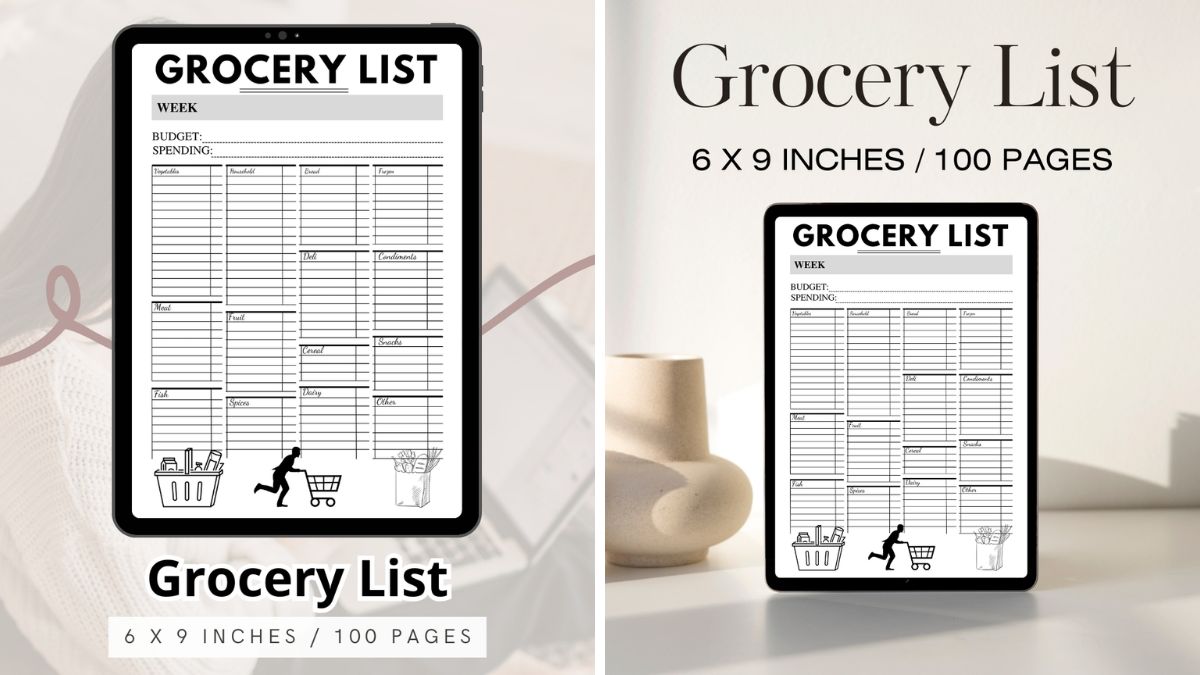
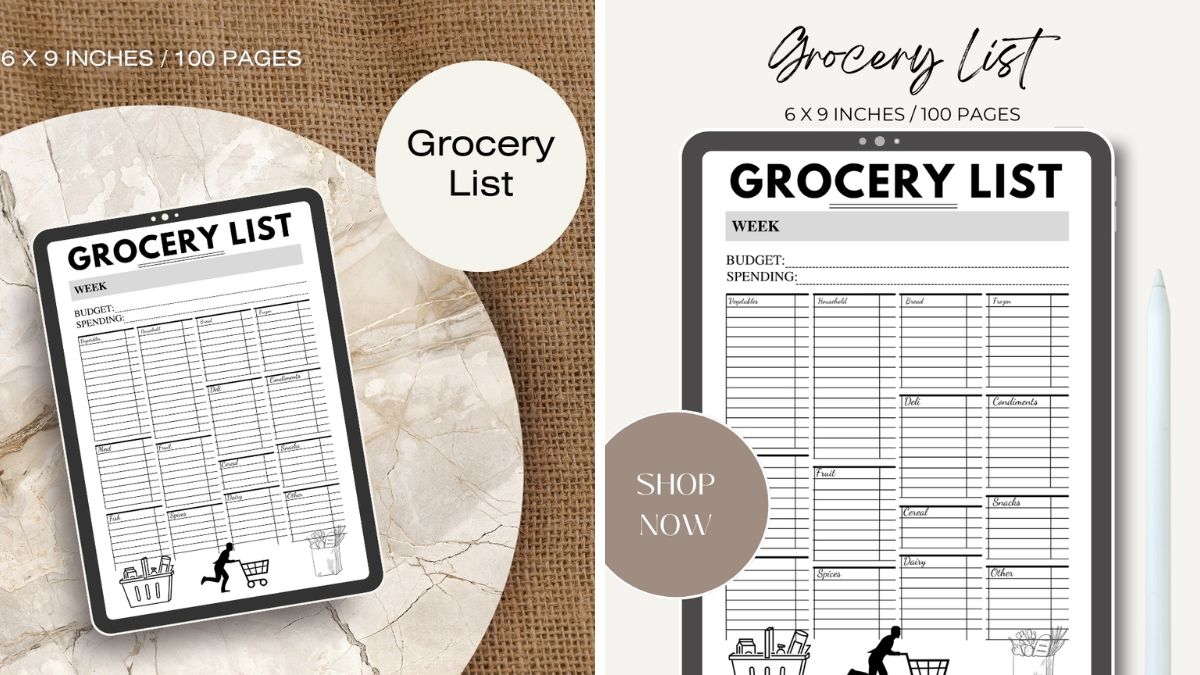
Make the page by hand, in a notes app, or in an editable template. If you prefer a ready-made starting point, the Grocery List Journal / Editable Canva Template is described by its listing as an editable Canva template for organizing grocery shopping, categories, budgets, meal planning, and reducing food waste. The listing says it can be customized and used digitally or printed. Review the listing before purchasing; it is a planning aid, not a promise of perfect meals or savings.
FAQ: Grocery planning journal questions
How often should I fill out a grocery planning journal?
Once a week is a useful starting point, ideally before shopping. Keep the session short and add notes only when helpful. If weekly planning feels like too much, plan three days at a time.
Do I need to plan every meal and snack?
No. Start with the meals that create the most friction, usually dinners or packed lunches. Keep a short list of dependable breakfasts and snacks rather than assigning each one to a day. The journal should provide options, not require constant decision-making.
Can this method work for a household with different preferences?
Yes, if you plan shared components and allow personal finishes. A base such as rice, roasted vegetables, or tortillas can support different sauces, proteins, and toppings. Invite household members to name one meal they would enjoy, then build the list around overlap.
Plan for support, not control
The best grocery journal is not the prettiest one or the most detailed one. It is the page that helps you open the refrigerator with a little more confidence. Give yourself a few meal anchors, a rescue option, and permission to change course. When the method respects your time, appetite, budget, and energy, planning stops being another standard to meet and becomes a small act of care.
Start with one page before your next shop. Write down what needs using, choose three realistic meals, and leave one night open. That is enough to begin building a grocery planning journal that works with your life instead of asking your life to work around it.
About the Author





