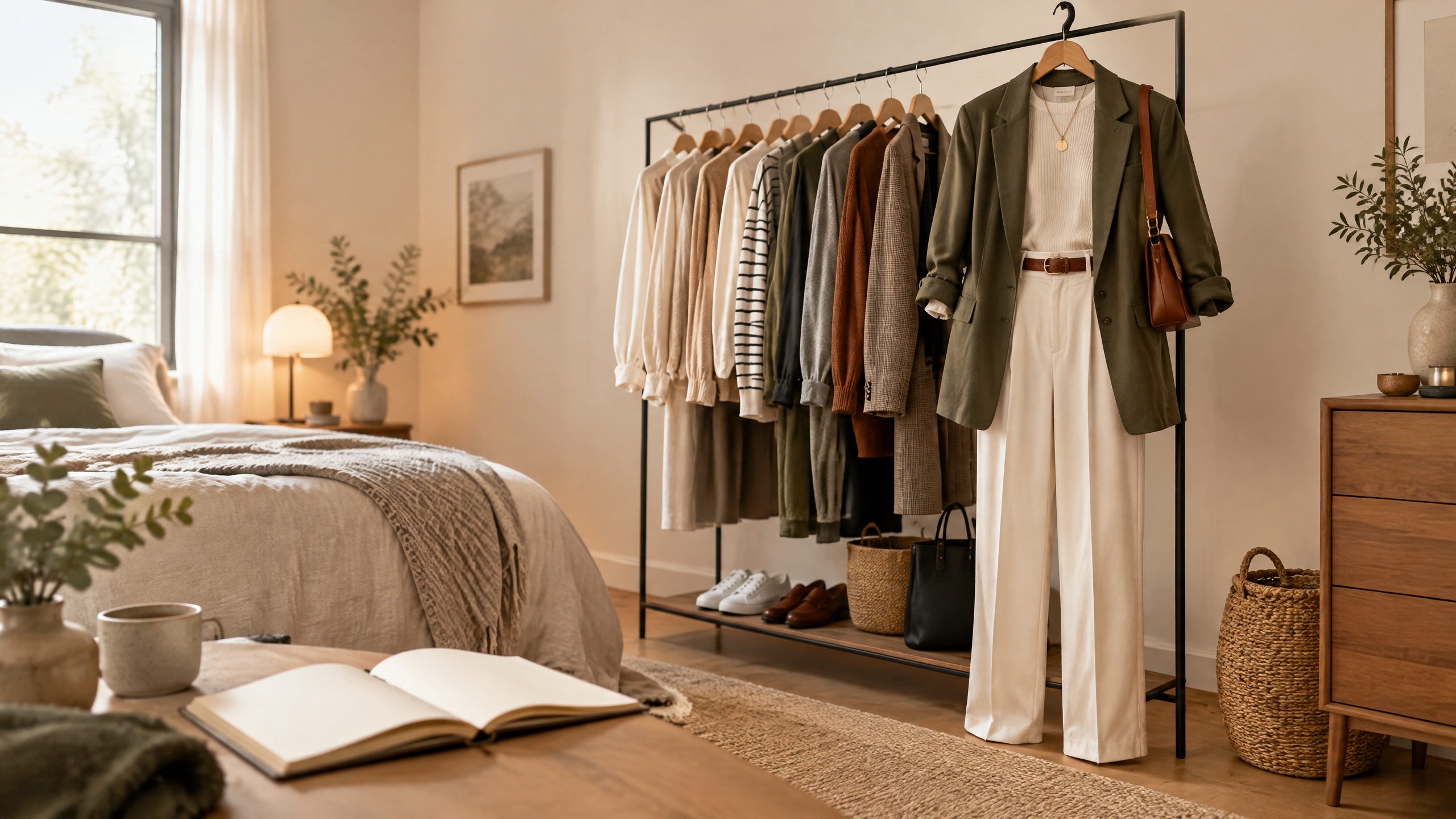
The Practical Capsule Wardrobe Journal: What to Track Before You Buy Anything New
A capsule wardrobe is often sold as a magic number: 30 pieces, 40 pieces, or some other tidy total that promises effortless dressing. But the number is not the point. A useful wardrobe is a record of your real routines, your changing needs, and the clothes that make getting dressed feel easier. Without that information, “building a capsule” can become another reason to shop.
The smarter approach is to pause before you buy. Spend a few weeks observing what you wear, what you avoid, and what repeatedly makes it into the laundry basket. A capsule wardrobe planner journal turns those observations into a practical brief. It helps you distinguish a genuine gap from a momentary want, then decide whether a new item will earn its place.
Begin with a real-life wardrobe audit
Before you plan outfits, document the wardrobe you already own. Choose a normal week rather than a glamorous one. Include workdays, errands, social plans, weather, laundry days, and the outfit you reach for when you are running late. The goal is not to judge your style. The goal is to see it clearly.
Record what you actually wear
For each outfit, note the date, the occasion, the weather, and the pieces you wore. You do not need to write an essay. A quick entry might read: “Tuesday, office, warm, navy trousers, white tee, loafers, blazer.” Add one honest line about how you felt: comfortable, too formal, confident, fussy, or still cold.
Count the pieces you can wear now
Make a simple inventory by category, such as tops, bottoms, dresses, layers, shoes, and occasion pieces. Mark each item as wearing, repair, alteration, seasonal storage, or not for me. Avoid using the inventory as a decluttering performance. A sentimental dress or a specialist coat may be worth keeping even if it is not part of your weekly rotation.
Track your outfit patterns, not just your item count
A capsule is a system of combinations. Tracking outfits reveals whether your clothes support the way you move through the day. It also prevents you from “solving” a styling problem by buying another isolated item.

Use a wear-frequency log
Give each frequently used piece a simple mark whenever you wear it. At the end of the month, identify your high-rotation items and your untouched items. The most-worn pieces are not automatically the best purchases; some may be default choices because alternatives are missing. Still, the pattern shows your comfort, color, silhouette, and fabric preferences in practice.
Photograph combinations you would repeat
Take quick mirror photos of outfits that feel right. Save them in a journal or phone album with a short note about the formula: “wide-leg trousers + fitted knit + short jacket” or “midi skirt + flat boots + soft sweater.” Over time, you will see a set of outfit formulas emerging.
When you consider buying something new, test it against those formulas. A piece that creates three plausible outfits is more promising than one that only looks exciting on its own. This is especially helpful for trend-led purchases, which can be beautiful but difficult to integrate.
Define the gap before you open a shopping app
A shopping list should describe a problem your wardrobe has failed to solve. “New clothes” is not a gap. “A layer that works over sleeveless dresses in a cool office” is a gap. The more specific the note, the less likely you are to buy a near-duplicate.
Write the use case in one sentence
For every potential purchase, complete this sentence: “I need this for ___, and I expect to wear it with ___.” Add the conditions that matter, including season, dress code, movement, care routine, and budget. For example: “I need a polished, breathable top for three office days a week, and I expect to wear it with my navy trousers, cream skirt, and jeans.”
If you cannot name the situation, the item may be inspiration rather than a need. That is not a moral failure. You can still buy it, but label it honestly as a pleasure purchase and decide whether it fits your discretionary budget.
Check for a hidden substitute
Before buying, search your own wardrobe for a workable substitute. Could a tailor shorten a hem? Could a belt change the proportion? Could a camisole make a neckline more useful? Could a shoe you already own shift the mood of an outfit? Sometimes the missing piece is not another garment but a repair, styling idea, or better storage system.
Build a pre-purchase scorecard
A journal is most useful when it turns good intentions into a repeatable decision. Create a short scorecard and use it for every nonessential purchase. The scorecard should be demanding enough to slow you down but simple enough to use in a fitting room.
Ask the five practical questions
First, does it fit a real occasion in your calendar? Second, can you name at least three outfits using pieces you already own? Third, is the fit comfortable when you sit, walk, reach, and carry what you normally carry? Fourth, can you care for it realistically? Fifth, does the full cost fit your budget, including tailoring or special cleaning if relevant?
Add a sixth question for duplicates: what does this do that your closest existing item does not? A new white shirt should have a meaningful difference in cut, fabric, proportion, or function. “It is on sale” is not a difference.
Use a waiting period that matches the purchase
A 24-hour pause may be enough for an everyday item; a week may be sensible for an expensive coat or occasion outfit. During the pause, return to your wear log. Ask whether the item fills the gap you wrote down or merely interrupts your attention.
Plan a capsule around your actual calendar
The most wearable capsule is built around a season or life chapter, not an abstract ideal. A remote worker, a nurse, a new parent, and someone commuting to a formal office will need different proportions. Your clothing should respond to your days rather than ask your days to become more photogenic.
Map your weekly categories
Estimate how often you dress for work, home, exercise, errands, social plans, travel, and formal occasions. Use broad percentages if that feels easier. Then compare those categories with the space and money you are currently giving them. If most of your week is casual but most of your budget goes to event clothes, the imbalance will keep producing “nothing to wear” mornings.
Next, note your climate and transition periods. A warm-weather capsule may need lightweight layers for air conditioning. A cold-weather capsule may depend on base layers, outerwear, and weatherproof shoes more than on extra tops. These are practical requirements, not signs that you are failing at minimalism.
Set a small experiment, not a permanent rule
Try a two-week mini-capsule using pieces you already own. Pick a manageable group based on your schedule, then track what you reach for and what you miss. You might discover that you need one versatile layer, but you might also discover that your “missing” item is simply a color you do not enjoy wearing.
At the end, write three columns: keep repeating, change the styling, and investigate later. The third column matters. It prevents every observation from becoming an immediate purchase. Revisit it after the season changes or after you have worn the current options several more times.
Common capsule wardrobe mistakes to avoid
Mistake one: copying someone else’s checklist. A white tee, blazer, and ballet flat may be excellent for one person and irrelevant for another. Use lists as prompts, not instructions. Your journal should reflect your work, body, climate, sensory preferences, and personal expression.
Mistake two: treating a low item count as the goal. If you remove useful clothes to reach a number, you may end up replacing them later. Measure success by cost per wear, ease of dressing, and satisfaction—not by how empty the rail looks.
Mistake three: ignoring maintenance. A beautiful fabric that requires care you will not provide is not a practical addition. Note laundering, steaming, repairs, and storage as part of the garment’s real workload.
Mistake four: buying for a fantasy schedule. Keep a small amount of aspiration in your wardrobe, but do not stock it with clothes for a life you rarely live. Start with next month’s calendar, not a hypothetical reinvention.
Mistake five: using shopping to solve body discomfort. Fit is information, not a verdict on your body. A tailor, a different cut, or a change in size may help; no body-size goal is required to make a wardrobe work. This is style guidance, not medical advice, and persistent concerns about pain, swelling, or sudden body changes belong with a qualified health professional.
A simple journal page you can use today
Create one page with five prompts: “What I wore,” “How it felt,” “What I reached for,” “What I wished I had,” and “What I will not buy yet.” Add a sixth prompt for “next test,” such as pairing a neglected skirt with two existing tops or taking a shoe to be repaired.
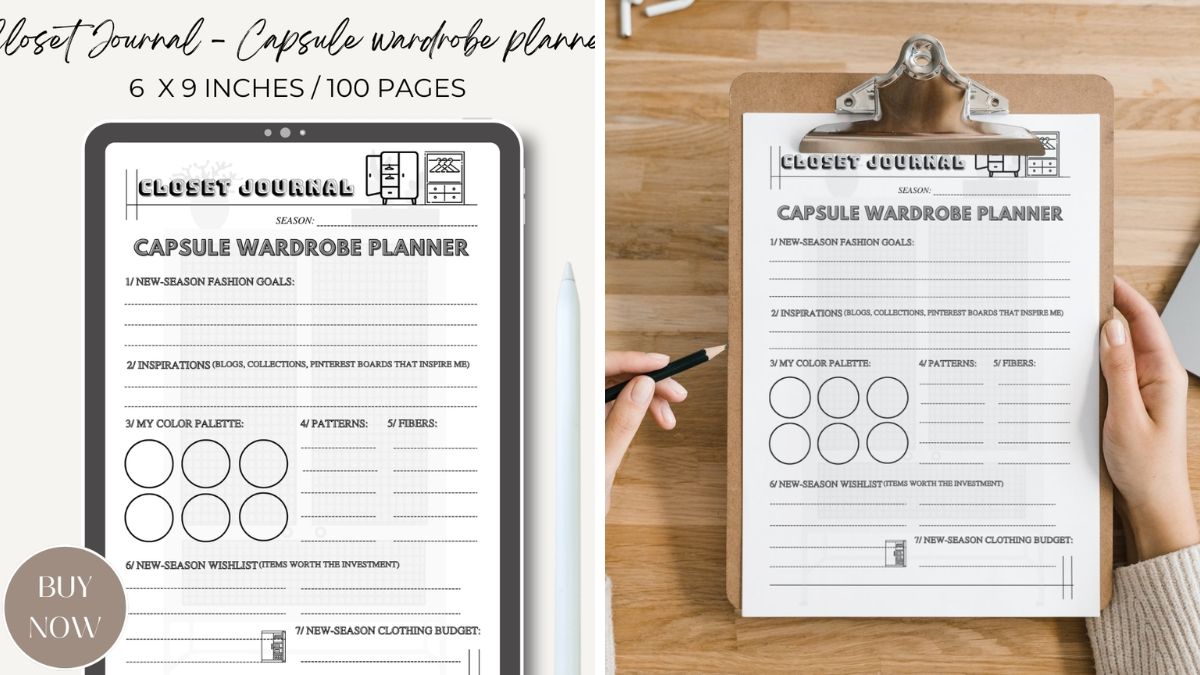
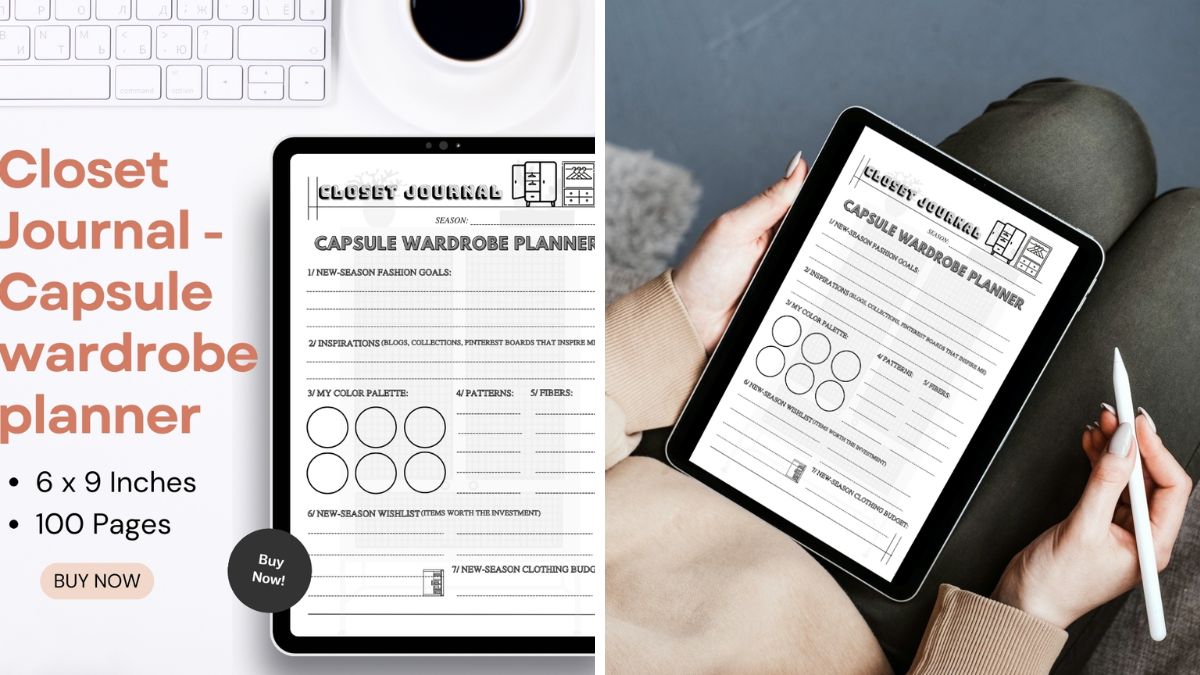
If you prefer a guided starting point, the Closet Journal – Capsule wardrobe planner / Editable Canva Template is listed as an editable Canva template designed to help organize, plan, and execute a wardrobe that reflects personal style while staying on budget. It is a journal/template rather than a promise of a perfect closet, so review the listing and decide whether that format suits the way you like to plan. The linked product page currently lists it in the Journal category and shows a price of $2.99; prices and availability can change.
FAQ: capsule wardrobe planner journal questions
How many items should a capsule wardrobe have?
There is no universal number. Choose a size that supports your calendar, climate, laundry routine, and comfort. Start with a two-week experiment instead of committing to a permanent total. If you can dress easily and enjoy the results, the capsule is doing its job.
How long should I track my clothes before buying?
Two weeks can reveal immediate outfit patterns, while a month gives you better information about repeat wear and changing weather. Track long enough to include ordinary days, not only special occasions. If an urgent need appears, use the pre-purchase scorecard rather than waiting for perfect data.
What if I love fashion and do not want a minimalist closet?
A capsule wardrobe can include color, prints, statement pieces, and experimentation. The journal is not asking you to become minimal; it is helping you choose deliberately. Keep room in your budget and closet for joy purchases, then distinguish them from items bought to solve a practical gap.
Before you add anything to your cart, open a fresh journal page. Write the occasion, the outfits it will join, the care it needs, and the closest substitute you already own. Then wait long enough to hear your considered answer. A wardrobe built this way may not look identical to anyone else’s, but it will feel more like yours—and that is the point.
About the Author