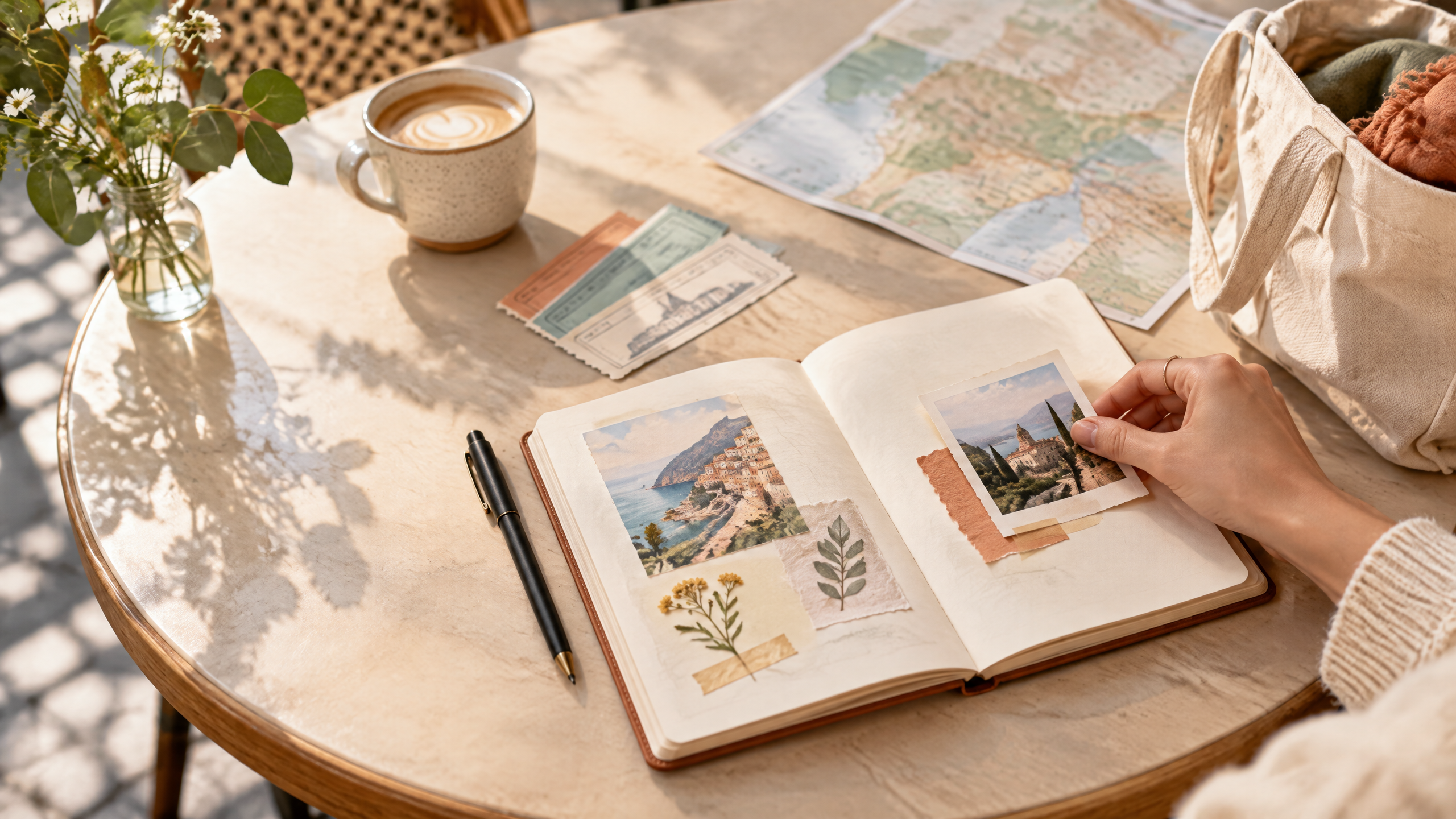
How to Make a Travel Journal You Will Actually Want to Keep
A travel journal sounds romantic until you are three days into a trip, carrying too many receipts, running late for a train, and facing a blank page that seems to demand a beautiful account of everything. That pressure is why many well-intentioned notebooks become abandoned souvenirs.
The better approach is to make a journal that fits the way you actually travel. It can hold a few honest sentences, a crooked sketch of a doorway, a coffee sleeve, or a note about the bus route you would take again. It does not need to document every attraction or resemble a polished scrapbook. Its job is to help you notice your own trip while it is happening—and give your future self something specific to return to.
If you are wondering how to make a travel journal, begin with one principle: design it around your energy, not your most ambitious vacation fantasy. Choose a format you can carry, create repeatable prompts, and leave room for scraps and silence. The result will feel less like homework and more like a private companion.
Choose a format that matches your trip
Before buying supplies, think about the physical conditions of your travel. A journal for a city weekend can be quite different from one for a road trip, beach stay, or family holiday.
Pick for portability first
A slim notebook with sturdy binding is usually an easy starting point. Look for pages that open comfortably, a cover that can tolerate being tucked into a tote, and paper that suits your favorite pen. If you love markers or watercolor, test a few pages first; thin paper can turn a relaxing ritual into a fight with bleed-through.
A small journal encourages short entries and fits on a café table. A larger sketchbook gives you room for maps, tickets, and drawings but is more noticeable to carry. Neither is more correct. The right size is the one you will reach for when you are tired.
Decide what the journal needs to do
Some travelers want a record of impressions. Others want a practical companion for reservation details, restaurant names, and spending reminders. You can combine both by reserving the first few pages for trip dates, a rough route, and essential contacts, then keeping the rest personal and visual.
Avoid recording sensitive information that would create a security risk if the notebook were lost. Your journal should support the trip, not add a new worry.

Build a page system that removes pressure
A blank notebook becomes easier to use when every page does not require a new idea. Create a few repeatable page types and let the journal vary naturally between them.
Use the three-line entry
On a busy day, write only three lines:
- I noticed:a detail that caught your attention.
- I felt:your mood, energy, or honest reaction.
- I want to remember:the moment most likely to disappear.
For example: “I noticed laundry moving above the narrow street. I felt calm after getting lost. I want to remember the orange cake beside the tram stop.” This takes minutes and preserves more personality than a list of landmarks.
Write a scene, not a report
When you have more time, choose one scene instead of attempting a complete account. Describe a conversation, meal, view from a window, or neighborhood before it wakes up. Start with sensory facts: what was warm, sharp, crowded, sweet, echoing, or unexpectedly quiet?
A “before and after” page is another useful format. Note what you expect before visiting a place, then record what surprised you afterward. The contrast often reveals more than a generic statement about whether you enjoyed it.
Keep a prompt page inside the cover
Write prompts before you leave so you never have to invent a topic at the end of a long day:
- What would a photograph miss about today?
- What did I eat that I would order again?
- Where did I feel most like myself?
- What did I learn from taking the slower route?
- What sound belongs to this place?
Prompts are invitations, not requirements. Skip anything that feels forced.

Capture the trip in small moments
The classic plan—write a full entry before bed—does not survive every itinerary. Capture small notes as they happen, then expand only the ones that still interest you.
Try a two-minute capture habit
At lunch, on a train, or while waiting for a room key, write five quick words. They might be “rain, tiled steps, basil, blue bus, brass handle.” Later, those words can reopen the scene. Add a star beside anything you want to develop and leave the rest as fragments.
A phone can help preserve details without replacing the journal. Take a quick photo of a street sign or record a voice memo when your hands are full, then transfer one useful detail to the page. The journal remains the edited, human version of the trip rather than a second camera roll.
Create a small travel kit
Keep the kit compact enough for your day bag: one dependable pen, one backup, a pencil if you sketch, and narrow tape or a glue stick for paper pieces. A small envelope can hold items you want to attach later. A clip or elastic band keeps loose pages from escaping.
One accent color can make a journal feel considered without turning it into an art project. Try a muted highlighter or colored pencil that echoes the landscape. Avoid packing an entire craft store; too many choices make it easier to postpone the page.
For shared trips, give each person a page or invite everyone to contribute one sentence. Do not pressure a quiet traveler to perform enthusiasm. A private note can be more meaningful than a polished group summary.

Turn overlooked details into memorable pages
A travel journal becomes distinctive when it includes what did not make it onto the itinerary. The taxi driver’s recommendation, the first grocery store you entered, or the way a hotel curtain moved in the morning may become the memories that age best.
Record one local texture each day
Choose one texture, sound, smell, color, or phrase. Write it plainly. “The market smelled like warm bread and wet stone” gives your memory somewhere to stand. You do not need to make the sentence poetic; specificity does the work.
Add notes your future self can use
At the end of a day, write one practical observation: the best time to arrive, the shoes you were glad to wear, the neighborhood that felt easy to walk, or the reservation you should make earlier next time.
Keep recommendations grounded in your experience. Instead of declaring a place universally perfect, write what it offered you: “Good for a quiet breakfast before a museum,” or “Beautiful, but bring a layer for the windy overlook.” Honest context is more valuable than a ranking.
Try a color or shape spread
Choose five colors from one day and label them with their sources: painted doors, fruit, a bus seat, the evening sky, or a shop awning. Alternatively, draw five shapes you noticed. This makes a page feel connected to a place without requiring advanced artistic skill.
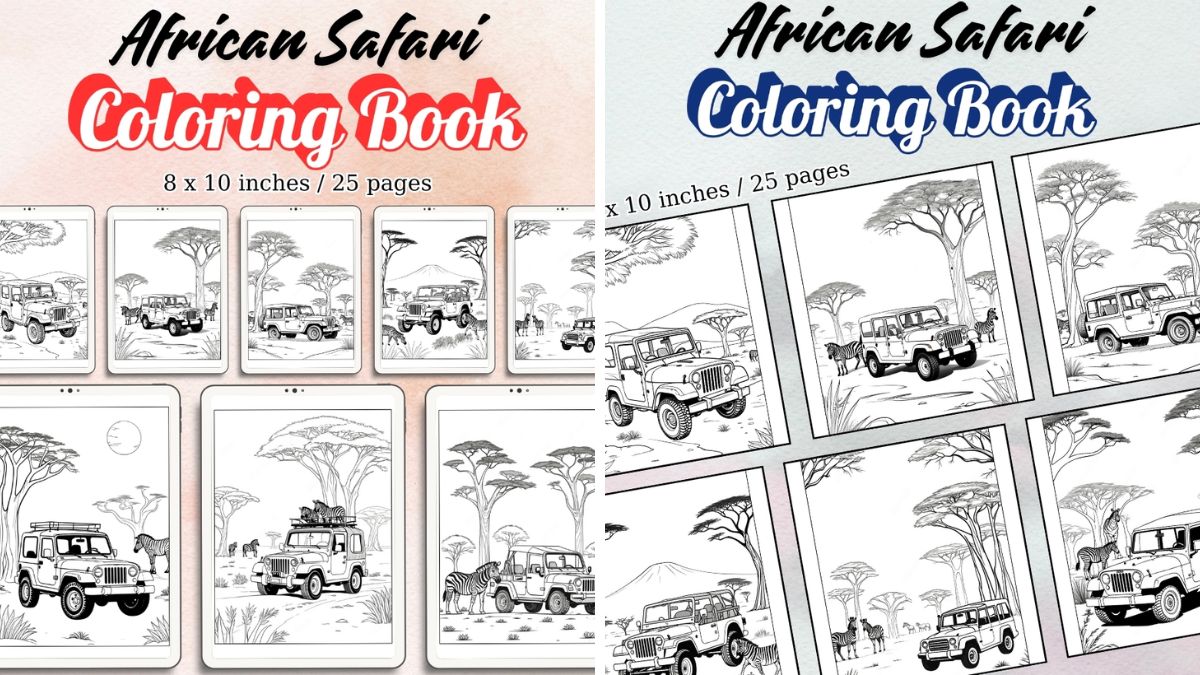
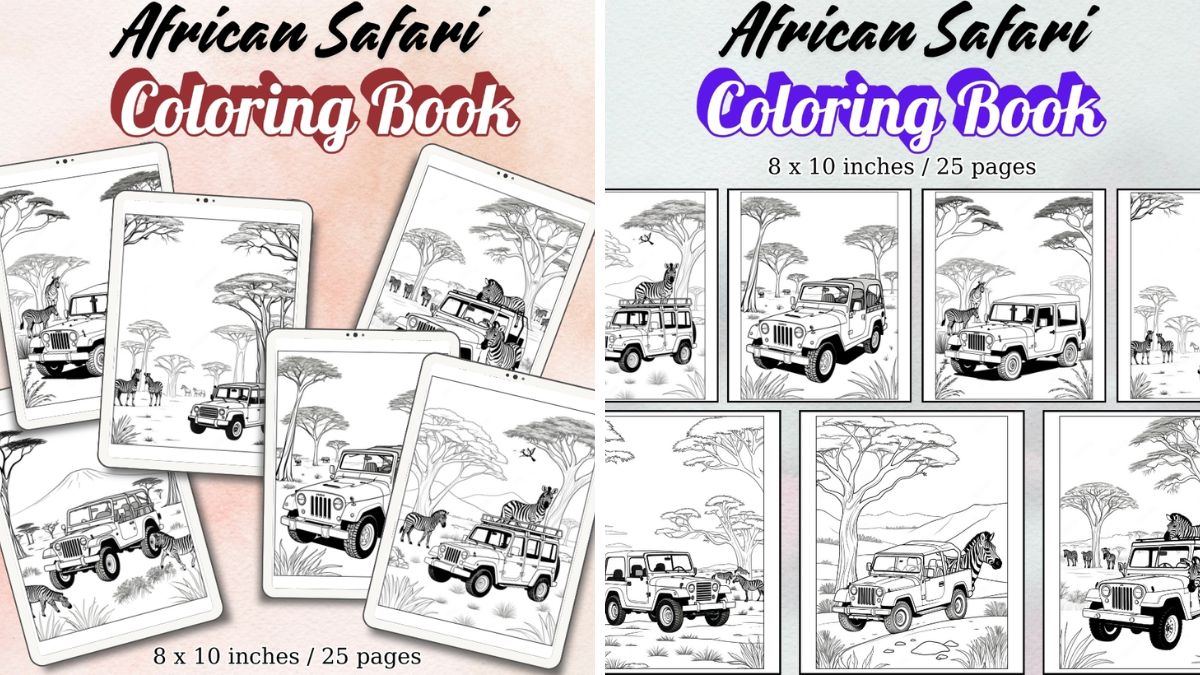
If an African wildlife or nature-focused trip is part of your travel story, African Safari Coloring Pages Vol.1 / Sheets of African Safari {Coloring Book} can be a creative addition to your journal routine. The linked listing describes it as a coloring-pages product featuring African safari animals and landscapes, including elephants, lions, giraffes, and zebras. You might use a page as a pre-trip activity, a prompt for a wildlife observation spread, or a separate insert in your notebook. Review the listing for current purchasing details; this recommendation is based only on the description shown there, not on a personal test or an assumption about results.
A note on wellness and child-development language: Creative activities may feel calming or engaging for some people, but experiences vary. Coloring should not be presented as medical treatment, and a coloring product should not be assumed to provide developmental benefits for every child.
Close the journal without creating another project
The end of a trip is often when the notebook disappears into a drawer. Give yourself a small closing ritual instead of attempting a major scrapbook session.
Complete a one-page trip closeout
Within a week, fill in four headings: What I would repeat, what I would change, what surprised me, and what I am still wondering about. Add three favorite meals, one person or exchange you remember, and the date you would like to revisit the journal.
Attach only the loose items that add context. Photograph oversized pieces before recycling them. Write a short caption under every item so the page does not become a mystery later.
Make a return-to page
Write a final note beginning, “Next time, I want more…” and finish it with something specific, such as unplanned mornings, neighborhood walks, or time near water. Then write, “Next time, I want less…” without judging the answer.
This turns memory into useful information. It can shape the pace, budget, and priorities of your next trip without pretending that every vacation must be optimized.
Common mistakes to avoid
Trying to document every day perfectly. A journal is not a legal record. Missed days are normal; add a catch-up line or leave the gap alone.
Buying supplies or an imaginary version of yourself. If you never sketch at home, a complicated art kit may not become your travel personality. Begin with tools you already use comfortably.
Writing only what a brochure would say. “The cathedral was beautiful” is a starting point, not a memory. Add what made it beautiful to you: the cool floor, a shaft of light, or the pause you took in the doorway.
Overloading pages with fragile souvenirs. Choose a few pieces and keep the rest in a labeled envelope so the journal can still close and travel.
Turning the journal into a performance. Write for yourself first. Share only what you genuinely want to share.
FAQ: How to make a travel journal
What should I write in a travel journal?
Write what you noticed, felt, tasted, learned, and want to remember. A useful entry can be three lines long. Include sensory details and practical notes instead of trying to summarize an entire destination.
How do I keep a travel journal when I am busy?
Use a two-minute capture habit. Record five words, one sentence, or a quick sketch during a natural pause, then expand only the notes that still interest you. Missed days do not invalidate the journal.
Is a notebook or digital travel journal better?
Use the format you will open consistently. A paper notebook is tactile and easy to personalize, while a digital journal is searchable and convenient when luggage is limited. You can combine them by keeping quick digital notes and transferring the best details to paper.
Start with one page. You do not need a perfect notebook, an elaborate kit, or a life-changing itinerary. Choose a journal that travels comfortably, write five prompts inside the cover, and make one small entry on your next outing. Notice the detail you would normally miss. That is the beginning of a travel record with a real chance of staying with you.
When you return, let the journal be unfinished in the best way: a collection of lived moments, useful clues, and room for the next story. Save this guide, gather your simplest supplies, and make a page before your next trip begins.
About the Author