A Gentle Wellness Planning System for Women Tired of Chasing Health Trends
If your wellness routine keeps changing with every new podcast, product launch, or “30-day transformation,” you are not failing at health. You are probably trying to build a life around too many instructions at once.
One week, the answer seems to be an early workout. The next, it is a perfect morning routine, a supplement stack, a strict eating window, or a new app that promises to organize your entire body. The advice may sound motivating, but the constant switching can leave you feeling behind before the day has even started.
A better approach is a wellness planning system for women that is gentle enough for ordinary weeks. It does not ask you to become a different person. It gives you a small set of priorities, a way to adapt them, and a regular moment to notice what is actually helping.
The goal is not to optimize every hour. It is to create dependable support for your energy, mood, nourishment, movement, rest, and connection—without turning self-care into another performance review.
Start with support, not self-correction
Before you plan a healthier month, ask a kinder question: What would make my current life feel more supported?
That question matters because wellness plans often begin with criticism. We focus on the habit we “should” fix, the number we want to change, or the version of ourselves we think would finally feel in control. A plan built from shame may be impressive on paper, but it is hard to return to after a demanding week.
Instead, choose one season of life to plan for. A new job, parenting a young child, recovering from a stressful period, managing a busy social calendar, or simply moving through a low-energy month all call for different expectations. Your system should respond to your circumstances rather than pretend they do not exist.
Try a one-sentence starting point
Complete this sentence: “Over the next four weeks, I want to feel more ______ because ______.”
You might write “steady because my mornings feel chaotic,” or “rested because I keep treating sleep as optional.” Keep the sentence descriptive rather than dramatic. “I want to feel more at home in my body” gives you room to make useful choices; “I must completely transform myself” creates pressure without direction.
Choose a small wellness compass
A wellness planning system becomes manageable when it has a few categories instead of an endless list. Use five areas as a compass: energy, nourishment, movement, restoration, and connection. You can rename them to fit your life, but avoid creating ten separate projects.
For each area, write three things:
- What is happening now?
- What would support me this month?
- What is the smallest repeatable action?
For example, under restoration, you might notice that your evenings are filled with scrolling and unfinished tasks. Your monthly support could be a calmer transition out of work. The smallest action might be putting your phone on charge outside the bedroom three nights a week, if that is safe and practical for you.
Under movement, the answer does not have to be a punishing workout plan. It could be a walk during one lunch break, gentle stretching while the kettle boils, or an exercise class you genuinely enjoy. The useful question is not “What burns the most?” but “What kind of movement helps me feel more capable and present?”
Use a minimum, a standard, and a stretch
For each priority, set three versions:
- Minimum:the option you can do on a difficult day.
- Standard:the option that fits an ordinary day.
- Stretch:the option you choose when you have extra time or energy.
A movement example could be five minutes of mobility, a 20-minute walk, and a full class. A nourishment example could be adding one satisfying food to a meal, preparing a simple lunch, and cooking a recipe for leftovers. This structure protects your routine from the all-or-nothing trap.
Build your week around anchors
Habits are easier to remember when they attach to something already happening. Instead of placing a long list on a blank calendar, choose two or three anchors that give your week shape.
A morning anchor might be drinking water while you feed the dog. A workday anchor might be stepping away from your screen for lunch. An evening anchor might be dimming the lights after you finish washing up. The anchor is not meant to become a perfect ritual. It is simply a reliable doorway into a supportive action.

Plan the week in ten minutes
At the start of each week, write down:
- One action that supports your energy.
- One meal or food decision you can make easier.
- One form of enjoyable or restorative movement.
- One boundary that protects your attention or rest.
- One person, place, or activity that helps you feel connected.
Then check your actual calendar. Put the actions where they can realistically happen. If Wednesday is packed with meetings, do not reserve it for a complicated dinner and a long workout. A practical plan respects the shape of your week.
Leave white space. The empty room in your schedule is part of the system, not evidence that you are wasting time.
Make food and movement feel supportive
Many wellness plans quietly turn eating and exercise into moral tests. A gentler system treats them as ways to care for your future self.
For food, make a short list of reliable combinations you can assemble when decision-making is low. Think of a protein or protein-rich food, a fiber-containing food, something with flavor, and a drink. This is not a rigid formula or a prescription. It is a prompt for building a meal that feels satisfying enough to carry you through the next part of the day.
Keep a few “bridge foods” available for the gap between no time and a full meal. That might be yogurt and fruit, toast with eggs, soup with crackers, or a prepared option you actually like. Planning for imperfect days is more useful than pretending they will not happen.
For movement, separate health support from body punishment. Choose activities that match your current energy and experience. Schedule recovery as deliberately as activity. If pain, dizziness, unusual fatigue, or another concerning symptom is present, pause the experiment and seek advice from a qualified health professional rather than trying to push through it.

Add a monthly review without turning it into judgment
A plan needs feedback, but feedback should not become surveillance. Once a month, take 15 minutes to ask:
- What gave me more steadiness or ease?
- What was hard because the plan was unrealistic?
- What did I keep doing even when the week was messy?
- What can I remove, simplify, or move to a different time?
Notice patterns without making sweeping conclusions. One restless week does not prove that a routine is useless. One good day does not prove that a product or protocol changed everything. Look for actions you can repeat and results you can observe in everyday life.
Use a “keep, change, release” list
Write three short columns. Keep the practices that feel genuinely supportive. Change the ones that may work with a smaller dose or better timing. Release the ideas you adopted from fear, comparison, or pressure.
Releasing a wellness habit is not quitting. It is making room for choices that fit your values and resources. A routine that only works when you have unlimited time, money, energy, and privacy is not a personal failure; it is an incomplete design.
A simple 7-day wellness planning template
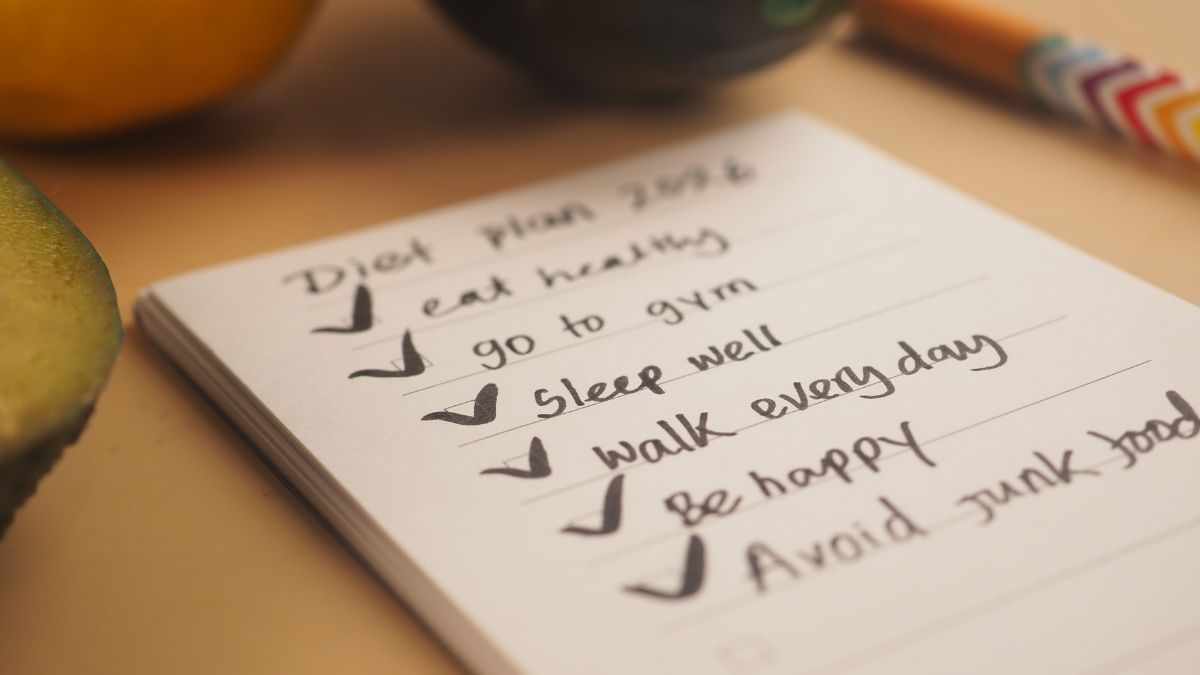
Use this checklist as a starting point, then edit it until it feels like yours.
Before the week begins
- Name the feeling you want more of this week.
- Check your calendar for demanding days and recovery gaps.
- Choose one minimum, standard, and stretch option for movement.
- Select two easy meals and one flexible backup.
- Put one enjoyable connection or pleasure on the calendar.
During the week
- Follow the minimum version when life is full.
- Notice hunger, energy, mood, and tension without grading yourself.
- Make one environment easier: fill a water bottle, set out walking shoes, or prepare a breakfast component.
- Keep one evening or block of time deliberately unoptimized.
At the end of the week
- Record one thing that helped.
- Record one friction point.
- Decide what to keep, change, and release.
- Carry only one or two priorities into the next week.
The point of a checklist is to reduce remembering, not to create another standard you can fail.

Common mistakes that make wellness feel exhausting
Mistake 1: Starting with too many habits
A plan with twelve daily behaviors may look ambitious, but it creates twelve opportunities for guilt. Begin with one anchor and one meaningful action. Add only after they feel familiar.
Mistake 2: Copying someone else’s routine
A celebrity schedule, influencer protocol, or friend’s meal plan may be interesting. It is not automatically appropriate for your body, budget, culture, work, or responsibilities. Borrow ideas, not identities.
Mistake 3: Treating rest as a reward
Rest is not something you earn by completing every task. Put recovery on the calendar before the week fills up, even if it is only a quiet meal, an early bedtime, or a short walk without an audio lesson.
Mistake 4: Ignoring money and access
Wellness advice can become expensive quickly. A useful plan includes free or low-cost options and does not assume a private gym, specialist appointments, premium groceries, or a large amount of spare time. Your resources are part of the design.
Mistake 5: Using tracking to punish yourself
If tracking makes you anxious or obsessive, it is not serving the plan. You can use a simple note such as “helped,” “neutral,” or “not for me,” or skip tracking altogether.
One optional resource to explore

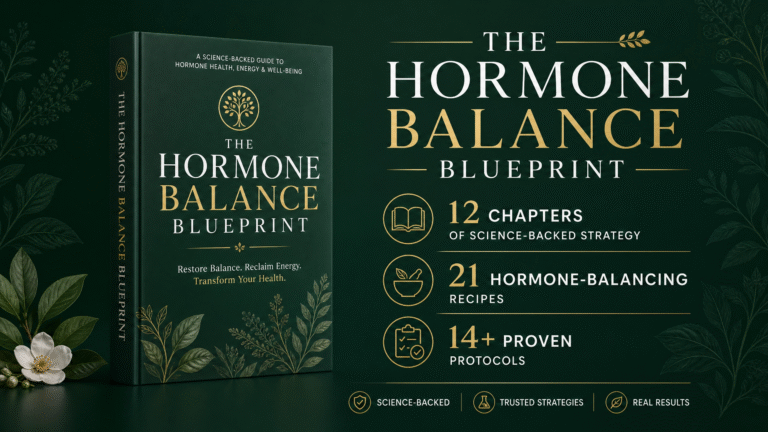
If you want a more focused resource around women’s wellness, you can review The Hormone Balance Blueprint. Read the description carefully and decide whether it matches the kind of guidance you are looking for; it should complement, not replace, individualized care from a qualified clinician. No single ebook, plan, or purchase can account for every woman’s health history or circumstances.
FAQ
What is a wellness planning system for women?
It is a flexible way to choose a few health-supporting priorities, connect them to your real schedule, and review what helps. It is a planning framework, not a universal medical protocol.
How many wellness habits should I start with?
Start with one or two actions that are small enough to repeat during an ordinary week. When they feel stable, you can add another. Consistency matters more than an impressive list.
What if I keep falling off my wellness plan?
Shrink the plan and examine the setup. Your action may be too large, poorly timed, or dependent on resources you do not have. Return to the minimum version and begin again without treating the reset as a failure.
Your next gentle step:
Choose one area that would feel better with support, then write its minimum version on your calendar. Make it so practical that you could do it on a busy day. At the end of the week, ask what made life a little easier and build from there.
Wellness does not have to be a chase. It can be a quiet system of choices that helps you live in your actual body, with your actual responsibilities, in the season you are in now. Start small, stay curious, and let a plan earn its place by making your life feel more supported—not more controlled.
Disclaimer: This article is for general educational and lifestyle information only. It is not medical advice, diagnosis, or treatment. If you have persistent or concerning symptoms, are pregnant or postpartum, take medication, or have a diagnosed condition, consult an appropriately qualified health professional before changing nutrition, exercise, supplements, or other health practices.
About the Author