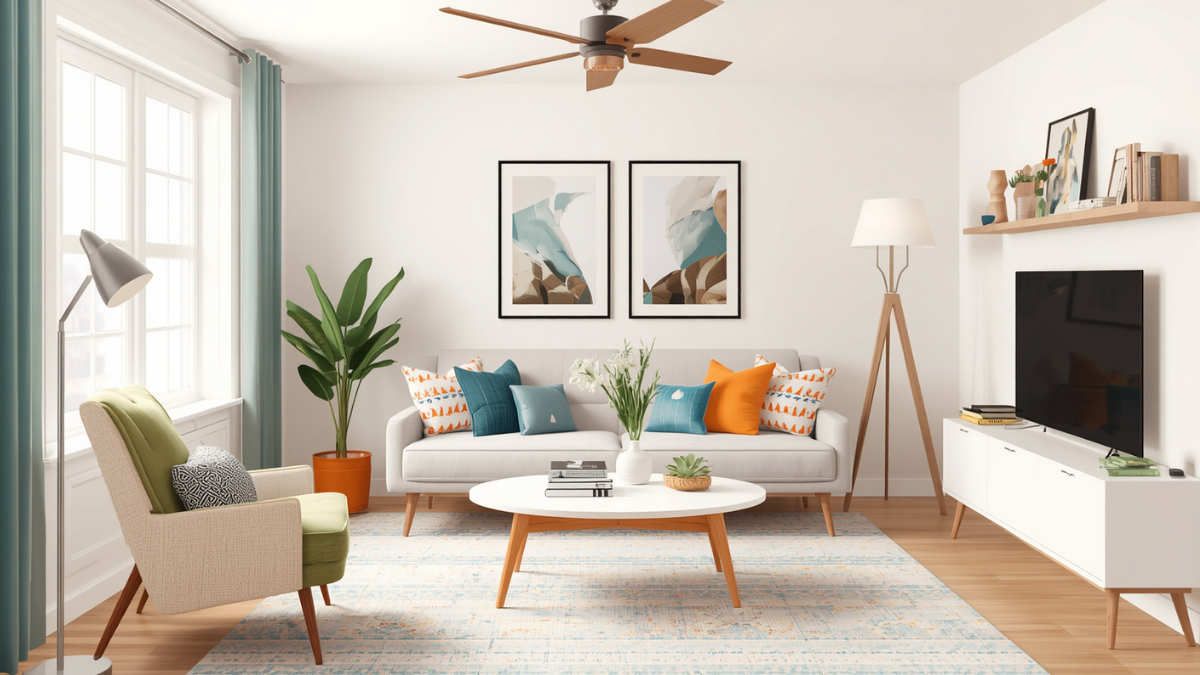
Small-Space Decor Ideas
Nobody tells you, when you sign the lease on your first “cozy” apartment, that cozy is a euphemism. You find out the hard way — usually while trying to fit a couch, a coffee table, and your own body into a living room that seems to have been measured by someone who has never owned furniture. But here’s the thing design blogs don’t say loudly enough: a small room isn’t a design failure. It’s a design constraint, and constraints, handled well, tend to produce the most interesting rooms in the first place.
The goal isn’t to pretend your studio is a loft. It’s to use a handful of proven small-space decor ideas — the kind that manipulate light, sightlines, and scale — so the room feels like it’s giving you more than its square footage technically allows. None of this requires knocking down walls. Most of it requires rethinking what’s already in the room.
Let the Floor Show
The single biggest small-space mistake is furniture that touches the ground everywhere it possibly can. A sofa with a solid base, a low dresser, a bed frame with drawers built into the sides — all of it, however useful, visually eats the floor. And in a small room, floor space reads as room space. The less of it you can see, the smaller everything feels, even if the furniture itself isn’t that big.
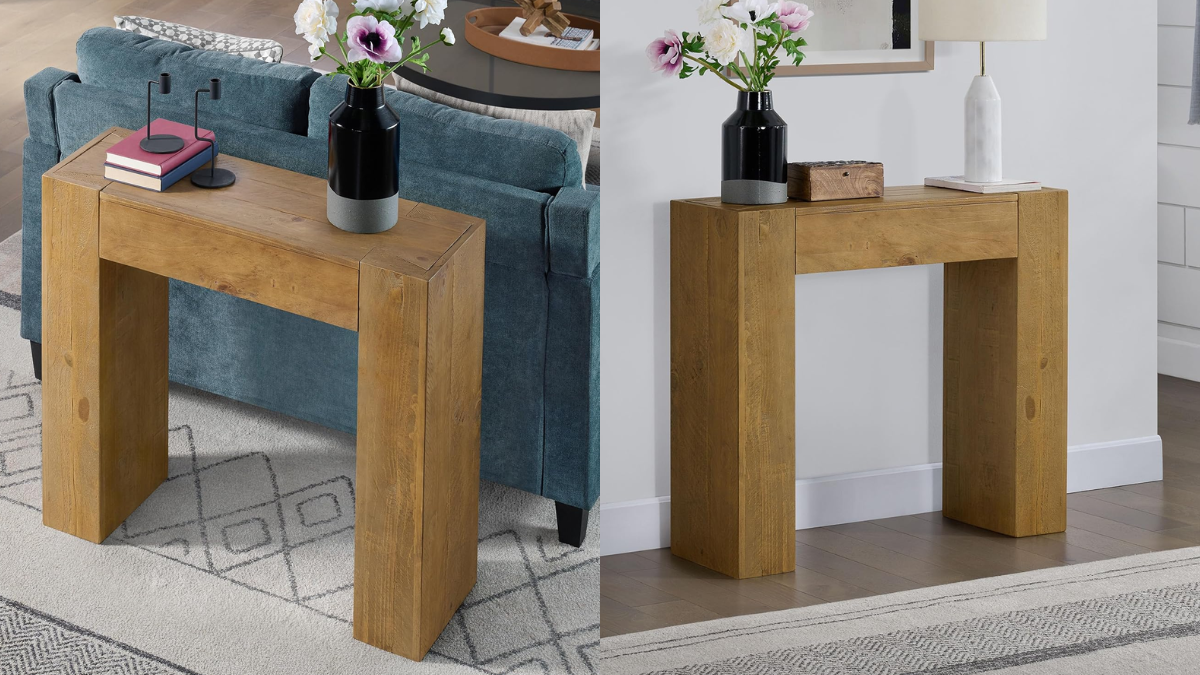
The fix is almost embarrassingly simple: choose furniture with visible legs instead of a solid base. A sofa on slim wooden legs lets your eye travel underneath it to the floor beyond, which tricks the brain into registering more depth than actually exists. The same goes for side tables, media consoles, and even your bed frame.
→ Shop it: Mid-Century Wood Leg Console Table
Mirrors Aren’t a Cliché — They’re Just Underused
Yes, “put up a mirror” is the most repeated small-space tip on the internet, and yes, it’s repeated because it actually works. The mistake most people make isn’t using mirrors — it’s using one small, decorative mirror and calling it done. A mirror only does its job when it’s large enough to reflect a meaningful chunk of the room, and positioned to reflect something worth doubling: a window, a lamp, an interesting piece of art.
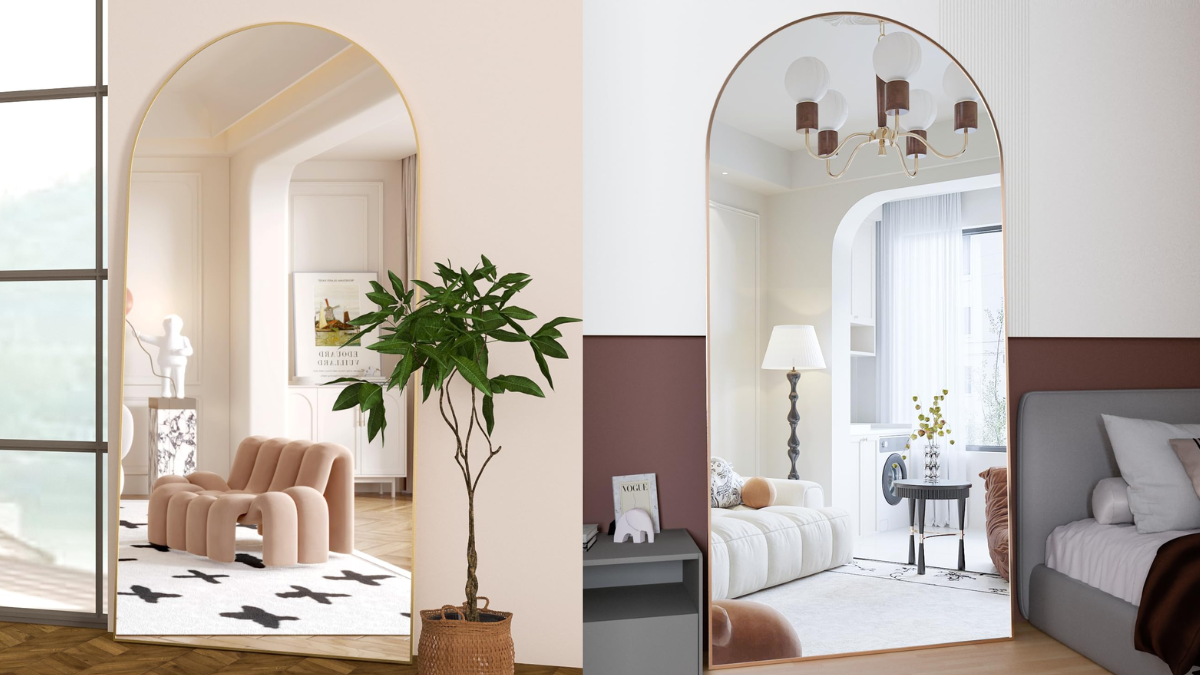
A floor-length leaning mirror placed opposite a window is one of the highest-impact, lowest-effort changes you can make to a small living room. It bounces natural light across the entire space and creates the illusion of a second room just beyond the glass. Skip the small round mirror over the console — it’s decorative, not functional, and in a small space, you need furniture and decor to be both.
→ Shop it: Full-Length Leaning Floor Mirror
Go Vertical When You Can’t Go Wide
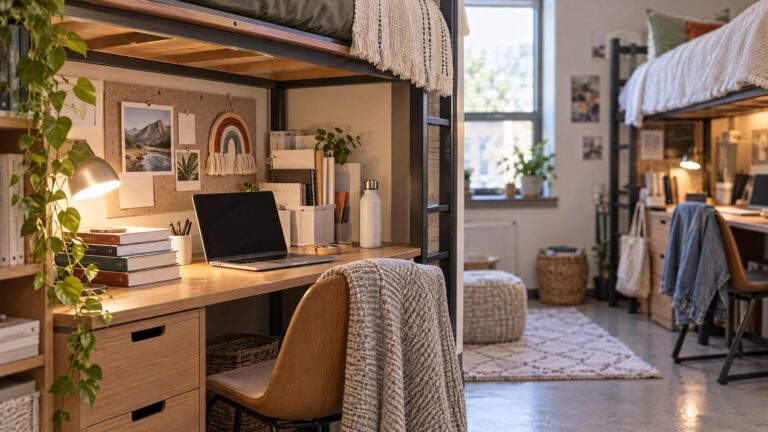
When floor space runs out, the walls are still wide open — literally. Vertical storage is one of the most underrated space-saving furniture categories, because it stores just as much as a wide dresser or bookshelf while taking up a fraction of the floor print.
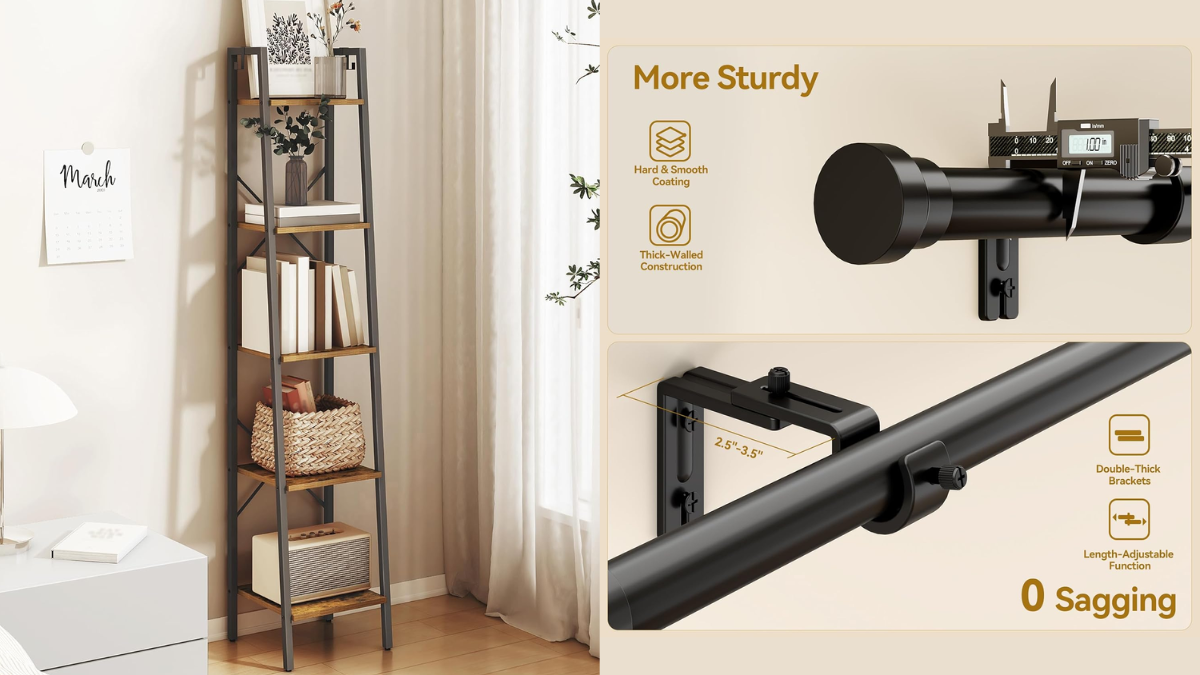
Tall, narrow bookshelves do more for a small room than short, wide ones — not just because they hold more, but because the eye is drawn upward, which makes the ceiling feel higher and the whole room feel taller. The same logic applies to curtains: hang them close to the ceiling rather than just above the window frame, and the entire wall reads as taller than it is.
We’re loving right now:
One Rug, Sized Correctly, Beats Two Small Ones
Rugs are where a lot of small-space decorating goes quietly wrong. The instinct in a tight room is to buy a small rug to “save space,” but a too-small rug actually does the opposite — it chops the floor into visual sections, making the room look choppier and smaller than it is.
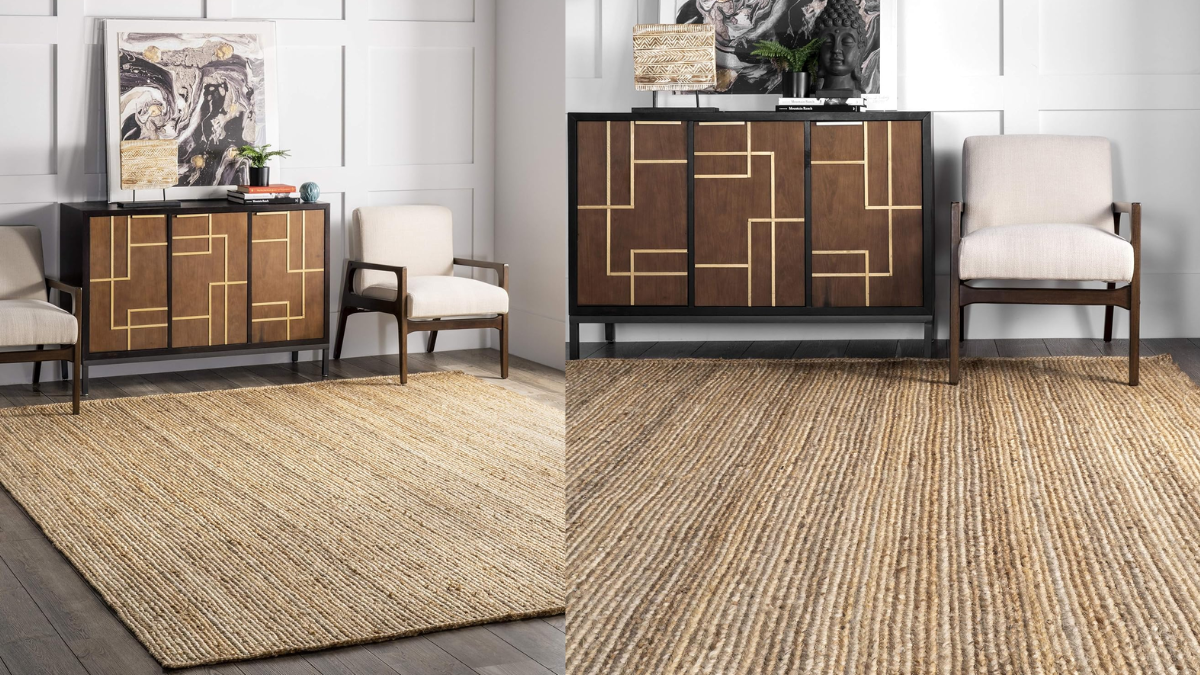
The better move is one larger rug, sized so that at minimum the front legs of your major furniture pieces sit on it. This unifies the floor into one continuous visual plane instead of fragments, which is exactly the trick your eye needs to read a small living room as more open. If budget or space genuinely won’t allow a large rug, a low-pile, light-colored option is the next best thing — it reflects more light than a thick, dark one and won’t visually “thicken” the floor.
→ Shop it: Low-Pile Jute-Blend Area Rug, Natural
Let Furniture Do Two Jobs
In a full-size house, furniture can afford to be single-purpose. In a small space, every piece should be pulling double duty, or it’s taking up room it hasn’t earned. This is where space-saving furniture genuinely changes how livable a small apartment feels, not just how it looks.
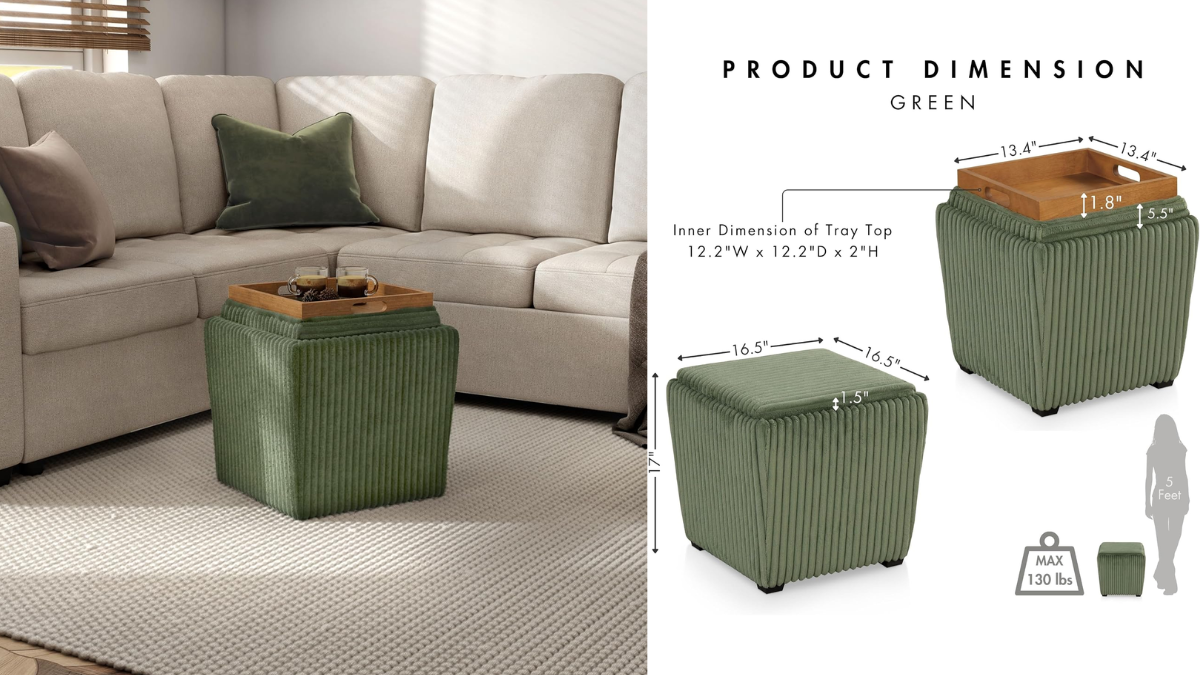
A few multi-purpose swaps worth making:
- An ottoman with storage instead of a coffee table — it hides blankets and clutter while still giving you a surface for your coffee.
- A daybed instead of a sofa in a studio, so the same piece of furniture handles seating during the day and sleeping arrangements for guests at night.
- Nesting side tables instead of one large end table — they tuck away completely when you don’t need the extra surface.
→ Shop it: Storage Ottoman with Removable Tray Top
Color Still Matters More Than People Think
There’s a persistent myth that small rooms have to be painted white to feel bigger. It’s not entirely wrong, but it’s incomplete — what actually matters is contrast, not just brightness. A room painted a single warm, mid-tone color, walls and trim alike, can feel more expansive than a stark white room with high-contrast dark furniture, because there’s no hard line where the wall visually “stops.”
If you’re renting and can’t repaint, you can borrow the same principle with textiles: keep your curtains, rug, and bedding in a close tonal range rather than a mix of bold, competing colors. It’s a small trick, but it’s one of the fastest ways to make small apartment decorating feel intentional instead of chaotic.
Small Bedroom Decor: A Few Extra Rules
Bedrooms come with their own version of this problem, mostly because the bed itself is often the single largest object in the entire apartment. A few bedroom-specific fixes:
- Skip the traditional nightstand if space is truly tight, and mount a small wall shelf instead — it holds a lamp and a book without eating floor space.
- Use a headboard with built-in shelving so you’re not adding a separate dresser to the room.
- Keep the bedding light and low-contrast — a dark, heavy duvet in a small bedroom visually shrinks the one piece of furniture that’s already dominating the room.
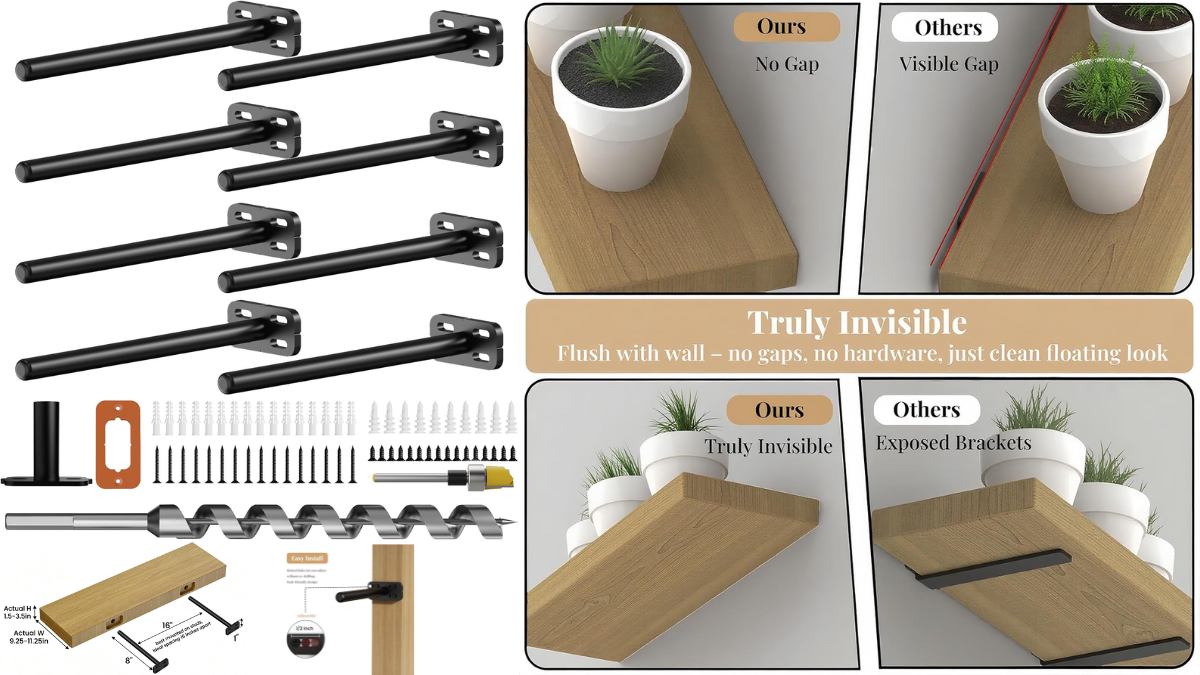
→ Shop it: Floating Wall Shelf with Hidden Bracket
Lighting Layers, Not Just One Overhead Fixture
Small rooms almost always come with one flat, overhead light source, and it’s one of the fastest ways to make a room feel like a box rather than a place you want to sit in. A single bright light from directly above flattens everything beneath it, erasing the shadows and depth that make a room feel three-dimensional instead of like a photograph of a room.
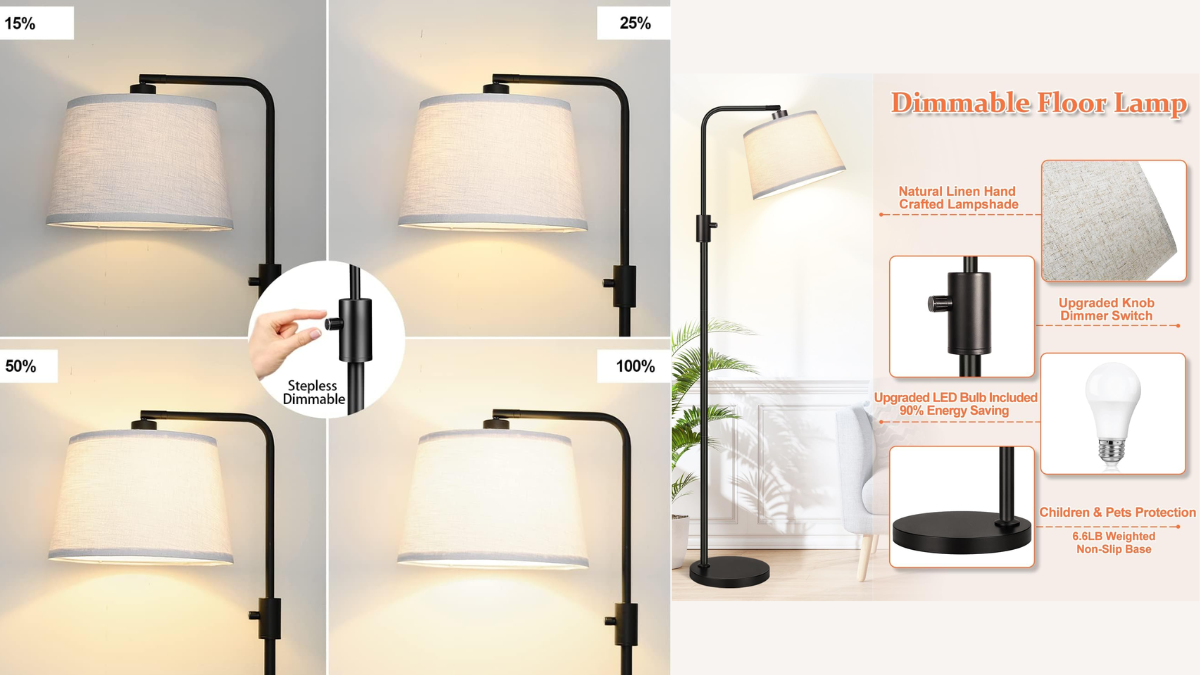
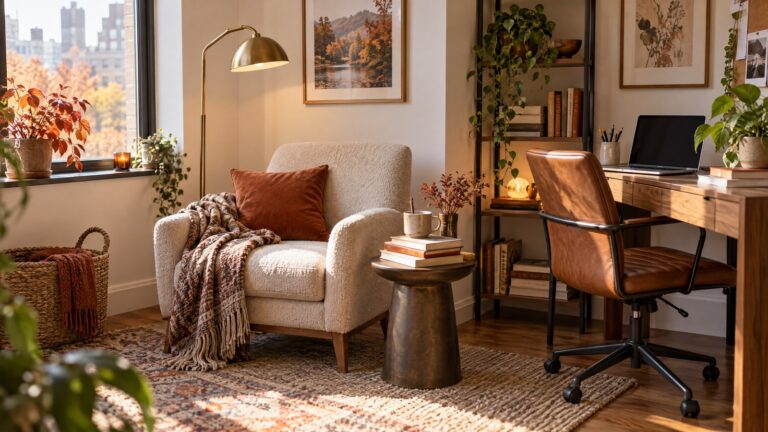
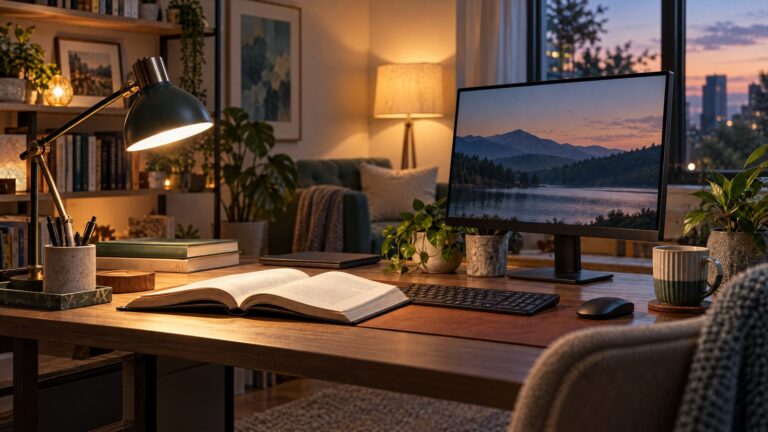
The fix is layering: instead of relying on the overhead fixture alone, add at least two other light sources at different heights — a floor lamp in a corner, a small table lamp near the seating area, maybe a plug-in wall sconce above a reading chair. Multiple light sources at varying heights create pockets of light and shadow throughout the room, which is exactly the kind of depth a small space is missing when it’s lit from one point straight above.
This is also one of the cheapest fixes on this entire list. A floor lamp costs less than almost any piece of furniture, and it does more to change the feeling of a room after dark than a new sofa ever could.
→ Shop it: Arc Floor Lamp with Fabric Shade
Where to Splurge and Where to Save in a Small Space
Not every small-space fix needs the same budget, and knowing where to put your money matters more here than in a larger home, simply because every purchase has to earn its limited real estate.
Splurge on your seating. In a small living room, the sofa or chair is doing more visual and functional work than any other single item, and a cheaply made piece will sag, wear, and date faster than almost anything else in the room. If one item in this whole list deserves a bigger chunk of the budget, it’s this one.
Save on decorative accents. Vases, trays, and small wall art are easy to find secondhand or at lower price points without sacrificing much, since their job is primarily visual rather than functional. A thrifted frame or a $10 ceramic bowl does just as much work as a pricier version once it’s styled well.
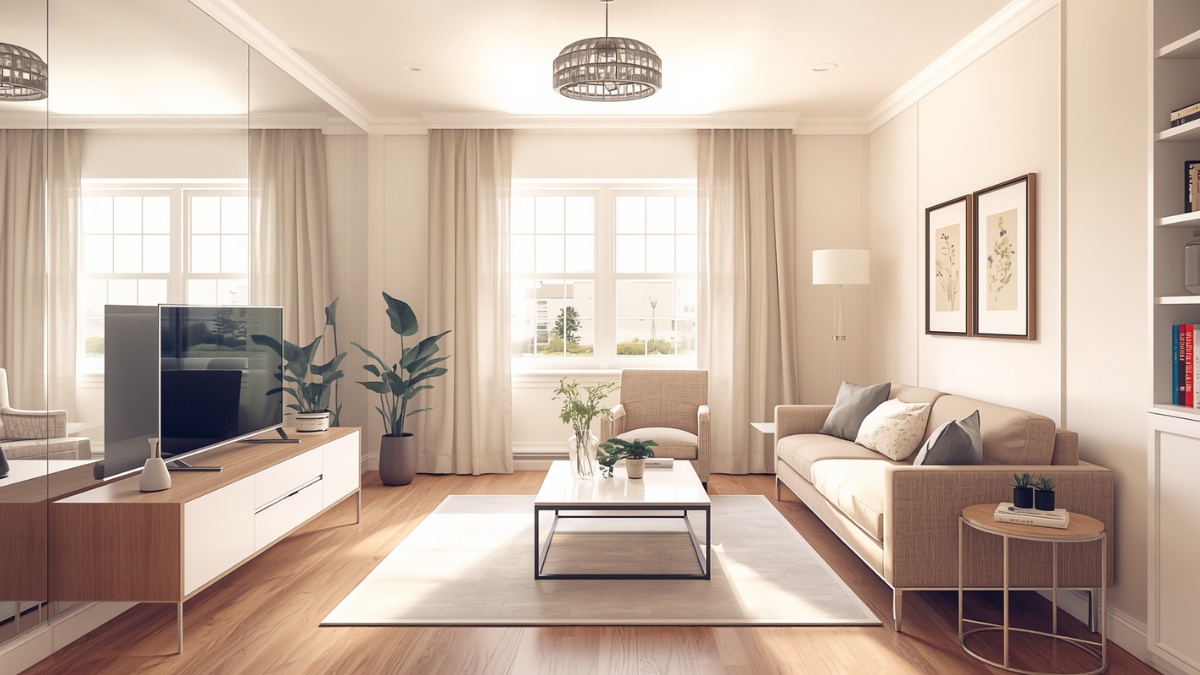
Splurge on the mirror. Given how much visual work a properly sized mirror does in a small room, this is one place where a slightly higher price point for a larger, well-framed piece pays off more than almost any other single purchase on this list.
Save on storage bins and organizers. Function matters more than brand here, and budget bins tucked inside a shelf or under a bed do the job just as well as expensive ones, since no one sees them once they’re in use.
Quick Answers: Small-Space Decor FAQ
What colors make a small room look bigger? Warm, light, mid-tones applied consistently across walls and trim tend to outperform stark white, because they reduce visual “stopping points” where the eye registers a boundary. Consistency matters more than the specific shade.
Should I avoid big furniture in a small room? Not necessarily — one or two appropriately sized, well-proportioned pieces usually work better than many small ones, since a room full of small furniture can look cluttered rather than spacious. The goal is fewer, correctly scaled pieces, not the smallest furniture available.
Do small rooms need less furniture, or just different furniture? Usually the latter. Multi-purpose, leggy, and vertical furniture solves more of the problem than simply removing pieces, though editing down to what you actually use is always a good baseline step.
Is a large rug really better than a small one in a tight room? Yes, in almost every case. A rug sized to unify the seating area reads as more spacious than a small rug that visually fragments the floor, even though it technically covers more of the room.
Small Doesn’t Have to Mean Small-Feeling
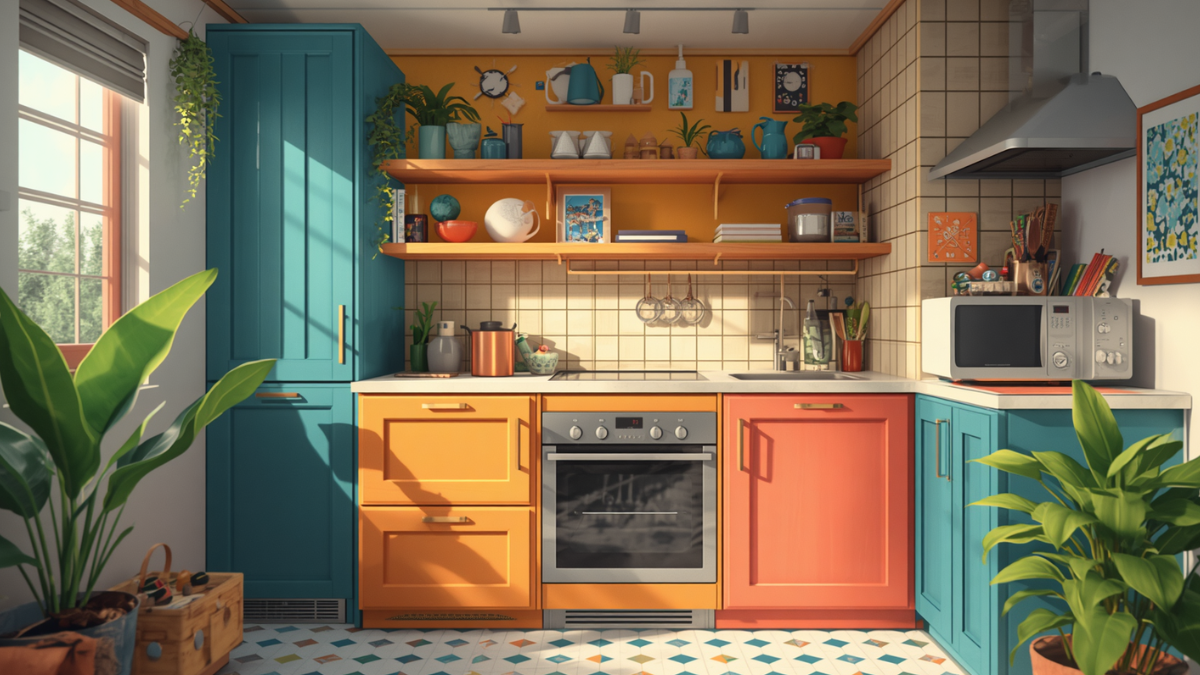
The rooms that feel the tightest usually aren’t the smallest ones — they’re the ones where every piece of furniture is fighting the space instead of working with it. Once you start choosing furniture that lets light and floor show through, sizing your rug and mirror generously instead of cautiously, and letting a few pieces do double duty, square footage stops being the thing that defines how a room feels.
You don’t need more space. You need the space you have to be used a little more intentionally.
About the Author