Quiet Luxury Home Decor: How to Get the Look Without the Price Tag
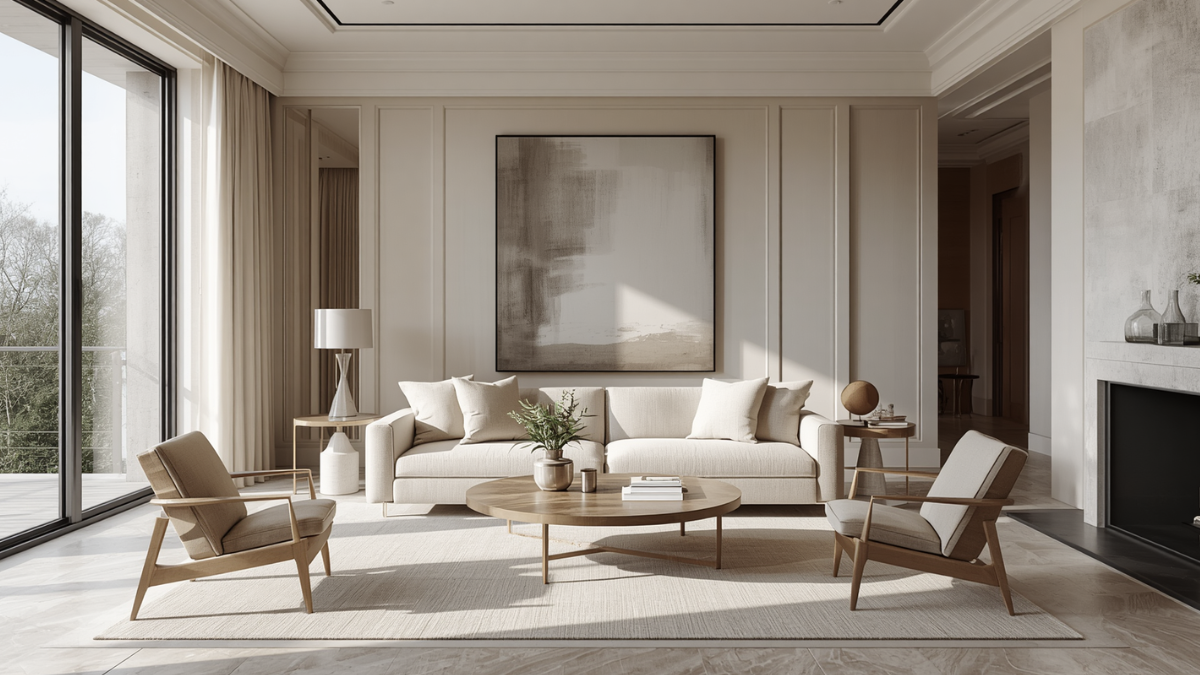
There’s a particular kind of room that makes you lower your voice a little when you walk into it. Nothing is loud. Nothing is trying too hard. And yet somehow, everything — the linen on the sofa, the weight of the ceramic bowl on the console table, the way the light hits an unfinished oak shelf — feels expensive. That’s the whole idea behind quiet luxury home decor, and it might be the first design trend in years that isn’t about buying more.
Quiet luxury didn’t start in home decor — it started on runways and red carpets, a backlash to logo-covered everything in favor of quality you have to look twice to notice. It’s since made its way into our living rooms, and honestly, it’s a relief. This isn’t about a $12,000 sectional or an interior designer on retainer. It’s about restraint, texture, and a handful of genuinely good pieces doing all the heavy lifting.
Here’s how to bring elevated home decor on a budget into your own space — no trust fund required.
What Quiet Luxury Home Decor Actually Means
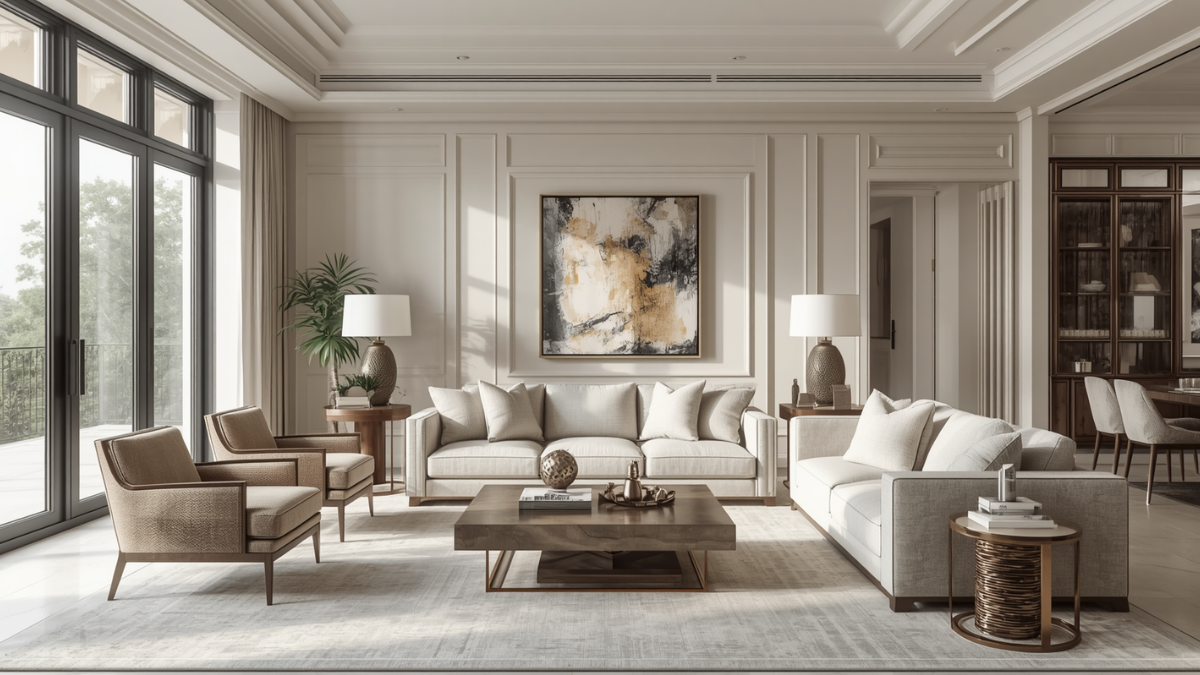
Before you start rearranging your living room, it helps to know what you’re actually going for. Quiet luxury isn’t a color palette you can buy in a kit — it’s a philosophy, and it comes down to three things: materials, restraint, and proportion.
Think natural materials over synthetic ones — linen instead of polyester blends, oak instead of laminate, stone instead of plastic-that-looks-like-stone. Think a neutral palette that leans warm rather than stark: ivory, sand, walnut, sage, the occasional charcoal for contrast. And think editing — a quiet luxury room usually has fewer objects than you’d expect, because every object earns its place.
This is also why the aesthetic pairs so well with minimalist home decor ideas. The two trends overlap heavily, but quiet luxury adds warmth and tactility that pure minimalism sometimes skips. It’s minimalism with a cashmere throw on it.
Start With Texture, Not Color
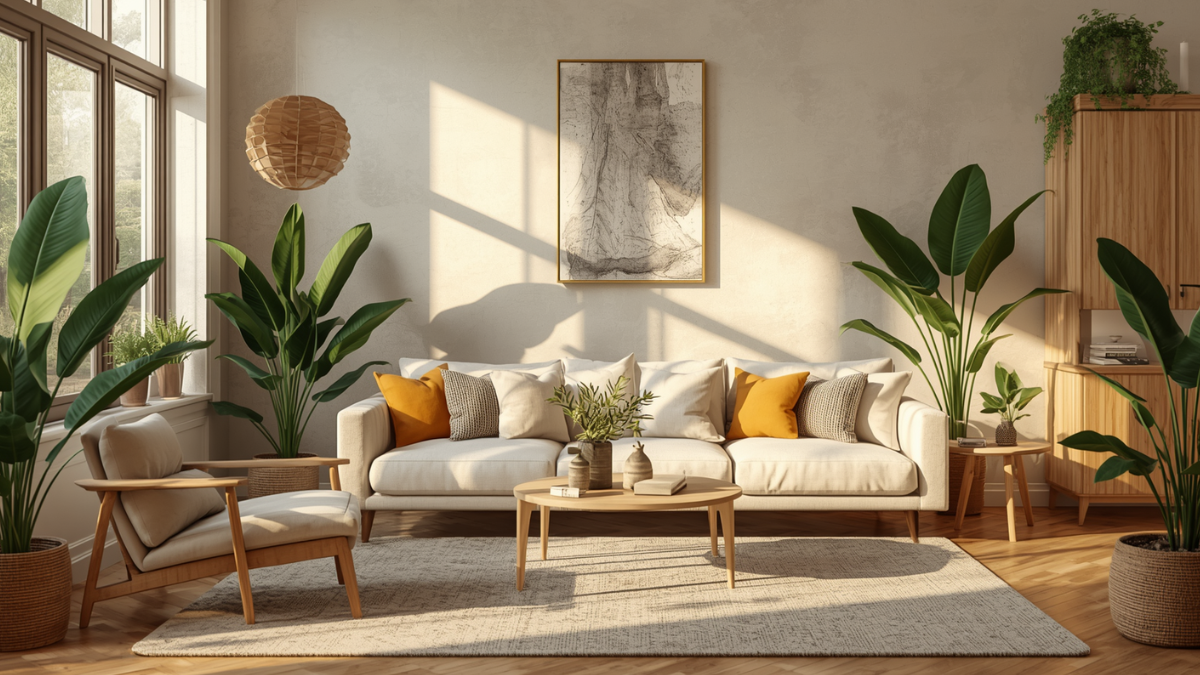
If you take one thing from this article, let it be this: quiet luxury lives or dies on texture, not color. A room that’s entirely beige can still look cheap if everything is flat and shiny. A room in the exact same palette can look expensive if it’s layered with texture — a nubby wool rug, a smooth ceramic vase, a slightly wrinkled linen duvet, a brushed brass drawer pull.
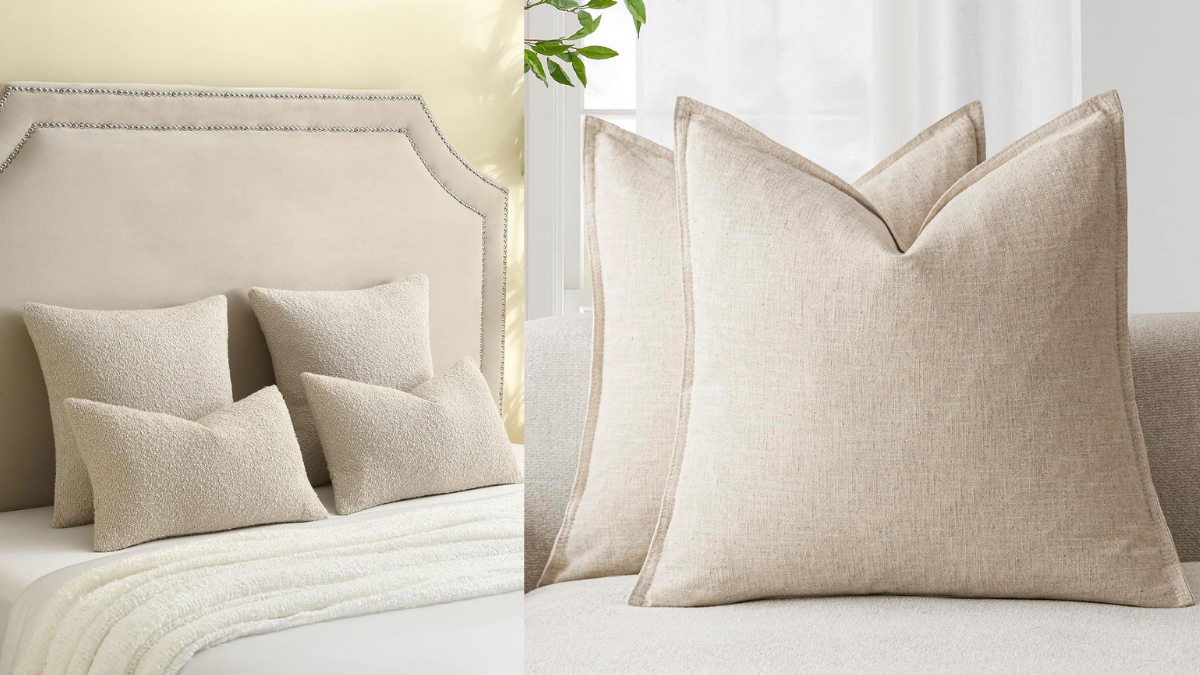
Start small. Swap your synthetic throw pillow covers for something in a heavier, more textured weave, like a bouclé throw pillow cover or a chunky knit throw blanket. These two changes alone can shift a couch from “fine” to “featured in a design magazine,” and neither will run you more than the cost of a nice dinner out.
→ Shop it: 100% Linen Throw Pillow Covers
The Case for a Neutral, Warm Palette
If your walls, furniture, and decor are all fighting for attention in different colors, no amount of expensive material will read as calm. Neutral home decor works because it lets texture and light do the talking instead of color.
That doesn’t mean everything has to be beige — that’s a common misread of the trend. It means picking a tight palette (usually two or three tones) and staying disciplined about it. A classic starting point: a warm white or greige wall, a walnut or oak wood tone, and one deeper accent color like olive, rust, or charcoal used sparingly.
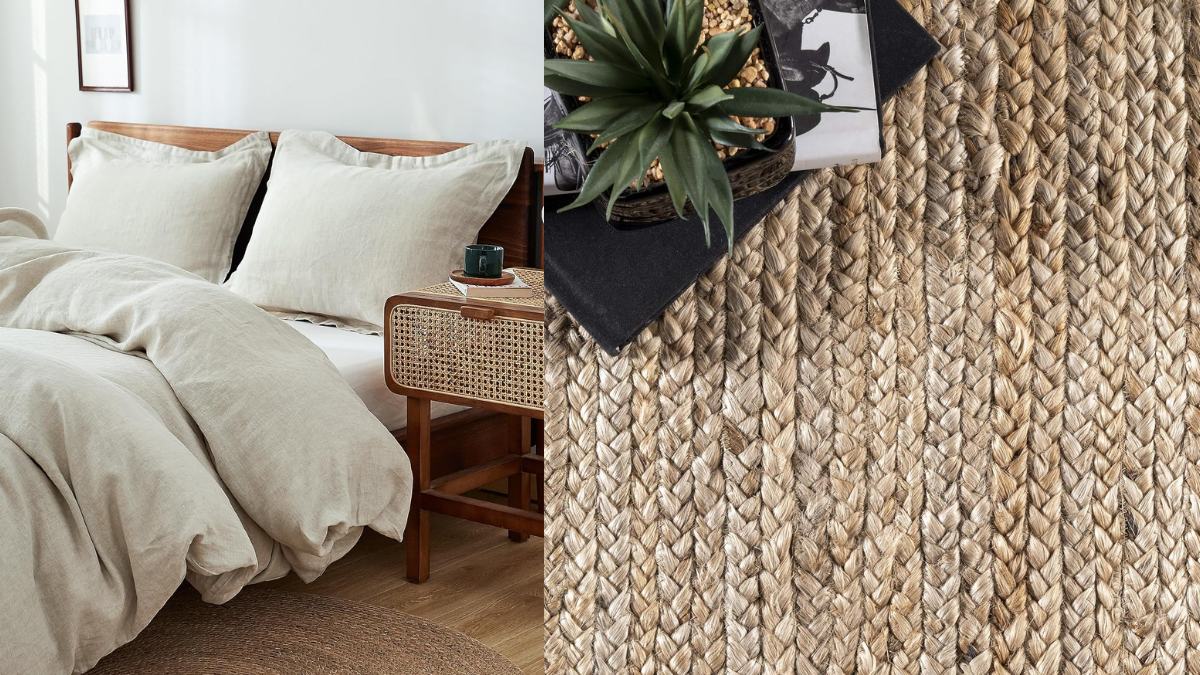
If repainting isn’t in the cards right now, you can fake a lot of this with textiles. A linen duvet cover in oatmeal or a set of heavyweight cotton curtains can quiet down a room that’s currently a little too colorful, without touching a paintbrush.
We’re loving right now:
Fewer, Better Objects Beat More, Cheaper Ones
This is the part of quiet luxury that actually saves you money, even though it feels counterintuitive at first: buy less, buy better.
Instead of five decorative objects from five different big-box clearance racks, pick one or two that are genuinely well made — a heavy ceramic vase, a carved wooden bowl, a piece of stoneware pottery — and give them room to breathe on a shelf or console table. Empty space is not the enemy here. In quiet luxury design, negative space is doing just as much work as the object itself.
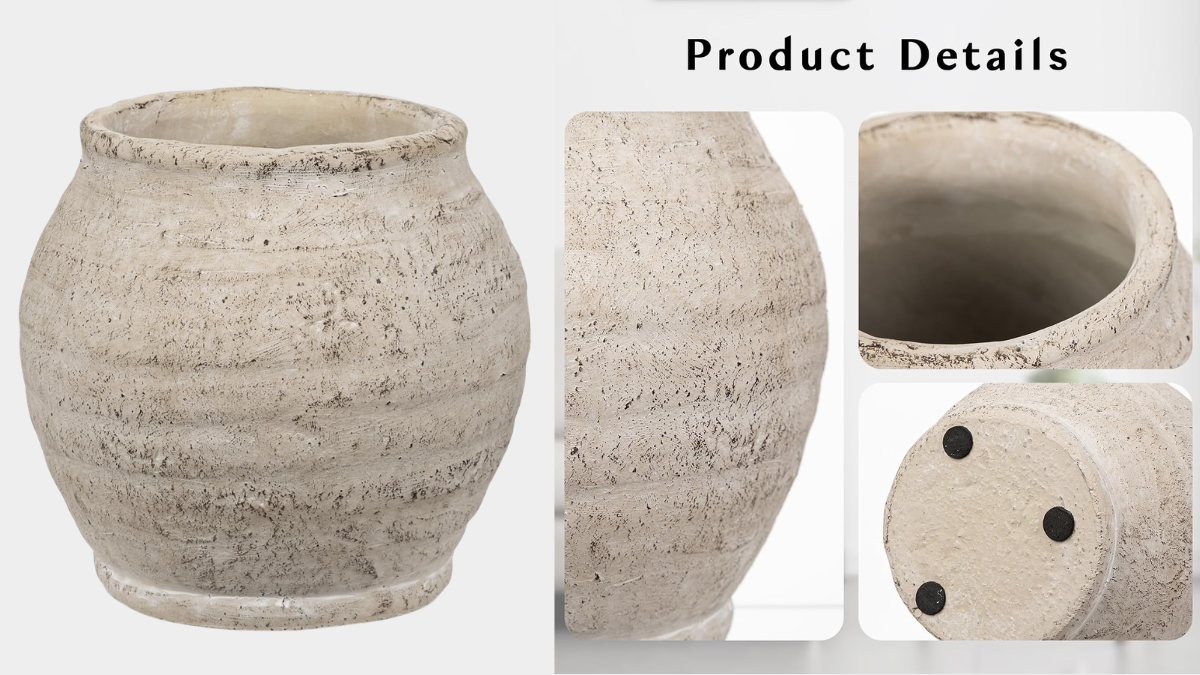
This is also where a little bit of timeless interior design thinking goes a long way. Trend-driven decor (think: neon signs, novelty pillows, anything with a slogan on it) ages fast and starts to look cheap within a year. A well-made ceramic vase or a solid wood tray, on the other hand, will look just as good in five years as it does today — which means you’re not re-buying your decor every time Pinterest shifts.
→ Shop it: Handmade Stoneware Vase, Speckled Cream
How to Make Furniture Look More Expensive Than It Is
Not everyone is ready to replace their furniture, and honestly, you don’t need to. Quiet luxury is less about what you own and more about how it’s dressed.
A few low-cost tricks that make existing furniture read as higher-end:
- Swap plastic or brass-tone hardware for solid metal pulls. Cheap-looking cabinet or dresser hardware is one of the fastest tells that furniture is budget-grade — and one of the cheapest fixes.
- Layer your bedding instead of using one flat set. A duvet, a woven throw, and two pillow textures instantly make even an IKEA bed frame look like it belongs in a boutique hotel.
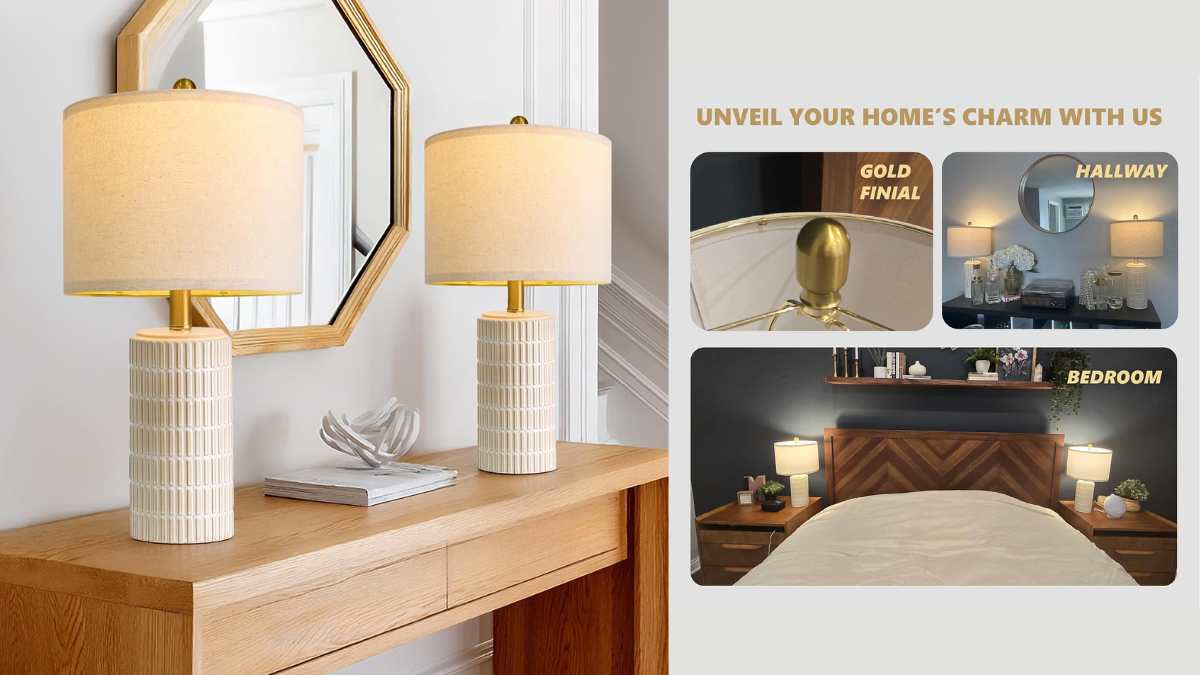
- Add a table lamp instead of relying on overhead lighting. Warm, low lighting is doing more for the “expensive room” feeling than almost anything else on this list, and it’s one of the most underrated pieces of affordable home decor.
→ Shop it: Ceramic Table Lamp with Linen Shade
The One Mistake That Ruins the Look
Here’s the honest part: quiet luxury is easy to get slightly wrong, and when it’s wrong, it doesn’t look elevated — it just looks empty or unfinished. The mistake is treating “less” as the whole strategy instead of a byproduct of quality.
A bare room with a $20 rug and a bare wall isn’t quiet luxury. It’s just a bare room. The trend only works when the few things you have are genuinely nice — solid materials, good proportions, natural fibers. If your budget only stretches to one upgrade this month, put it toward the item you touch or see the most: your bedding, your sofa throw, or the rug under your coffee table. Those three items do more visual work per dollar than almost anything else in a room.
A Simple Room-by-Room Starting Point
If you’re not sure where to begin, here’s a low-effort entry point for each major room:
Living room: One textured throw, one set of linen pillow covers, one ceramic or stone object on the coffee table. Bedroom: A linen or linen-blend duvet cover, layered pillows, one table lamp with a fabric shade. Entryway: A jute or wool runner, one carved wood tray for keys and mail, a single dried or preserved floral arrangement.
None of these require a renovation. Most of them can be done in a single weekend, for less than the cost of a new piece of furniture.
Where to Splurge and Where to Save
One of the most common questions people ask once they’ve bought into the aesthetic is simple: okay, but where do I actually spend real money? Not every item in a quiet luxury room needs to be an investment piece, and knowing the difference will save you from overspending on the wrong things.
Splurge on the items you touch daily. Your mattress topper, your bedding, and your sofa (or at least a slipcover for it) are worth the higher price point, because fabric quality is the hardest thing to fake and the thing your body actually notices. A cheap-feeling duvet will never look expensive no matter how well it’s styled, because you’ll feel the difference the second you touch it.
Save on the items that are mostly visual. Decorative objects, vases, trays, and even some lighting can be found secondhand or from budget retailers without sacrificing much, because their job is primarily aesthetic rather than functional. This is where thrifting, estate sales, and marketplace apps genuinely shine — a $15 vintage ceramic bowl often reads as more expensive than a $60 new one, simply because it has a little wear and an unusual shape that mass-produced pieces don’t.
A useful rule of thumb: if you’ll touch it every day (bedding, towels, the sofa you sit on), spend a little more. If you’ll mostly look at it (a vase, a tray, a piece of art), it’s fine to hunt for a deal. This one framework alone will keep your affordable home decor budget from ballooning while still giving you the room the “expensive” feeling you’re after.
Quick Answers: Quiet Luxury Home Decor FAQ
Is quiet luxury just another word for minimalism? Not exactly. Minimalism is primarily about quantity — owning fewer things. Quiet luxury is primarily about quality — the materials and craftsmanship of the things you do own. A minimalist room can be sparse and inexpensive; a quiet luxury room is sparse but intentionally invested in.
What colors are considered quiet luxury? Warm neutrals dominate: ivory, oatmeal, sand, taupe, walnut brown, and sage green, often with a single deeper accent like charcoal or rust used sparingly. Stark, cool whites and heavily saturated colors tend to work against the aesthetic.
Can quiet luxury home decor work in a rental? Yes, arguably better than most trends, since so much of it is achieved through textiles, lighting, and small objects rather than built-ins or paint. Swappable items like duvet covers, rugs, curtains, and lamps do almost all of the heavy lifting, and every one of them travels with you when you move.
How much does it cost to get the look? It scales with your budget. A meaningful refresh — new bedding, a couple of pillow covers, one lamp, one decorative object — can be done for under $250. A full room can be done gradually over a few months without ever making one large purchase.
Quiet Luxury Isn’t About Money — It’s About Attention
The reason this trend has staying power, unlike a lot of decor fads, is that it’s not really about how much you spend. It’s about paying attention — to material, to texture, to what you actually need versus what you’ve just accumulated. A room can be quiet luxury on a fifty-dollar budget or a fifty-thousand-dollar one; the principles don’t change, only the price tags on the objects that follow them.
So before you buy anything new, take a lap around your own space first. Chances are, the closest thing to “elevated” isn’t a purchase away — it’s an edit away.
About the Author