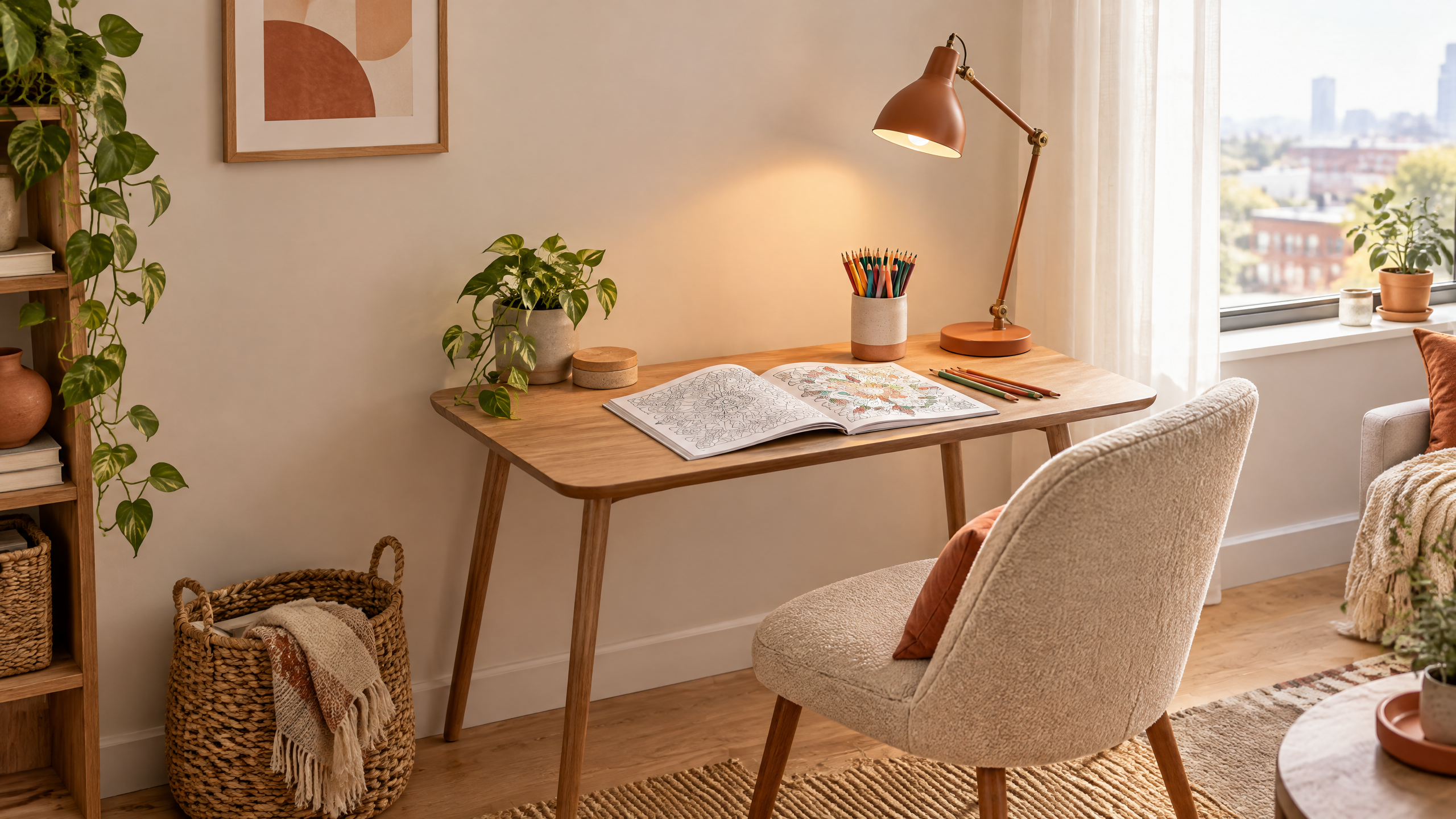
How to Create a Beautiful Adult Coloring Corner in Any Small Space
There is a particular pleasure in having one small place in the home that asks nothing of you. It is not the desk where bills accumulate or the sofa where laundry waits to be folded. It is a chair beside a window, a slim shelf, or the quiet end of a dining table where a page, a pencil, and a little unclaimed time can meet.
That is the appeal of an adult coloring corner. It gives a creative habit a visible home without demanding a craft room, a renovation, or a shopping spree. The most successful adult coloring corner ideas begin with the space you already have and solve practical questions first: Where will you sit? Can you see the page clearly? What happens to supplies when you are finished? How can the setup look like part of your home rather than an office station left on display?
Below is a flexible plan for creating a polished, comfortable nook in a studio apartment, shared bedroom, home office, or busy family room. Think of it less as a decorating formula and more as a small invitation to return to something you enjoy.
Start by choosing the smallest useful footprint
A beautiful corner is not necessarily a large one. In fact, a compact footprint is easier to maintain because every item has a job. Begin by measuring the area where you might sit, then mark the width of the chair and the reach you need for a side table or storage basket. Leave enough clearance to pull the chair out without blocking a doorway, drawer, radiator, or walkway.
Look for overlooked real estate
Make the boundary visible
A corner feels intentional when it has a quiet visual edge. Place a small rug beneath the chair, hang one print above it, or use a painted-looking tray to gather supplies. The goal is not to fence off the area. It is to signal, at a glance, “this is where this activity happens.”

Build the setup around comfortable posture
Coloring can make you lose track of time, which makes comfort more important than decorative perfection. Choose a seat that supports your back and lets both feet rest on the floor. A dining chair can work if you add a thin cushion and bring the coloring surface to a comfortable height. ### Match the table to your arm position
Your forearms should be able to rest lightly while you work, without your shoulders creeping toward your ears. A slim C-table, lap desk, nesting table, or adjustable side table can be more useful than a standard coffee table. Test the height with a book before buying anything: place a coloring page on it and see whether you can fill a small shape without bending sharply at the neck.
Keep the most-used supplies within one reach
A pretty corner becomes inconvenient when every session begins with a scavenger hunt. Keep your current pencils, sharpeners, eraser, and a few pages in one open container. A handled caddy works well if the corner is shared; a lidded box is better if dust, pets, or curious hands are concerns.
Store specialty supplies elsewhere until you know you use them regularly. A small edit keeps the corner calm and prevents the visual clutter that makes a relaxing activity feel like another household task.
Solve the lighting before styling the shelf
Good light is one of the most practical adult coloring corner ideas because it changes both the look and the usability of the nook. Daylight is wonderful, but it shifts throughout the day. A dedicated lamp lets you color in the evening without relying on a harsh ceiling fixture.

Choose a lamp that directs light onto the page
A small adjustable task lamp can sit on a side table or clamp to a nearby shelf. Angle it so your hand does not cast a shadow over the area you are filling. If you are left-handed, test the lamp from the opposite side; the most comfortable position depends on where your arm naturally falls.
A warm-to-neutral bulb can make the corner feel welcoming while keeping colors reasonably clear. Rather than choosing a bulb based only on atmosphere, bring a few colored pencils or markers when you shop and see how the light treats them. If you use multiple media, a lamp with adjustable brightness is especially useful.
Reduce glare and eye fatigue
Do not position glossy paper directly under an exposed bulb. A shaded lamp or angled light usually feels gentler than a bare overhead source. If you experience persistent eye discomfort, headaches, or vision changes, pause and seek appropriate professional advice; a decorative setup is not a substitute for an eye evaluation.
Give every supply a home without making the corner look clinical
Use a three-level storage system
Keep daily supplies at arm’s reach. ### Protect the surface and the room
Place a desk pad, cutting mat, or washable tray under the page if you use materials that can mark furniture. Check the manufacturer’s guidance for any pen, ink, or paint before using it on a delicate surface. This small precaution makes it easier to color spontaneously because you are not worried about leaving a ring or stain behind.
Style it like a room, not a supply station
The corner should feel connected to the rest of your home. Repeat one color from the room in the cushion, pencil cup, or small artwork. Add one tactile element, such as a linen cushion or a woven basket, then stop. Too many decorative objects compete with the page and reduce the useful surface.

Choose a visual mood that supports the habit
Design for a quick reset
At the end of a session, you should be able to put everything away in under two minutes. Use one tray for the active project and one container for tools. If you stop halfway through a page, slide it into a folder or portfolio so the unfinished work remains visible but protected. A corner that resets quickly is more likely to stay usable during a busy week.
Make the corner work in different kinds of homes
A 30-minute setup plan
First, clear one surface and remove anything that does not belong there. Next, place the chair and test the working height with a book. Add the lamp, then gather only the supplies you use most. Put the rest in a nearby drawer or box. Finally, add one soft furnishing and one personal detail.
When you have no permanent corner
A “traveling” coloring kit can still create a ritual. Keep a folder, pencil case, and lightweight lap board together in a closet or cabinet. Choose one regular spot, such as the dining table after dinner, and clear it before you begin. The consistency of the setup matters more than whether the supplies live there full-time.

Common mistakes that make a coloring nook harder to use
Choosing aesthetics before ergonomics. A beautiful chair that strains your back will not become a favorite. Test the sitting position and surface height first, then choose finishes and accessories
Overfilling the work surface. Candles, plants, cups, books, and tools can leave no room for the page. Keep decoration to the edges and preserve a clear central area.
Ignoring the light at night. A sunny corner may be unusable after work. Add task lighting during the planning stage rather than treating it as an afterthought.
Buying a large collection too soon. More supplies do not automatically create more creative time. Start with the materials you genuinely enjoy, then expand when the habit earns the space.
Making cleanup complicated. If the last step requires sorting dozens of items, unfinished projects will linger and the corner will feel messy. Favor broad categories and containers that are easy to open
Treating coloring as a performance. Coloring may feel restful or absorbing, but it is not medical treatment and it will not affect everyone in the same way. If you are seeking help for anxiety, pain, sleep problems, or another health concern, speak with a qualified professional rather than relying on a hobby alone.
A simple product to keep in the rotation

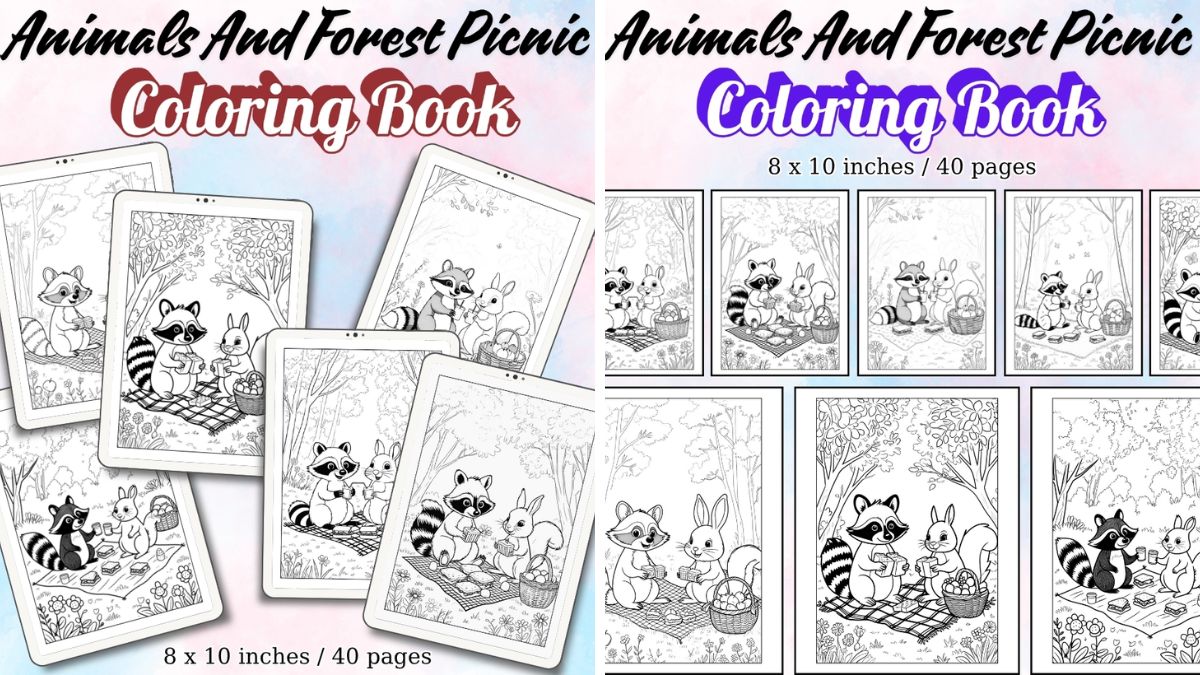
If you want a nature-themed option for the page itself, take a look at Animals And Forest Picnic Coloring Pages / Sheets of Animals And Forest Picnic {Coloring Book}. The linked listing describes it as a coloring-pages product featuring friendly animals in a forest picnic setting, including scenes with rabbits, foxes, deer, owls, raccoons, and squirrels. It is presented as suitable for children, parents, teachers, and art lovers, with designs described as ranging from simpler outlines to more detailed forest scenes.
Frequently asked questions
How much space do I need for an adult coloring corner?
You need room for a stable seat, a surface large enough for the page, and a container for your active supplies. In practice, a chair plus a narrow side table can be enough. Measure the footprint and walking clearance rather than waiting for an empty room.
What should I put in a coloring corner first?
Start with a comfortable seat, a reliable light source, a firm work surface, and the tools you use most. Add decor only after those basics work together. This order keeps the corner useful even if your budget or floor space is limited.
How do I keep a small coloring space tidy?
Use one open container for current tools, one folder for unfinished pages, and one nearby place for extras. Reset the station at the end of each session. If the corner is shared, choose a tray or caddy that can move in one lift.
Make a little room for the things that restore your attention
The most beautiful version will be the one that fits your actual life: a compact, welcoming place you can return to when you want a screen break, a creative pause, or simply a few quiet minutes with color. Clear one small patch of space this week, gather what you already own, and let the corner become yours through use.
About the Author





