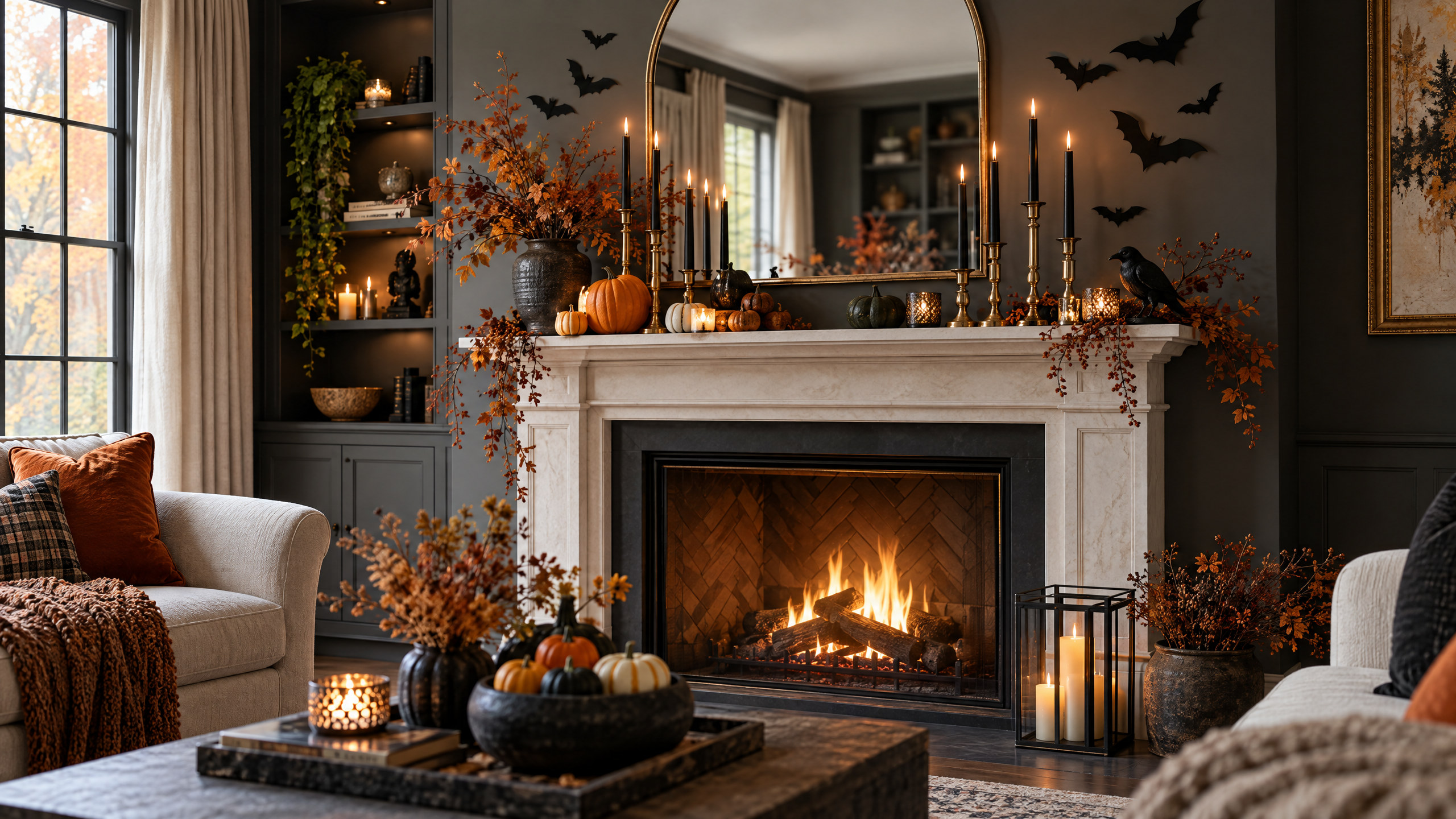
A Safer Halloween Mantel: Cozy, Spooky Styling Without Open Flames or Loose Clutter
A mantel is the easiest place to give your living room a seasonal personality — but when you share a home with toddlers, energetic dogs, or curious cats, the same mantel becomes a small hazard zone. This guide focuses on intentional choices that keep the look atmospheric while minimizing risk: secure anchors, battery-operated light, appropriate heat clearance, clever swaps for breakables, how to achieve visual balance without loose clutter, and exactly what to keep off the hearth.
Think of it as design with an extra layer of child- and pet-aware engineering. With a few practical swaps and simple securements, your mantel can read spooky and layered without inviting knocks, burns, or swallowed trinkets.
Why “safe” matters for Halloween mantel decor
Halloween lends itself to textures and trinkets: garlands, taper candles, stacked pumpkins, vintage bottles. Those same items can be tempting for small hands and paws, or risky near active fireplaces and hot gas inserts. Prioritizing safety doesn’t mean giving up mood. It means planning where pieces sit, how they’re fixed, and what stays off the hearth when a fire is lit or even when the fireplace glass is warm.
A safe mantel is about three things: stability (nothing topples), heat management (nothing melts or ignites), and small-piece control (nothing a pet or child can swallow). Combine those principles and you get a mantel that looks considered and keeps your household intact.
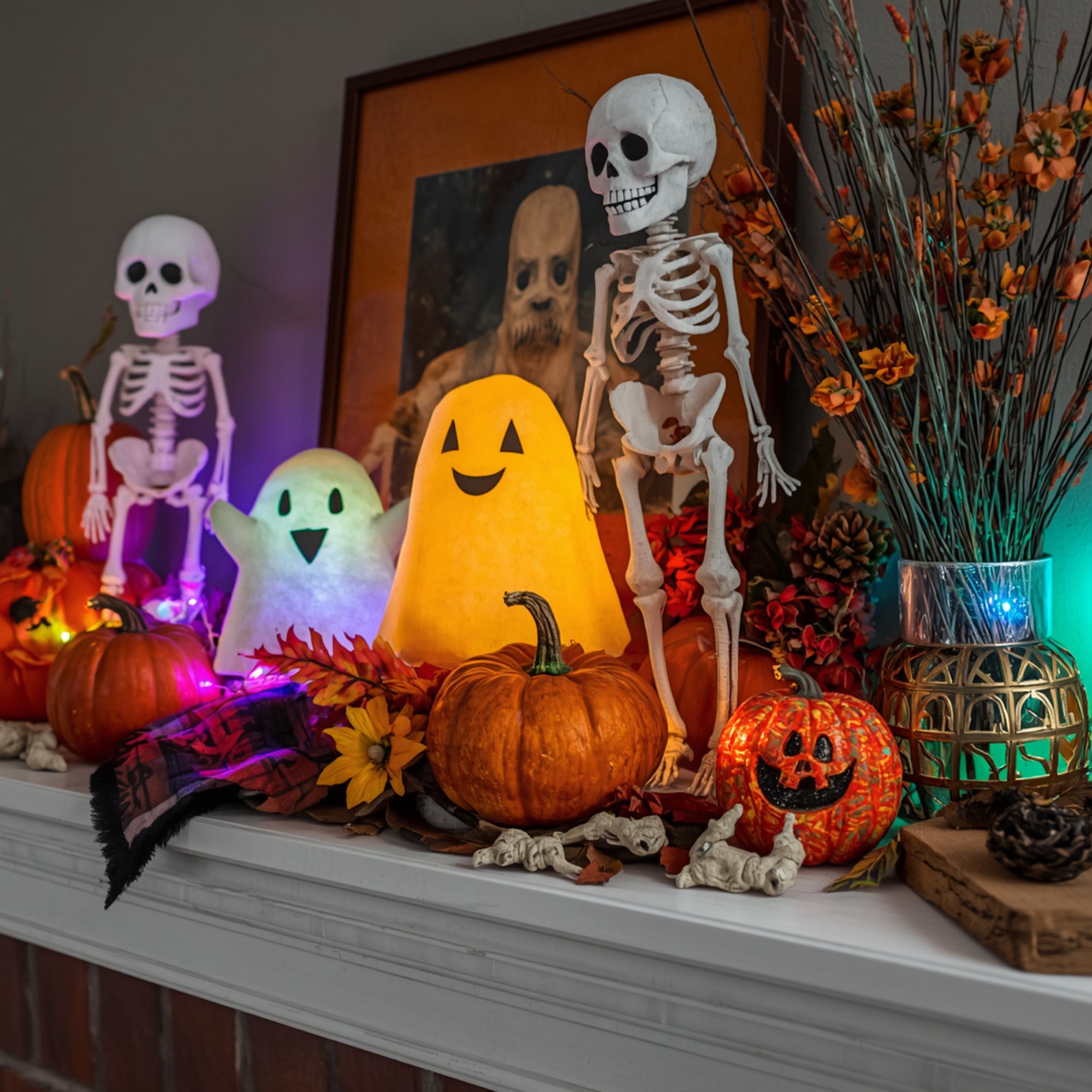
Anchor everything heavy — keep it from tipping
Toppling objects are the most common mantel hazards. Heavy urns, ceramic pumpkins, stacked frames and leaning mirrors become dangerous when bumped.
- Place heavier, low-center pieces at the back and center of the mantel. Anchoring heavier items in the middle reduces the moment arm if something is nudged.
- If you use an anti-tip product under a vase or sculpture, choose one rated for the object and compatible with the mantel surface, then follow its instructions. Do not rely on adhesive alone to secure a heavy or top-heavy piece.
- For heavy frames, mirrors, or tall objects, use appropriate hanging hardware installed into a suitable structural point; follow the hardware and wall-manufacturer instructions. In a rental, choose a lighter freestanding alternative unless the property owner permits secure installation.
- Avoid stacking unstable pieces where children or pets can reach them. Prefer a single stable object with a broad base; if any securing product is used, follow its weight rating and surface instructions.
- If your mantel is within reach of a climbing child or a jumpy dog, opt for metal or resin decor with wider, flatter bases rather than narrow-necked vases. Wider bases distribute weight and resist tipping.
Tip: When in doubt, test stability by applying gentle pressure from the front and sides. If an item shifts easily, it needs a better anchor or a different home.
Lighting that reads spooky — without flames
Flame-free lighting is a non-negotiable for many households but still offers plenty of atmosphere.
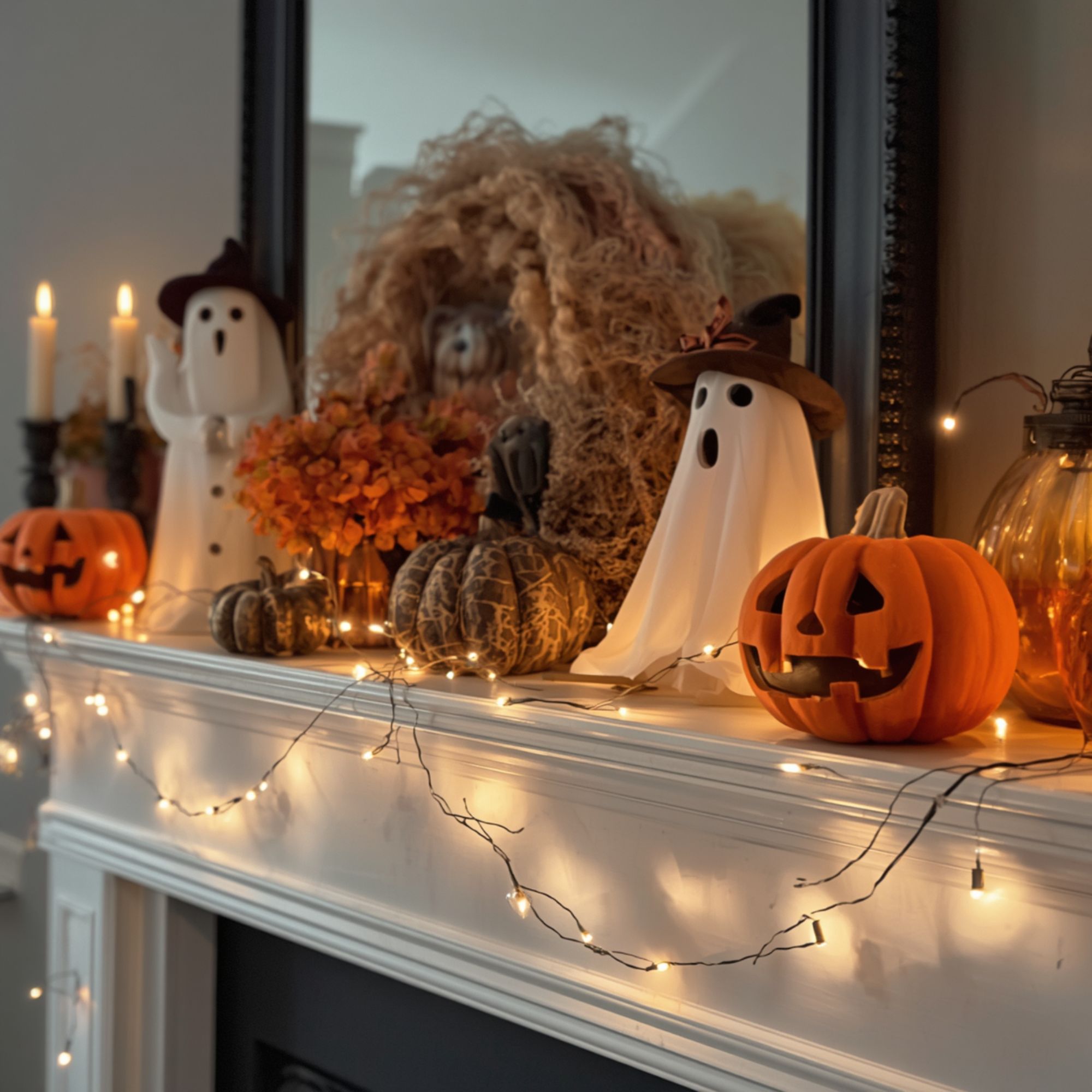
- Choose battery-operated LED candles instead of real flames. Look for ones with flicker modes and warm color temperature (2700K–3000K) to keep a cozy look without heat. Place them on stable surfaces and secure them with putty if they might be nudged.
- String lights with low-voltage LEDs are excellent for draping a garland or highlighting a framed print. Secure strings with clear clips or small command hooks so they don’t droop into reach. Avoid glass-covered bulbs; plastic or silicone-coated strings are more durable around pets and kids.
- Conceal battery packs behind heavier objects or tape them to the back of the mantel with cloth-friendly tape. Exposed battery packs are both attractive to curious fingers and an electrical risk if chewed.
- For a framed seasonal scene or art behind the mantel, opt to place the digital image in a backlit frame or print it in a large format and set it slightly recessed. If you’re using digital clip art as a backdrop, verify the listing and license before printing or reproducing the files — for example, a digital seasonal art resource such as Halloween Spooky Night Background Scenes can provide a layered backdrop, but check the product listing and license to confirm permitted uses. (Use this link to view the product page: Halloween Spooky Night Background Scenes.)

Safety note: Even battery LEDs generate a small amount of heat when enclosed; avoid placing them under fabric or inside closed vessels where heat could build up.
Heat clearance — how much space is enough
Clearance requirements depend on the fireplace, insert, and materials. Do not use a general distance as a substitute for the manufacturer’s instructions; surrounds and glass may stay hot after a flame is off.
- Keep paper, fabric, dried foliage, and other combustible decor outside the clearance areas specified in the fireplace manual. When those limits are unclear, remove seasonal items from the mantel and hearth while the fireplace is operating.
- For working fires, clear the entire hearth of loose items. That means no baskets of decorative leaves, no porous props, and no candy bowls left on the hearth.
- If you have a gas fireplace that heats the glass front, avoid placing heat-sensitive plastics or adhesive tapes directly above it. Check the fireplace manufacturer’s guidelines for recommended clearance distances and maximum surface temperatures.
- If you plan to run a fire or even the pilot light regularly through the season, create a “hot zone” map: mark where the glass, metal trim, mantel shelf, and nearby walls become warm. Use that map to place only heat-tolerant materials in proximity.
When in doubt, don’t assume. Consult your fireplace manual or installer for specific clearance guidance for your unit.
Breakables, small parts and pet-proof materials
Small detachable items, glittery embellishments, and fragile glass are magnets for curious fingers and teeth.
- Avoid glass or thin ceramic pieces within reach. Swap them for resin or metal alternatives that mimic look without the hazard.
- Skip loose beads, sequins and small wires that can come off and be swallowed. If you love the sparkle of garlands, choose sewn or fused embellishments rather than glued or wired ones that unravel.
- Candy is a particular concern: don’t leave open bowls on the mantel. If you want to signal Halloween generosity, use a covered candy jar with a secure lid, or place treats in a closed container on a high mantle shelf or a side table out of reach.
- Select unglazed, matte finishes when possible; glazing can chip into sharp pieces that present ingestion or laceration risk.
- Skip fragrance by default in homes with children or pets; scent products and potpourri can irritate or be ingested. Keep any household product secured and follow its label.
Materials that are durable and easy to clean — powder-coated metal, painted resin, tightly sewn textiles — are better choices where pets and kids roam.

Visual balance when you can’t use loose clutter
You can keep the layered, moody look without using a pile of small loose items.
- Anchor the composition with two or three stable focal pieces: a framed print, a sturdy candlestick cluster, and a heavier decorative object in the center. Work around those anchors.
- Use height and negative space to create drama. A single tall vase (anchored) at one side can balance a wider low piece on the other. Leave breathing room so items aren’t at the mantel edge.
- Favor groupings of three or five objects rather than lots of tiny bits. Grouped objects read as intentional and are easier to secure.
- Replace fragile or small accent décor with larger “safe” props: a single faux jack-o’-lantern with a weighted base, a sculptural skull made of resin, or a leaf garland sewn into a cloth backing so it can be stapled or pinned rather than draped loosely.
- Consider a framed seasonal print or mirror as your backdrop. Large, flat elements provide graphic impact without anything to grab or topple.
Design tradeoff: tighter, simpler vignettes reduce the “collected” look but increase safety dramatically. Think curated rather than cluttered.
Quick setup checklist (for busy hosts)
Before you leave for a gathering or light a fire, scan the mantel using this short checklist.
- Clear the hearth of loose items and flammable decorations.
- Secure tall and heavy pieces with putty, brackets, or anchored hanging hardware.
- Move battery packs and cords out of reach; use purpose-made cord-management products according to their instructions.
- Replace real flames with battery LED candles and check batteries/timers.
- Swap fragile decor for pet-proof alternatives or place fragile items high out of reach.
- Keep candy in a covered container away from mantel or off the hearth entirely.
- Do a reach test: kneel to a child’s eye level and note what looks tempting or accessible.
This quick run-through takes just a few minutes and prevents most common issues.
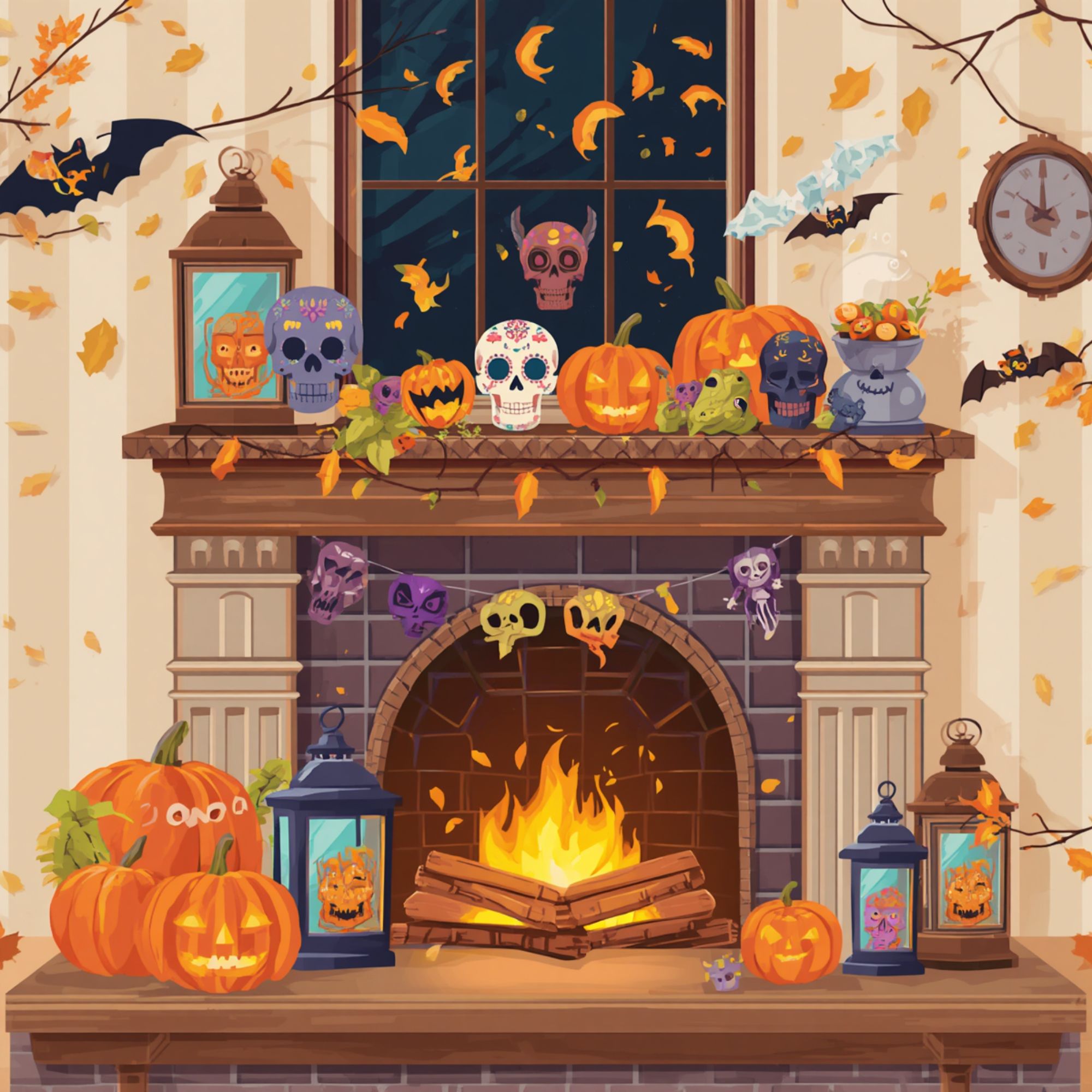
Maintenance, storage and season transitions
A safe mantel is also a sustainable one: keep things organized between Halloween and Thanksgiving so you’re ready for both mood and safety next year.
- When you remove seasonal items, check for loose parts, frayed wires, or sticky residues. Clean and store things in labeled bins so you won’t forget what needs repair.
- Replace or repair any anchor hardware used over the season. Adhesives lose grip; batteries corrode if left in devices.
- Store delicate pieces away from heavy items, and keep batteries stored separately to avoid leaks.
- Consider swapping to a “transition” setup for late fall: remove spookier elements and keep neutrals that are safe and kid-friendly for Thanksgiving.
A small bit of end-of-season care pays off with faster, safer setups in future years.
Final thoughts: cozy mood, less worry
Halloween doesn’t have to mean risk. With a few deliberate swaps, basic anchoring, and an attention to heat and small parts, your mantel can feel atmospheric and still be safe for everyone who shares your home. The aim is not to sterilize the look but to design with the real rhythms of family life in mind: pets that wag, toddlers that reach, friends who bring treats.
Design choices that look considered — large anchors, secure lighting, thoughtful negative space — also look modern and intentional. When you use safety as a design brief, you often end up with a quieter, more sophisticated Halloween mantel that does the job without drama.
Happy styling — and safer haunting.
Frequently Asked Questions
Can I use real pumpkins on the mantel if I secure them?
Fresh pumpkins are bulky and stable but can be tempting for hands and mouths. If you place a fresh pumpkin on the mantel, anchor it with non-slip pads and keep it away from the mantel edge. For households with young children or pets, lightweight faux pumpkins with weighted bases tend to be safer and longer-lasting.
Are battery-operated candles really safe around pets?
Battery-operated LED candles remove the flame and much of the heat risk, but they still have small electronics and batteries that should be kept out of reach. Secure them on the mantel, tape or hide battery packs, and check for chew marks on cords or casings. Always follow the product’s instructions.
If I have a gas fireplace, how close can decor be?
Clearance needs vary by unit. As a rule, avoid placing flammable items directly above or in front of the fireplace opening, and keep decor at least a foot or more back from the mantel’s edge if the glass or surround becomes hot. Check your fireplace’s manual or consult the installer for exact manufacturer-recommended clearances.
About the Author





