How to Build a Beauty Routine You Can Actually Keep | LifestyleInspo
A beauty routine can begin with the best intentions and end weeks later with products crowded at the back of a drawer. The problem is rarely discipline. More often, the routine was designed for an imaginary version of your life: a woman with unlimited time and energy.
A routine that lasts looks different. It is short enough for a busy morning, forgiving enough for a difficult week, and specific enough that you do not have to make a fresh decision every time you stand in front of the mirror. It also leaves room for pleasure. Beauty should not feel like another performance review.
If you are wondering how to build a beauty routine, start by treating it as a small system rather than a shopping list. Decide what matters, give each step a home, and create a baseline you can return to when life gets messy. Here is a practical way to do it.
Start with your real life, not an ideal schedule
Before choosing products, observe your existing habits. When do you reliably wash your face? How much time do you have before leaving? Your answers are more useful than a viral routine built for someone else’s timetable.
Find your dependable anchors
An anchor is a habit that already happens. Brushing your teeth, taking a shower, making coffee, and getting into bed are all possible anchors. Attach a beauty step to one of them so it does not depend on remembering a separate appointment with yourself.
For example, you might apply moisturizer after brushing your teeth at night, detangle your hair while your conditioner sits, or put on sunscreen after getting dressed. The point is not to create a perfectly choreographed morning. It is to place a useful action where your day already has momentum.

Name the outcome you want
Choose one or two priorities for the next month. Your goal might be calmer-feeling skin, less rushed mornings, more consistent haircare, or a simple makeup look for video calls. A focused goal makes it easier to decide what belongs in the routine and what can wait.
Avoid turning a concern into a verdict about your appearance. “I want a comfortable, low-maintenance routine” is more useful than “I need to fix my face.” A routine is support, not punishment.
Build a minimum routine first
The most reliable routine has a minimum version for late mornings, travel days, and tired nights. Start with the smallest set of steps that serves your priorities.
A simple morning baseline
A morning baseline might be cleansing in the way that suits your skin, moisturizing if needed, applying broad-spectrum sunscreen as directed on the product label, and choosing either makeup or a grooming step that makes you feel pulled together. If cleansing in the morning leaves your skin uncomfortable, a water rinse may be enough for you; if you wake up oily or sweaty, you may prefer a gentle cleanser.
The exact products will vary. What matters is that the sequence is easy to remember and does not require a new decision each morning. Keep the products together, ideally where you will see them in the order you use them.

A simple evening baseline
At night, remove makeup and sunscreen, cleanse as appropriate, and use a moisturizer or other product you already know your skin tolerates. If you use a treatment, add only one at a time and follow its label. You do not need to turn every evening into a facial.
Hair can have a parallel baseline: brush or gently detangle, protect it in the way that works for your texture and style, and complete one maintenance step such as moisturizing the ends or preparing it for the next day. Keep the baseline small enough that “I am tired” does not automatically mean “I skip everything.”
Add one layer at a time
Once the baseline feels ordinary, you can add a targeted step. Introduce it slowly enough that you can tell what is helping, irritating, or simply unnecessary.
Use a four-question product filter
Before buying or adding a product, ask:
- What job is this meant to do?If you cannot answer clearly, pause.
- Where does it fit in my existing sequence?A product without a place is likely to become clutter.
- How often can I realistically use it?A weekly treatment is not a good fit if you never have a spare evening.
- What will I stop, simplify, or delay to make room for it?More steps should be a conscious trade, not an automatic addition.
Give new products a fair trial. Note when you started, how often you used the item, and what you noticed. This prevents every result from becoming a guessing game.

Be careful with “more”
Using several strong exfoliating or treatment products at once can be uncomfortable, and a dramatic first week is not the same as a sustainable result. If you have persistent irritation, a changing mole, significant hair loss, or another concerning symptom, speak with a qualified healthcare professional or dermatologist rather than trying to solve it with an increasingly complicated routine. Product advice is not a diagnosis.
Design the routine for different energy levels
Consistency does not mean doing the same number of steps every day. It means having a version for the life you are living today.
Create three modes
The essential mode is your two- to four-step baseline. It is for rushed mornings, sick days, and late nights. The standard mode is your usual routine, with the products and grooming steps that make you feel cared for. The leisurely mode is optional: a hair mask, longer shower, careful shave, manicure, or makeup experiment when you genuinely want the experience.
Writing these modes down reminds you that the short version is part of the plan, not a failure.
Make the room do some of the work
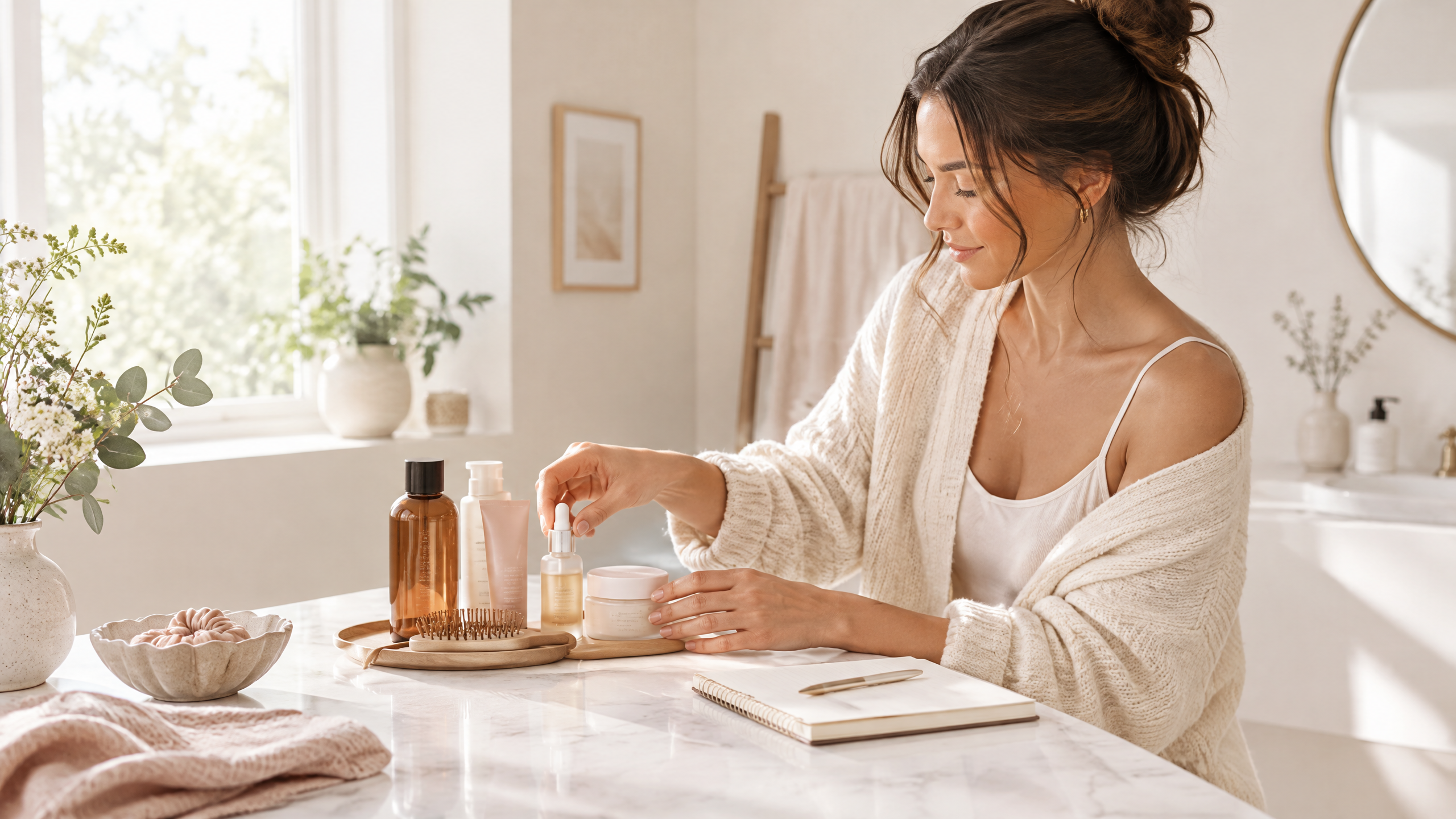
Store everyday products in one visible, reachable place. Put occasional products somewhere separate so they do not interrupt the basic sequence. A small tray can create a visual boundary between “use most days” and “use when I choose.”
Also consider physical friction. A pump may be easier than a jar when your hands are wet, and a tool that needs charging should have a permanent spot near an outlet. Small environmental decisions can matter more than motivation.
Make beauty fit your budget and values
A routine should not create financial pressure. Before replacing an empty product, check whether it served a genuine need, whether you enjoyed using it, and whether a simpler option would do the job. You can also set a monthly beauty allowance and keep a short replacement list rather than shopping whenever a new trend appears.
Finish before you expand
Use what you own when it is safe and suitable for you. Do not finish a product that causes discomfort, has changed in smell or texture, or is past the period recommended by the manufacturer. Give new products enough time to become familiar before deciding you need something more exciting.
Let your routine reflect your identity
Some people love a polished makeup look. Others feel best with clean skin, brushed brows, and a favorite lip balm. Some enjoy styling their hair; others prefer a cut that looks good with minimal effort. There is no prize for choosing the most elaborate version.
Ask what makes you feel like yourself when you see your reflection. That answer can guide your purchases better than a trend cycle. A useful routine helps you express your preferences rather than replacing them.
Track what works without turning it into homework
A little reflection can reveal patterns, but tracking should remain light. Once a week, ask what felt easy, what you skipped, and what created friction. If you repeatedly skip a step, treat that as information. Move it, shorten it, or remove it.
Try a one-month reset
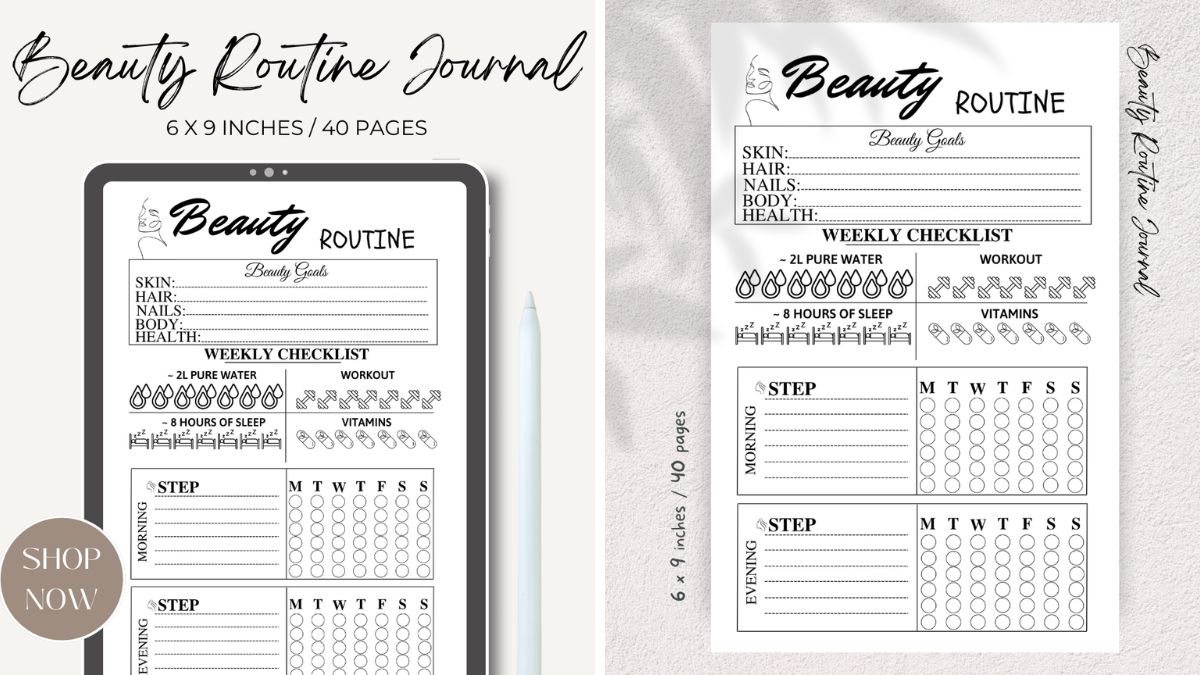
For four weeks, keep your routine intentionally narrow. Use the same baseline, introduce no more than one new product, and note how your skin, hair, schedule, and mood respond. You can use a notebook or a simple digital note with three prompts: “What did I use?” “How did it feel?” and “What would make tomorrow easier?”
This is not a promise that a routine will transform your appearance or solve a health concern. It is a way to notice your preferences and build a rhythm you can maintain. If faith, prayer, or a personal spiritual practice is part of your self-care, it may be meaningful to pair it with a quiet beauty ritual, but keep that choice personal; no spiritual practice is a substitute for medical advice or professional care.
Keep a seasonal review
Every few months, check whether your routine still suits the weather, schedule, and your hair or skin needs. You may need a lighter texture in humidity, a richer moisturizer in a dry season, or a faster styling plan during a demanding work period. Adjusting is maintenance.
Common mistakes that make routines hard to keep
Mistake 1: Copying a complete routine from someone else
A routine filmed in a calm bathroom may not match your commute, budget, climate, or skin. Borrow principles, not someone else’s entire shelf.
Mistake 2: Changing everything at once
A full overhaul makes it hard to identify what helps or irritates. Change one meaningful variable at a time.
Mistake 3: Treating missed days as a broken streak
You are not starting from zero because you skipped a night. Resume at the next practical anchor. A routine is a return path, not a test of perfection.
Mistake 4: Confusing discomfort with effectiveness
Stinging, tightness, or peeling is not a required sign that a product is working. Stop a product that causes concerning discomfort and seek professional guidance if symptoms persist.
Mistake 5: Buying organization instead of building a system
A pretty container can help, but it cannot decide what you use or when. Start with the routine, then choose storage that supports it.
FAQ: How to build a beauty routine
How many steps should a beauty routine have?
There is no universal number. Begin with the fewest steps that address your priorities, then add only what you can use comfortably and consistently. For many people, a basic morning and evening sequence is enough.
Should I use the same routine every day?
Keep the anchors similar, but allow the details to change. Your essential, standard, and leisurely modes can share a foundation while responding to your time, energy, and plans. Flexibility is what makes repetition possible.
How long does it take to build a routine?
Give yourself several weeks to see whether the sequence fits. The goal is familiarity, not a perfect streak. Revise what repeatedly gets in the way.
Your next step:
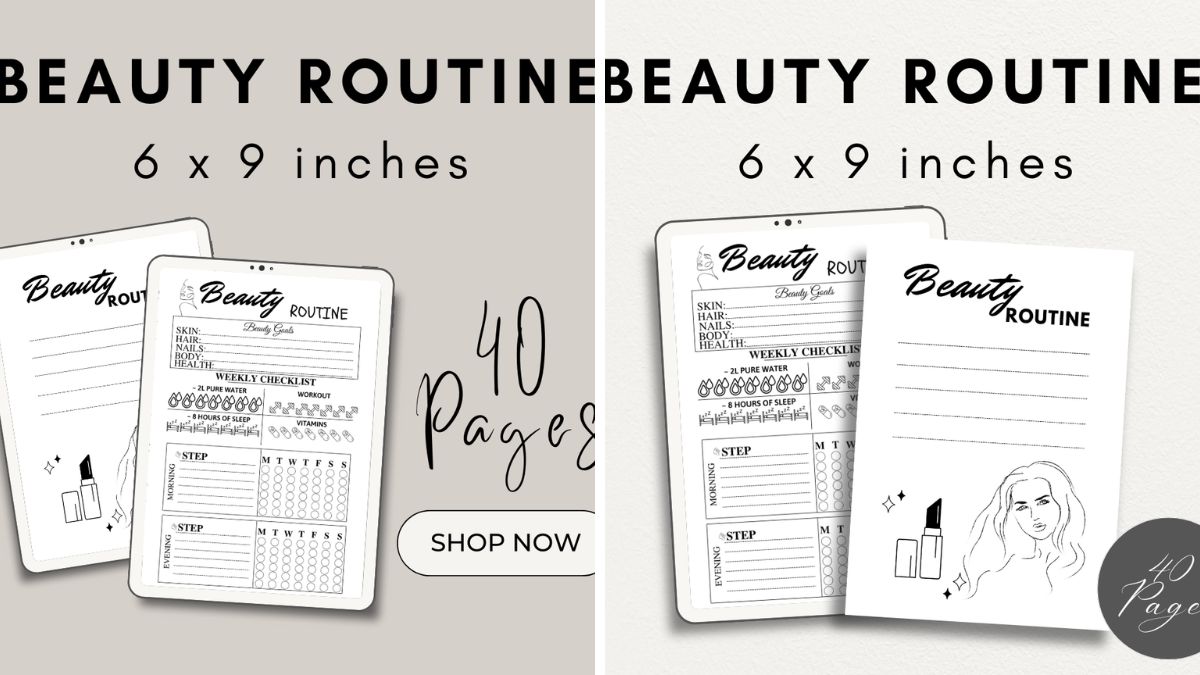
Tonight, choose one anchor, write down your essential routine, and place those products where you will see them. Leave the rest for later. If you would like a dedicated place to think through your rituals, the Beauty Routine Journal / Editable Canva Template is listed as an editable Canva template for organizing and reflecting on a beauty routine. The listing states that the purchase includes one PDF with a Canva link and 40 pages in Canva. Review the product page before buying so you can decide whether that journal format suits the way you like to plan.
A routine you can keep is not the one that looks most impressive on day one. It is the one that still feels possible on an ordinary Tuesday. Start there, make it yours, and let consistency grow from something kind enough to repeat.
About the Author