Everyone and their mother is selling an “AI business” course right now. Most of them promise the moon, deliver a PDF full of ChatGPT tips you already Googled, and leave you exactly where you started — just $197 poorer.
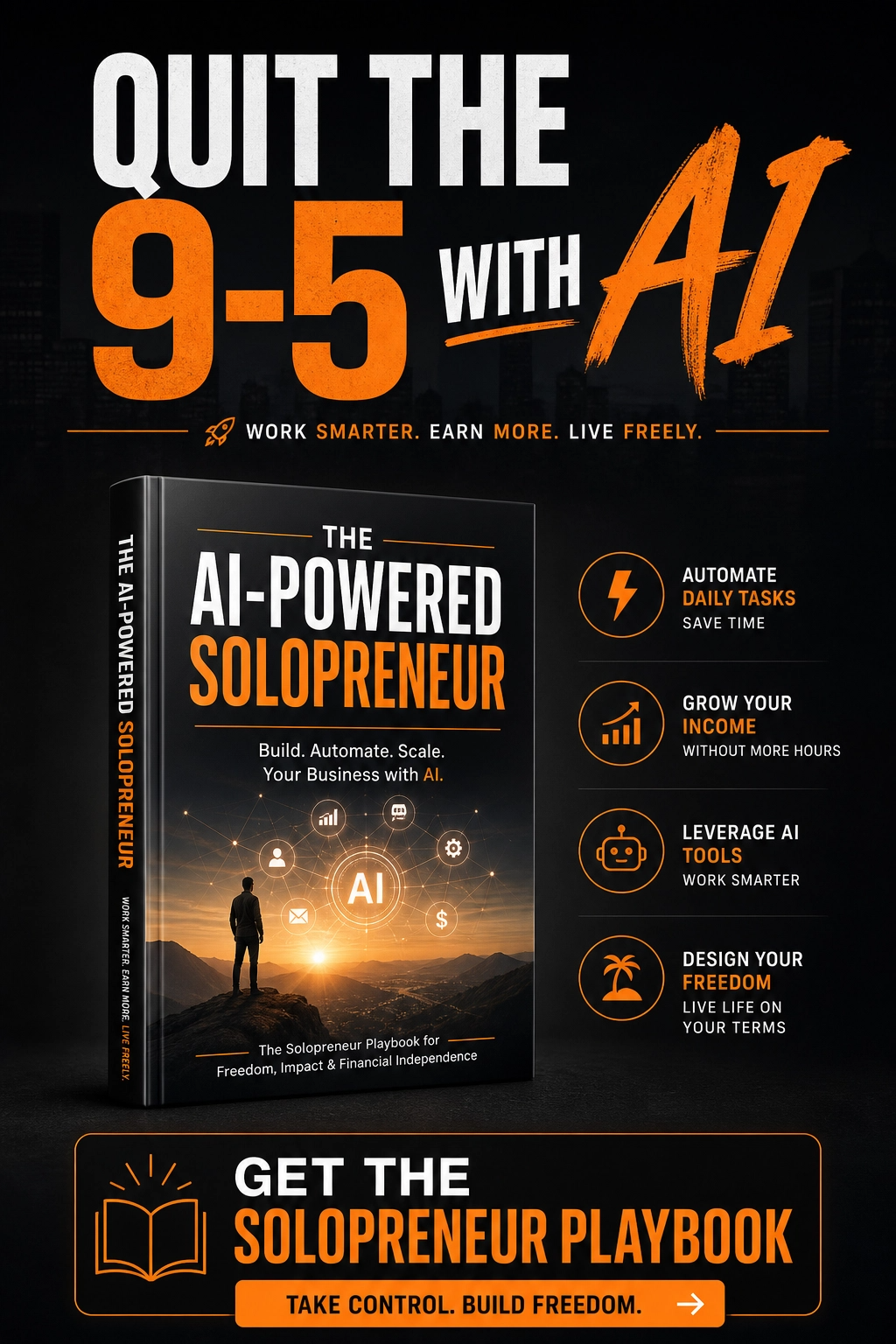
So when I came across The AI-Powered Solopreneur from LadyBossIncome, I was skeptical. A 73-page ebook for $47, claiming it could take you from “overwhelmed by AI” to your first $10K month? I’ve heard that pitch before.
But I read it anyway. And honestly? It surprised me.
Here’s my full, unfiltered review — what’s inside, what actually works, who it’s for, and whether it’s worth your money.
What Is The AI-Powered Solopreneur, Actually?
Before we get into the review, let me tell you what this book is — because the sales page makes it sound almost too good to be true, and I want to give you a real picture.
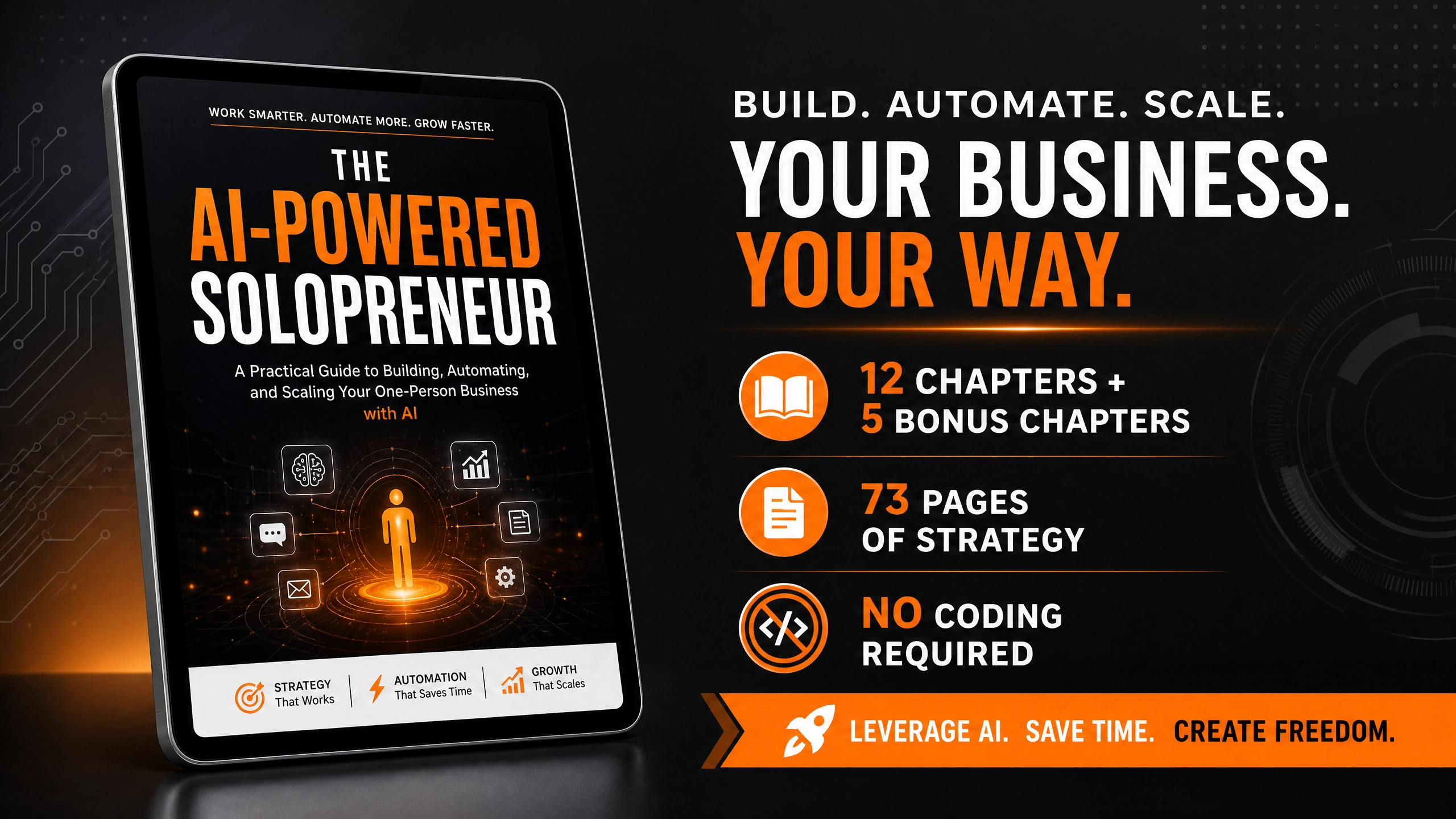
The AI-Powered Solopreneur is a 73-page PDF ebook organized into 12 core chapters, 5 bonus chapters, and 5 appendices. It’s designed for freelancers, coaches, content creators, and one-person business owners who want to use AI tools — ChatGPT, Claude, Gemini — to build income without a team, without tech skills, and without working more hours.
The author’s core argument is refreshingly honest: AI tools aren’t magic. Strategy is. Most people use AI to write a quick email and nothing more. A small group of solopreneurs are using the same tools to build six-figure businesses. The difference isn’t access — it’s the system.
That framing alone is more grounded than 90% of AI content I’ve consumed this year.
Who This Book Is For (and Who Should Skip It)
Let me save you some time with the most important question first.
This book is a strong fit if you:
- Are a freelancer, content creator, coach, or solo entrepreneur
- Have played around with AI tools but haven’t figured out how to turn them into actual income
- Want a structured system — not inspiration, not theory, not a 10-hour video course
- Are starting from zero or under $2K/month and want a clear path forward
- Don’t have a coding background and are intimidated by the “tech” side of AI
You can probably skip it if you:
- Already run a systematized AI-powered business at $10K+/month
- Are looking for deep technical AI training (this is strategy, not engineering)
- Want a physical book or interactive course format
The sweet spot reader? A woman in her late 20s to early 40s who knows AI is changing everything but keeps getting stuck at “but where do I actually start?” — that reader will get enormous value here.
What’s Inside: A Chapter-by-Chapter Overview
The book moves through four logical phases: understand the opportunity → choose your model → build the system → scale it. It doesn’t waste pages.
Chapters 1–2: The Foundation (And Why Now Matters)
Chapter 1 lays out why this moment — right now — is genuinely different from every previous “make money online” wave. The math has changed. AI compresses what used to take a team of five into what one focused person can do in a few hours. It’s not hype; it’s a real shift in leverage.
Chapter 2 does something most AI books don’t: it presents seven distinct income models with estimated earning ranges, startup costs, and skill requirements for each. This alone is worth the price of entry. Instead of giving you vague advice to “build a personal brand,” it breaks down paths like AI freelancing ($2K–$8K/month), digital products ($500–$5K), micro-agency ($5K–$25K), and courses/coaching ($2K–$20K). You get to see the tradeoffs clearly and choose the model that fits your life.
Chapters 3–8: The Income Models in Depth
This is the meat of the book, and it’s where the writing gets genuinely tactical.
Each chapter is dedicated to one business model — content business, freelancing, digital products, agency, course creation, and passive income/automation — and follows the same satisfying pattern: here’s how it works, here’s the AI workflow, here’s what to charge, here’s your action step for this week.
A few standouts:
Chapter 4 (AI Freelancing at Premium Rates) challenges the race-to-the-bottom pricing that kills most freelancers. If AI lets you deliver in 2 hours what used to take 8, you don’t lower your rate — you raise it. You’re not billing time anymore. You’re billing outcomes. This reframe alone could change how you position yourself entirely.
Chapter 5 (Digital Products with AI) walks through creating prompt packs, mini-courses, templates, and ebooks. It’s practical without being overwhelming. If you’ve ever thought “I want to create something that earns while I sleep” but didn’t know where to start, this chapter is your starting point.
Chapter 8 (Automation & Passive Income) is where the book gets exciting. This isn’t passive income as a fantasy — it’s passive income as architecture. What systems do you need to build, in what order, to actually have money coming in when you’re not working? The chapter is honest about the upfront effort required, which I appreciated.
Chapters 9–12: Pricing, Ethics, and the 90-Day Launch Plan
Chapter 9 on pricing strategy is one of the most underrated sections in the book. Value-based pricing sounds intuitive until you have to actually do it — this chapter gives you the framework to figure out what your work is worth with AI leverage factored in.
Chapter 10 on ethics and authenticity addresses something most AI business books conveniently ignore: how do you use AI in a way that builds genuine trust with clients and an audience? This chapter won’t satisfy everyone — it’s not a 30-page philosophical treatise — but the fact that it exists and takes the question seriously says something about the author’s intentions.
Chapter 12 — the 90-day launch plan — is probably the most-referenced section by readers. Week by week, step by step, it maps out the exact sequence to go from “I have an idea” to “I have my first paying clients or first product sales.” Multiple readers in the testimonials credit this chapter specifically for their results.
Bonus Chapters & Appendices: More Than Filler
The five bonus chapters cover prompt engineering (the RACE framework is actually useful), 50 AI business ideas with income potential for each, a 12-month income roadmap, a client acquisition system with cold outreach scripts, and a full solopreneur OS — tools, workflows, weekly rhythms.
The appendices include an AI tools reference table, a monthly performance tracker, a 50-prompt library, a financial planner, and an AI glossary. These aren’t afterthoughts. They’re the kind of tools that turn a book from something you read and forget into something you actually use.
What I Loved
The format respects your time. Every chapter ends with one concrete action step completable in under 30 minutes. That’s a writing philosophy I wish more business books had. Knowledge without action is expensive therapy.
It doesn’t oversell. The book is honest that results vary, that the 90-day plan requires real effort, and that passive income takes active building first. That honesty builds trust.
The income models are specific and realistic. Ranges like “$2K–$8K for AI freelancing” or “$500–$5K for digital products” are grounded. They’re not “make $100K overnight” promises. They’re real starting ranges for people doing real work with AI.
No tech skills required — genuinely. If you can use Google Docs, the book claims, you can implement everything inside. Having read it, I believe that’s true. The tool recommendations are practical and include free tiers.
What Could Be Better
No review is honest without this section.
It covers a lot of ground quickly. 73 pages for 17 chapters means some topics get 4–5 pages when they could sustain an entire book. The digital products chapter, for example, could be its own course. If you want depth on any single model, you’ll need to go further after this book.
The testimonials read a little polished. Sarah made $1,200 in her first month. Priya tripled her income in 3 months. These might be completely true — and the book does have a 4.9-star rating — but I’d love to see more nuanced or mixed results acknowledged.
No community or support. It’s a standalone PDF. If you get stuck implementing the 90-day plan, you’re on your own. A companion community or office hours would make this product dramatically more valuable.
The Verdict: Is The AI-Powered Solopreneur Worth $47?
Yes — with one caveat.
If you read business books to feel good and then do nothing, save your money. No book will fix that, including this one.
But if you’re someone who acts — who will open the PDF, do the Chapter 2 exercise to pick your income model, and actually start the 90-day plan? At $47, this is one of the better investments in the “AI for business” space right now. It’s specific, it’s honest, and it’s built around doing, not just knowing.
The AI window is still open. The people who build systems now — imperfect, iterating, learning as they go — are the ones who will look back at this moment with satisfaction. This book is a reasonable, well-organized guide for getting started.
→ Get The AI-Powered Solopreneur — $47 (Instant PDF download · 30-day money-back guarantee)
One More Thing Before You Go
If you’re building a business — or just starting to think about it — the mindset shift matters as much as the strategy. Surrounding yourself with the right energy isn’t woo; it’s practical. Your workspace, your morning ritual, the things you reach for when you sit down to work — they set the tone.
We love this Graceful Like a Mother Botanical Mug from omniinspo for exactly that reason. The dried flower design turns a regular coffee break into something that actually feels intentional — and for a solopreneur working from home, those small rituals add up.
→ Shop it: Graceful Like a Mother Botanical Mug — $19.99
This post contains affiliate links. We may earn a small commission at no extra cost to you.
About the Author