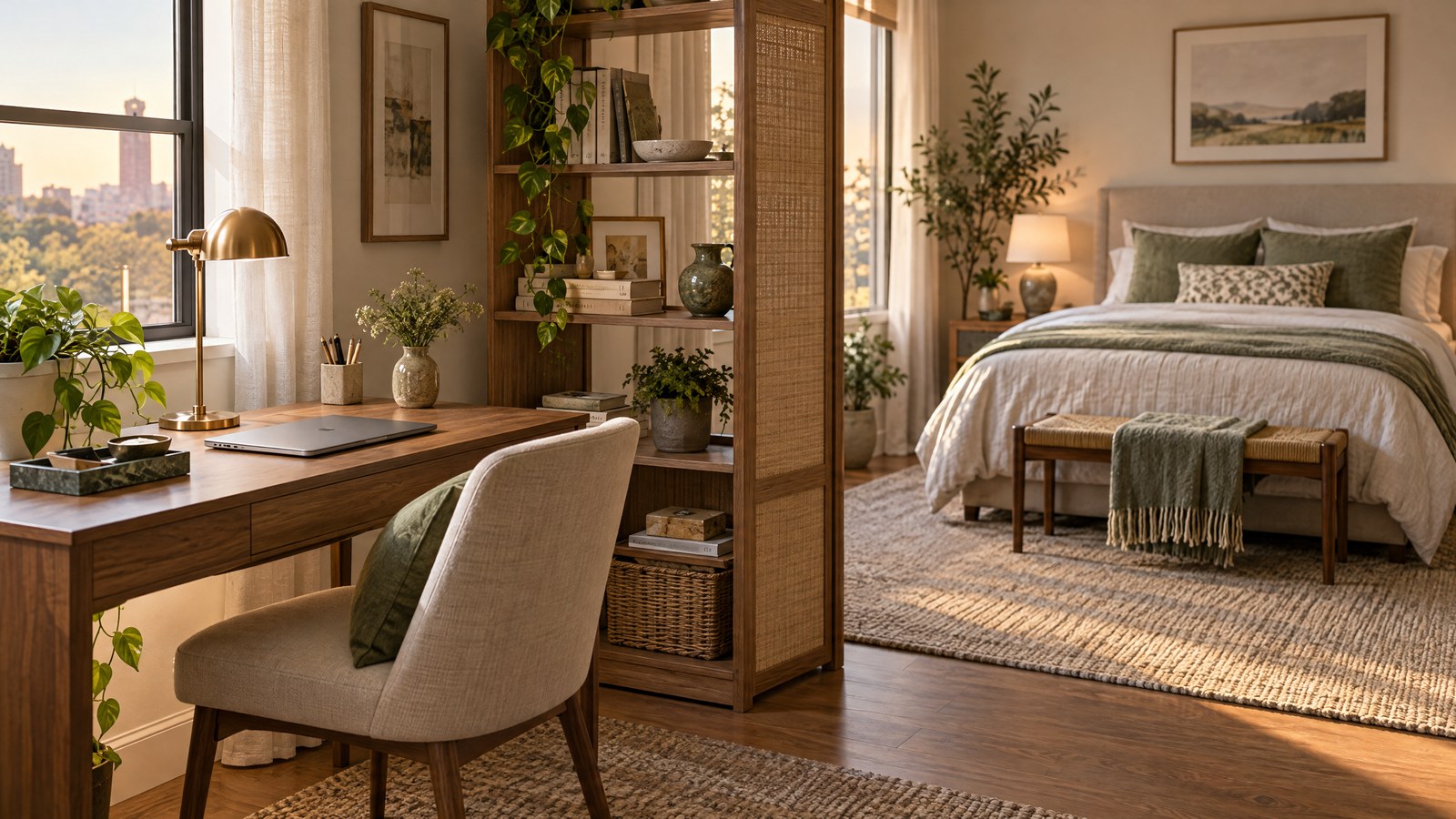
How to Set Up a Desk in Your Bedroom Without Letting Work Take Over
Fitting a desk into your bedroom can save space and keep your schedule flexible — but it can also blur the line between “work” and “rest.” A thoughtful bedroom desk setup focuses on physical and psychological boundaries so your bedroom stays restorative. This guide walks through layout choices, furniture orientation, device tuck-away strategies, storage that disappears, and a reliable close-down ritual to keep late emails from creeping into your sleep routine.
Why this matters: your environment cues behavior. When work is visually separated, tucked out of sight, and intentionally oriented away from the bed, it becomes easier to switch roles from “employee” to “homebody.” These ideas are practical for small bedrooms, shared rooms, or anyone who needs a peaceful sleep sanctuary without sacrificing a functional workspace.
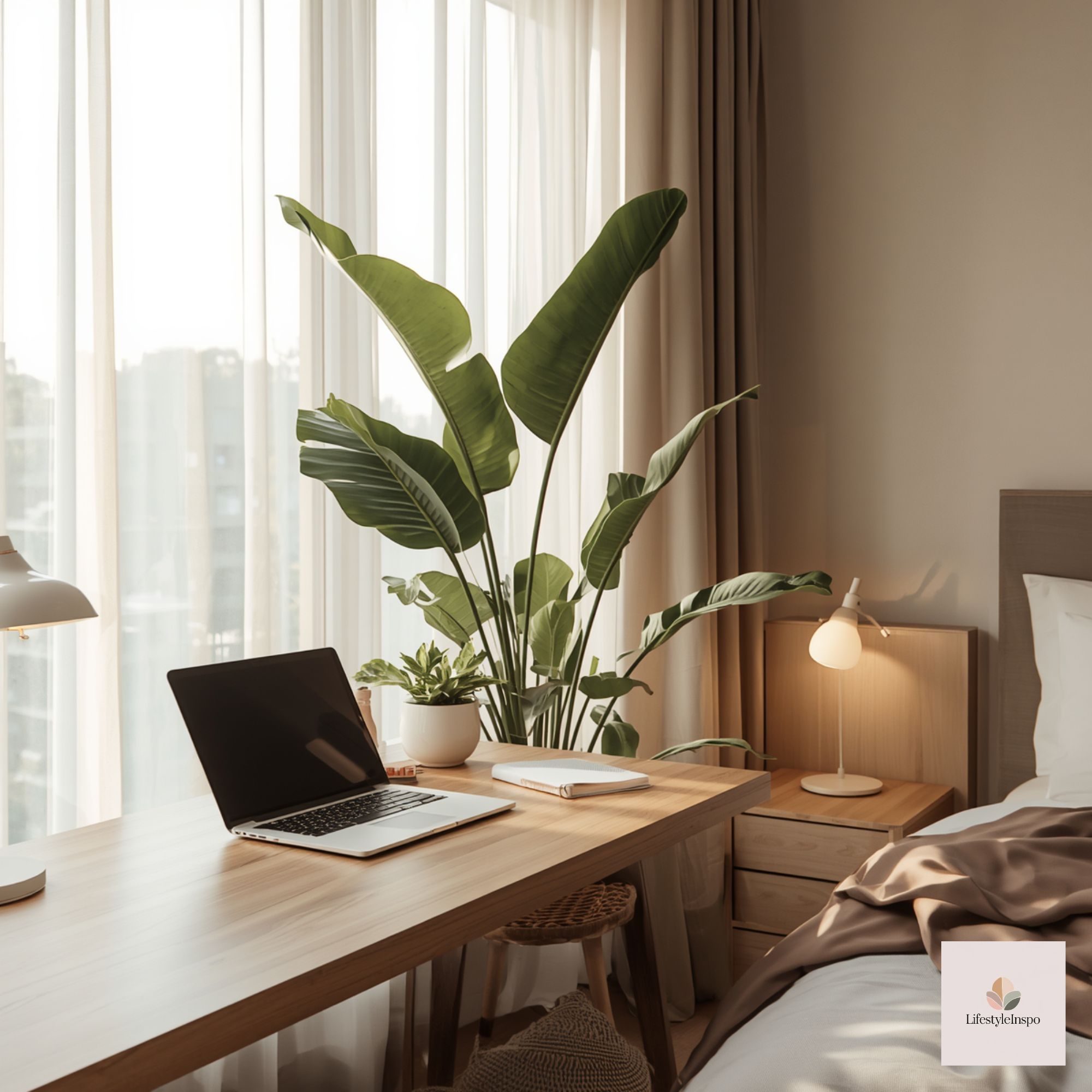
Choose the right spot — prioritize visual separation over proximity
The single most effective thing you can do is place your desk so it reads as a separate zone from the bed at a glance. That doesn’t always mean the farthest corner. Think in terms of sightlines and movement.
- If possible, position the desk where your bed isn’t the first thing you see when seated. That reduces the visual stimulus of pillows and blankets while you work.
- Use the room’s architecture: a nook, recessed wall, or alcove naturally separates areas. If your bedroom is a studio-style layout, try angling the desk so it faces a wall rather than the bed.
- For small spaces, push the desk under a window or opposite a wardrobe. A line of sight barrier — a tall plant, narrow bookshelf, or fabric screen — can be enough to mentally mark the work area.
Avoid putting the desk immediately adjacent to the bed where cables and papers spill over. Visual separation reins in the tendency to check work while still in bed and helps you reserve the bed’s primary function: rest.
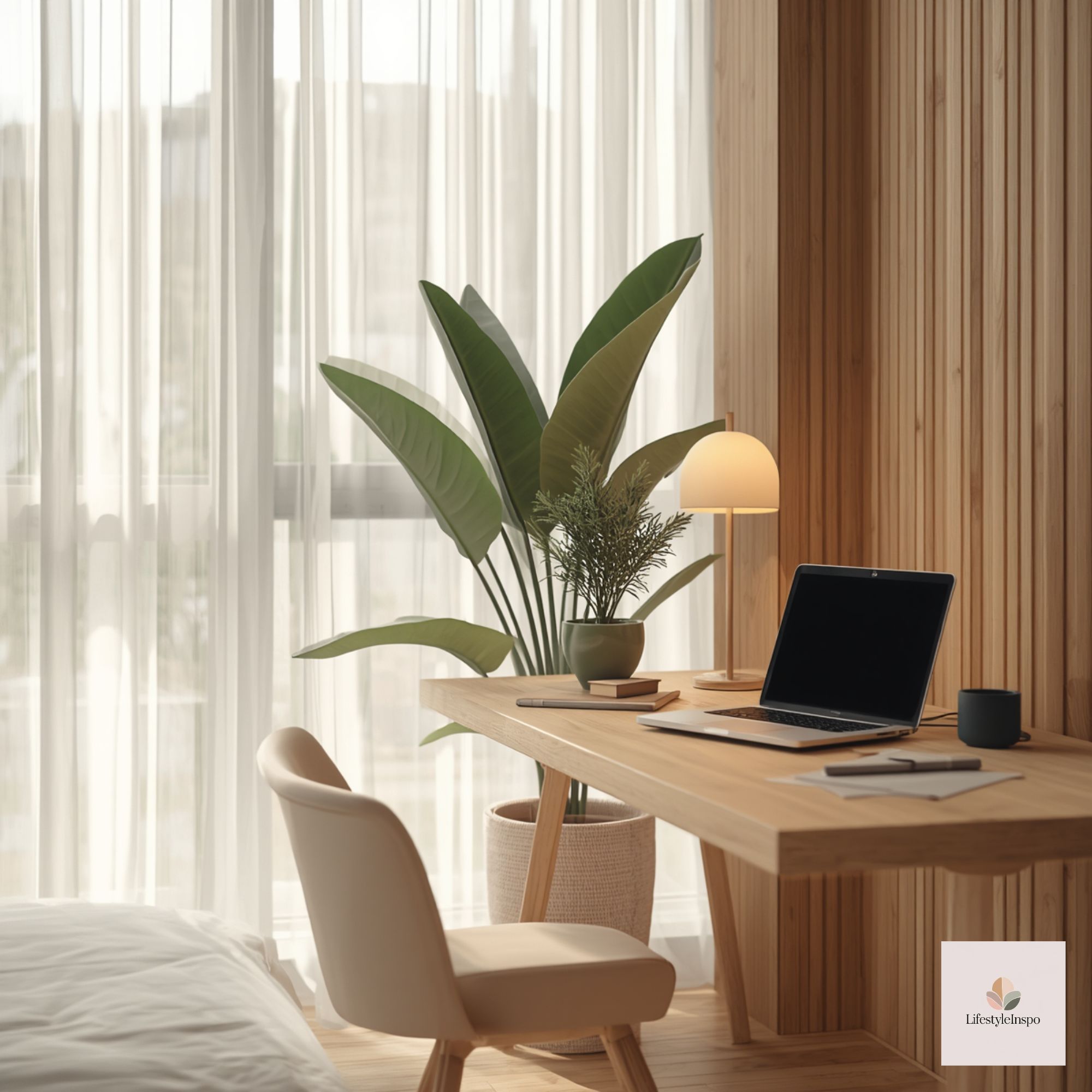
Furniture orientation — aim for a purposeful stance
How a desk is oriented shapes the mental posture of your workday. Orientation can be subtle but impactful.
- Face a wall or neutral surface rather than the bed to reduce temptation and distraction. A plain wall gives your eyes a rest and makes the room feel less like an office.
- If natural light is important, position the desk so light falls from the side, preventing glare while keeping the bed out of direct view.
- Consider a floating desk (wall-mounted) that reads like a console rather than a full workspace; its lower profile signals “temporary work” versus “permanent office.”
- If you prefer a view, orient the desk toward the window, but still ensure the bed isn’t directly facing you. That way you get a sense of openness without bedtime reminders.
Furniture orientation also impacts how easy it is to close off work at day’s end. A desk facing away from the center of the room is easier to ignore when you step across the threshold of “off-the-clock.”
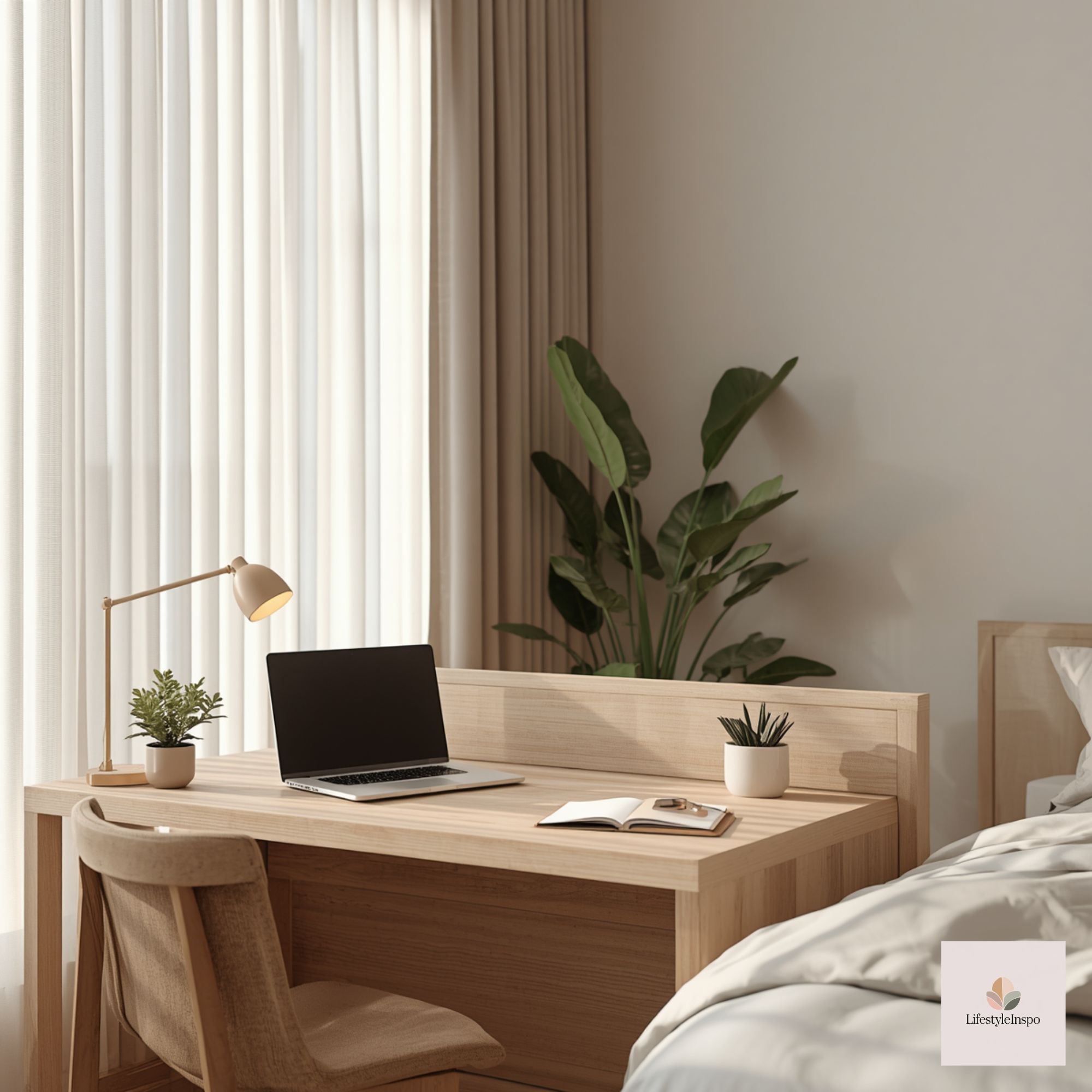
Create storage that tucks work out of sight
Visible mess equals mental mess. Storage that makes work vanish at the end of the day is essential for a successful bedroom desk setup.
- Use a desk with drawers or a nearby filing cart to stow papers, chargers, and notebooks quickly. Label inside drawers simply (Today, Archive, Supplies) so tidying is fast.
- Install a slim wall cabinet or floating shelf above the desk with closed doors. Closed storage reads as furniture rather than office equipment.
- Choose multi-functional pieces: an ottoman with storage, a nightstand drawer that accepts both bedside items and office bits, or a small dresser where the top two drawers are dedicated to work.
- Use cable organizers and a small basket for chargers. A shallow tray or desktop box keeps everyday items together; the trick is that it’s small enough to be slipped into a drawer when your workday ends.
- For single-purpose items you don’t need every day (printer, scanner), keep them on a cart with casters that can be rolled into the closet or hallway when not in use.
Tip: designate one “active project” folder or tray. Everything else goes into long-term storage. That minimizes visual clutter and decision fatigue when you’re shutting down.
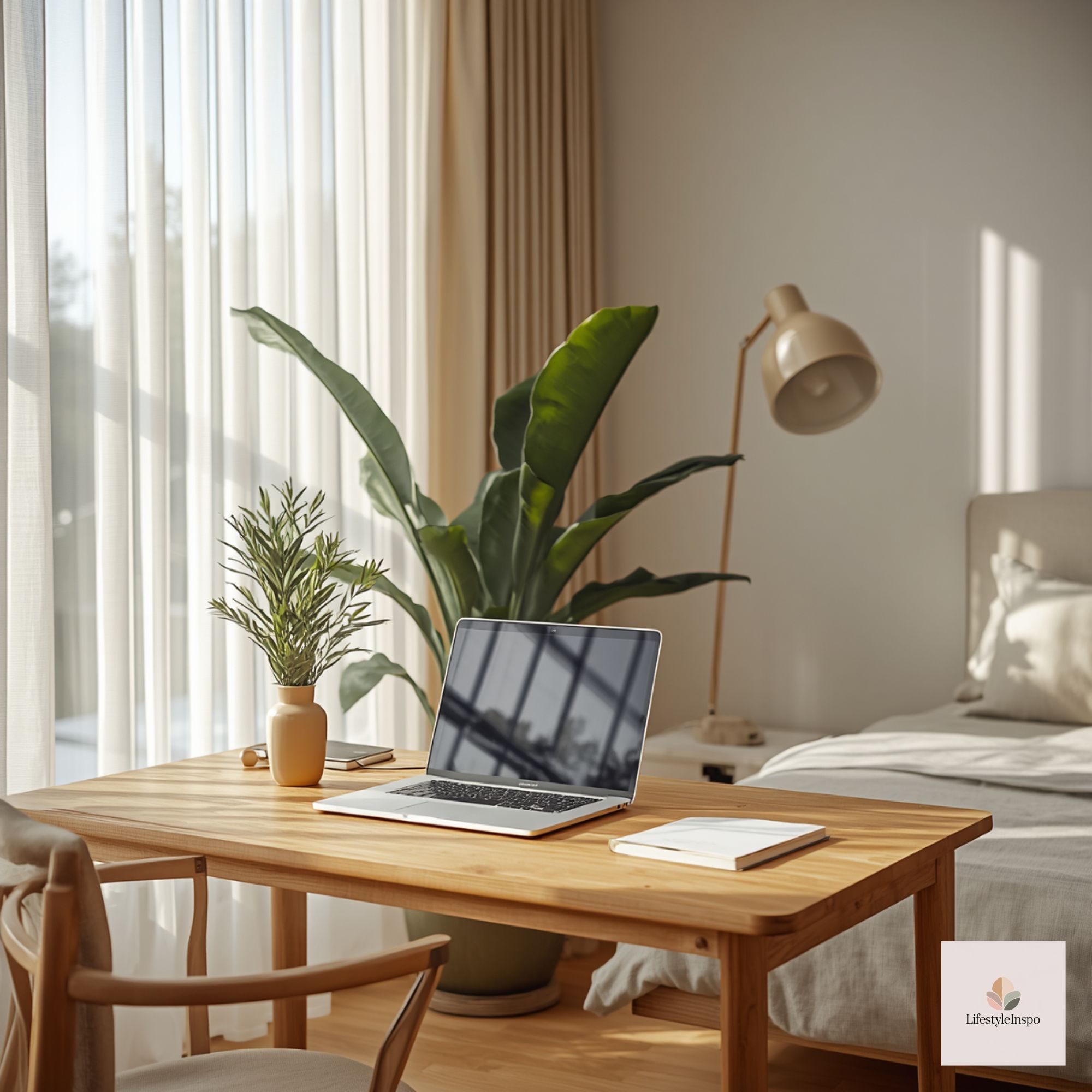
Tuck away devices — physical disconnection, visually enforced
Digital devices are the hardest boundary to maintain. Make their storage part of the design:
- Use a charging station inside a drawer or a small cabinet with a ventilation slot so devices can charge out of sight. A drawer with a pass-through for cords lets phones and tablets recharge while remaining hidden.
- Invest in a laptop sleeve or shallow box to slide your laptop into — whether it’s a physical case or a decorative box. The act of closing the sleeve is an intentional signifier of “work is done.”
- For monitors or desktop towers, consider a simple riser with a back panel and door, or place the tower under the desk behind a discreet panel. Keep external hard drives and peripherals stored in labeled containers.
- Place notifications and messaging apps on a schedule — then honor that light by removing the device from the bedside. A visible, charging phone on the nightstand invites check-ins; a phone charging inside a desk drawer doesn’t.
The psychological benefit of devices out of view is significant: fewer visual cues that encourage re-engagement with work during off hours.
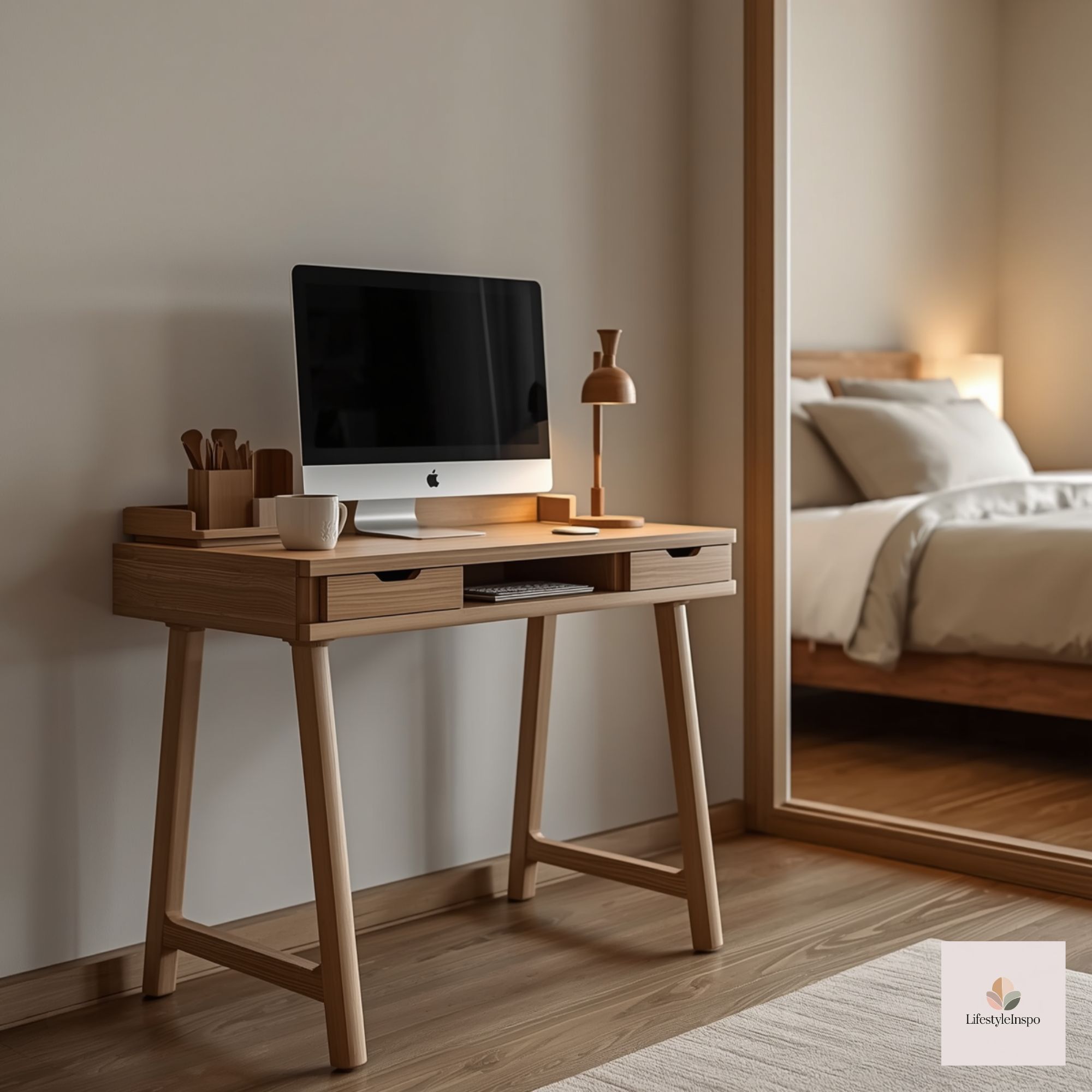
Visual zoning with textiles and low partitions
Low-cost, low-commitment visual cues can separate functions without a full renovation.
- A rug under the desk defines the work zone. Choose a different texture or color than the area rug under the bed.
- A narrow bookshelf or open-slat screen between bed and desk provides a visual barrier while allowing airflow and light.
- Hang a curtain or fabric panel you can draw at night. Unlike opaque sliding doors, a curtain feels soft and signals the space is “closed” when work ends.
- Use bedding that contrasts with the desk area’s palette; this difference reinforces separate roles in your brain — the bed equals rest, the desk equals task.
These measures create clear visual boundaries so your room communicates two distinct purposes at a glance.
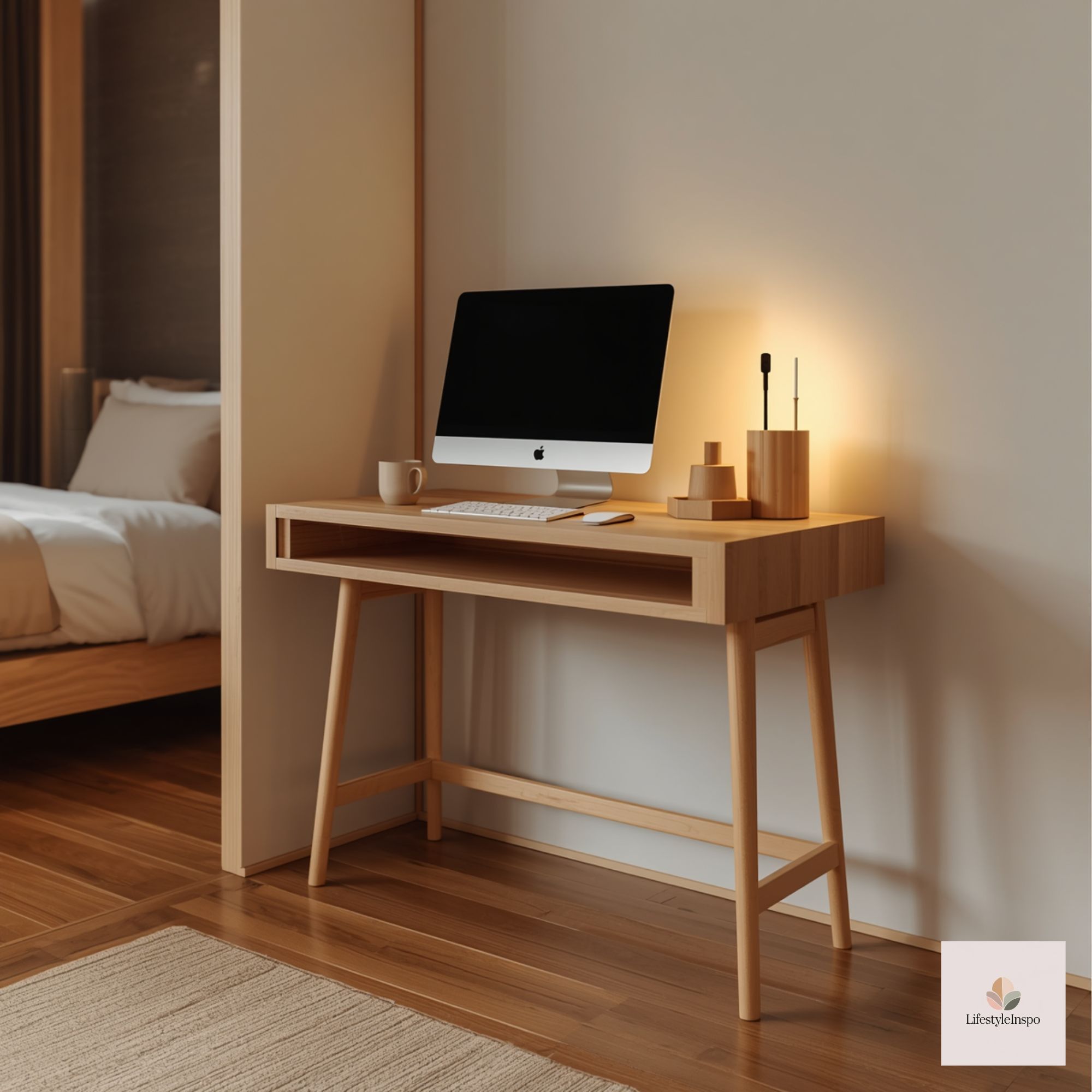
The close-down ritual — 10 minutes to end the day
A ritual is the behavioral equivalent of physical closure. Treat it as a non-negotiable transition.
- Set a consistent time to stop. Ten minutes before that time, tidy the desktop: put devices in their drawer, file papers in the “active” folder, and unplug or roll away the cart.
- Close the laptop, slide it into its sleeve or box, and make a small list of tomorrow’s top three tasks — then place the list in your “Today” drawer.
- Dim the work area lights and switch on a bedside lamp or soft lighting. The change in lighting reinforces the end of the workday.
- Take one minute to clear and label cords, one minute to clear the surface, and one minute to check calendar notifications for anything urgent. Small, repeatable steps are surprisingly effective.
Make the ritual sensory: a small spritz of room spray, a particular playlist, or a five-breath pause as you close the laptop solidifies the mental switch from work to rest.
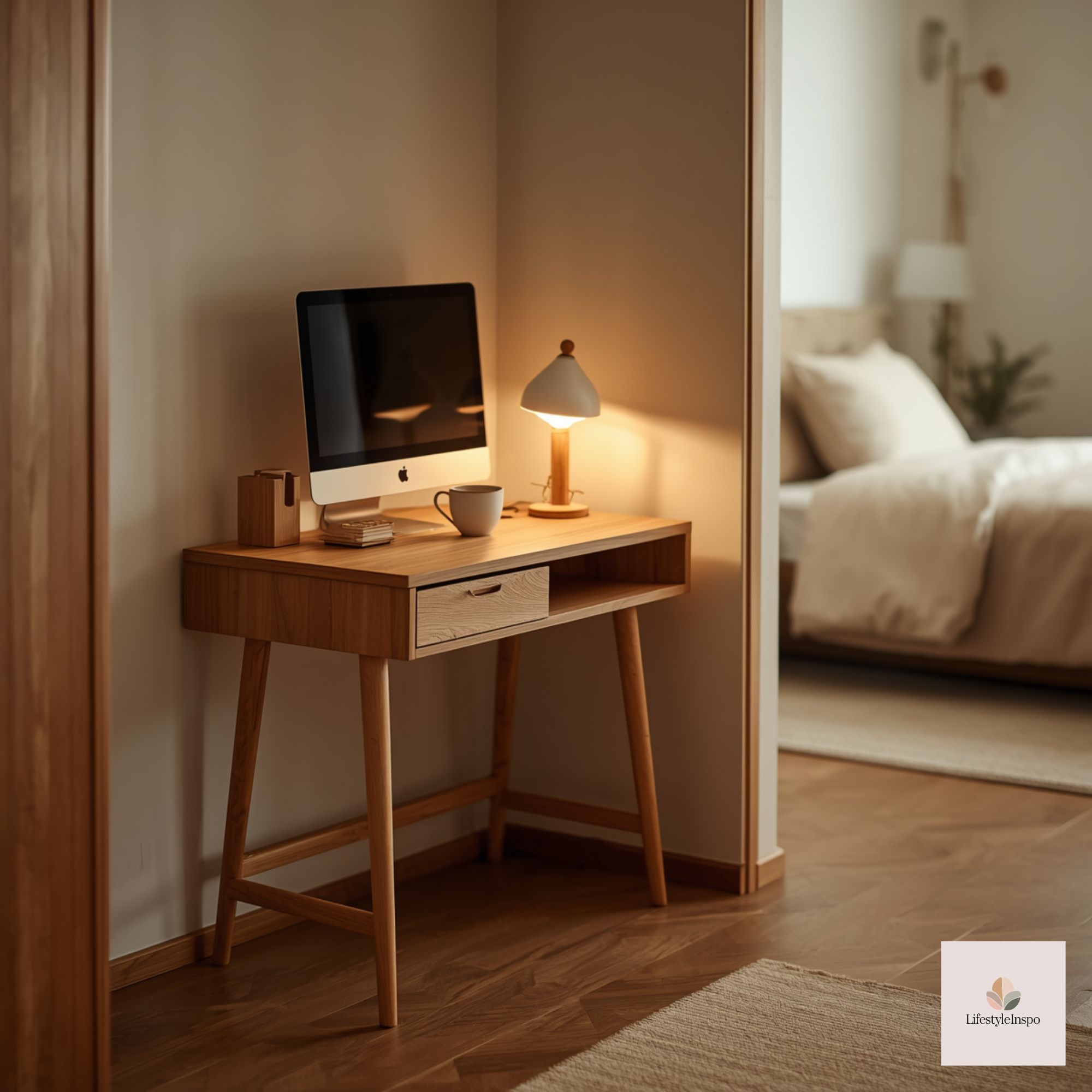
Design choices that cue relaxation without erasing style
The goal isn’t to make the workspace hideous — it’s to choose elements that belong in a bedroom.
- Opt for furniture with softer lines and warmer finishes that read as bedroom furniture rather than office equipment. A mid-height dresser repurposed as a desk base can blur the lines calmly.
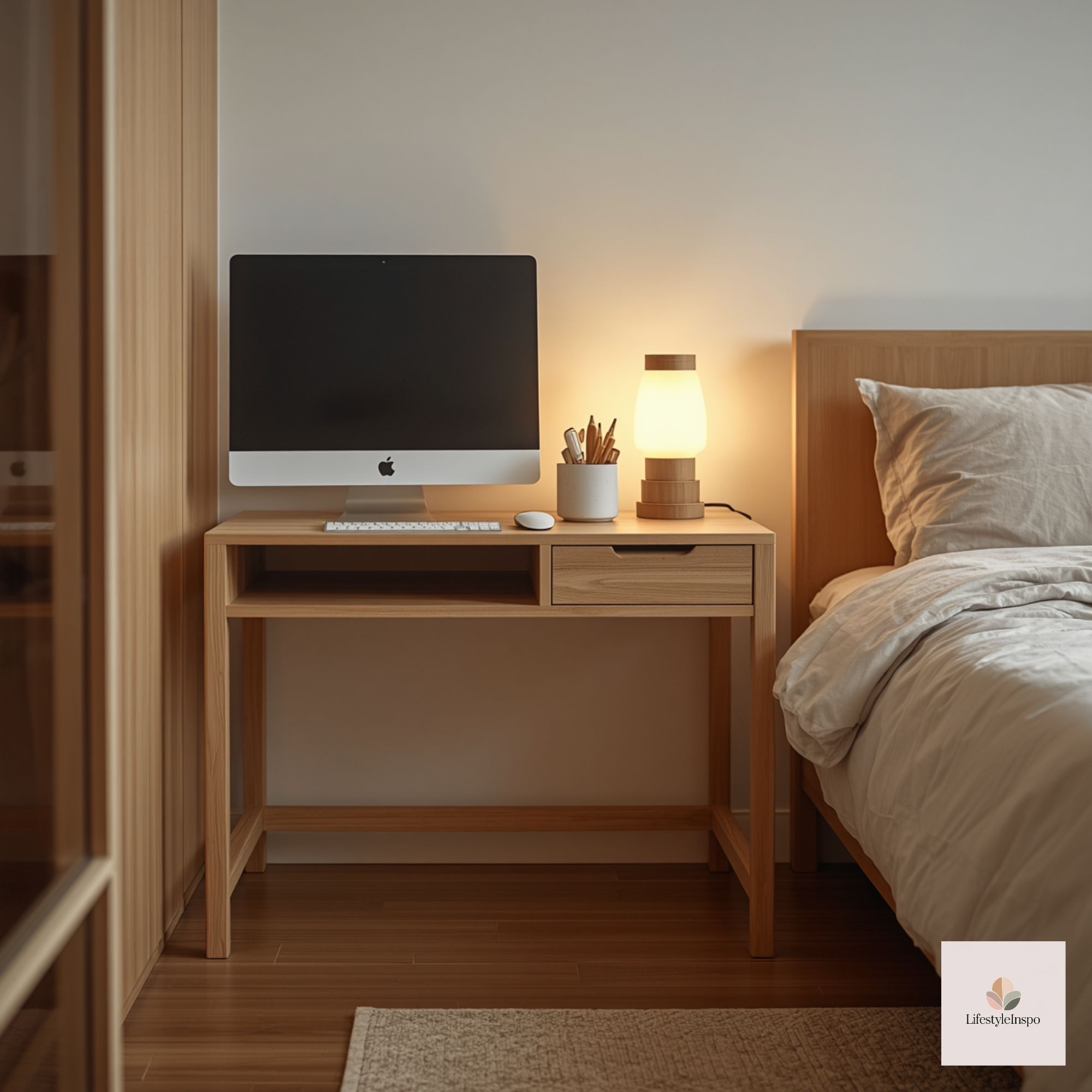
- Keep visible supplies minimal and aesthetically coordinated: a neutral pencil cup, leather journal, or matte tray. When everything visible feels like part of the room, your brain won’t treat the desk as an invading office.
- Incorporate a plant or a tactile object that’s restful rather than energizing; it connects the desk with the room’s relaxing vibe.

- Use a muted wall treatment or one downloadable graphic as inspiration for a small decorative element. For example, if you want a subtle calming background for your wall organizer, consider using digital clip art like these Blue Green Watercolor Backgrounds as a color guide or printable accent — they are downloadable digital assets, not physical art. Review the seller’s usage terms before reproducing or printing any files.
Blue Green Watercolor Backgrounds | Digital Paper Clip Art for Teachers & Students (PNG)
Small-space modularity — make it convertible
If your bedroom doubles as occasional work HQ, choose pieces that convert quickly:
- Fold-down or wall-mounted desks can be cleared in seconds and read as furniture when closed.
- A desk with reversible accessories (one side for work, the other for display) lets you flip the visible face according to mode.
- Keep a slim trolley with work supplies that can be wheeled into a closet or hallway at night.
- A lap desk can replace a full desk on some days; it’s easy to store in a nightstand and offers separation because it’s not part of the room’s permanent silhouette.
Modularity gives you control: when work needs to be contained, you can make it physically smaller without losing functionality.
Don’t forget sleep hygiene adjacency — proximity matters
Where you set your desk affects your bedtime routine and sleep cues.
- Avoid placing the desk where late-night work equipment (bright screens, glowing LEDs) faces the bed. Even small lights can undermine sleep quality by signaling wakefulness.
- Keep a dedicated “sleep walk” from bed to dresser and bathroom that doesn’t cross the desk. In small rooms, orient furniture to maintain that clear path.
- If you track sleep or use wearable devices, store chargers with your other devices — not on the nightstand where they’ll tempt midnight checking.
- Reserve one surface near the bed only for sleep-related items: a clock, water, a book. That constancy helps your brain associate that area with rest.
A computer that says per my last email on a desk, 90s aesthetic
Conclusion
A bedroom desk setup that respects sleep boundaries is less about removing work entirely and more about controlling how and when work appears. Balance layout, furniture orientation, storage, device tuck-away, and a reliable close-down ritual to keep the bedroom’s primary purpose intact. With a few intentional design moves, you’ll have a space that supports focused work during the day and restorative sleep at night.
About the Author





