
How to Create a Warm, Collected Christmas Living Room Without Buying All New Decor
The loveliest Christmas living rooms rarely look as if they were assembled in one shopping trip. They feel gathered over time: a familiar lamp, a ribbon saved from last year, books with softened spines, and ornaments with stories attached. That is good news if your holiday boxes feel tired—or if your budget has no interest in a complete seasonal makeover.
The best Christmas living room decor ideas are often less about adding more and more about editing what you already have. A few shifts in color, texture, height, and light can make the room feel warm and intentional without erasing the everyday character that makes it yours. Here is how to create that collected feeling with a practical plan, a little restraint, and plenty of room for real life.
Start by Shopping Your Own Home
Before buying a wreath, walk through the rest of your house with a basket or tote. Look for objects that can change the mood of the living room without looking overtly seasonal: woven baskets, brass candlesticks, wooden bowls, old frames, ceramic pitchers, plaid blankets, and books in cream, green, brown, or red.
Do not worry if an item was not originally intended for Christmas. A stack of hardback books can raise a small tree. A scarf can become a table runner. A vintage-looking bowl can hold pinecones, dried orange slices, or a few baubles. A basket can corral extra throws and make the room feel softer at the same time.
Then remove a few things. This makes the new arrangement breathe. Clear one surface before styling it, rather than layering seasonal pieces over every existing object. A collected room has variation, but it also has quiet spaces.
Make a quick three-pile edit
Create three piles: keep in the room, use somewhere else, and store until January. Keep pieces that bring warmth, memory, or useful texture. Move anything that competes with the tree or blocks a walkway. Store fragile items in a safe place if you know the room will be busy with children, pets, or guests.
This small edit can create the visual impact of new decor for free. It also gives you a clearer sense of what, if anything, is genuinely missing.
Choose a Simple Color Story
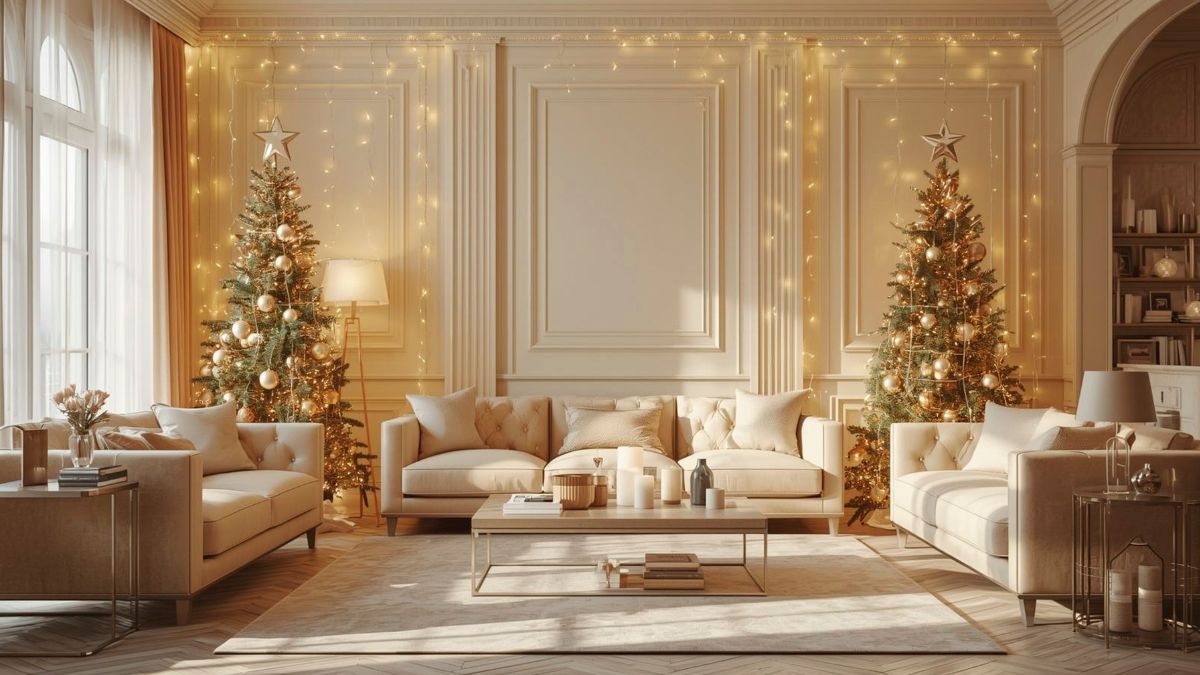
A warm Christmas room does not need every traditional color at full volume. Pick two or three supporting tones and let the existing palette lead. For a neutral sofa, try evergreen, faded red, and warm brass. In a colorful room, repeat one shade from an existing rug or artwork. For a darker room, cream, wood, and candlelight feel especially welcoming.
The goal is repetition, not perfection. Repeat a color at least three times so it feels deliberate: a red ribbon on the tree, a red book on the coffee table, and a red berry detail on a wreath. If using metallics, choose one dominant finish. Brass and aged gold blend easily with wood and warm bulbs, while bright silver creates a cooler effect.
Try not to introduce a brand-new palette just because it is trending. The most convincing rooms connect to what is already there. Your everyday cushions, curtains, and artwork should still make sense when the seasonal pieces are removed.
Layer Texture Before You Add More Stuff
Texture is what makes a room feel cozy in photographs and in person. It also gives old decorations a fresh setting. Drape a chunky knit or wool-look throw over the arm of a chair. Fold a second blanket in a basket. Add a velvet or nubby cushion if you already own one. A small change in finish can make familiar objects feel newly considered.
Use the coffee table as a low, tactile composition rather than a crowded display. A tray can hold a candle, a small bowl, and one seasonal object. Leave room for mugs and conversation. If you have children or pets, replace breakable pieces with wooden ornaments, fabric trees, or an unbreakable bowl of pinecones.
On shelves, mix smooth and rough materials. Pair ceramic with woven fiber, glass with wood, or glossy ornaments with matte paper. These contrasts keep a neutral room from looking flat and help a small collection appear more substantial.
Give the Tree a More Personal Point of View
A tree can be beautiful without being perfectly coordinated. Start with the ornaments that mean something to you, then fill gaps with a single material or color you already have. Handmade paper ornaments, ribbon, dried citrus, and simple wooden shapes can make a mixed collection feel connected.
Use ribbon in small, relaxed sections instead of forcing it into a precise spiral. Tuck it into branches and let a few ends fall naturally. If you have several styles, choose one as the main layer and use the others sparingly.
Place larger ornaments lower and toward the inside of the tree, with lighter pieces near the tips. Step back often. A tree is viewed from across the room, so balance matters more than what one branch looks like up close.
A small tree on a stool, side table, or stack of books can extend the story beyond the main tree. A basket, folded blanket, or fabric you already own can hide the stand while adding texture.
Style the Mantel and Shelves with Breathing Room
A mantel does not have to carry every Christmas symbol you own. Begin with one anchor, such as a mirror, artwork, or a long branch of greenery. Add two or three objects at different heights. Finish with one small detail that repeats the room’s color story.
For a balanced arrangement, imagine a gentle triangle: something tall on one side, a lower grouping in the middle, and a medium-height piece on the other. The triangle does not need to be symmetrical, but it should feel stable. Leave some wall or shelf visible. Negative space is what keeps a display from reading as clutter.
If you do not have a mantel, use a console, media unit, or bookcase. A strand of greenery, candlesticks, or three framed cards can create the same horizontal focus. Keep candles away from curtains, garlands, and passing sleeves; battery-operated lights are a sensible alternative for busy homes.

For a playful digital touch, Christmas Background Scenes offers high-quality PNG Christmas-themed scenes for crafts and projects. You could use them to make temporary printable art, gift tags, or a small seasonal sign rather than buying another permanent decoration. The listed price is $4.99.
Use Light to Do the Heavy Lifting
If the room feels underwhelming, check the lighting before buying anything else. Overhead light can flatten a layered space, while several low pools of light make it feel intimate. Turn on a table lamp, floor lamp, and tree lights together. If the bulbs differ, switch them or place the cooler light farther from the seating area.
String lights can be tucked into a glass vase, wrapped around a banister, or placed behind a console display. Keep the arrangement loose and hide the battery box or cord where possible. One thoughtful strand usually looks better than several tangled ones.
Candles add atmosphere, but they also require attention. Use sturdy holders on stable surfaces and never leave a burning candle unattended. In a family room, warm battery candles can provide the glow without adding another safety concern.
Add Small Seasonal Details That Tell a Story
The collected look comes from details that feel chosen rather than scattered. Display a few meaningful ornaments in a bowl. Hang old holiday cards along a wall with clips. Put a small wreath on an interior door or lean one against a shelf. Use a favorite mug as a holder for cinnamon sticks or cut greenery, provided the greenery is kept fresh and away from heat.

A small amount of Christmas clip art can also help with temporary paper details. Christmas Clip Art – Vol.1 – {Omnimart24h Clip Art} is listed as a 30-image transparent-background PNG bundle with trees, Santa, stockings, reindeer, hot chocolate mugs, gift boxes, wreaths, snowmen, bells, and candy canes. At $8.99, it could support homemade place cards, children’s activity sheets, or a rotating gallery wall without committing to more physical decor.

For a different mood, Christmas Clip Art – Vol.2 – {Omnimart24h Clip Art} includes 30 transparent-background PNG designs described with fireplaces, elves, holly, gingerbread houses, ornaments, sleighs, Santa hats, eggnog bowls, penguins, and jingle bells. The listed price is $7.99. Use only a few motifs so the result feels edited: perhaps a fireplace illustration in a frame and a tiny holly design on a gift label.

If your household prefers a softer, storybook feel, Christmas Clip Art – Vol.3 – {Omnimart24h Clip Art} is described as a 30-image transparent-background PNG set with Santa, presents, elves, reindeer, sleighs, teddy bears, bells, hot cocoa, and ribbon elements. It is listed at $7.99 and could become a source for simple printable art, a children’s corner, or handmade wrapping accents.
These are optional creative resources, not a reason to fill every surface. The charm is in choosing one small project that supports the room’s existing mood.
Spend Only Where the Room Truly Needs Help
Once you have edited, rearranged, and lit the room, pause for a day before shopping. Notice what still feels unfinished. Perhaps the tree needs height, the sofa needs warmth, or the mantel needs one long element. Buy for that specific gap rather than browsing for general inspiration.
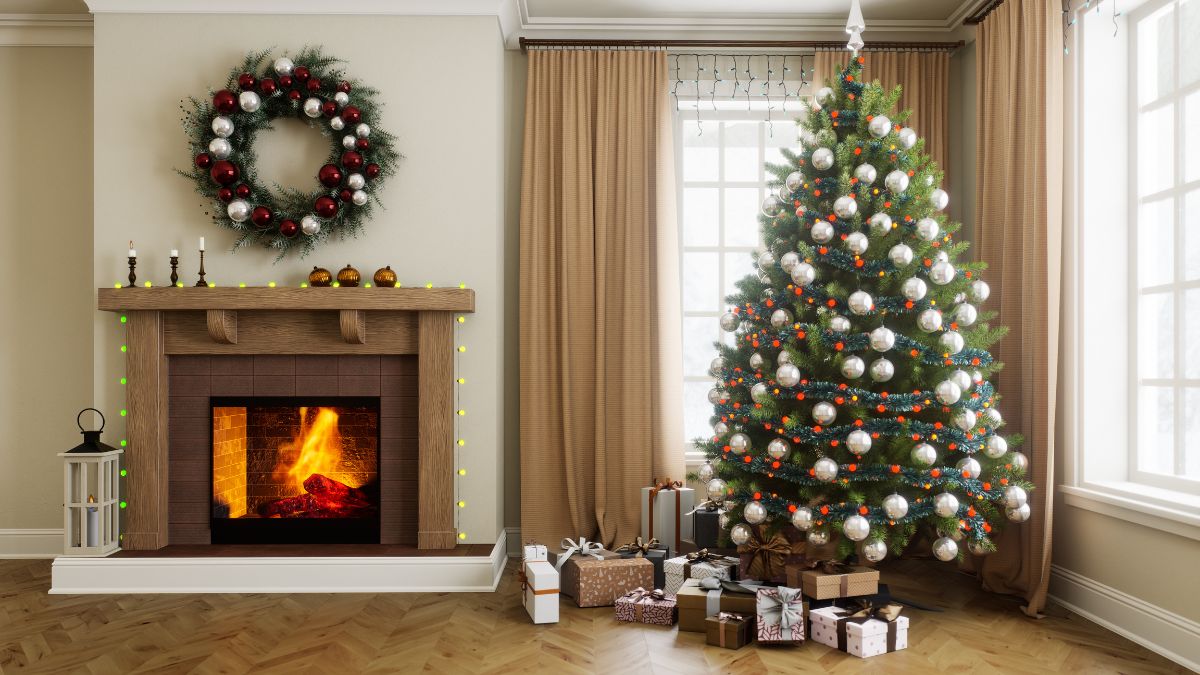
A useful budget order is: lighting first, textiles second, greenery or natural elements third, and decorative extras last. Lighting changes the whole room. Textiles change comfort. Greenery brings life and shape. Small objects are lovely, but they have the least impact when the foundation is not working.
Set a spending limit before you open a shop page. A $20 ribbon, a secondhand brass candlestick, or a bundle of grocery-store greenery may solve a problem more elegantly than a cart full of small ornaments. If you do buy something new, choose a piece that can work beyond Christmas, such as a neutral basket, a wood tray, or a warm-toned lamp.
A one-hour reset
If you need a quick plan, spend the first 15 minutes clearing surfaces. Use the next 15 to gather textiles and adjust the furniture for easier conversation. Then dedicate 15 minutes to the tree or focal display. Finish with 15 minutes of lighting and a final edit from the doorway.

The doorway test is surprisingly useful. Stand where you first enter the room and ask what your eye sees. If it lands on a pile of cords or a crowded corner, make one small correction. If it lands on the tree, a warm lamp, or a meaningful display, you are probably finished.
Keep the Room Livable
A Christmas living room should welcome people, not make everyone afraid to sit down. Keep pathways open, leave a clear place for drinks, and make throws easy to reach. Use durable pieces where possible, and keep precious decorations above the level of curious hands and wagging tails.
Do not remove every trace of ordinary life. A board game on the shelf, a stack of novels, or a well-used reading chair can make the holiday styling feel sincere. The most successful Christmas living room decor ideas are simple: shop your own home, repeat a restrained color story, layer texture, use light deliberately, and choose a few meaningful details. When you make space for what you already love, the room feels collected because it is.
About the Author





