“Your results look completely normal.”
If you’ve sat in a doctor’s office, exhausted and foggy and quietly falling apart, and heard those four words — this review is for you.
Because there is a significant gap between normal and optimal when it comes to hormonal health. And for millions of women, living in that gap means fatigue that no amount of sleep fixes, weight that doesn’t respond to diet or exercise, moods that swing without warning, hair that thins, sleep that fragments, and a brain that used to be sharp going inexplicably quiet. All while the paperwork says everything’s fine.
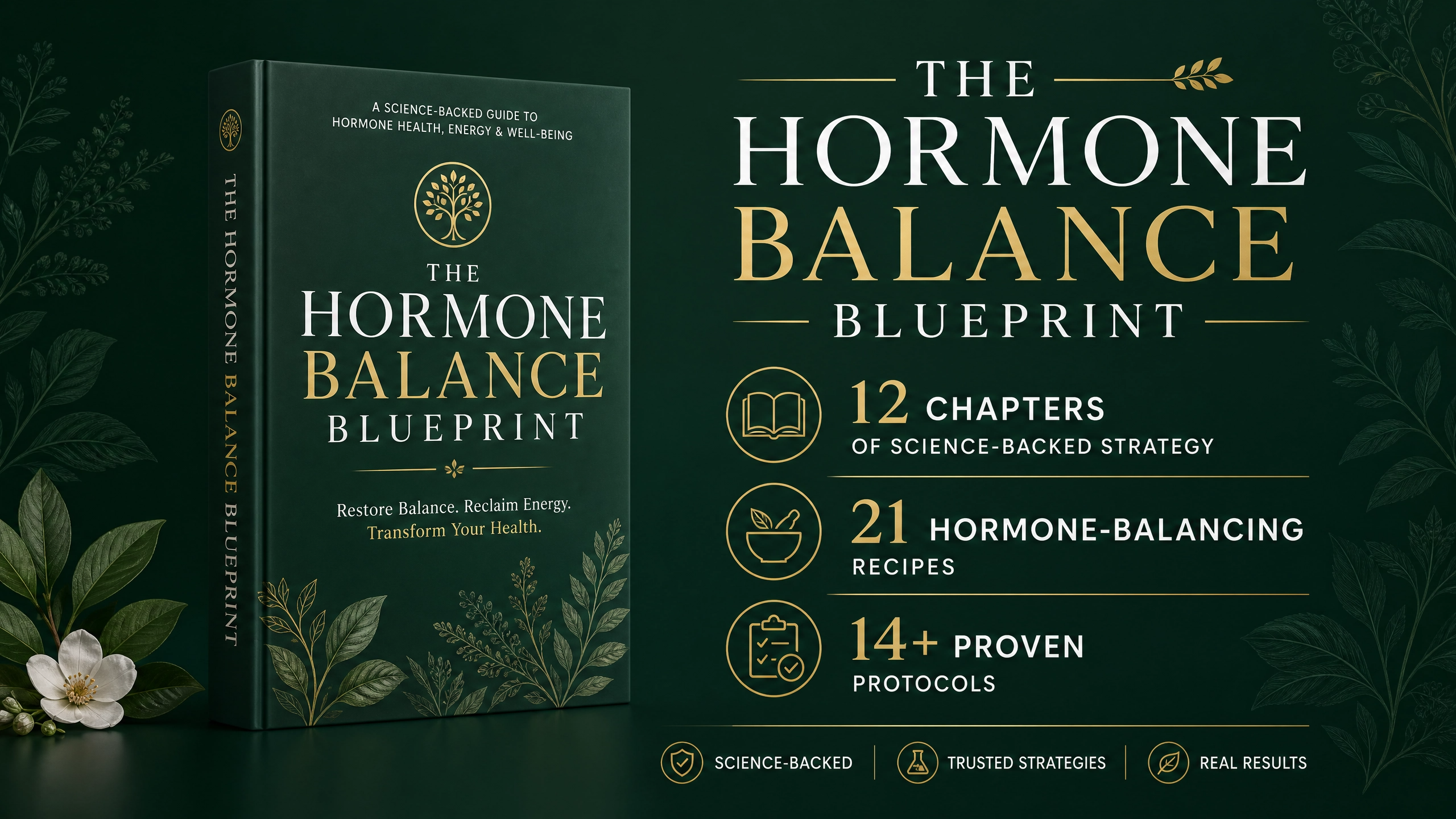
The Hormone Balance Blueprint by LadyBossIncome is built specifically for that woman. After reading all 72 pages, here’s my honest, complete breakdown — what’s inside, what makes it different, and whether it’s worth your $57.
Note: This review is for educational purposes only. This book — and this review — are not substitutes for medical advice. Always work with a qualified healthcare provider before beginning any new supplement or health protocol.
What This Book Is — and Isn’t
Let’s be precise, because this matters with health content.
The Hormone Balance Blueprint is a comprehensive educational guide to women’s hormonal health — cortisol, thyroid, estrogen and progesterone, insulin, gut-hormone connections, and perimenopause — written in plain language for non-medical readers. It includes protocols, supplement guidance with specific dosing, a 30-day reset plan, 21 recipes, a cycle syncing calendar, a lab reference guide, and a 12-month phased roadmap.
What it explicitly is not is a substitute for medical care. The book states this clearly and consistently throughout — recommending lab testing with a provider, noting when symptoms warrant professional evaluation, and flagging when supplement interactions require individualized guidance. That care in framing is one of the first things I noticed, and it meaningfully distinguishes this from the corner of wellness content that oversells and under-discloses.
What it is is something many women have never had: a complete, coherent framework for understanding how their hormones interact — not as isolated systems but as a deeply connected network where disruption in one area cascades through all the others.
Who This Book Was Written For
The sales page says it’s for women who’ve been told their labs are normal while feeling anything but. That’s accurate — and it’s a wide net.
You’ll find this genuinely valuable if:
- You’ve experienced fatigue, brain fog, weight resistance, poor sleep, mood shifts, severe PMS, or hair thinning and haven’t gotten clear answers
- You’ve been through standard bloodwork and everything came back “fine” — but something still feels off
- You’re in perimenopause or approaching it and want to understand what’s actually happening hormonally (and what to do about it)
- You have PCOS, Hashimoto’s, or a thyroid diagnosis and want a more complete picture of how it connects to everything else
- You want to arrive at your next doctor’s appointment genuinely prepared — knowing which tests to request and what optimal ranges look like
This may not be your best fit if:
- You’re in an acute health crisis that requires immediate medical attention — start with your doctor, not a book
- You want deep clinical detail at a textbook level (this is thorough but written for a general audience)
- You already work with a functional medicine practitioner who has given you a personalized protocol
The reader this book serves best is the woman who has been dismissed, patched, or told to wait and see — and who is ready to stop waiting.
Inside the Book: What Each Chapter Actually Covers
The structure is deliberate. The author doesn’t scatter tips — she builds a system, layer by layer, in the order that matters for results.
Chapter 1: Your Hormones Are Talking
The opening chapter introduces the six key hormones governing women’s health and provides a self-assessment to identify your dominant imbalance pattern. The framing is important here: your symptoms are not random, and they are not your fault. Hormonal imbalance affects an estimated 80% of women at some point — it’s a predictable physiological response to genuine stressors, not a personal failing.
The self-assessment tool at the end of this chapter is the kind of thing most women will want to revisit every few months as their symptoms shift.
Chapter 2: Taming Cortisol — Why Everything Starts Here
This chapter earns its second-slot placement. Cortisol is framed as the master disruptor — and the science behind that claim is laid out clearly. When cortisol is chronically elevated, it suppresses thyroid hormone conversion, depletes progesterone, drives insulin resistance, and fragments sleep architecture. All simultaneously. You cannot meaningfully fix your thyroid, your cycle, or your metabolism while your nervous system is in a sustained stress response. This chapter explains why and gives you the Cortisol Reset Protocol: morning light exposure, protein-first breakfast, strategic movement timing, and an evening shutdown sequence. It’s actionable within 48 hours.
Chapter 3: Thyroid — The Metabolic Controller
This is one of the most valuable chapters in the book for the subset of women who have been told their thyroid is fine while experiencing every hypothyroid symptom in the textbook.
The issue the book addresses clearly: standard TSH testing misses a significant portion of thyroid dysfunction. T4-to-T3 conversion can be impaired even when TSH looks normal. Reverse T3, Hashimoto’s antibodies, and ferritin (critical for conversion) are rarely tested in standard panels. Chapter 3 tells you exactly which labs to request — and what optimal ranges look like, not just what falls within the standard reference range. That distinction is the entire point.
Chapter 4: Estrogen & Progesterone — The Rhythm
The cycle-syncing framework in this chapter is one of those concepts that, once you understand it, you genuinely can’t unsee. Your hormones shift across four distinct phases of your cycle — menstrual, follicular, ovulatory, luteal — and your energy, focus, social capacity, and physical recovery capacity shift with them. Working with those rhythms instead of against them changes not just how you feel but how productive and sustainable your daily life is.
The estrogen dominance section is handled with appropriate nuance — covering environmental estrogens, gut health’s role in estrogen clearance, and why progesterone deficiency is often the real issue when estrogen “dominance” is the label.
Chapter 5: Insulin — The Root Nobody Talks About
This chapter may be the most broadly underappreciated in the book. Insulin resistance sits at the root of PCOS, thyroid dysfunction, adrenal dysregulation, estrogen dominance, and menopausal weight gain. It exists on a spectrum that begins years — sometimes a decade — before a diabetes diagnosis, and standard fasting glucose tests miss it entirely. The meal sequencing framework here (protein and fiber before carbohydrates) is one of those protocol changes that’s simple to implement and has downstream effects that go far beyond blood sugar.
Chapter 6: The Gut-Hormone Axis
The concept of the estrobolome — the specific community of gut bacteria responsible for metabolizing estrogen — is introduced here, and it’s one of those explanatory pieces that makes everything click for women who’ve been told their hormones are fine but whose symptoms point elsewhere. Your gut isn’t just digesting food. It’s running a significant portion of your hormonal regulation. The 30-plants-per-week target and the fermented foods framework are grounded in current microbiome research and genuinely practical.
Chapter 7: Perimenopause — The 10–15 Year Timeline Nobody Told You About
This chapter is for every woman who hit her late 30s or early 40s and started feeling different — worse sleep, mood shifts, irregular cycles, unexplained weight gain — and was told she was too young for perimenopause.
The timeline covered here is one of the most important pieces of information in the book: the perimenopause transition begins, on average, 10–15 years before the final period. Progesterone falls first. The symptoms that arrive in that window are real hormonal shifts, not anxiety or aging badly. The evidence-based HRT section is balanced and current, and the post-menopausal longevity priorities (bone density, cardiovascular health, cognitive protection) make this chapter useful for women at every stage of the transition.
Chapters 8–12: Nutrition, Exercise, Sleep, Supplements, Testing, and the 12-Month Roadmap
The nutrition chapter (Chapter 8) is built around hormone-supportive eating without requiring a specialized diet — protein targets, cruciferous vegetables for estrogen clearance, fiber for gut health, anti-inflammatory fats. The 7-day meal framework is a practical starting point, not a rigid prescription.
The supplement chapter includes a foundation stack — magnesium glycinate, vitamin D3+K2, omega-3s, methylated B-complex — with specific dosing, timing, and primary targets for each. The book notes clearly that all supplementation should be individualized with a provider, especially for targeted protocols involving berberine, Vitex, or DIM.
Chapter 11 on lab testing is where the book delivers something most general wellness content can’t: a complete guide to reading your own results against optimal ranges, not just standard reference ranges. The sample hormone panel shown on the sales page — where every value is within “normal” range yet the woman is exhausted and can’t lose weight — is exactly the scenario this chapter was written to address.
The 12-month phased roadmap closes the book in four phases: Foundation (Months 1–3: cortisol, gut, movement), Targeted Optimization (Months 4–6: specific protocols, cycle syncing, retesting), Deepening (Months 7–9: compound wins), and Integration (Months 10–12: systems and longevity). The phase structure is important — the book is explicit that foundation work must come before targeted supplementation, because adding complexity on an unstable base is a waste of time and money.
The Bonuses
The 30-Day Hormone Reset Protocol is a day-by-day action plan that structures the first month in four focused weeks. The 21 Hormone-Healthy Recipes (7 breakfasts, 7 lunches, 7 dinners) each include key hormonal benefits and protein targets — this isn’t a general healthy recipe collection, it’s a functional extension of the nutrition chapter. The Lab Reference Guide (Bonus 3) is arguably worth the price of the book on its own: every hormone test, conventional normal range vs. functional optimal range, and first action steps for each value.
The appendices — 12-month goal tracker, supplement quick reference, cycle syncing calendar, and hormone glossary — are the kind of tools that reward printing out and keeping accessible.
What I Loved
The systems thinking. This book never treats hormones in isolation. Cortisol affects thyroid affects insulin affects estrogen — every chapter references the others, because that’s how the body actually works. Most hormone books miss this.
The lab chapter is genuinely rare. Telling women not just which tests to request but what optimal looks like — rather than “ask your doctor” — is an act of real education. Arriving at an appointment prepared with a printed lab reference is a different experience entirely.
The tone is validating without being alarmist. The book doesn’t catastrophize or sell fear. It consistently names what you might be feeling and explains the mechanism behind it — which is infinitely more useful than being told to manage stress better.
The medical honesty. The disclaimer is present and genuine, not perfunctory fine print. Every supplement recommendation comes with a “consult your provider” flag. That matters.
What Could Be Better
72 pages is genuinely not enough for this topic. Some chapters — the gut-hormone axis, the perimenopause section, the thyroid chapter — could sustain entire books. This is comprehensive in breadth; it is, by necessity, limited in depth. Use it as your map, then go deeper on whatever’s most relevant to you.
No space for individual variation. The book acknowledges that protocols should be individualized, but a PDF can only go so far. Women with autoimmune conditions, active thyroid disease, or complex hormonal presentations will benefit most from using this as a foundation for conversations with a functional medicine practitioner, not as a standalone replacement.
The recipe section, while useful, is fairly foundational. If you’re already eating a whole-food diet, you may not find many surprises there.
The Verdict: Is The Hormone Balance Blueprint Worth $57?
For the woman who has been dismissed, or who is managing symptoms without a clear framework, or who wants to walk into her next appointment with real knowledge rather than just symptoms — yes, absolutely.
This is the kind of book that changes the conversation you’re able to have with your own healthcare team. It gives you vocabulary, reference points, and a sequenced plan for taking your hormonal health seriously in a way that most standard care simply isn’t structured to provide.
It is not a replacement for medical care. But it is the kind of education that makes medical care significantly more useful — and that’s a meaningful thing to have in a single, $57 PDF.
→ Get The Hormone Balance Blueprint — $57 · Instant PDF download · 30-day money-back guarantee
The Morning Ritual That Makes the Protocol Stick
If there’s one thing the Cortisol Reset chapter makes clear, it’s that your first hour sets the hormonal tone for your entire day. Morning light, a protein-first breakfast, no phone before you’ve been up for 20 minutes — these aren’t wellness aesthetics. They’re physiology.
And yet — the feeling of your morning ritual matters too. The things that signal to your brain: this time is intentional, this is mine.
For the woman building a new morning around her own health: this Graceful Like a Mother Botanical Mug from omniinspo has a dried flower design that makes a quiet kitchen feel a little more like a sanctuary. The kind of small, beautiful detail that makes a new habit feel worth showing up for — day after day, which is exactly what any protocol requires.
→ Shop it: Graceful Like a Mother Botanical Mug — $19.99
This post contains affiliate links. We may earn a small commission at no extra cost to you. The information in this article is for educational purposes only and does not constitute medical advice. Please consult a qualified healthcare provider before beginning any new health protocol.
About the Author