
How to Build a Morning Routine That Actually Sticks - The Only Framework You Need
There’s a particular kind of defeat that comes from a failed morning routine.
Not dramatic defeat. Not visible-to-anyone defeat. Just the quiet, private kind — where you had a plan, you believed in the plan, you set the alarm and laid out the journal and even bought the matching water bottle, and then somewhere around day nine everything quietly dissolved and you were back to hitting snooze and scrolling before you’d even remembered what you meant to do differently.
If that resonates: it’s not a you problem. It’s a design problem. And once you understand what’s actually going wrong — not motivationally, but mechanically — building a morning routine that lasts stops feeling like a test of character and starts feeling like a solvable system.
Here’s everything you need to know. Including why everything you’ve tried before probably had a fatal flaw baked in from the start.
Why Most Morning Routines Fail by Week Two
The failure point for most morning routines isn’t 3am or 5am on day one, when motivation is running high and the idea still feels shiny. It’s day eight, when it’s raining and you’re tired and the thing you promised yourself feels less like a ritual and more like homework.
Here’s what’s actually happening in those early weeks, and why most routine frameworks don’t account for it:
The routine you borrowed isn’t yours. You found someone’s morning routine on YouTube or TikTok — the 5am wake-up, the meditation, the journaling, the workout, the smoothie — and you tried to import it wholesale into a life that looks nothing like theirs. Their routine works for them because it was built around their energy, their schedule, their actual life. Transplanted into yours, it becomes a performance. And performances are exhausting to sustain.
You built it too big, too fast. A ten-step morning routine attempted on day one is a recipe for failure. Not because you can’t do ten things — but because habits need to be practiced one at a time before they become automatic. Stacking ten new behaviors simultaneously means none of them get entrenched. One disrupted morning and the whole structure collapses.
The streak model is working against you. When “don’t break the chain” is your motivational architecture, missing one morning doesn’t just mean missing one morning — it means the whole thing is broken. So it is. The perfectionism spiral takes over and you quit entirely instead of just resuming the next day.
You skipped the identity layer. This is the deepest issue, and the one almost no morning routine content addresses. If you don’t see yourself as someone with a morning practice — if part of you is still waiting to feel like that kind of person — the routine will always feel like you’re playing dress-up. You’re doing the behaviors of a disciplined person while still internally identifying as someone who “isn’t a morning person.” That tension exhausts itself within two weeks, every time.

What the Science Actually Says About Mornings
Here’s the piece that changed everything for me — and that most morning routine content completely ignores.
Your body produces a natural cortisol spike in the first 30 to 45 minutes after waking. It’s called the cortisol awakening response, and it’s one of the most powerful neurological tools you have. This is your brain’s built-in alertness and motivation window — a free, daily, biology-provided dose of focus and energy that your body generates regardless of how much sleep you got or how stressed you are.
Most of us immediately spend that window on our phones.
Not because we’re weak or undisciplined — but because the phone is designed to capture attention during exactly this window. Every notification, every scroll, every piece of someone else’s life that appears on your screen is competing for the neurological resources your body just produced for you. By the time you’ve finished your first scroll session, that cortisol window is gone — and you spend the rest of the morning trying to manufacture focus that biology already offered you for free.
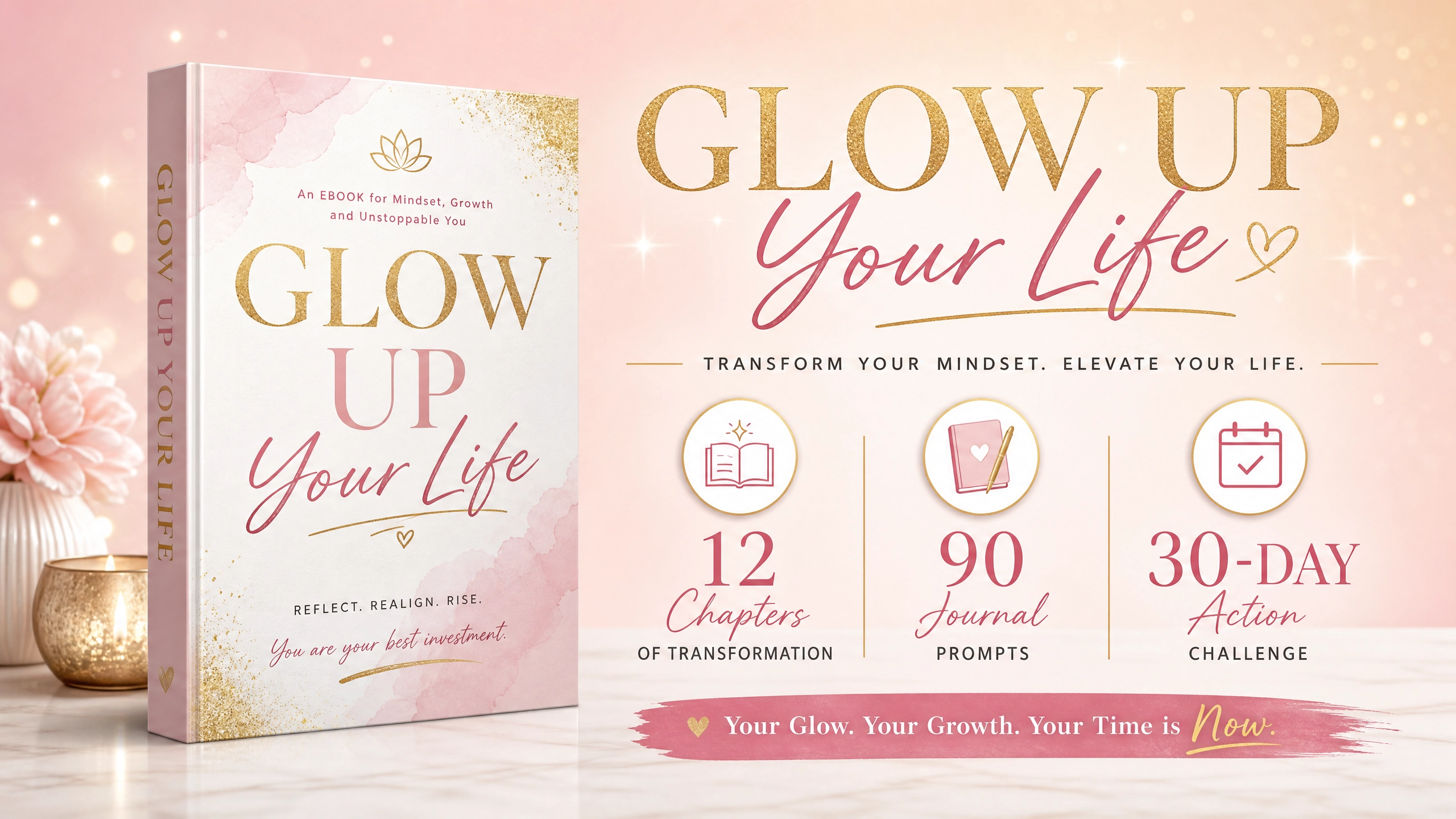
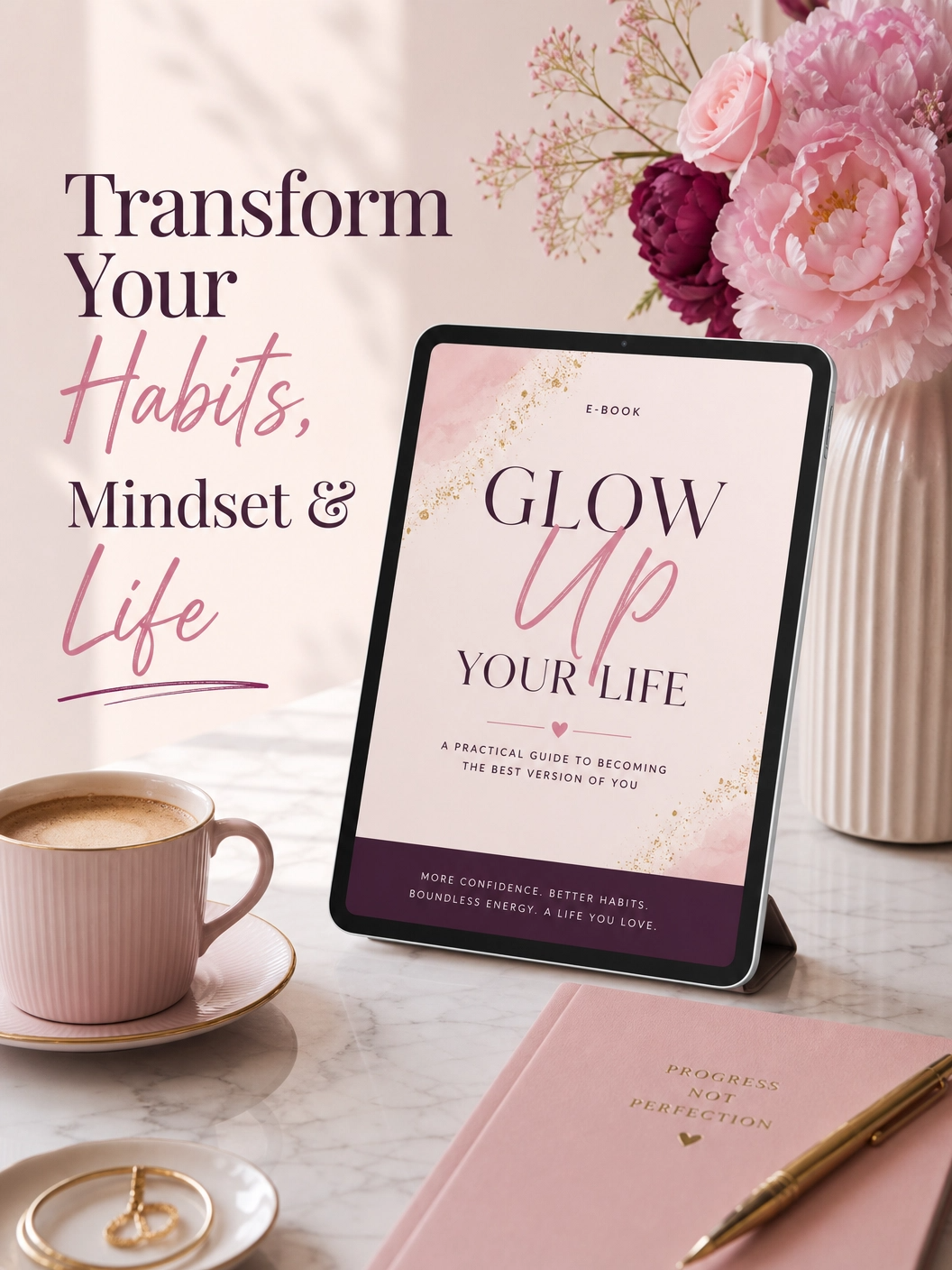
Protecting your cortisol awakening response isn’t a wellness aesthetic. It’s a physiological strategy. And it’s the foundational principle behind the morning routine framework in Glow Up Your Life, a 70-page transformation guide from LadyBossIncome that builds its entire morning chapter around this science — and around designing a practice that’s actually yours, not borrowed from someone with a different life.

The Framework That Actually Works: Anchor Habits + Optional Stack
The Glow Up Your Life approach to morning routines is built on a two-part structure that solves the most common failure modes simultaneously.
Part 1: Your Anchor Habits (under 10 minutes total)
These are your non-negotiables — the two or three things that happen every single morning regardless of what day it is, how tired you are, or whether your schedule got completely upended. They’re short enough that there’s genuinely no excuse not to do them. They’re consistent enough that they become automatic within two to three weeks.
Examples of anchor habits that work:
- Morning light exposure for five minutes (step outside, face a window — this resets your circadian rhythm and amplifies the cortisol awakening response)
- A protein-first breakfast or a specific morning drink before anything else
- Two minutes of intentional breath before touching your phone
- One sentence written in a notebook — not a full journal entry, just one sentence
The design principle here: your anchor habits should be so small they feel almost embarrassing. That’s the point. They’re not meant to be impressive. They’re meant to be indestructible.
Part 2: Your Optional Stack (add when time allows)
This is where the bigger practices live — the journaling, the workout, the extended meditation, the morning pages. They’re genuinely valuable. They’re also the practices that get skipped when life happens, and that’s okay — because your anchor habits are still intact.
The optional stack expands on good days and contracts on hard ones. Your morning practice never fully collapses because it was never wholly dependent on the optional parts.
The most important shift in this framework: a ten-minute morning is not a failed morning. A ten-minute morning with your anchor habits is a successful morning. This is the two-day rule applied to routines — never miss the same habit two days in a row, and never measure success by whether you hit the full optional stack.

The Identity Question You Have to Answer First
Here’s the part the YouTube morning routine videos skip because it doesn’t make good content: none of this works until you address what you believe about yourself.
Glow Up Your Life opens with an identity chapter before it gets anywhere near habits or routines — because the author understands that behavior follows identity, not the other way around. You can design the most scientifically optimal morning routine in the world, and if part of you still fundamentally believes you’re “not a morning person” or “someone who can’t stick to things,” you’ll find a way to exit the routine within three weeks.
The “I am” inventory from Chapter 1 asks you to write out every identity statement you’ve been carrying and examine where each one came from. I’m not a morning person — is that a biological fact, or a conclusion you drew from a period in your twenties when you were staying up too late and running on poor sleep? I can’t build habits — is that true, or is it the story you built around a time when you tried to build ten habits simultaneously and failed?
Most of those statements aren’t truths. They’re old evidence filed as identity. And examining them — really questioning them instead of accepting them as fixed — is what makes the habits chapter land instead of just sounding like more advice you already know.
The morning routine framework works. But it works significantly better once the identity layer has been addressed. Which is why in the book, it comes second.
What Your Morning Ritual Actually Needs to Feel Like
One more thing nobody says enough: your morning should feel like yours.
Not like a productivity protocol. Not like a self-improvement performance. Not like evidence you’re a high achiever. Like a quiet hour that belongs to you — that you actually want to return to the next morning, and the morning after that.
The rituals that stick aren’t the ones that are most impressive. They’re the ones that feel genuinely good to practice. A six-step routine you dread is less sustainable than a two-step routine you love. Environment matters. The physical details matter. The mug you hold while you journal or read or sit quietly for five minutes before the rest of the household wakes up — it matters more than it should, in the best way.
This Wild Beautiful Mom Floral Wreath Mug from omniinspo has the kind of boho watercolor energy that makes an early morning feel intentional rather than obligatory. The floral wreath design is the kind of thing you reach for and feel something small and good — and small and good, practiced daily, compounds into a morning practice you actually protect.
→ Shop it: Wild Beautiful Mom Floral Wreath Mug — $19.99
Or if your aesthetic runs more cottagecore and botanical — the Mom is My Home Watercolor Cottage Mug from omniinspo has soft garden energy that turns any desk or kitchen table into a small sanctuary. The kind of detail that signals: this time is mine.
→ Shop it: Mom is My Home Watercolor Cottage Mug — $19.99
Where to Go From Here: The Full System
If the morning routine piece resonated — the science, the anchor habit framework, the identity layer underneath it all — there’s a lot more in Glow Up Your Life that builds on the same principles.
The book covers twelve areas of transformation: identity, habits, morning routines, self-care, confidence, mindset, relationships, finances, productivity, physical wellness, digital wellness, and vision. Each one is sequenced deliberately — the morning routine chapter works the way it does because it comes after the identity chapter, and before the self-care chapter. Everything connects.
It also comes with a 30-Day Glow Up Challenge — one specific action per day, designed to build momentum across every pillar — and 90 journal prompts that go far deeper than gratitude lists. The kind of questions that surface the beliefs actually driving your daily patterns.
The book is $57, comes as an instant PDF download, and has a 30-day money-back guarantee.
→ Start your morning — and everything after it — with Glow Up Your Life: $57
The Morning Routine Design Questions Worth Asking Yourself
Before you open a new notes app and start building a new routine, sit with these:
What do I actually want my mornings to feel like? Not “productive.” Not “disciplined.” What’s the emotion? Calm? Energized? Creative? Grounded? Design toward the feeling, not the output.
What are my two non-negotiables — the things that happen no matter what? Start there. Just two. Everything else is optional until those two are automatic.
What in my current morning is actively working against me? (The phone within reach of the bed is usually the honest answer. The snooze button set for six intervals. The notifications that start before you’ve had a chance to remember who you are.)
What would make me actually want to get up? This is underrated as a design question. Something to look forward to — genuinely — is more powerful than any alarm setting.
Your morning doesn’t need to be impressive. It needs to be yours, it needs to be sustainable, and it needs to leave you better than you were when you woke up. That’s the whole brief.
Start small. Protect your first hour. And let it compound from there.
This post contains affiliate links. We may earn a small commission at no extra cost to you.
About the Author