
7 Money Moves Every Stay-At-Home Mom Should Make
Staying home to raise your kids is one of the most valuable things a person can do. It just doesn’t pay — and that gap creates a specific kind of financial vulnerability that nobody warned you about before you made the choice.
The money moves for stay-at-home moms that actually matter aren’t about cutting coupons or buying generic cereal. They’re about getting genuinely secure: knowing your numbers, owning your future, and building income that belongs to you — without sacrificing the reason you chose to be home in the first place.
Here are seven moves worth making this year. Some take an afternoon. Some take a year. All of them will change how you feel about money.
Move #1: Get Your Own Clear Financial Picture (Not Just “Our” Finances)
Most stay-at-home moms know the rough shape of their household finances. Fewer know the details — account numbers, investment balances, insurance policies, the exact interest rate on every debt. Even fewer have that information somewhere they can access it independently.
That’s not a criticism. It’s a pattern — and it’s also a vulnerability.

Start here: Schedule two hours this week with your spouse (or alone, if you already have access) and document everything. Every account. Every balance. Every policy. Every debt and its rate. Net worth — assets minus liabilities, as a single number. Cash flow — what comes in, what goes out, where the difference actually goes.
This isn’t about distrust. It’s about being a full partner in the decisions that shape your family’s future. And if anything ever happened — a divorce, a death, a medical crisis — you’d want to be the person who already knew where everything was, not the person who had to figure it out in the middle of grief.
The shift you’ll feel: Instead of ambient money anxiety, you’ll have information. Information isn’t always comfortable, but it’s always better than not knowing.
Move #2: Build a Budget That Works for Your Life — Not a Finance Influencer’s
Budget content online tends to fall into two categories: unrealistically strict systems built for people with spreadsheet hobbies, and vague advice to “track your spending” that never tells you what to do with what you find.
The budget that actually works for stay-at-home mom life has a few things going for it:
It accounts for irregular expenses — not just monthly bills. Christmas, back-to-school shopping, car maintenance, birthday parties, annual subscriptions. These are never actually surprises. They just aren’t in most budget templates. Sinking funds — small monthly contributions to categories you know are coming — eliminate the category of “unexpected expense” almost entirely.

It’s built for one income. The 50/30/20 framework (50% needs, 30% wants, 20% savings and debt payoff) works well as a starting point, but single-income families often need to adjust those ratios — especially in the early years of building. That’s fine. The framework is a guide, not a rule.
It gives every dollar a job. Zero-based budgeting — where income minus expenses equals zero on paper before the month begins — is the method that tends to work best for families wanting to eliminate debt and build savings simultaneously. Families who switch to this approach typically find $150–$400/month they weren’t tracking. Not because they were being reckless. Because money without a destination tends to drift.
The best budget is genuinely the one you’ll actually use — not the one that looks most impressive in a planner.
Move #3: Give Your Debt an End Date (Not Just a Minimum Payment)
Here’s the reframe that changes everything about how debt feels: it doesn’t have to be permanent.
When you calculate your actual debt-free date — using either the avalanche method (tackle highest interest rate first) or the snowball method (tackle smallest balance first for psychological momentum) — the weight of it changes. It becomes a number on a calendar instead of a vague, indefinitely heavy presence.
The avalanche method saves more money mathematically. The snowball method works better for people who need the motivation of visible progress. Neither is wrong. The right one is the one you’ll actually stick to.

A few strategic moves worth knowing:
- Call and negotiate your interest rates. Seriously — call your credit card company and ask for a lower rate. It works more often than you’d expect, especially with a history of on-time payments.
- Look at balance transfer offers if you’re carrying high-rate credit card debt — a 0% introductory period can make a meaningful dent.
- Attack one debt at a time rather than spreading small extra payments across all of them. Focus creates momentum.
March 2027 is a real date. So is September 2026. When you know yours, it stops feeling like “someday.”
Move #4: Open a Retirement Account in Your Own Name — Today
This is the financial move most stay-at-home moms don’t know they can make. And it might be the most important one on this list.
The Spousal Roth IRA allows you to contribute up to $7,000 per year to a retirement account in your own name — as long as your household has any earned income, which your spouse’s income qualifies as. The money grows tax-free. Withdrawals in retirement are tax-free. And the account belongs to you — not to the marriage, not to your spouse’s employer, not to anyone else.
If you’ve been home for several years and didn’t know this existed — you may be able to make retroactive contributions for prior years, depending on your tax situation.

This matters for reasons beyond retirement math. It matters because financial security within a marriage should never mean financial dependency on a marriage. A Spousal Roth IRA in your name, an independent credit history in your name, and a clear understanding of your family’s finances aren’t signs of distrust. They’re signs of a healthy, equal financial partnership.
Other retirement pieces worth addressing:
- If your family has an HSA, maximize it — triple tax advantage is one of the best tools available
- Understand your Social Security picture as a stay-at-home parent (career gaps affect your benefit)
- Know your family’s life insurance coverage — and whether there’s coverage for you, not just your spouse
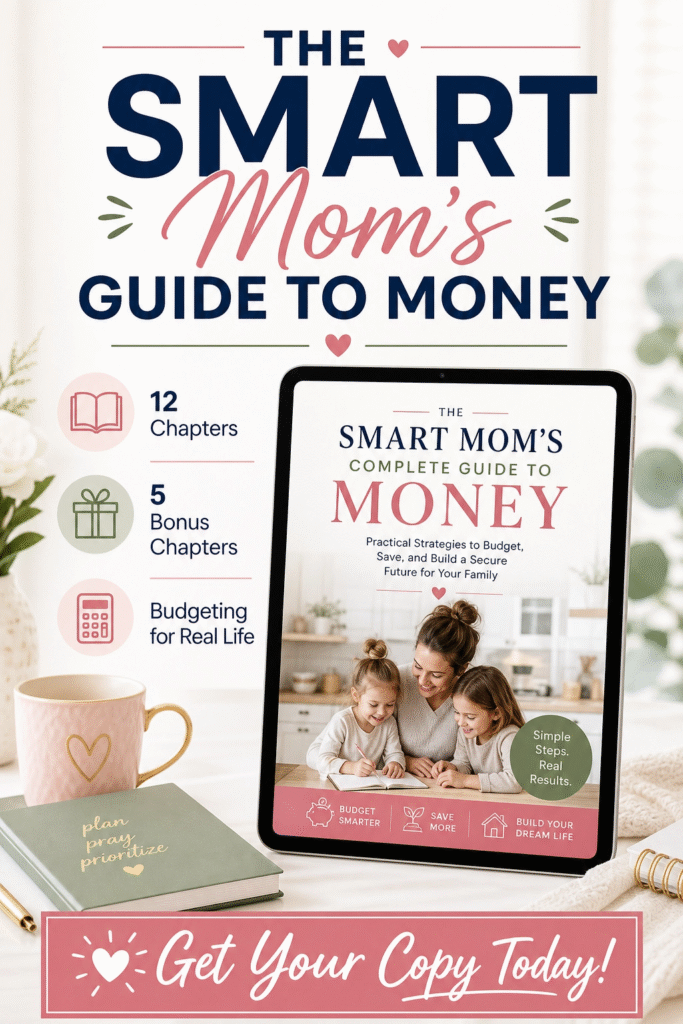
📘 The Smart Mom’s Complete Guide to Money covers all of this in detail — budgeting frameworks, debt elimination with a real payoff date, the Spousal Roth IRA, investing basics, retirement planning for career-gap moms, and protecting your family’s future. Includes a complete financial toolkit: budget template, debt payoff planner, net worth tracker, and 90-day action plan.
Written judgment-free, specifically for single-income families with kids. Currently $27 (regular $47) with a 30-day money-back guarantee.
Move #5: Start Building Income That’s Yours — Not “Help With the Bills”
This is where the financial picture shifts from managing what exists to actively building something new.
There’s a meaningful difference between income that goes into a shared household account and income that you control, save, invest, or spend according to your own priorities. Both matter. But the second kind does something specific for your sense of agency, your financial security, and — if we’re being honest — your sense of self.
The good news: the internet has made it genuinely possible to build real income from home, around real mom life, without going back to a 9-to-5. Not “passive income” mythology. Not $5 survey sites. Real income — sometimes within weeks, sometimes within months — from skills you already have or can develop.

The fastest path to your first dollar:
Virtual assistant work is where the fastest income lives. You’re already managing schedules, writing communications, organizing information, handling logistics — skills businesses pay $25–$75/hour for on platforms like Upwork. Portfolio not required to start. A well-written profile and one well-crafted proposal can get your first client within 1–3 weeks.
Digital products are the move that compounds. Create a template, a planner, a guide, a printable — once — and sell it indefinitely on Etsy or Gumroad. Canva (free) is all you need to make them. A well-positioned Etsy listing can generate sales while you’re making lunch, putting kids down for naps, or doing absolutely nothing.
Affiliate marketing is the easiest layer-on. Write about products you genuinely use, link them, earn a commission when someone buys. It starts small and builds as your content grows. There’s no inventory, no customer service, no creation — just honest recommendations.
Blogging and content creation is the long play — 6–12 months before meaningful revenue, but the compound interest of audience-building is unlike anything else. When your content works for you while you sleep, the math is extraordinary.
Print-on-demand means zero upfront cost, no inventory, no shipping — you design (Canva), someone else fulfills. Mugs, t-shirts, tote bags, phone cases. If you have an eye for design or a specific niche audience, this can be a meaningful additional stream.
The rule isn’t to do all of them. The rule is to pick one, start this week, and give it 30 days before you evaluate whether it’s working.
Move #6: Treat Your Money Skills as a Career Asset
Here’s a reframe worth sitting with: everything you’re learning about personal finance, household management, and online income is a career asset — not just a hobby or a survival skill.
Understanding budgets, cash flow, debt elimination, investing, tax strategy? Those are skills businesses pay for. Running a household on a single income with intentionality and strategy? That’s operational management. Building an online income stream from scratch? That’s entrepreneurship.
The gap on your resume isn’t a gap. It’s a different kind of experience — one that, combined with the right framing and the right skills, translates directly into freelance work, consulting, virtual assistance, financial coaching, course creation, and a dozen other income paths.

The moms who transition back into some form of paid work — whether full-time, freelance, or building their own thing — most successfully are the ones who kept building skills during the years they were home. Online income skills, financial literacy, digital tools, content creation. The world rewards those things now in ways it didn’t a decade ago.
You don’t have to choose between being home with your kids and building something. That’s the false choice that a lot of outdated career advice still presents. The real question is: what are you building while you’re home?
Move #7: Have the Money Conversation You’ve Been Avoiding
Money is the most common source of conflict in marriages — and the least openly discussed. Not because couples don’t care, but because money conversations so quickly become conversations about values, control, security, and trust. It’s easier to avoid them until there’s a crisis.
The families who get ahead financially — and stay together doing it — have a different relationship with money conversations. They’re regular. They’re structured. They’re separated from the heat of a specific conflict.
A monthly money meeting sounds like something only very organized people do. It’s actually one of the highest-leverage habits a couple can build. Thirty to sixty minutes once a month: review the budget, check progress on debt and savings goals, adjust anything that isn’t working, make decisions together before they become arguments.

The framing matters: this isn’t a performance review. It’s a planning session. You’re on the same team.
Topics worth covering if you haven’t yet:
- What does financial independence mean to each of you?
- What’s your plan if something happened to the earning spouse?
- Do you both understand every account, investment, and insurance policy?
- What financial decisions require joint agreement?
- What does a genuinely secure retirement look like — for both of you?
These conversations are uncomfortable exactly once. After that, they’re just the meetings where you run your family’s finances like the serious operation it is.
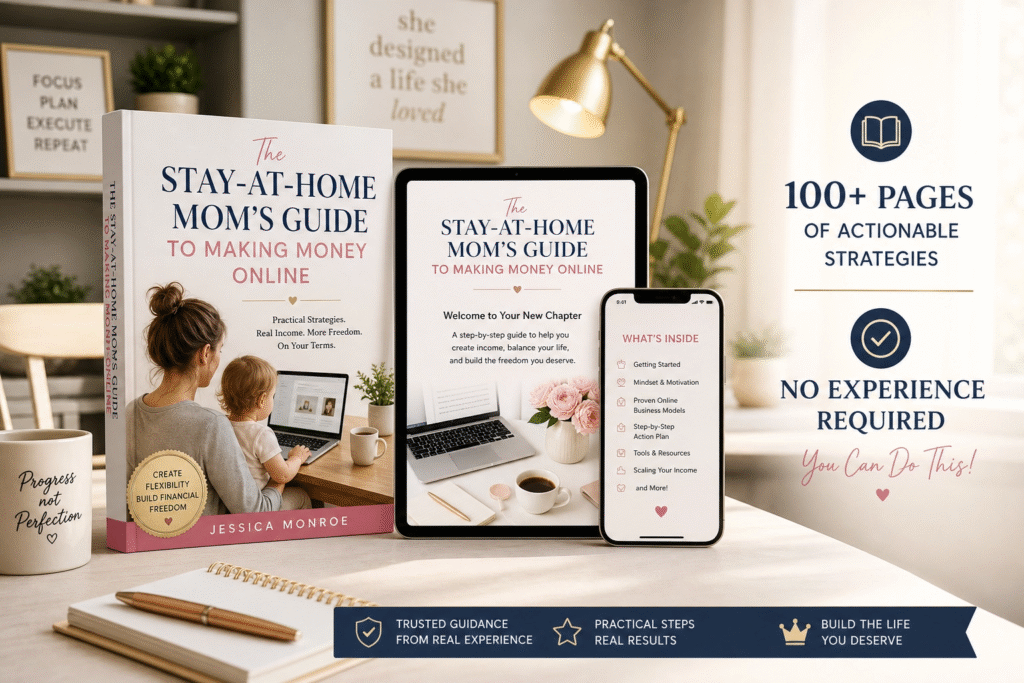
📗 The Stay-At-Home Mom’s Guide to Making Money Online covers 12 specific income methods — freelancing, digital products, affiliate marketing, virtual assistant work, blogging, print-on-demand, social media monetization, online courses, and more — each with step-by-step instructions, specific platforms, exact tools, and a 30-day action plan to your first dollar.
Built for 30-minute work windows. Zero startup cost methods for beginners. $27 with a 30-day money-back guarantee.
→ Get The Stay-At-Home Mom’s Guide to Making Money Online — $27

The Thing Nobody Tells You About Financial Confidence
It doesn’t arrive before you start. It arrives because you started.
The mom who opens her Spousal Roth IRA on a Thursday afternoon doesn’t feel confident before she does it — she feels nervous and slightly unsure. The confidence comes from having done it. The mom who lists her first digital product on Etsy doesn’t feel like a business owner before the listing goes live — she feels like someone who’s trying something. The identity shifts after the action, not before it.
The money moves for stay-at-home moms that matter most aren’t the ones that require you to already feel ready. They’re the ones you do while you’re still a little scared — the budget you sit down with even though the numbers are uncomfortable, the retirement account you open even though investing feels intimidating, the first client proposal you send even though you’re not sure you’re qualified.
You were never taught this. Most of us weren’t. That’s not a character flaw — it’s a gap, and gaps can be filled.
Two resources that fill two different parts of that gap:
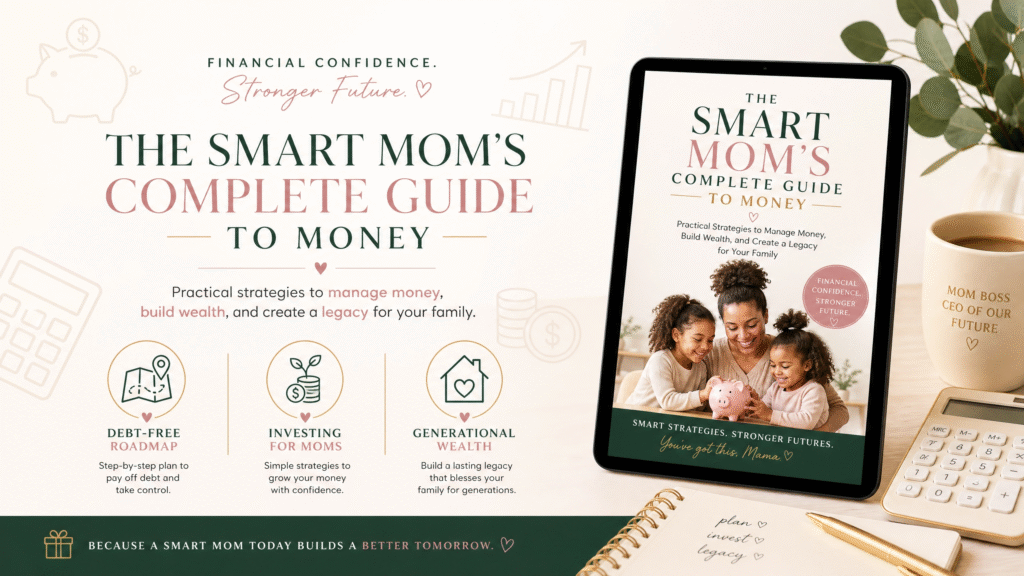
→ For taking complete control of your family’s money:
The Smart Mom’s Complete Guide to Money — $27
→ For building income that’s genuinely yours:
The Stay-At-Home Mom’s Guide to Making Money Online — $27
Both come with a 30-day money-back guarantee. Both deliver as instant PDFs. Both were written for exactly where you are right now.
Save this. Share it with a friend who needs it. And then — do the next small thing.
This post contains affiliate links. We may earn a small commission at no extra cost to you. We only recommend resources we’ve genuinely reviewed and believe in.
About the Author