Pretty Paper Storage Ideas for a Home Office That Still Work
Paper is one of those things that quietly accumulates until it becomes an atmosphere—stacks of bills, project drafts, receipts, and the sentimental notes you can’t quite toss. You don’t need a boring filing cabinet to manage it. With a few pretty, purposeful storage strategies you can keep your documents accessible, organized, and visually calming—so your home office feels like a thoughtfully designed space, not an administrative nightmare.
Below, you’ll find practical, style-forward home office paper storage ideas that balance form and function: simple habits, smart containers, easy DIYs, and options for tight spaces and budgets. I’ll also weave in two paper-themed products that work beautifully as both decor and storage accents.
Why pretty paper storage matters
Paper storage isn’t just about aesthetics. When your filing system is attractive and simple, you’re more likely to use it consistently. Accessibility reduces procrastination (easier to file than to avoid), and a pleasing setup lowers stress—especially if you work from home and live with that space. Think of storage as a design layer: a chance to introduce color, texture, and personality while making everyday life smoother.
Quick principles to guide every system
- Visibility: Keep frequently used papers in sight; archive the rest.
- One-touch processing: Aim to make decisions once—file, act, or toss.
- Cohesive materials: Choose containers and labels that fit the room’s palette.
- Vertical thinking: Use walls and shelf faces to maximize small footprints.
Now let’s get concrete.
Stylish but sensible containers that earn their place
Invest in containers that make you want to click them closed.
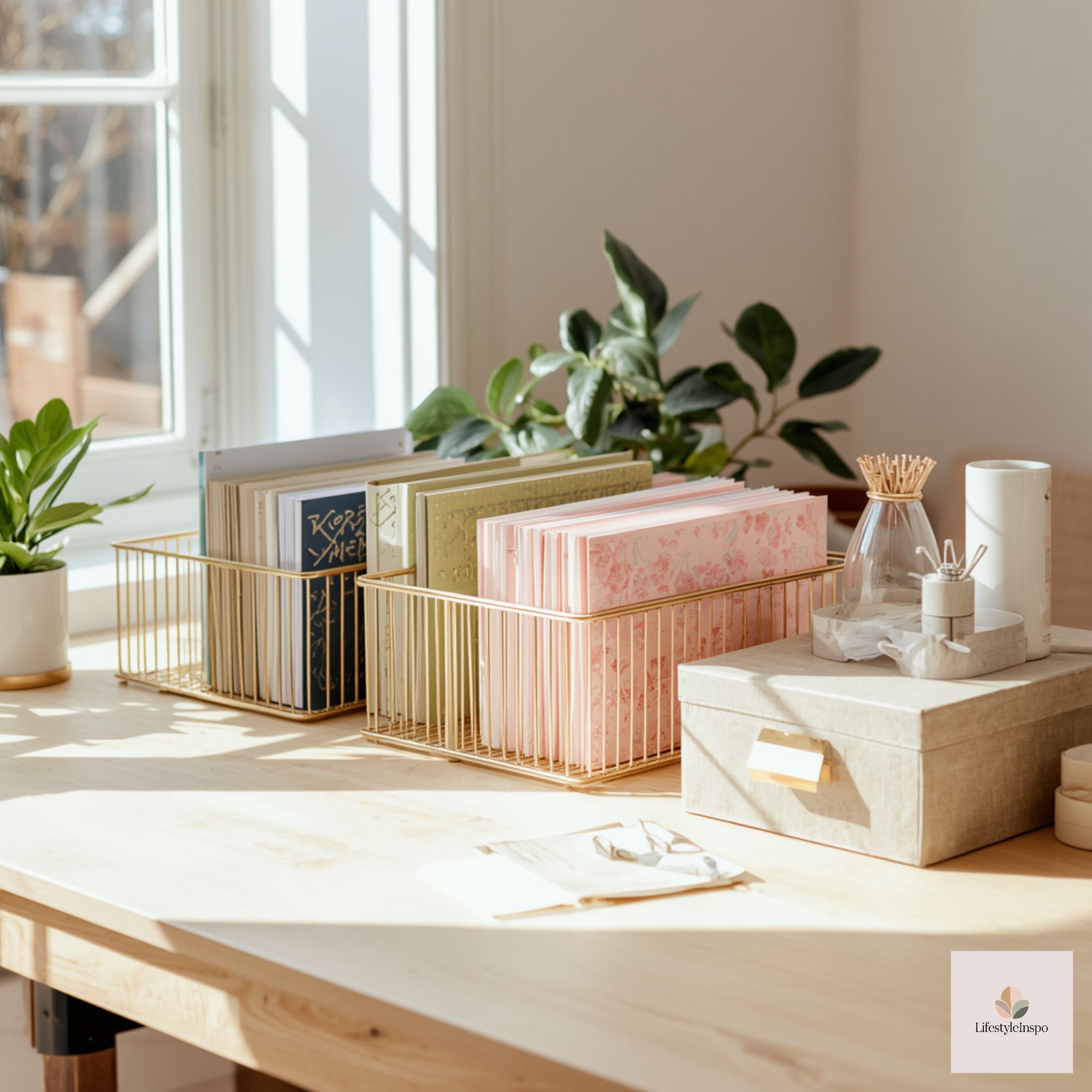
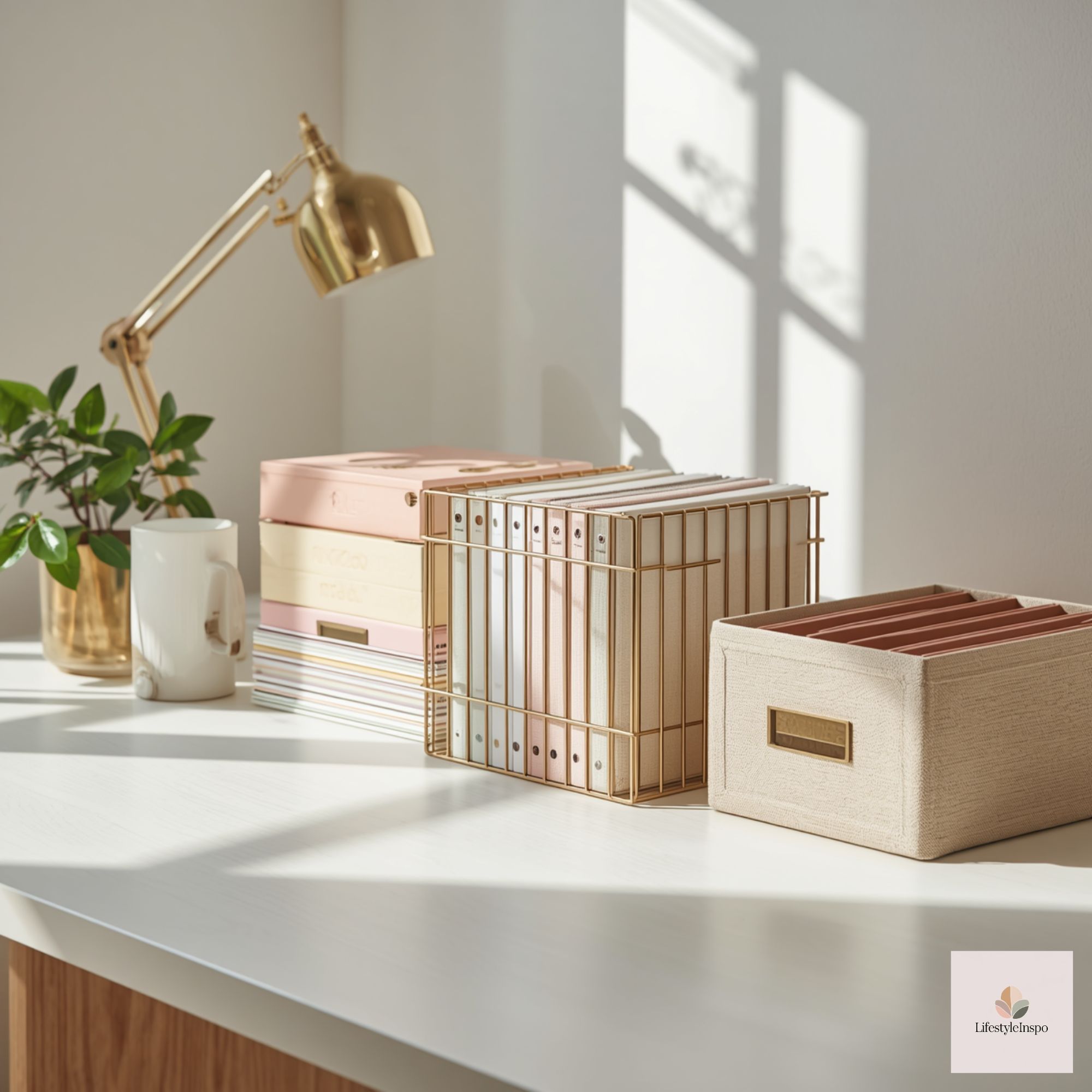
- Stacking letter trays: Look for low-profile metal or bamboo trays. Stackable trays keep open projects front and center without swallowing desktop real estate.
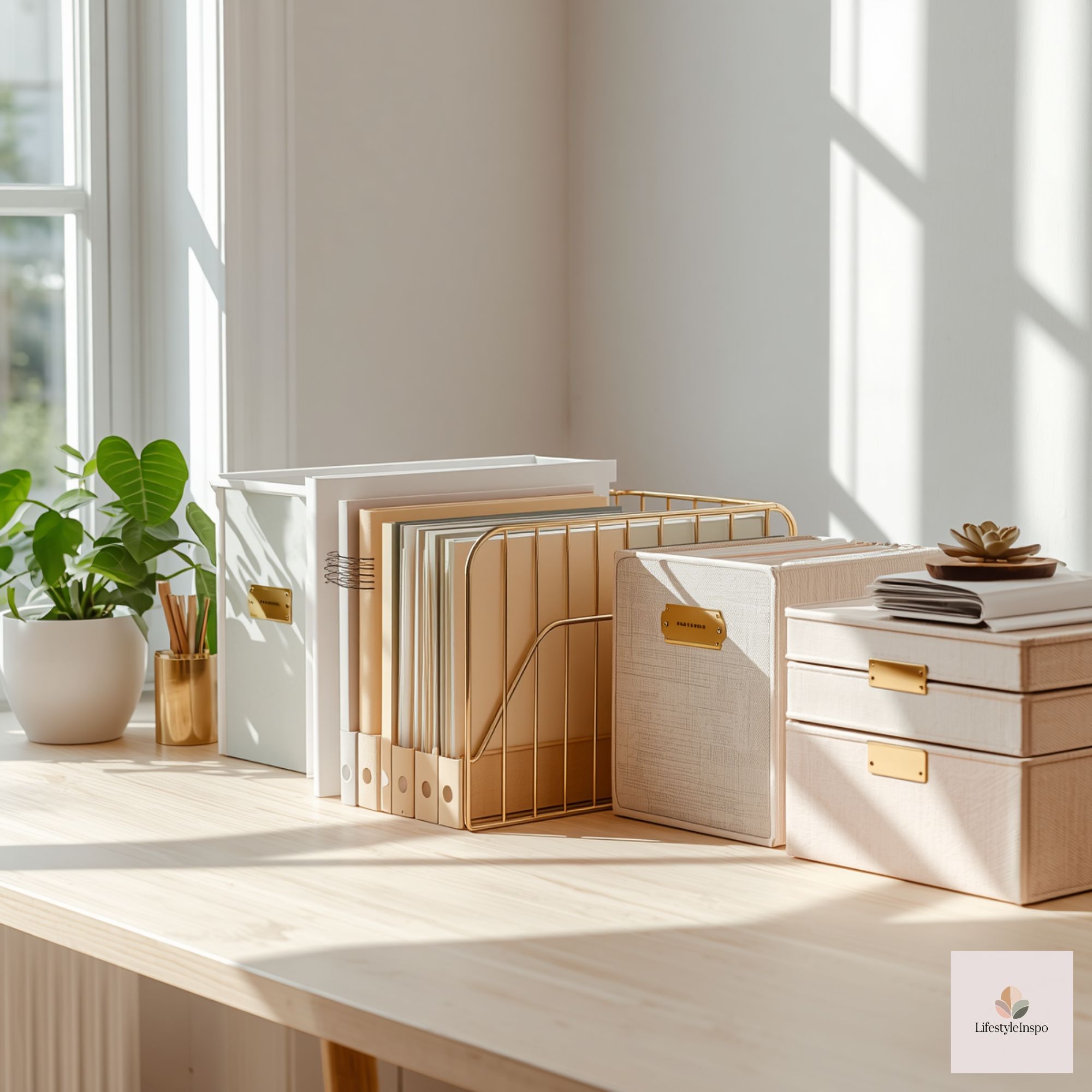
- Decorative boxes with lids: For archived or infrequently needed paper, a lidded box keeps dust out and looks tidy on a shelf. Choose neutral tones or subtle prints—something that reads like decor.
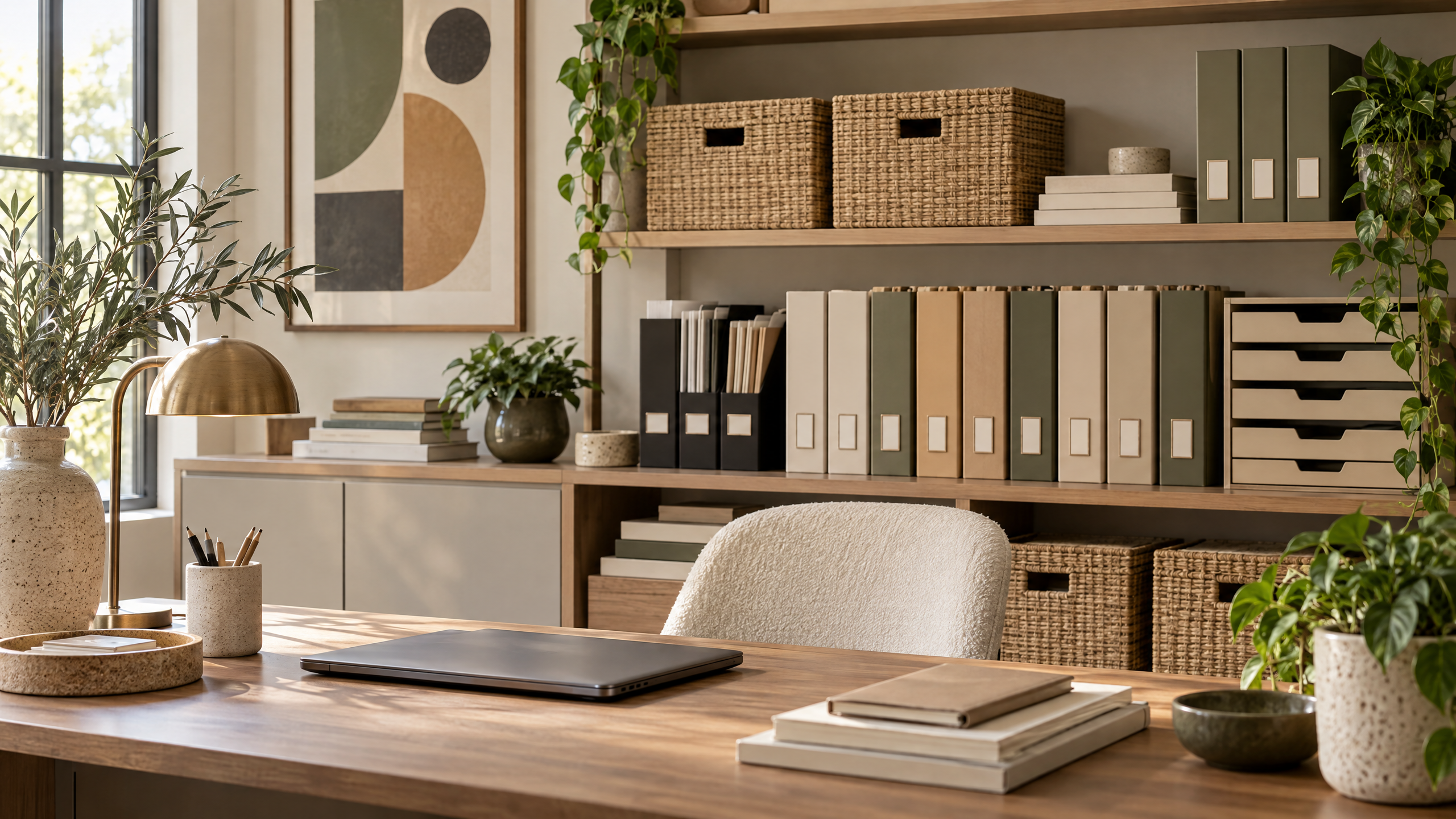
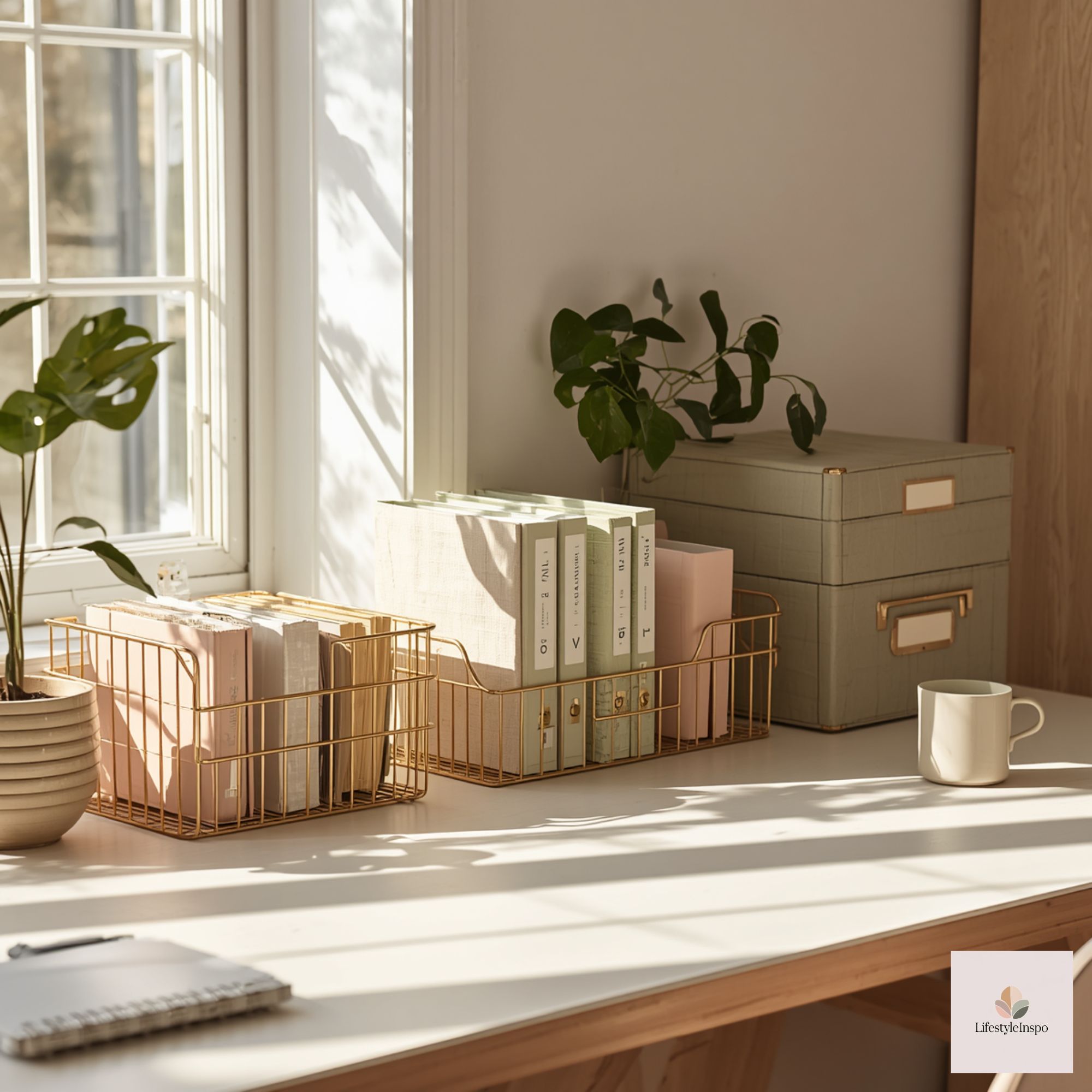
- Magazine files: Modern magazine files come in soft-touch materials and patterns so they double as display pieces. Use them for folders, catalogs, or project binders.
- Clear archival boxes: For receipts and legacy documents, transparent boxes let you scan and find without opening every lid.
Product pick—if you like watercolor tones: the Geometric Watercolor Shapes collection has a gentle pattern that pairs well with warm woods and brass accents. Use a couple of pieces from this series as magazine files or desktop folders to add a soft, artistic touch without distracting from work.

Another option for a calm, neutral backdrop is the Earthy Neutrals Watercolor Paper—its muted textures work well as shelf liners or as covers for wrapped boxes to instantly elevate budget-friendly containers.
Systems that make paper manageable
A good container is only as useful as the system behind it. Here are practical filing systems to try.
The three-bin daily system
- Inbox: Paper that requires action—bills to pay, items to file, short tasks to complete.
- Action bin: Things that need processing right away—phone calls, quick replies, marked-up drafts.
- Archive bin: Papers that are done but need to be kept (warranties, contracts, tax docs).
Process the inbox at least once every few days—toss, delegate, or file—and move completed items to the archive.
The project tower
- Use a vertical tower of magazine files, one slot per project.
- Label each slot clearly with current due dates and the next action needed.
- Rotate slots out when a project closes and replace them with the next active project.
The dated folder method (for financials)
- Keep a labeled folder for each month in a compact file crate.
- At month’s end, process receipts and move the folder into your long-term box or scanner pile.
Portable paper storage for hybrid work
If you split time between home and office, go portable.
- A slim briefcase or document folio with internal compartments keeps in-progress documents neat.
- Use a small accordion file for receipts and meeting notes to avoid shuffling loose paper.
- Keep a “work grab bag” by the door with current folders and a notepad so leaving in a hurry doesn’t mean losing your system.
DIY and budget-friendly upgrades
You don’t need to spend much to make storage look intentional.
- Cover generic cardboard boxes with watercolor paper from the Earthy Neutrals Watercolor Paper collection to create coordinated archive boxes—use double-sided tape for a neat finish.
- Paint plain magazine files a single color and attach small chalkboard labels for flexible labeling.
- Make a wall-mounted file rack from a narrow floating shelf and leather straps: hang the straps from small hooks and slip thin folders between them for a sculptural, space-saving solution.

Labeling that invites use
Labels are the secret sauce. When everything is labeled clearly, filing becomes frictionless.
- Keep labels simple: “Bills,” “Receipts,” “Taxes,” “Current Projects.”
- Use consistent or hand-lettered tags for visual cohesion.
- For temporary projects, try removable labels or washi tape with a marker so you can reassign slots.
Small-space solutions
Small offices need a little creativity.
- Use the back of a door: over-the-door organizers with pockets can hold mail, magazines, and folders.
- Under-desk rolling drawers: Narrow, wheeled units slide under desks and are excellent for papers you don’t need every day.
- Wall pockets: Fabric wall pockets keep desktop surfaces clear and are lightweight to install.
If you’re very tight on space, prioritize digital conversion: scan or photograph papers immediately and keep only the original documents that require it (legal papers, warranties, originals). For kids’ art or sentimental notes, consider photographing and creating a yearly photo book to save space.
Accessibility & inclusivity notes
Make your paper storage friendly to everyone who uses the space.
- Keep labels high-contrast and use clear fonts to help low-vision users.
- Position frequently used bins between waist and shoulder height to avoid bending or reaching.
- Use lightweight materials and easy-open lids for people with limited hand strength.
- Consider a seated filing option—rolling carts that can slide under chairs for those who need to stay seated.
How to transition to a prettier paper system in 30–60 minutes
If your desk needs a refresh but you don’t have a day to commit, here’s a simple sprint.
- 0–10 minutes: Clear the surface. Gather all loose paper into one pile.
- 10–20 minutes: Sort into three piles—Action, File, Recycle. Shred anything confidential you don’t need.
- 20–40 minutes: Place the Action stack in a visible inbox tray. Put File items in labeled folder(s) or magazine files. Recycle what you can right away.
- 40–60 minutes: Choose one decorative container (a patterned folder, a pretty box, or a piece from the Geometric Watercolor Shapes collection) and use it to anchor the desktop visually. Add a label and keep a small shred/bin nearby.
This quick reset reduces visual clutter and makes the system feel intentional—one pretty container makes all the difference.
Maintenance habits that keep the pretty going
- Weekly 10-minute tidy: process the inbox, archive, and recycle piles.
- Monthly purge: remove anything older than needed, scan what’s worth digitizing.
- Quarterly refresh: swap out decorative papers, rotate box labels, and make sure the system still fits your needs.
Budget breakdown & where to save
- Under $25: DIY covers with watercolor paper, washi-tape labels, chalkboard tags.
- $25–$75: Attractive stacking trays, magazine files, a small rolling drawer unit.
- $75–$200: Designer storage boxes, decorative file cabinets, a compact lateral file.
Covering boxes with the Earthy Neutrals Watercolor Paper is a high-impact, low-cost upgrade—instant cohesion without expensive purchases.
Styling tips so containers feel like decor
- Group like with like: Keep similar materials together—wood with wood, brass with brass—to avoid visual chaos.
- Use repetition: The same magazine file repeated across a shelf creates an intentional rhythm.
- Add life: A single low-maintenance plant or a framed print near your paper storage makes it feel curated rather than purely utilitarian.
Ready to tidy in a way that actually feels good? Pick one corner and try the 30–60 minute reset. If you want subtle pattern or a neutral backdrop to make your boxes look intentional, explore the Geometric Watercolor Shapes or the Earthy Neutrals Watercolor Paper for quick, pretty upgrades.
About the Author