How to Style an Office Bookshelf So It Looks Collected, Not Cluttered
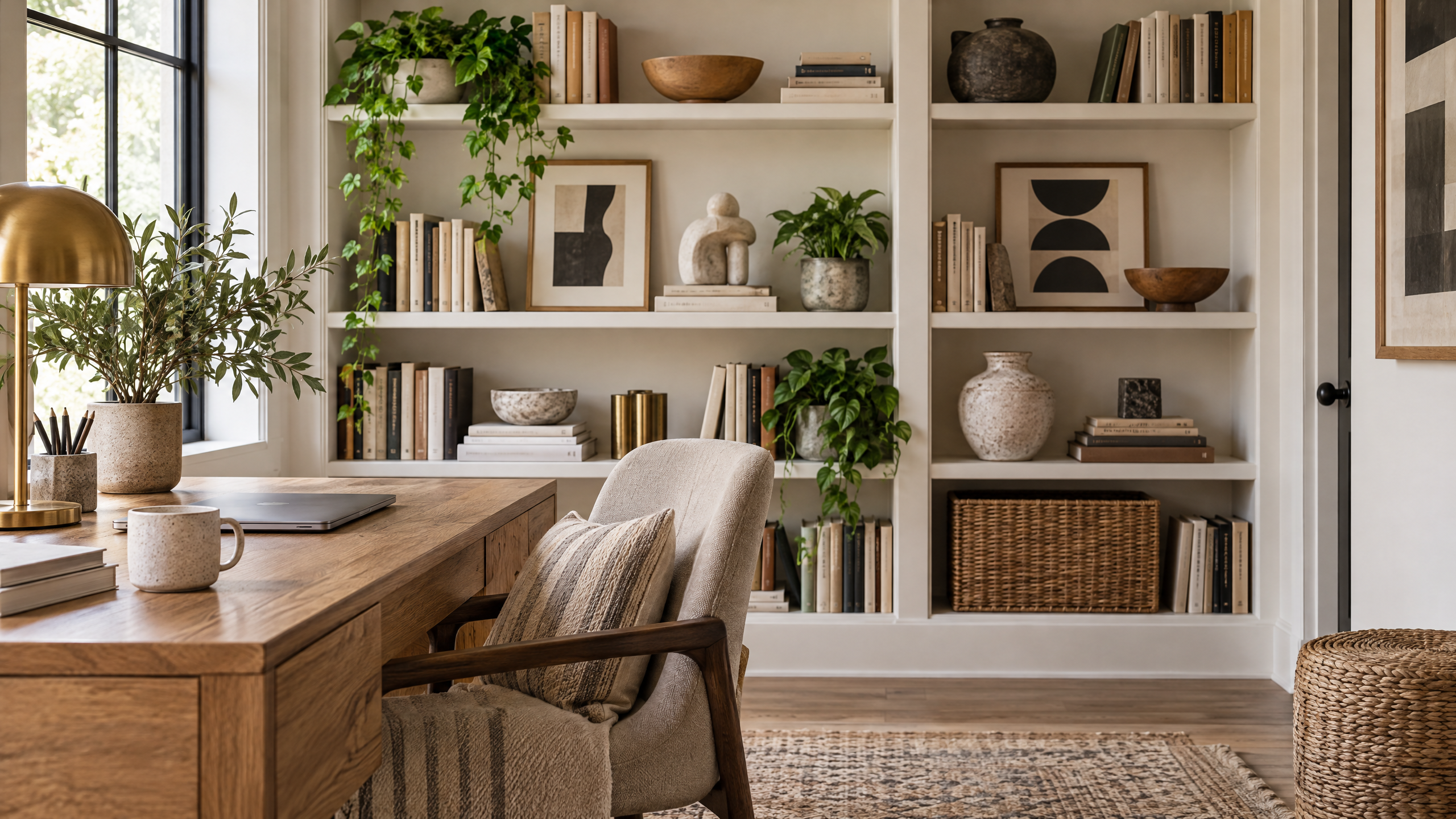
A bookshelf in your office should feel like an intentional backdrop—helpful, inspiring, and quieting the visual noise so your workday feels easier, not busier. But when every shelf becomes a catch-all for paperwork, tchotchkes, and half-read books, the result is clutter that distracts rather than delights. Styling a shelf to look collected—rather than cluttered—means editing hard, arranging thoughtfully, and leaning on a few visual tricks that make the whole unit read like a single, calm piece of decor.
Below you’ll find practical office bookshelf decor ideas, step-by-step styling methods, and simple product suggestions that feel curated and approachable. You don’t need to be a professional stylist—just a few mindful choices and a couple of affordable accessories will transform your shelf into a purposeful, polished presence.
Why “collected” matters more than “matchy”
A collected bookshelf looks like a natural extension of your life—books you actually read, objects with meaning, and a few visually cohesive accents that tie the whole thing together. The opposite is a shelf that’s overly curated in a way that feels staged or, worse, scattered.
The goal is warmth and clarity. That means:
- Editing ruthlessly (less is more).
- Grouping by color, shape, or theme so the eye has a resting place.
- Mixing function (files, reference books) with personality (art, plants).
- Using consistent visual cues—like repeating materials or colors—to unify the display.
Prep work: edit, measure, and plan
Before you place anything back on the shelf, do these three things.
- Empty the shelves.
- Take everything off and sort into piles: keep, relocate, donate, recycle. Seeing the blank canvas helps you make deliberate choices.
- Measure and map.
- Measure each shelf’s height and depth. Note where tall books, binders, or decorative pieces will fit. Draw a quick sketch if you’re visual—this prevents awkward returns.
- Decide on a visual spine.
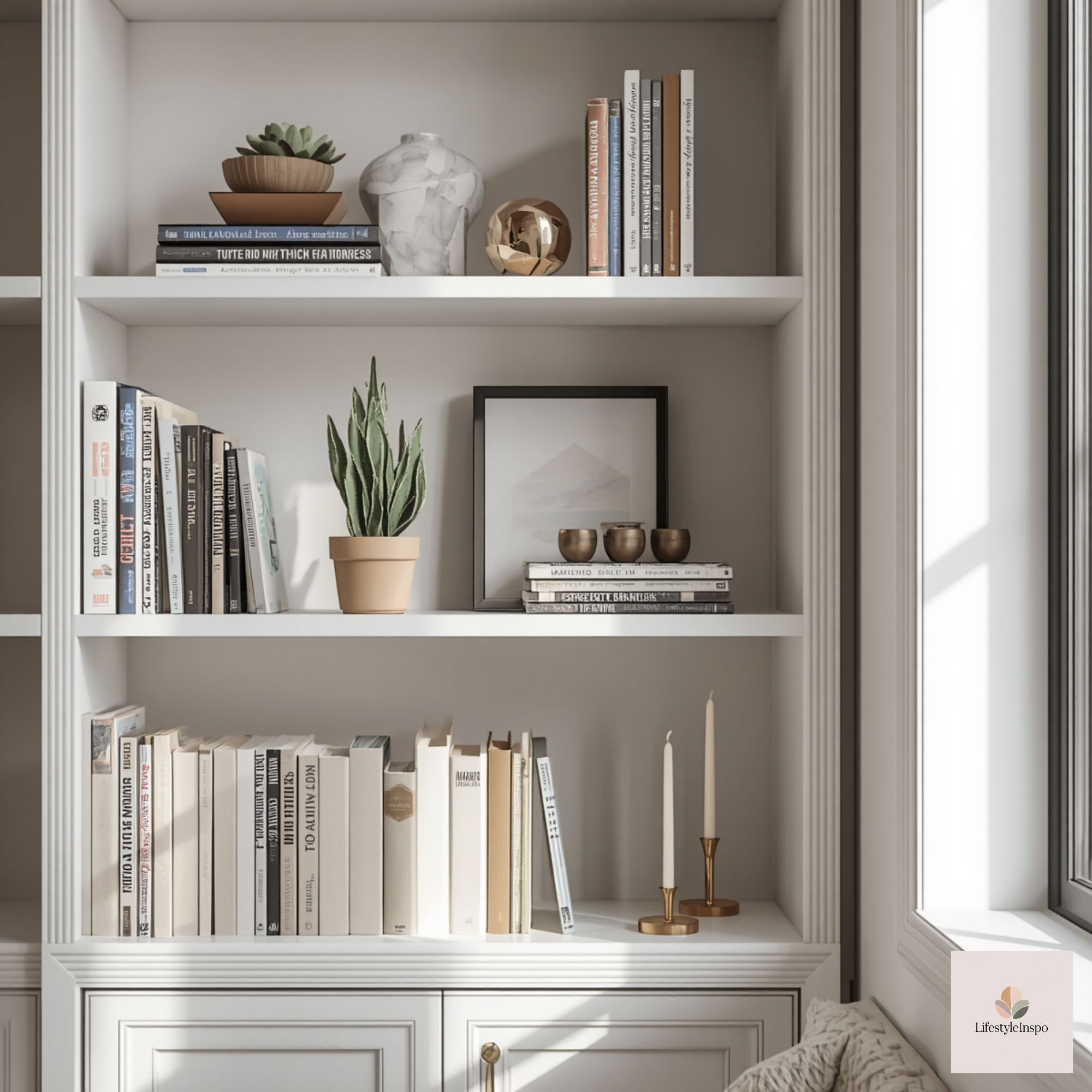
- Pick a unifying element: a color palette, a material (wood, ceramic, matte metal), or a repeating shape. This will be the thread that transforms disparate items into a collected look.
Start with a strong foundation: anchor pieces and negative space
Every shelf styling benefits from an anchor. Anchors give your eye a place to start and create structure.
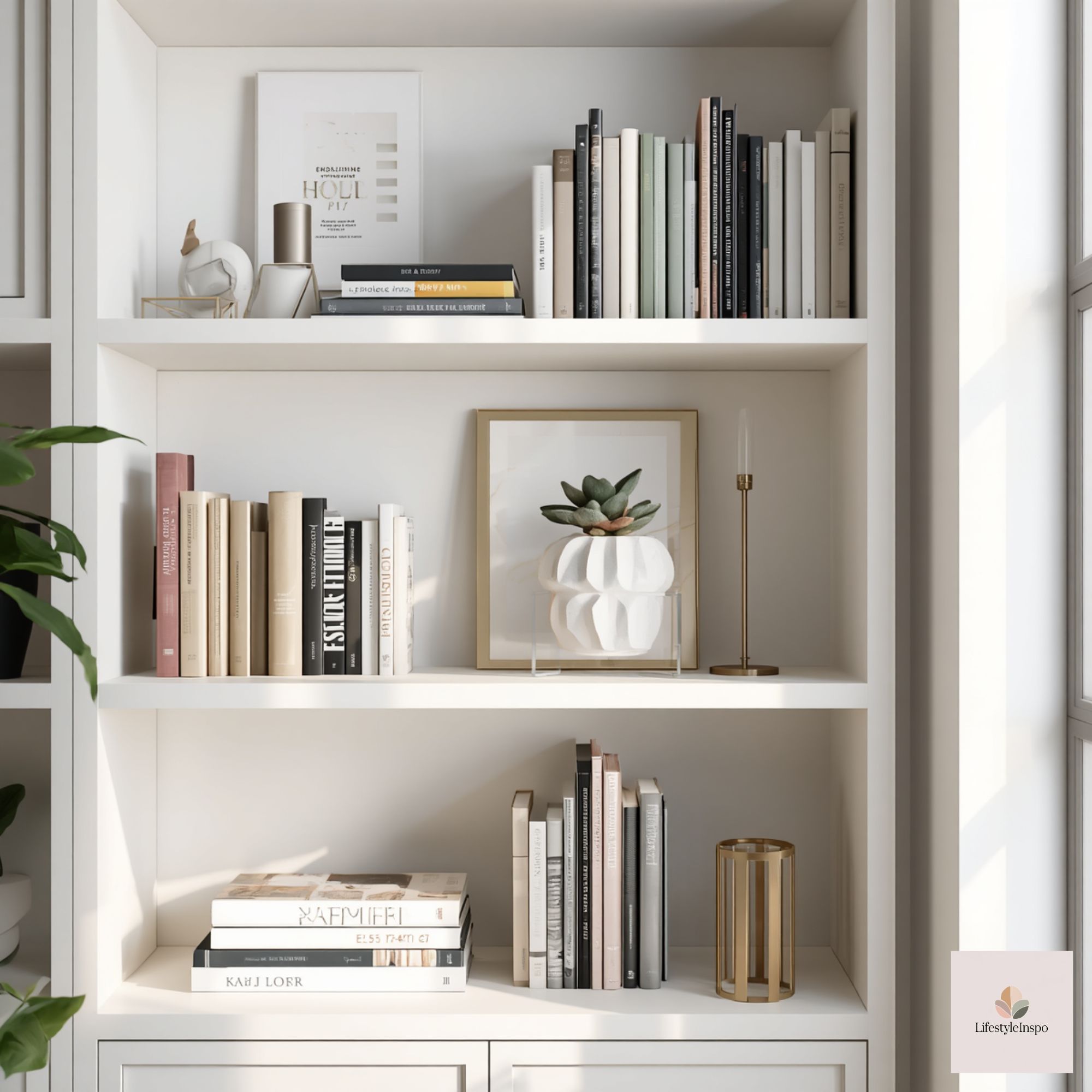
- Choose one or two larger items as anchors per shelf: a stack of hardcover books laid horizontally, a framed photo, or a sculptural vase.
- Leave breathing room. Negative space is essential—aim for about 30–40% visual emptiness across the whole bookcase. Don’t feel you must fill every inch.
Concrete step:
- Place one horizontal book stack toward a corner of a shelf. Balance it with a vertical row of books on the opposite side to create tension and harmony.
Use groupings and odd numbers
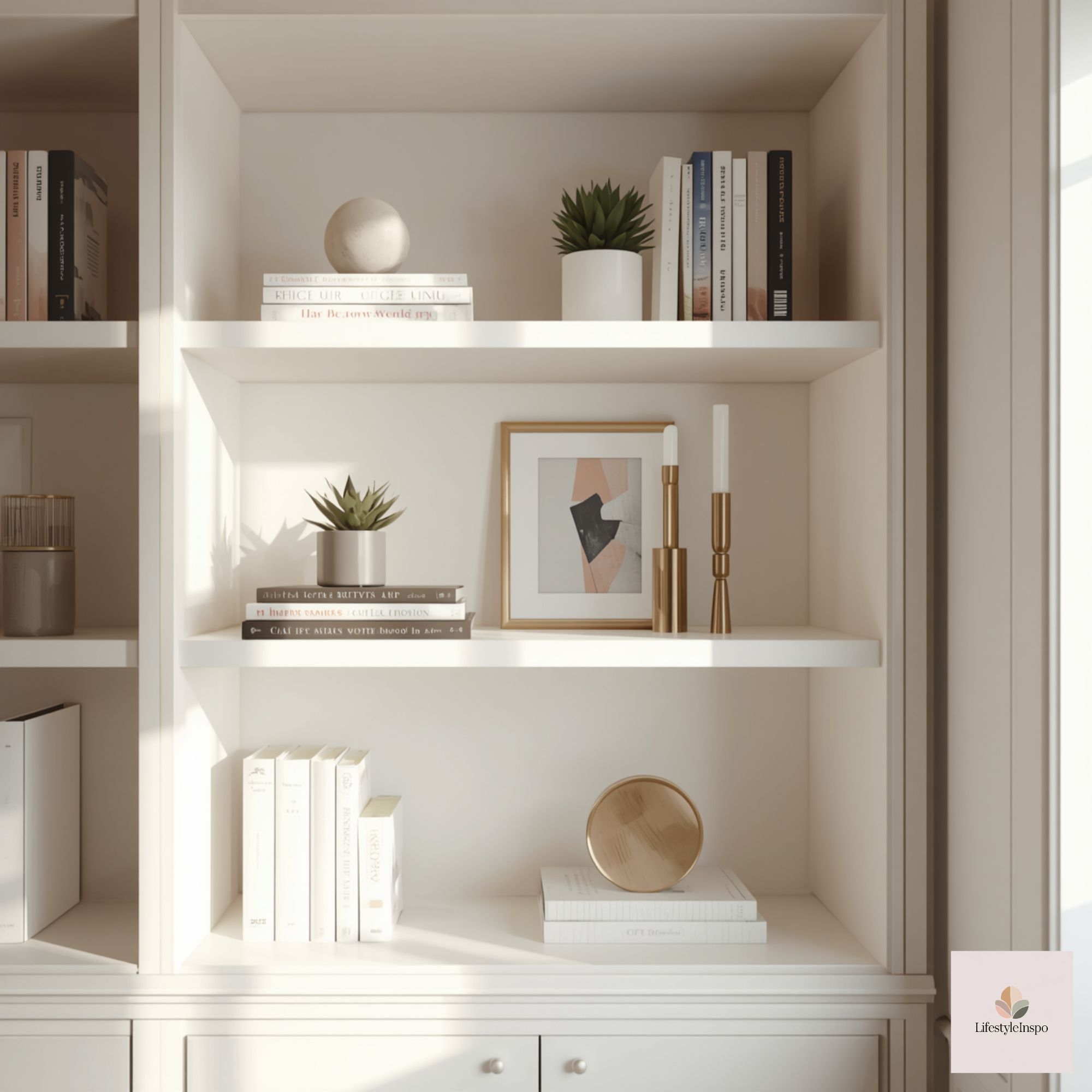
Group items in clusters of three or five. Odd-numbered groupings feel more dynamic and natural than symmetric pairs.
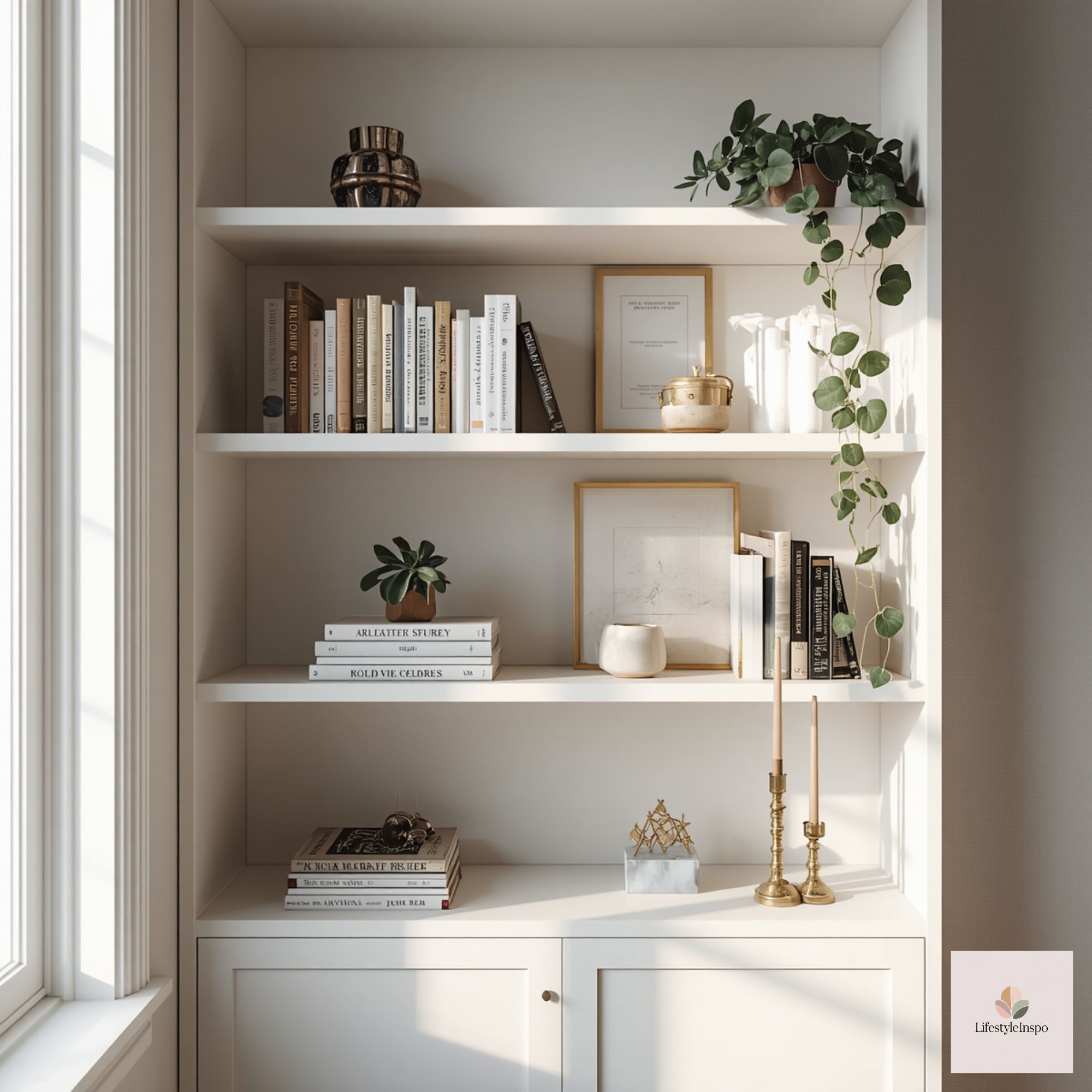
- Try 3–5 books plus one decorative object (like a small plant or ceramic piece) on a shelf.
- Keep related items together—writing tools in a pretty cup, not scattered across shelves.
Concrete step:
- Make a trio on a mid-level shelf: a vertical bookend group, a small potted plant, and a framed small art piece.
Vary height, texture, and orientation
A shelf where everything is the same height is visually flat. Instead, vary book orientation and textures.
- Stack some books horizontally and place a decorative object or tray on top.
- Let raw textures (woven basket, ceramic, linen box) sit next to glossy paperbacks.
- Mix hardcovers and paperbacks, but keep spines facing the same direction for neatness.
Concrete step:
- For a three-shelf unit: top shelf mostly display/meaningful objects; middle shelf reference books vertically; bottom shelf larger storage baskets for office supplies.
Edit your book spines intentionally
Books tell a story. You don’t have to hide spines, but be selective.
- Keep reference and frequently used volumes with spines out for easy access.
- For books you want to de-emphasize, turn them spine-in (pages facing out) and use a decorative bookend.
- Consider color-washing sparingly—grouping 5–8 books by color creates a visual block without demanding an entire rainbow reorganization.
Concrete step:
- Create a neutral block: choose 6–8 books with neutral-toned spines and position them together. Balance colorful cookbooks or design books elsewhere.
Add artwork and personal items thoughtfully
Small framed prints, postcards, or a favorite quote can add personality without clutter.
- Lean framed pieces behind objects rather than mounting everything on the wall. Layering creates depth.
- Keep frames in a limited palette (black, white, or wood) to maintain cohesion.
Product integration:

- For a soft, modern touch, tuck in a piece of watercolor art. The muted tones of Earthy Neutrals Watercolor Paper make a great backdrop for a middle shelf—place it behind a low stack of books so the paper peeks through.
- For a geometric, contemporary accent, prop a small print from Geometric Watercolor Shapes next to a sculptural object. The shapes add visual interest without overwhelming the space.

Concrete step:
- Select one shelf to be your “art shelf.” Lean one medium-sized frame and place a small object in front of it so the artwork reads as part of the scene.
Use storage as styling tools
Baskets, boxes, and trays are storage, but also styling devices.
- Woven baskets are great for stashing electronics, cables, or overflow notebooks. Closed boxes hide visual noise.
- Label discreetly if you need to know what’s inside. Use uniform boxes on lower shelves for balance.
- A shallow tray corral loose items like pens, glasses, and loose notes.
Concrete step:
- Use two matching baskets on the bottom shelf for miscellaneous supplies. Keep the shelf above tidy with display items so the visual weight feels balanced.
Include greenery—and choose low-maintenance options
Plants soften the geometry of a bookshelf and add an instant collected feel.
- Opt for low-light tolerant plants if your office doesn’t get much sun: pothos, ZZ plant, or snake plant.
- Small succulents or a single trailing plant on an upper shelf can create movement.
Concrete step:
- Place one trailing plant on a top shelf and a small succulent near a horizontal book stack to break up rigid lines.
Lighting: subtle, functional, and mood-making
A bookshelf is more compelling when it’s well-lit.
- If hardwired lighting isn’t available, battery-operated puck lights or a thin LED strip can highlight a shelf.
- A small lamp on a lower shelf adds warmth and provides task light if your desk is close by.
Concrete step:
- Install a warm-tone strip light under the top shelf to wash the book faces in a gentle glow.
Accessibility and function: keep daily-use items handy
A pretty shelf is only useful if it supports your workflow.
- Store everyday binders, notebooks, and reference books at arm’s reach and at eye level.
- Use labeled magazine holders or vertical file systems for current projects.
- Keep less-used or purely decorative items on higher or lower shelves.
Concrete step:
- Dedicate the second shelf from the top to “daily use” items—neatly organized vertical folders and a pen cup within reach.
Small-space hacks
If you’re working with a narrow or shallow shelf, these tricks help you maximize style and function.
- Lean art instead of hanging to save wall space.
- Use slim baskets and boxes to create visual order without bulk.
- Float a shallow shelf above a desk to serve as both storage and a display ledge.
Concrete step:
- Use a series of small, repeated objects (three small vases or candles) across shallow shelves to create a rhythmic look without overwhelming the depth.
Budget-friendly styling ideas
Looking put-together doesn’t require expensive buys.
- Edit first—decluttering is free and the most impactful step.
- Thrift small frames, vintage books, or ramekins for decorative objects.
- DIY a stack of coffee-table-style books by wrapping paperback stacks in kraft paper and adding a labeled spine.
Concrete step:
- Make your own art by cropping a magazine cover and mounting it in an inexpensive frame—layer it with a found object for a curated vignette.
Accessibility notes
If mobility or visual impairments are a concern, consider these small adjustments:
- Keep frequently used items on middle shelves (between waist and shoulder height) to avoid reaching or bending.
- Use tactile labels or high-contrast labels for quick identification.
- Replace breakable decor with soft or sturdy alternatives to minimize hazard risk.
Concrete step:
- Swap a delicate ceramic object for a small fabric storage box on lower shelves; it’s safer and easier to handle.
Styling schedule: keep it fresh without constant effort
To maintain a collected shelf without fuss:
- Do a five-minute tidy once a week: reset items that have migrated.
- Every three months, re-edit: remove one item and add one new-to-you piece.
- Rotate seasonal accents (a small pinecone in winter, dried flowers in fall) to keep the shelf feeling alive.
Concrete step:
- Place a sticky note on the shelf as a reminder to do your weekly five-minute tidy; habit builds a lasting aesthetic.
Final tips: cohesive choices that read as intentional
- Limit your palette: two to three colors repeated across objects looks cohesive.
- Favor a few statement objects rather than lots of tiny ones.
- Think in vignettes: create small scenes on each shelf rather than scattering objects evenly.
Gentle CTA:
If you’re starting a refresh, take a photo of your cleared shelves before you style—then compare after. You’ll be surprised how small changes create a calm, collected backdrop that makes work feel easier.
FAQ
Q: How many decorative items per shelf are ideal?
A: Aim for 2–4 meaningful items per shelf, paired with book groups or storage boxes. Use negative space so the eye can rest—more is not always better.
Q: Should I organize books by color or by subject?
A: Organize by subject for functionality if you use your books often. If your shelf is mainly decorative, grouping by color in small segments can create an intentionally styled look. You can mix both approaches: functional sections for work books and color blocks for display books.
Q: How do I make a small bookshelf look less cluttered if it has to hold a lot?
A: Use uniform storage boxes for small items, keep work-related items consolidated in vertical files, and reserve one shelf for display (art, a plant, and a stack of books). This creates the illusion of curated restraint even when storage needs are high.
About the Author