Christmas Projector Lights: Are They Worth It? (Buying Guide)
Picture this: it’s the first weekend of December, it’s cold, and you’re staring at a two-story house and a tangle of lights, wondering if there’s a better way.
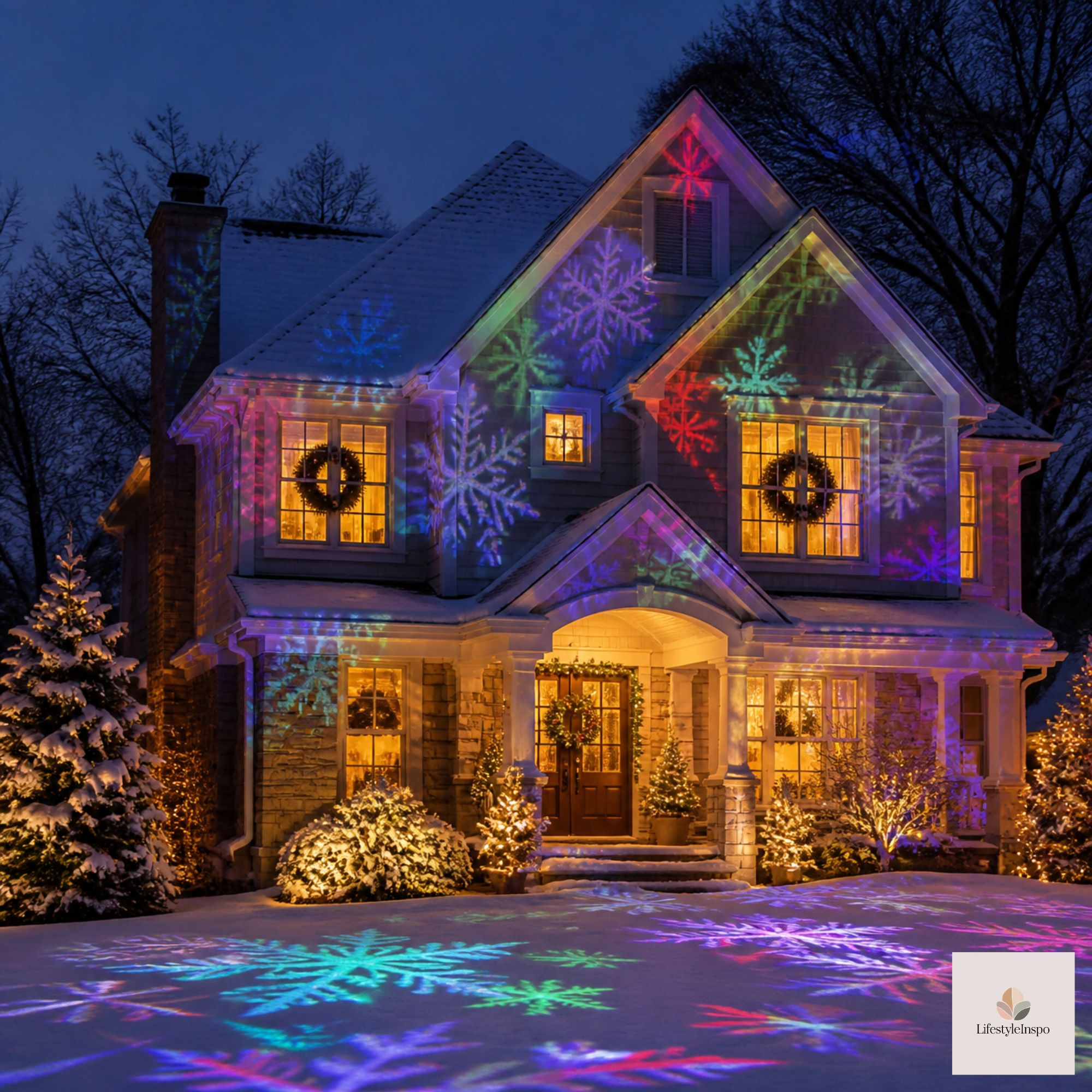
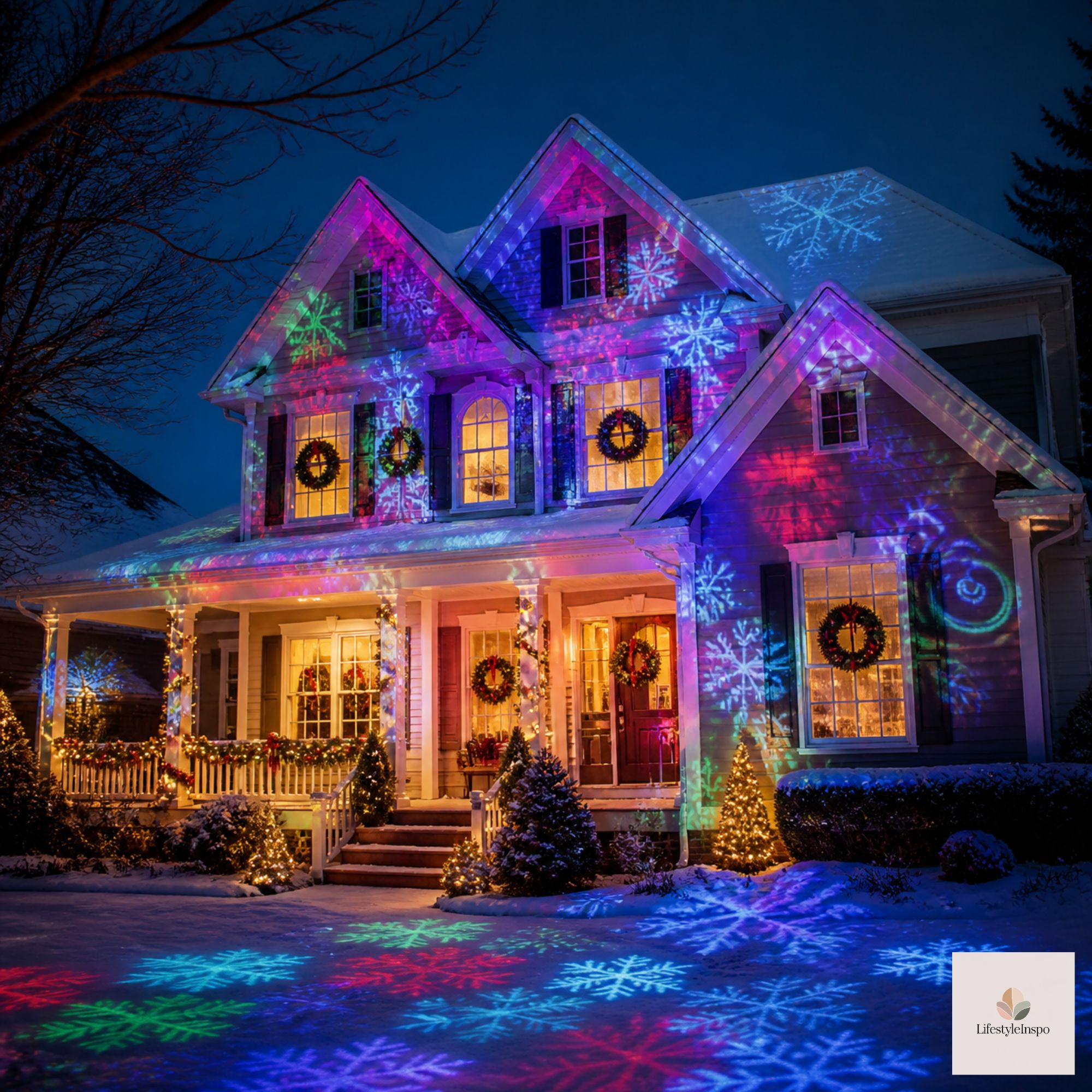
There is. Over the last few years, Christmas projector lights have become one of the most popular shortcuts in holiday decorating. Instead of hanging hundreds of bulbs, you place a small device in the yard, aim it at your home, and watch moving snowflakes, stars, or patterns cover the walls.
But are they actually worth it? Do they replace string lights? And how do you set one up so it looks good rather than blurry? This buying guide answers those questions, so you can decide with confidence.
How Do Christmas Projector Lights Work?
The concept is simple. A projector contains bright LEDs and a lens or slide that casts a pattern onto a surface. Depending on the model, the pattern might be falling snowflakes, twinkling stars, swirling colors, or festive shapes.
Most projectors for outdoor use include:
- A stake or stand to anchor them in the ground
- A weather-resistant housing to protect against moisture
- Adjustable focus to sharpen the image
- Multiple patterns or modes that you can switch between
- A cord and plug (and sometimes a timer or remote)
You set it up at a distance from your home, aim it at the surface, adjust the focus, and plug it in.
The Pros of Projector Lights
1. They’re incredibly fast
This is the number-one reason people love them. Setup takes minutes, not hours. There’s no ladder, no clips, and no untangling.
2. They cover a large area
A single projector can light up an entire wall of your house, a garage door, or a few trees at once. That’s a lot of coverage for one device.
3. They’re great for renters and tall homes
If you can’t (or don’t want to) climb onto the roof, a projector gives you a festive display from the ground.
4. They add movement
Falling snow or twinkling patterns bring a sense of life to the display that static lights can’t match.
5. Storage is simple
One small device is easier to store than boxes of tangled strands.
The Cons to Consider
Projector lights aren’t perfect, so it’s worth knowing the trade-offs.
- They don’t outline your home’s architecture. String lights highlight rooflines and windows, while projectors flood a surface.
- Results depend on the surface. Light-colored, flat walls work best. Dark or heavily textured surfaces can wash out the image.
- Daylight and street lights can reduce visibility. They look best in true darkness.
- Placement matters. Too close and the image is small, too far and it’s dim.
- They can feel less traditional. If you love the classic look of string lights, a projector may feel different.
None of these is a dealbreaker, and many people solve them by combining a projector with a few traditional pieces.
Projector Lights vs String Lights
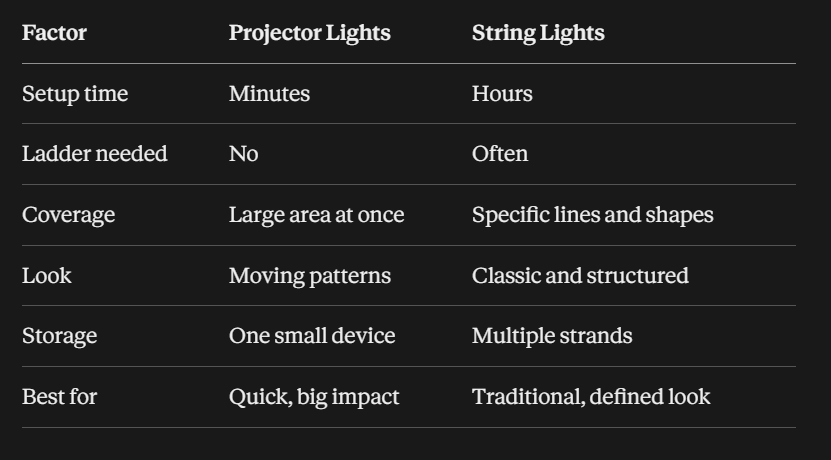
The honest answer is that they work best together. Use string lights to frame the entrance, and a projector to fill the larger surfaces.
How to Choose the Right Projector
When you’re comparing options, here’s what to look for:
- Outdoor rating. Make sure it’s designed to withstand rain and cold.
- Brightness. Brighter models cover more distance.
- Pattern variety. Look for options that match your style, such as snowflakes, stars, or classic motifs.
- Adjustable focus and angle. This helps you fine-tune the image.
- Timer or remote. These make daily use effortless.
- Stake or stand included. This ensures stable placement.
Christmas projector lights for outdoors are a popular choice for homeowners who want a big effect with minimal work.
→ Shop it: Christmas projector lights outdoor
Check the product page for brightness, coverage distance, and weather-resistance details so you can confirm it fits your home.
How to Set Up a Projector Light Step by Step
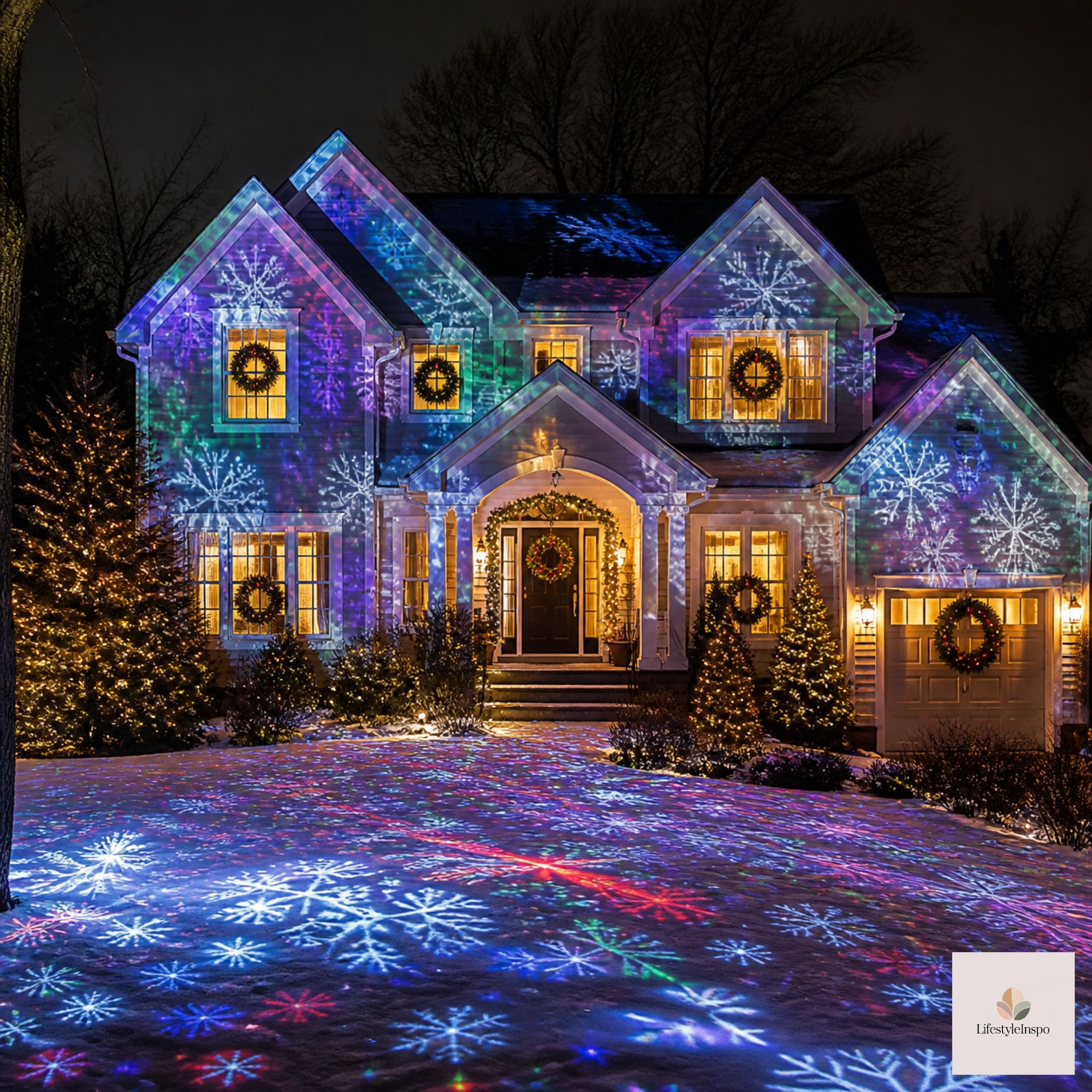
Follow these steps for a crisp, beautiful display.
- Pick your surface. Choose a flat, light-colored area such as a garage door, a front wall, or a large tree.
- Test at dusk or night. Plug it in before you stake it down to find the sweet spot.
- Find the right distance. Start about 10 to 15 feet from the surface and adjust from there.
- Aim and focus. Tilt the projector and turn the focus until the pattern is sharp.
- Stake it securely. Push the stake firmly into the ground so wind can’t move it.
- Cover the connection. Use a weatherproof cover on the plug.
- Add a timer. Set it to turn on at dusk and off at bedtime.
If you notice a pattern that looks fuzzy at the edges, move the projector a little closer or farther until it sharpens.
Make Your Projector Display Look Even Better
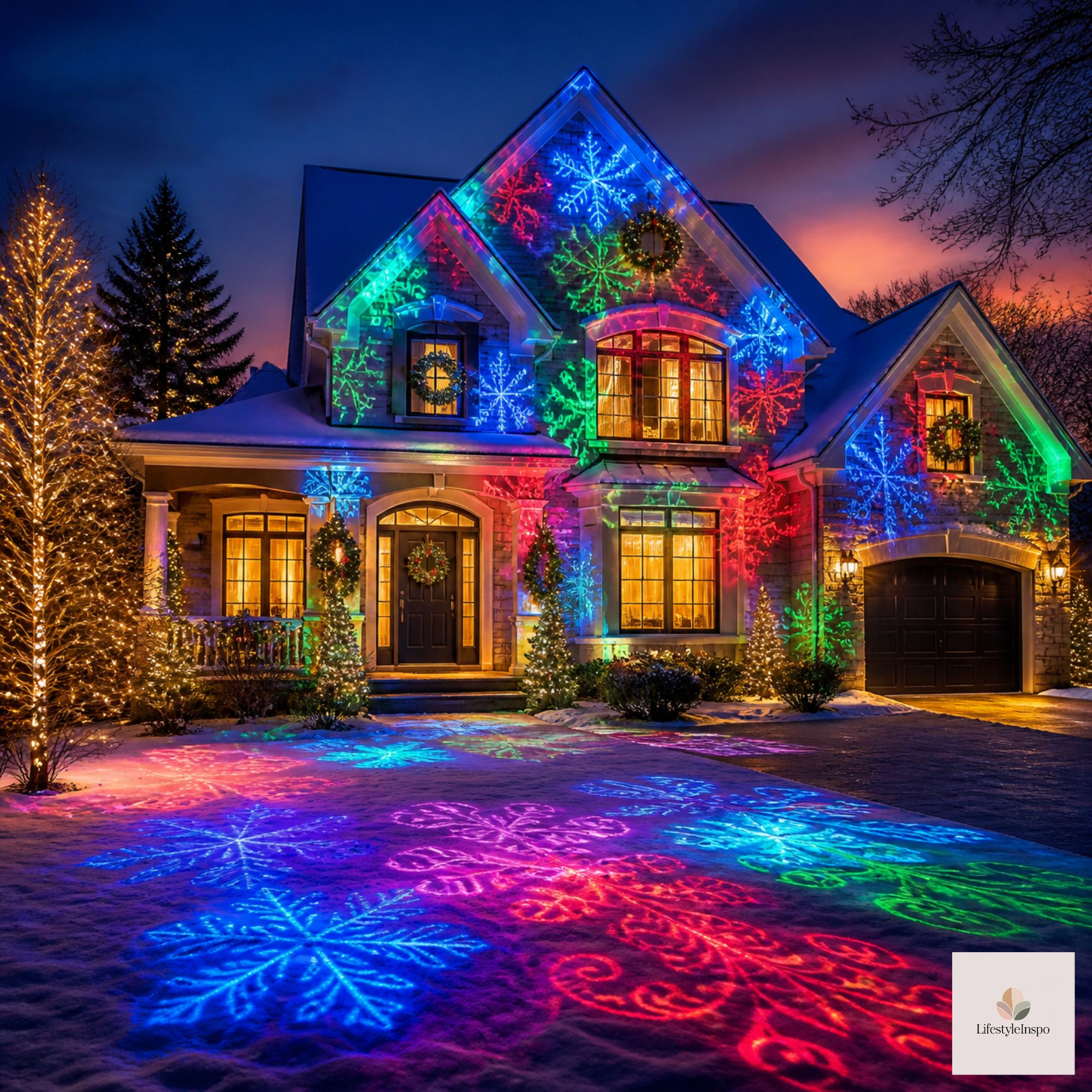
A projector can be the star, or the supporting actor. Here’s how to layer it with other decor.
Add a lighted figure
A glowing lighted reindeer on the lawn adds a fun focal point, and it looks magical when snowflakes swirl behind it.
→ Shop it: Lighted reindeer outdoor Christmas
Frame the door with a wreath
A classic Christmas wreath on the front door gives the entrance a traditional anchor and contrasts nicely with the moving lights.
→ Shop it: Christmas wreath
Keep the rest simple
When the projector provides movement and color, resist adding too many other lights. A clean, restrained scene looks more elegant than one that’s competing for attention.
Where Projector Lights Work Best
Not every home or surface is ideal, so here’s a quick guide.
- Garage doors: Large, flat, and usually light-colored, which makes them perfect.
- Front walls: Great if they’re smooth and light.
- Trees and shrubs: Make a lovely, organic backdrop with a shimmering effect.
- Fences: Work well when they’re white or light.
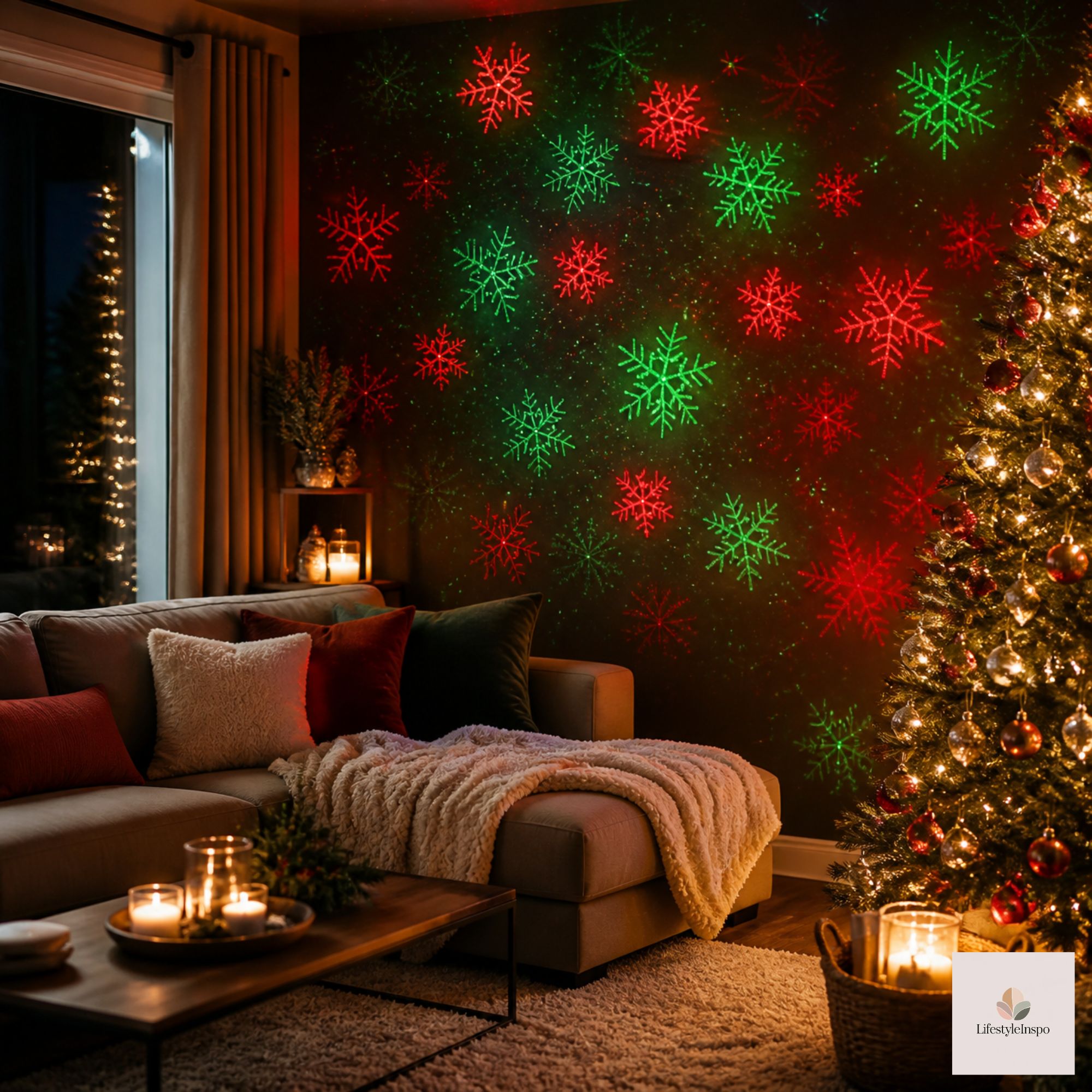
- Indoor walls: Some models can be used indoors for parties.
If your house is dark brick or heavily textured, try aiming the projector at a lighter surface or combining it with other lighting.
Troubleshooting Common Projector Problems
Even a simple device can act up. Here’s how to fix the most common issues:
- The image looks blurry. Adjust the focus ring slowly, and move the projector a few feet closer or farther away.
- The display looks dim. Move closer to the surface, or aim at a lighter, flatter area.
- The pattern is too small. Move the projector farther back so the image spreads wider.
- The projector keeps tipping over. Push the stake deeper, or add a small weight on top of the base.
- The light is shining into a window. Adjust the angle, or choose a different target surface.
- It turns off on its own. Check the timer settings and make sure the plug is dry and fully inserted.
Most problems come down to distance and angle, so take a few minutes at night to fine-tune. Once it’s dialed in, you rarely need to touch it again for the whole season.
Safety and Practical Tips
- Use only outdoor-rated products outside.
- Keep the plug off the ground where water can pool.
- Anchor the device firmly to avoid tipping.
- Check local rules if you live in an HOA or apartment community.
- Use a timer to save energy and extend the life of the unit.
- Be mindful of neighbors. Aim the light at your own property, and avoid shining into windows.
Christmas Projector Lights FAQ
Are Christmas projector lights worth it?
For most people, yes, especially if you want a quick, big-impact display without a ladder. They’re less ideal if you love the classic outlined look of string lights.
Can projector lights replace string lights completely?
They can for a simple, modern look, but many people prefer to combine both. Use string lights for definition and a projector for coverage.
Do projector lights work in the rain or snow?
Outdoor-rated models are designed to handle moisture, but always check the product details and use a weatherproof cover on the connection.
How far should I place a projector from my house?
It varies by model, but 10 to 15 feet is a common starting point. Move it closer or farther until the image looks crisp and covers the area you want.
Final Thoughts
Christmas projector lights are a modern shortcut with real charm. They’re fast, easy, and surprisingly magical, especially when paired with a few classic touches like a wreath and a glowing reindeer.
If you’ve been dreading the ladder, this might be the year you skip it. Save this guide for your decorating weekend, or send it to the neighbor who always has the best display.
About the Author