What My Mom's Halloween Ritual Taught Me About Making Ordinary Days Feel Magic
My mother has never once, in my entire life, treated Halloween like a minor holiday.
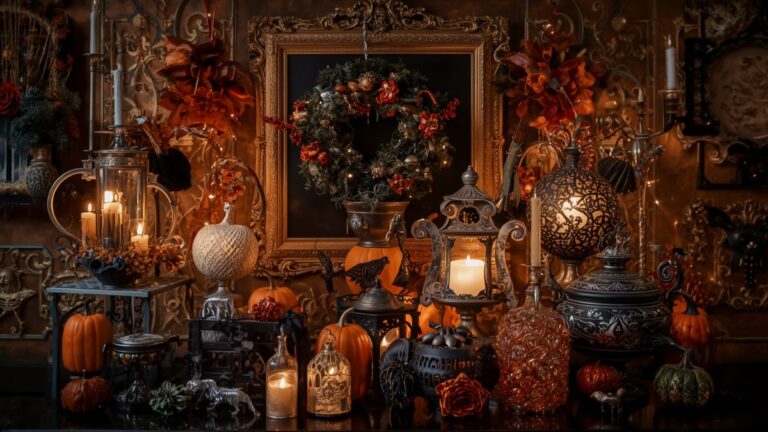
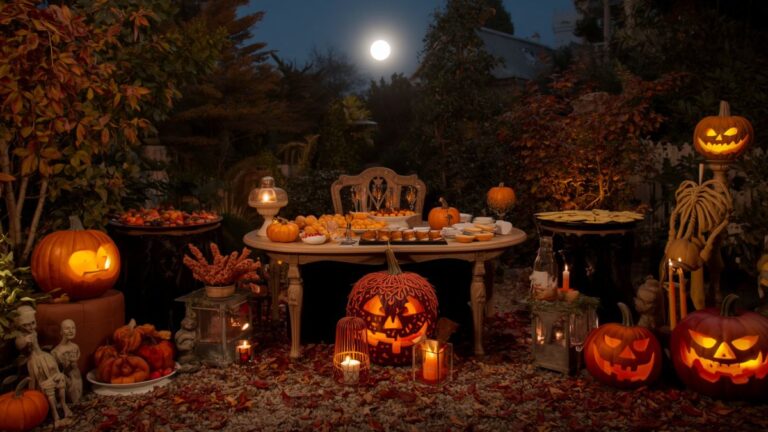
While other households in our neighborhood put out a single pumpkin on the porch and called it a day, ours got the full production — the driveway lined with paper bags glowing from tea lights inside, a fog machine humming somewhere behind the bushes, a playlist that started the second the sun dipped low enough to matter. My mom wasn’t decorating for anyone but herself, really. She just believed, with total conviction, that Halloween traditions were worth taking seriously, even if — especially if — nobody was grading her on it.
I didn’t understand this as a kid. I understood it as embarrassing. I was twelve and desperately wanted our house to look like everyone else’s, not like the one the whole street detoured past on the way to somewhere “better.” It took me a long time — longer than I’d like to admit — to realize that what she was actually doing had very little to do with Halloween at all.
The Ritual Was Never About the Holiday
Here’s what I understand now that I didn’t understand then: my mom wasn’t obsessed with Halloween as a concept. She was obsessed with the permission it gave her. October 1st arrived every year like a starting gun, and for thirty-one days, she got to be a little theatrical, a little indulgent, a little extra — in a way the rest of the calendar didn’t really allow.
She worked a job that had nothing to do with creativity. She raised three kids on a schedule that left almost no margin. And yet every single October, she found two or three hours a week to sit at the kitchen table cutting bats out of black cardstock, or standing on a step stool figuring out how to hang gauze from the porch ceiling so it moved just slightly in the wind. It wasn’t about the finished product. It was about having something — anything — that was entirely, unapologetically hers.
I think about that a lot now that I’m an adult with my own overloaded calendar. How rarely I give myself permission to spend an evening on something that serves no purpose beyond making me happy. How quickly “I don’t have time for that” becomes the default answer to almost everything that isn’t strictly productive.
The Year I Finally Understood
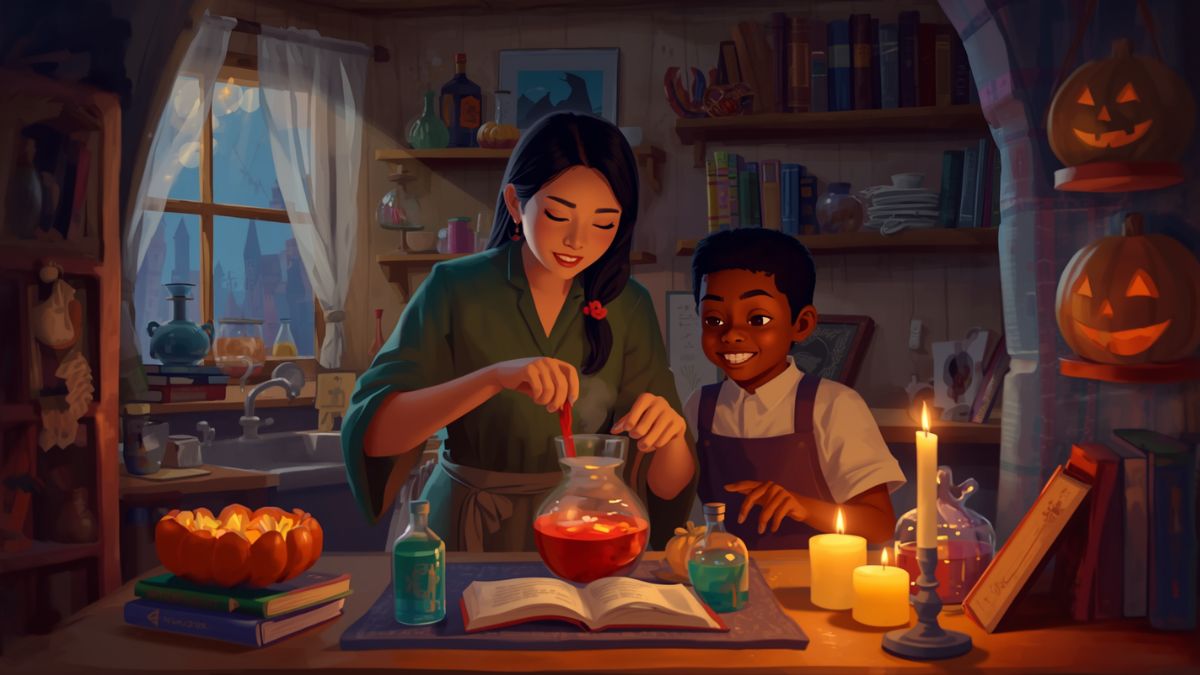
I was twenty-four, living in my first apartment, technically an adult but not remotely convinced of it yet. That October, on a whim I still can’t fully explain, I bought a single flameless pumpkin candle — nothing dramatic, just something small and warm to put on my windowsill — and I lit it every night while I made dinner.
It sounds like nothing. It practically was nothing. But I remember standing in my tiny kitchen, stirring pasta, watching that flicker against the glass, and feeling something settle in my chest that I hadn’t felt in months. I called my mom that night, not really to talk about the candle, but I ended up talking about it anyway. And she laughed — not at me, but with the specific recognition of someone who’d been trying to explain this exact feeling to her family for twenty years and had finally, accidentally, succeeded.
“That’s it,” she said. “That’s the whole thing. It’s not about Halloween. It’s about giving yourself a reason.”
What “Giving Yourself a Reason” Actually Means
I’ve turned that phrase over so many times since. What my mom meant, I think, is that most of us are waiting for permission to enjoy ordinary things — waiting for the “right” occasion, the milestone, the moment that officially justifies slowing down and making something feel special. And most of us are waiting for a permission slip that’s never going to arrive, because life doesn’t hand those out. You have to write your own.
Halloween, for my mom, was never really about ghosts or candy or even the neighborhood kids ringing the doorbell. It was a recurring, built-in reason to practice joy on purpose — a full month, every single year, where she got to decide that an ordinary Tuesday deserved a little atmosphere. That the walk from the car to the front door could feel like something, instead of just the last five minutes before you’re inside doing chores.
I used to think this was a quirky, slightly excessive hobby. Now I think it might be one of the smartest things she ever taught me, and she never once framed it as a lesson.

What I Do Differently Now
I’m not my mother. I don’t have the patience for a full front-yard production, and my apartment doesn’t exactly lend itself to a fog machine. But I’ve kept the part of her ritual that actually mattered — not the scale of it, but the intention.
Every October, I do one small thing that has no purpose other than making the season feel like something. Some years it’s as simple as swapping my usual candle for something seasonal. Other years it’s a single new piece of decor — one year it was a small stoneware dish shaped like a ghost that I now use year-round for jewelry, long after the holiday’s passed, because it turned out to be genuinely useful, not just seasonal.
The specifics change. The principle doesn’t: pick one thing, however small, and let it be a little excessive on purpose. Not because it’s efficient or productive or Instagram-worthy, but because you decided it mattered, and that decision is the whole point.
Why This Matters Beyond Halloween
I think a lot of us — especially in our twenties and thirties, especially while we’re building careers and relationships and whatever version of “adult life” we’re each cobbling together — get very good at deferring joy. We tell ourselves we’ll slow down and enjoy things once the big project is finished, once we’ve hit the next milestone, once things calm down. And things rarely calm down on their own. You have to build the calm-down into the calendar yourself, the same way my mom built a month of small, deliberate joy into hers every single October, no matter how busy that particular year had been.
Halloween just happens to be the holiday that taught me this. For someone else, it might be a Sunday morning ritual, or the way they set the table even when it’s just a weeknight dinner for one, or a candle lit for no particular reason at all. The holiday is almost beside the point. What matters is the decision underneath it — the quiet, private choice to treat an ordinary day like it deserves a little ceremony.
The Things We Inherit Without Noticing
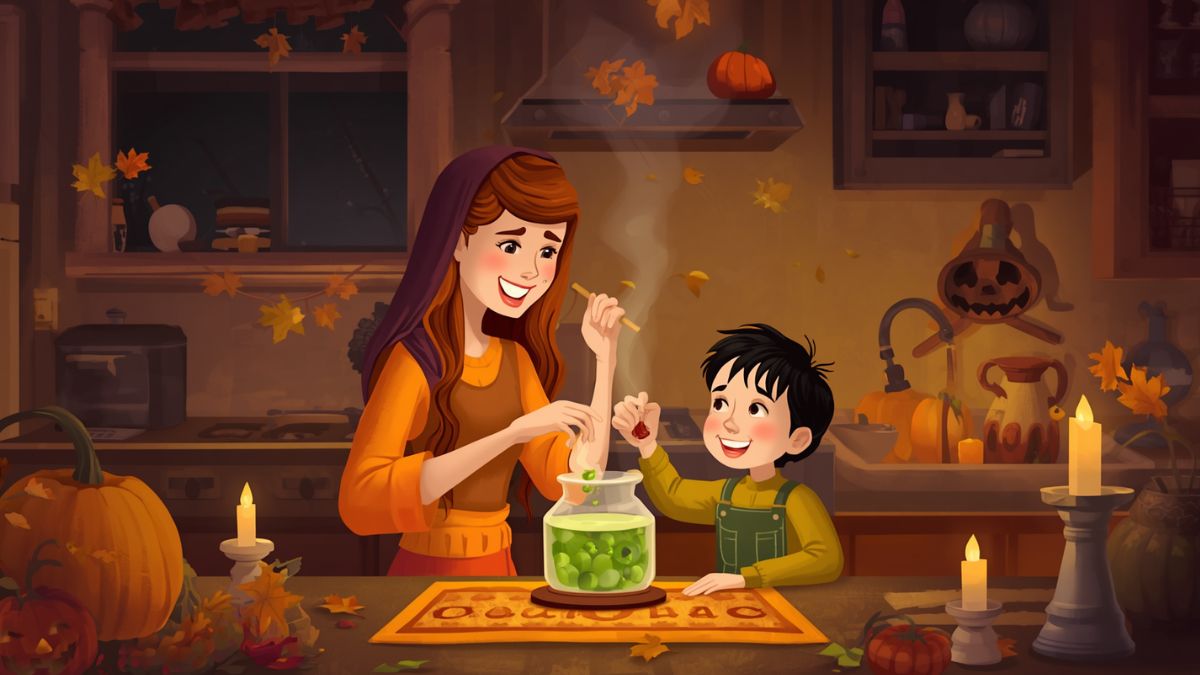
It’s strange, the things we absorb from our parents without ever being formally taught. Nobody sat me down and explained the philosophy behind the porch decorations. I didn’t learn it the way you learn a recipe, with steps written down somewhere I could reference later. I absorbed it the way you absorb most of the important things — by watching someone do it consistently, year after year, until the pattern became part of how I understood the world, whether I wanted it to or not.
I think about this especially now, watching my own friends become parents, wondering what small rituals they’re building without realizing it. The ones their kids won’t be able to name or explain for another twenty years, but will feel the absence of instantly if they’re gone. A specific pancake recipe on Sunday mornings. A song that always plays on the drive to school. A porch that gets a little too dramatic every October, for reasons no one in the family has ever needed to justify out loud.
We tend to think of inheritance as something material — money, jewelry, a house. But I think the more lasting inheritance is usually behavioral. It’s the permission structures we absorb from watching someone else use them. My mom never once told me that joy needed to be earned through productivity, but she also never explicitly told me it didn’t. She just showed me, every October, for over two decades, that a Tuesday could be worth decorating for. Eventually, I didn’t need the explanation. I just knew.
I don’t know if my own kids, someday, will remember a candle on a windowsill the way I remember gauze on a porch ceiling. I don’t know if the specific ritual matters as much as the fact that there was one — something consistent, something a little excessive, something that existed purely because it made someone happy and that was reason enough. I suspect that’s really the whole inheritance: not the decoration itself, but the belief that ordinary days are allowed to be a little extraordinary, if you decide to make them that way.
The Ritual Continues
My mom still goes all-out every October, even now, even with all three of us grown and out of the house. I drove past a few weeks ago and saw her up on that same step stool, hanging gauze from the porch ceiling, completely unbothered by whether anyone would notice or care. And I understood, finally and fully, that she was never doing it for the neighborhood. She was doing it for the same reason I now light a candle in my own kitchen every October: because giving yourself permission to make an ordinary evening feel a little magic is not a small thing. It might, actually, be one of the most important things.
So this year, whatever your version of “the ritual” looks like — a candle, a decoration, a playlist, a single deliberately cozy evening — I hope you give yourself the same permission my mom gave herself, year after year, without ever once asking if it was worth it. It always was.
About the Author