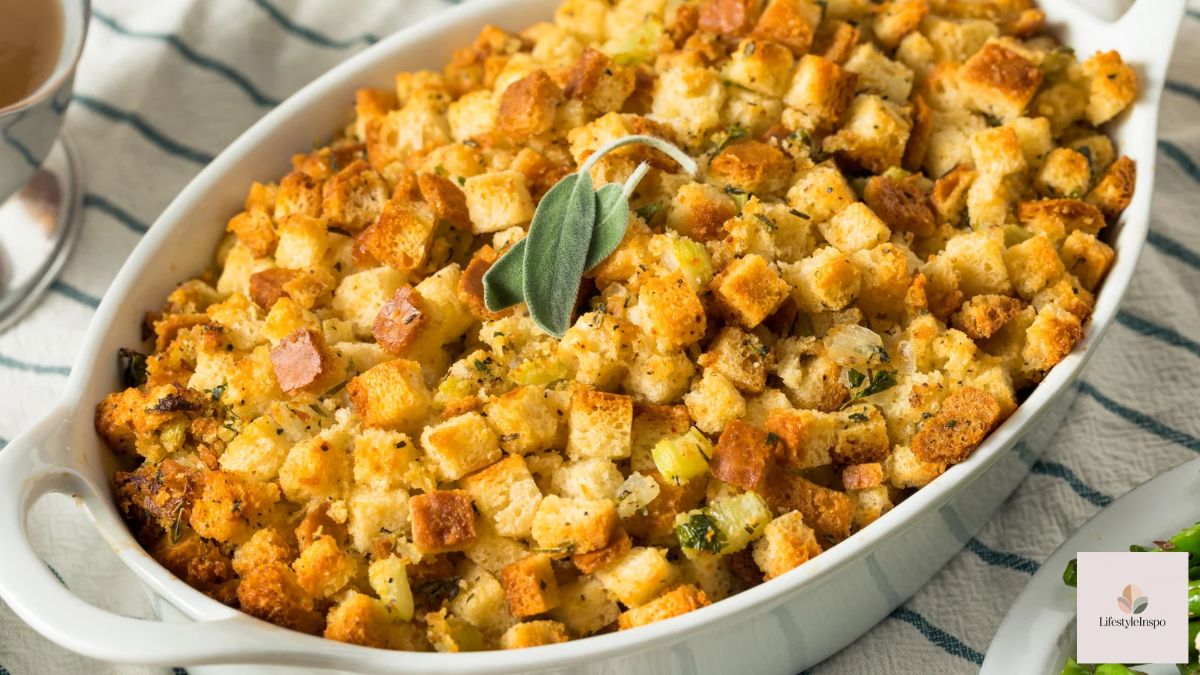
Stuffing vs Dressing: What's the Difference (and Which Should You Make)?
Few Thanksgiving debates are as friendly (and as passionate) as this one: is it stuffing or dressing? Some families say one, some say the other, and some are firmly convinced the other side is wrong. If you’ve ever been confused about which is which, you’re not alone.
Here’s a quick answer, followed by a deeper dive into how each one works, which is safer, which tastes better, and a classic recipe you can make ahead.
The Quick Answer
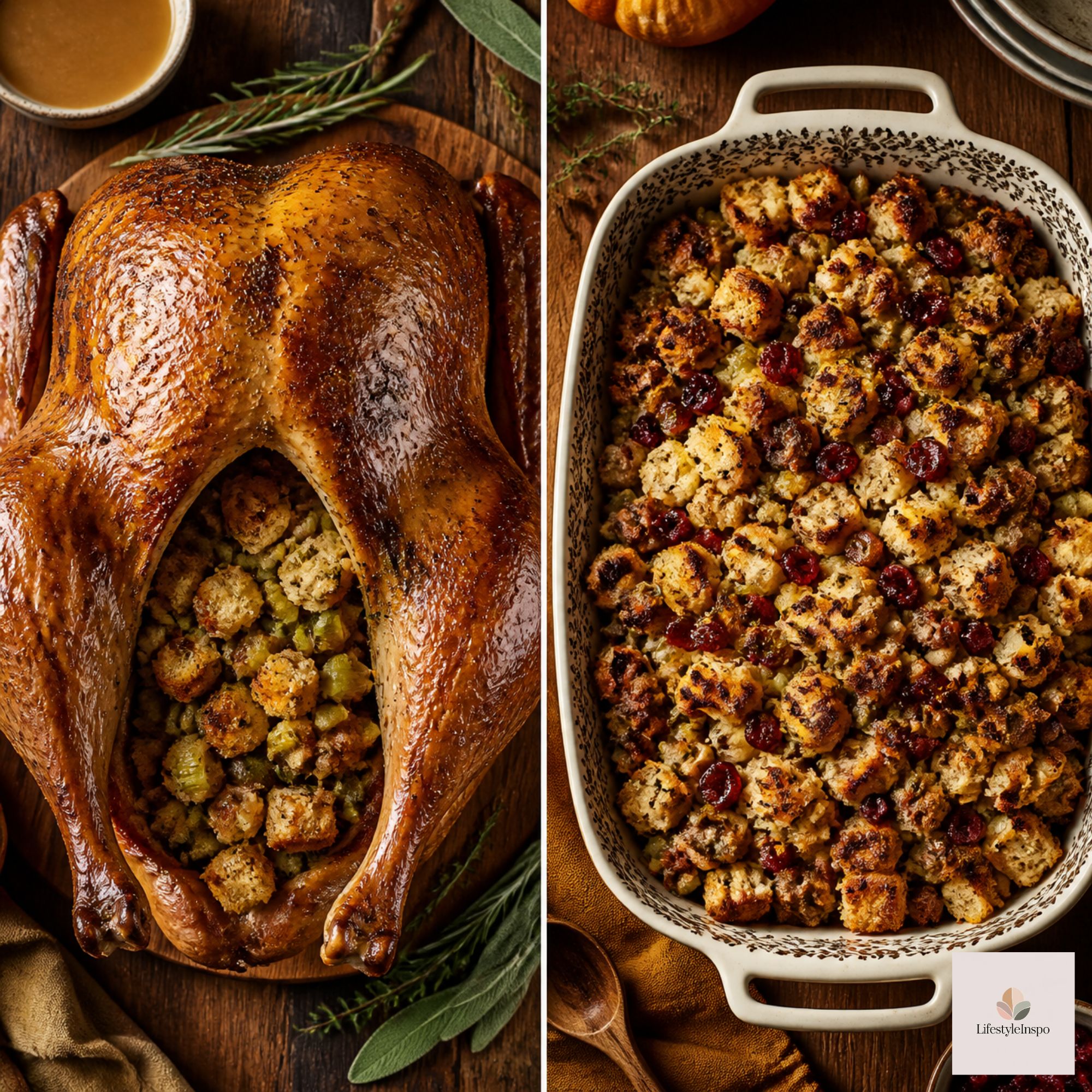
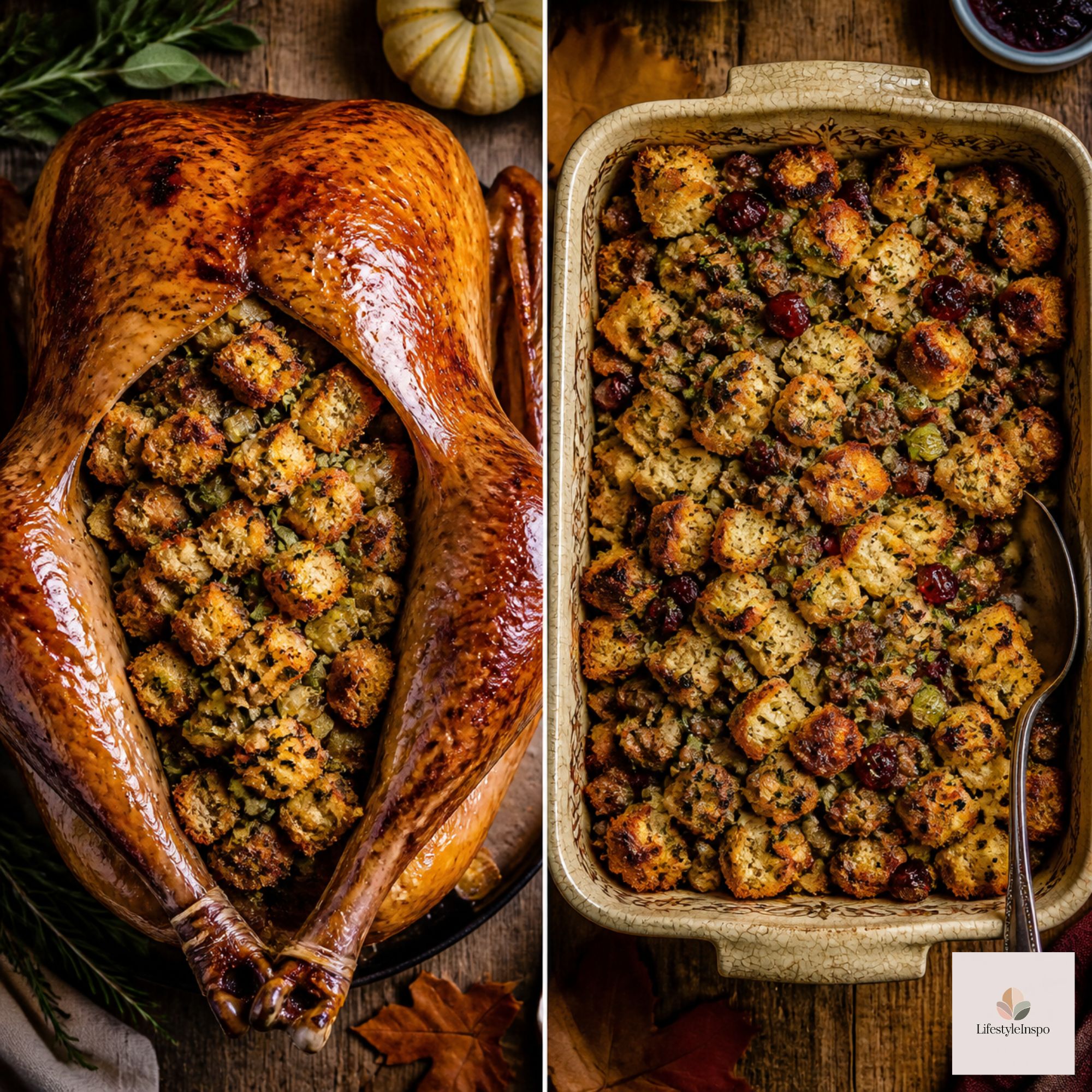
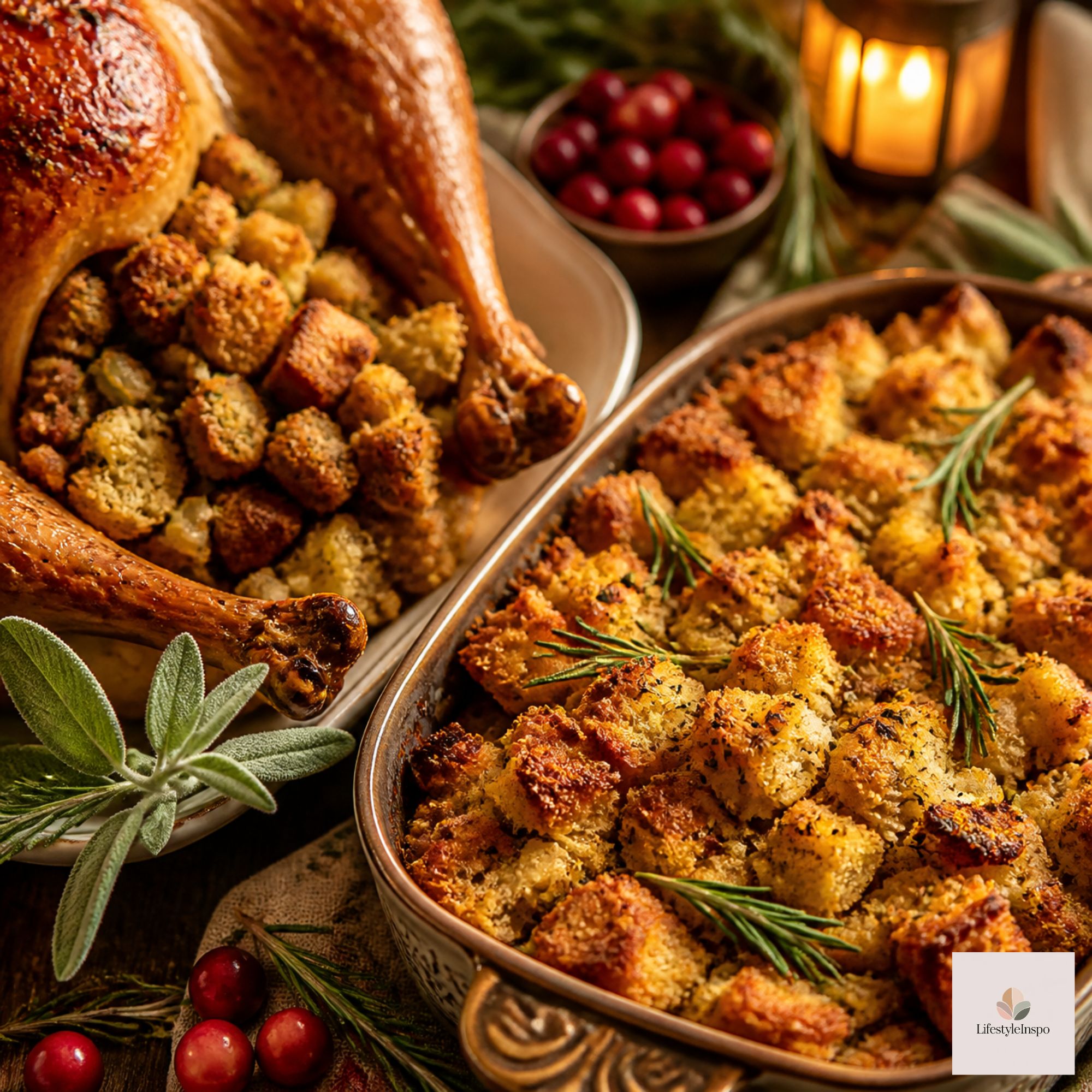
Stuffing is traditionally cooked inside the turkey’s cavity. Dressing is baked in a separate dish.
That’s the technical definition. In practice, the words are often used interchangeably, and regional preference matters most. In the American South, “dressing” is the common term for what’s usually baked in a pan, often made with cornbread. In the North and Midwest, many people say “stuffing” no matter where it’s cooked.
So if someone asks you to bring stuffing, or dressing, you really just need to know: do they want bread, herbs, and savory goodness in a baking dish? Then you’re covered.
Stuffing vs Dressing: Side-by-Side
Stuffing (cooked in the bird)
- Absorbs turkey juices, so it’s rich and savory
- Has a soft, moist, almost pudding-like texture
- Takes longer to cook safely
- Requires reaching 165°F in the center
- Can make turkey cook unevenly
Dressing (baked separately)
- Develops a crisp, golden top and edges
- Easy to control moisture and texture
- Cooks in its own time, so it doesn’t affect turkey timing
- Safer and simpler
- Can be made ahead, and you can make more of it
Which Is Safer?
Dressing wins. When you stuff a turkey, the stuffing has to reach 165°F in the center, the same safe temperature as the meat. But by the time the stuffing gets there, the turkey breast may already be overcooked and dry. Meanwhile, raw poultry juices soak into the bread, so undercooked stuffing can be a food safety risk.
Baking it separately avoids all of that. It’s also much faster to prep and keeps your turkey timing simple.
If you do stuff the bird:
- Stuff loosely right before roasting (never ahead of time)
- Use a thermometer to confirm the center of the stuffing hits 165°F
- Remove the stuffing from the bird right after cooking
Our recommendation: bake it separately, then moisten it with a little turkey drippings or broth.
Which Tastes Better?
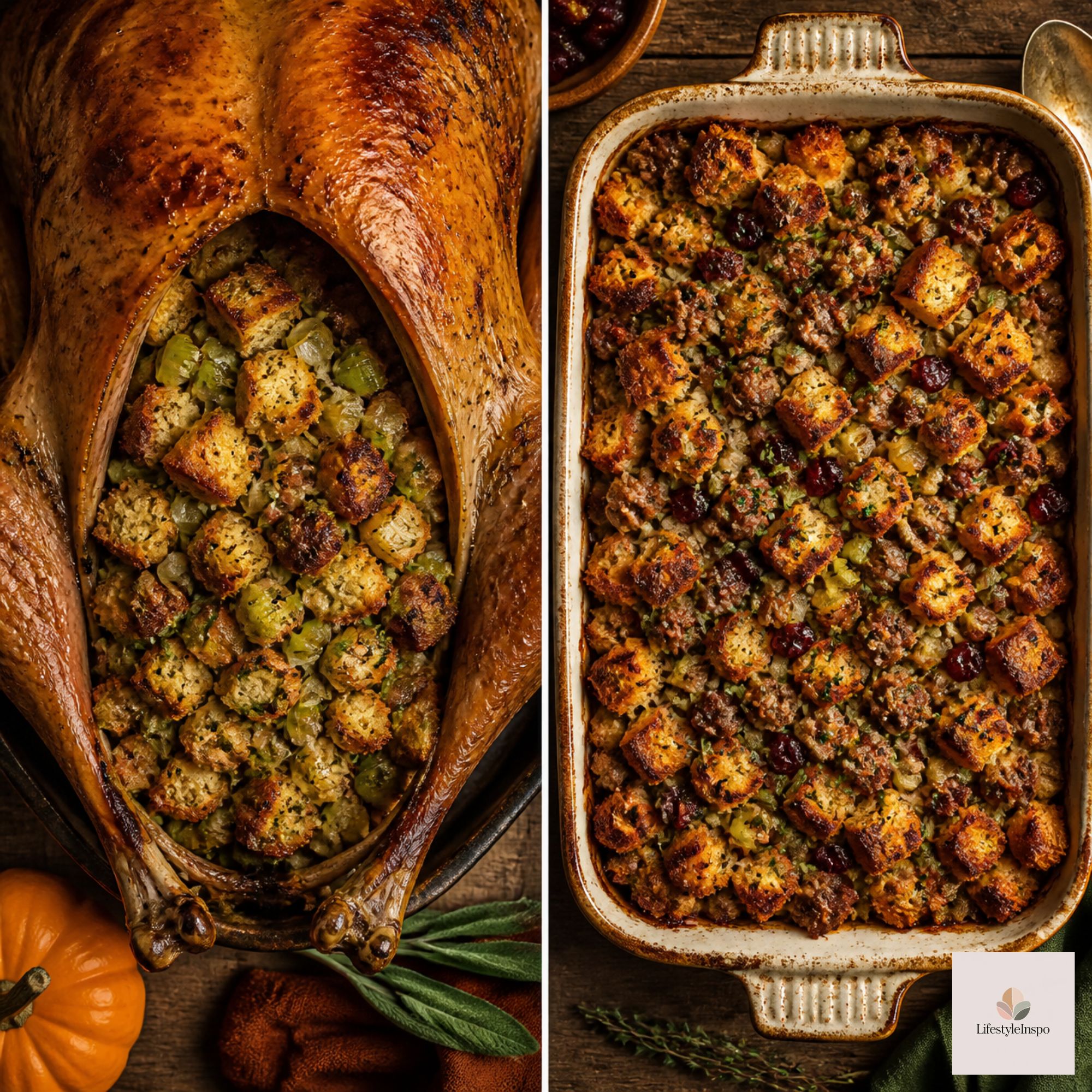
It depends on the texture you prefer.
- Love crunchy, golden edges and a contrast of textures? Choose dressing baked in a pan.
- Love moist, juicy, soft, turkey-flavored bites? Stuffing cooked in the bird has a unique richness.
- Want the best of both? Bake it in a dish and ladle some pan drippings or gravy on top. You’ll get crisp on top and tender in the middle.
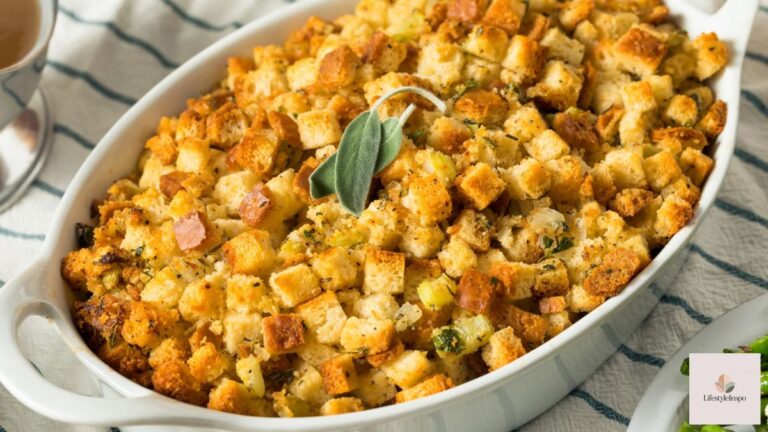
Classic Sage and Sausage Dressing
This recipe is flavorful, comforting, and easy to scale.
Serves 10 to 12:
- 1 pound (about 14 to 16 cups) sturdy bread, cut into ¾-inch cubes (day-old white bread, sourdough, or a mix)
- 1 pound pork sausage (sage or breakfast style)
- 6 tablespoons butter, divided
- 2 cups diced yellow onion (about 1 large)
- 1½ cups diced celery (about 3 stalks)
- 3 cloves garlic, minced
- 2 tablespoons chopped fresh sage (or 2 teaspoons dried)
- 1 tablespoon fresh thyme leaves
- 1 tablespoon chopped fresh parsley
- 1½ teaspoons kosher salt
- ½ teaspoon black pepper
- 2 to 3 cups chicken or turkey broth, warmed
- 2 large eggs, beaten
Step 1: Dry Out the Bread
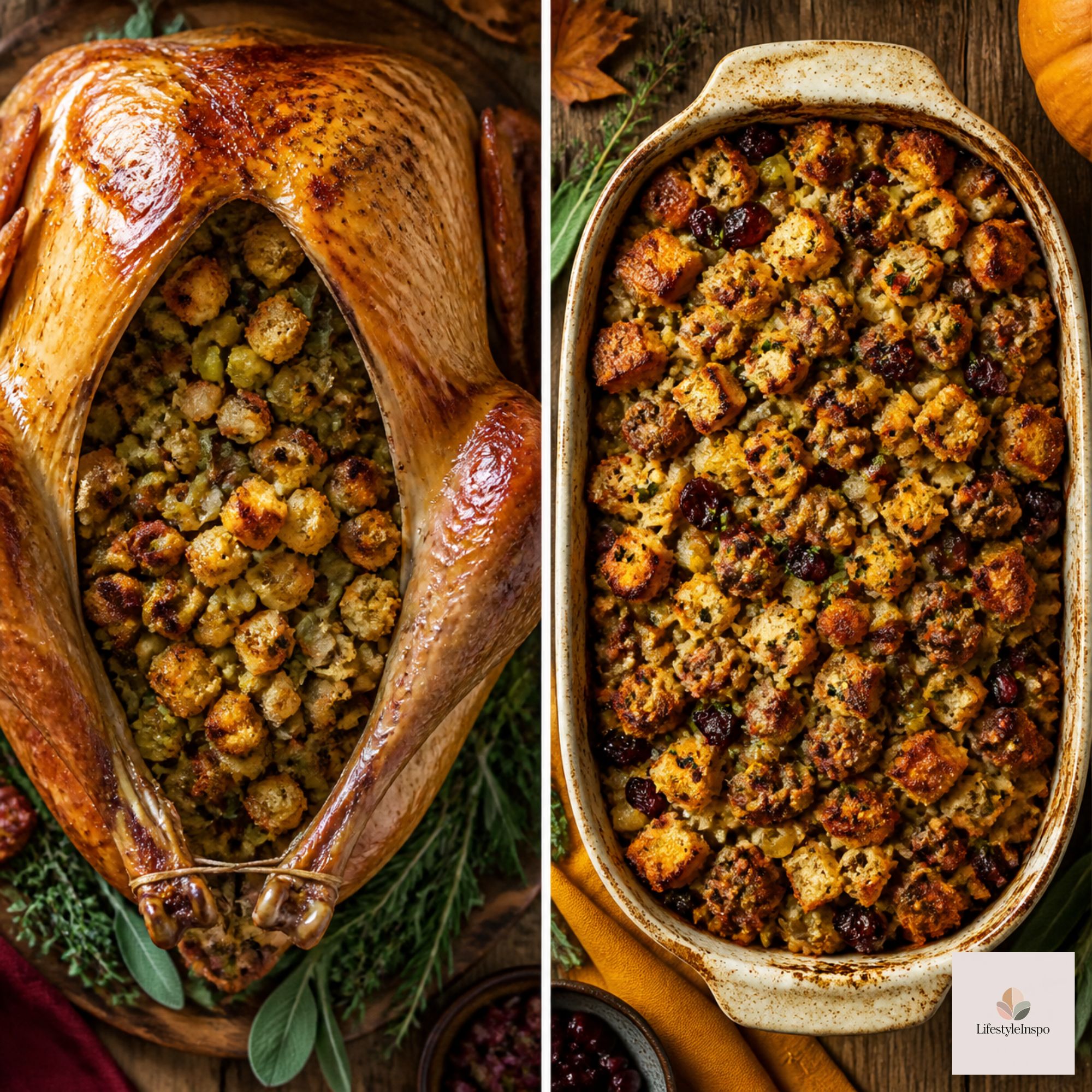
This is the secret to dressing that’s not mushy. Spread your bread cubes on a large baking sheet and bake at 275°F for 30 to 40 minutes, tossing once, until dry and lightly golden. (Or leave them out on the counter overnight.) Dry bread soaks up broth without falling apart.
Step 2: Cook the Sausage
In a large skillet or enameled Dutch oven, cook the sausage over medium heat, breaking it up, until browned and cooked through, about 8 minutes. Transfer to a large bowl using a slotted spoon, leaving the drippings behind.
Step 3: Sauté the Vegetables
Add 4 tablespoons of butter to the pan with the drippings. Add the onion and celery and cook for 8 to 10 minutes, until soft and translucent. Stir in the garlic, sage, thyme, and parsley and cook for 1 minute. Scrape everything into the bowl with the sausage.
Step 4: Combine
Add the bread cubes, salt, and pepper to the bowl. Pour in 2 cups of warm broth and the beaten eggs, tossing gently until the bread is evenly moistened. Add more broth if it looks dry. The mixture should be moist but not soggy. Taste and adjust the seasoning.
Step 5: Bake
Transfer to a buttered 9×13-inch baking dish. Dot the top with the remaining 2 tablespoons of butter. Cover with foil and bake at 350°F for 30 minutes. Remove the foil and bake another 20 to 25 minutes until golden brown and crisp on top.
Step 6: Serve
Let it sit for 5 minutes, then scoop and serve. Pass the gravy for drizzling.
How to Make It Ahead
Dressing is one of the easiest dishes to prep in advance.
- Up to 3 days before: Cube and dry the bread. Store in an airtight bag.
- The day before: Cook the sausage and vegetables. Assemble everything in the baking dish, but keep the broth and eggs separate (store in the fridge).
- Thanksgiving Day: Pour on the broth and eggs, then bake as directed.
- Fully baked ahead? Bake it, cool, cover, and refrigerate. Reheat covered at 325°F for 25 to 30 minutes, uncovering at the end to crisp the top. Add a splash of broth if it seems dry.
Store prepped components in glass food storage containers for easy stacking in a crowded fridge.
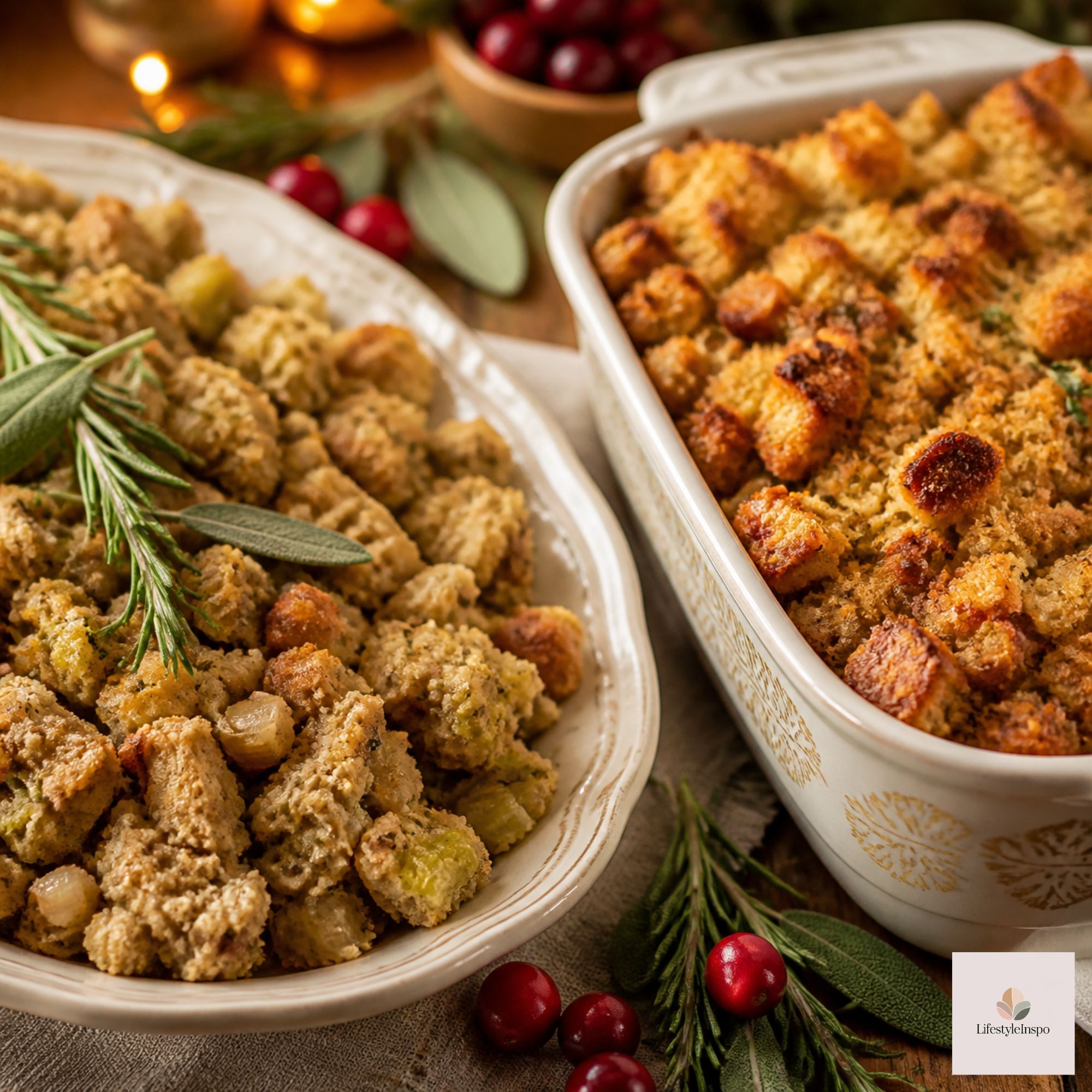
How to Keep Dressing Moist
- Use enough broth. Dry dressing is usually under-liquided.
- Cover for the first half of baking. Foil traps steam.
- Add eggs. They help bind and give a custardy texture.
- Don’t over-bake. Pull it out when the top is golden and the center is hot.
- Drizzle with drippings. A few spoonfuls of turkey drippings add flavor and moisture.
How to Make It Crispy
- Uncover during the last 20 minutes.
- Use a wide, shallow dish. More surface area means more crisp.
- Dot with butter before baking.
- Broil for 1 to 2 minutes at the end, watching closely.
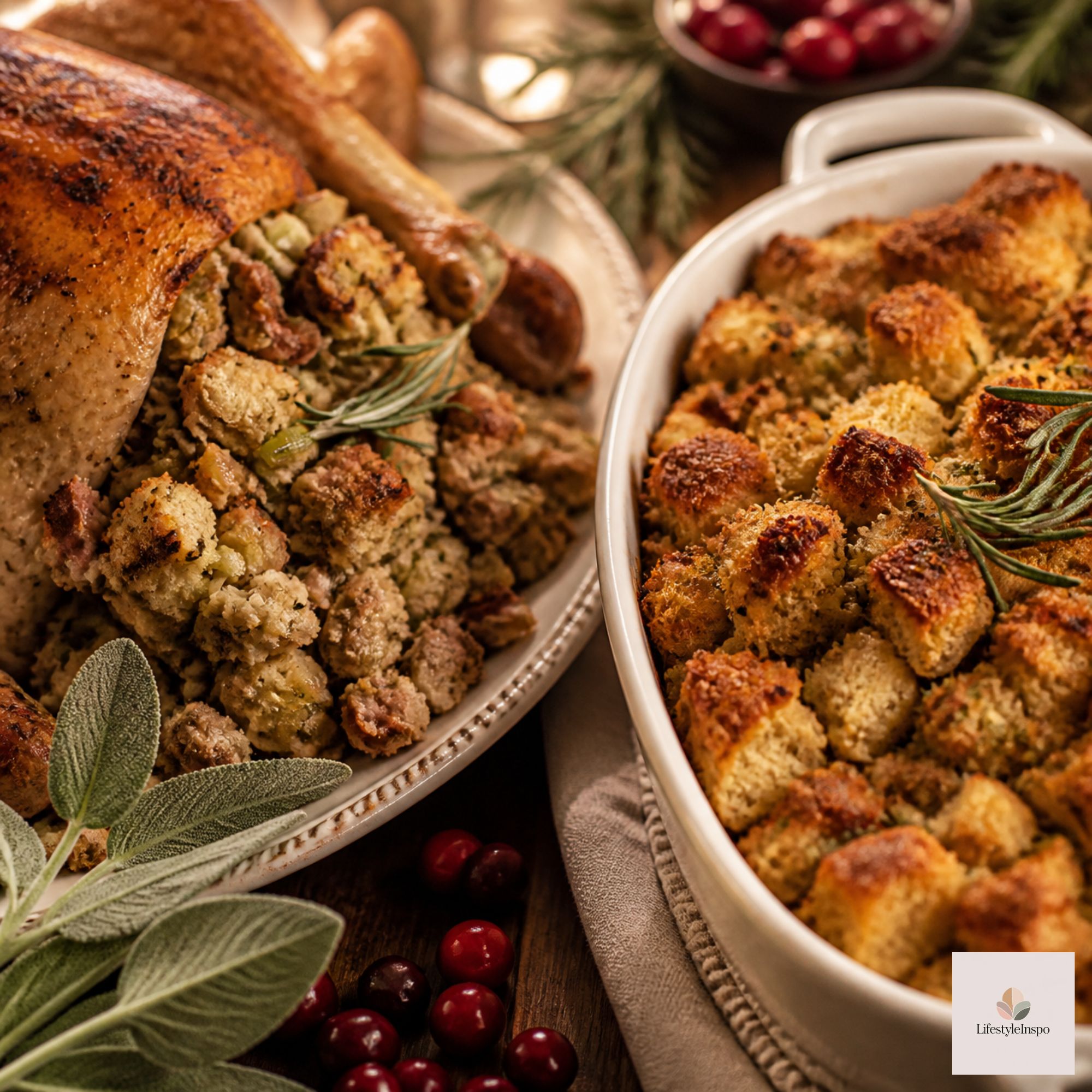
Flavor Variations
- Cornbread dressing. Use crumbled cornbread in place of white bread, popular in the South.
- Apple and cranberry. Add diced apples and dried cranberries for sweetness.
- Mushroom and leek. A savory, earthy vegetarian option. Use vegetable broth.
- Oyster dressing. A classic in some regions. Add shucked oysters and their liquor.
- Chestnut and herb. Add roasted, chopped chestnuts for a nutty flavor.
- Italian sausage and fennel. Swap the sage sausage for Italian sausage with a pinch of fennel seed.
- Gluten-free. Use gluten-free bread and follow the same process.
- Vegetarian. Skip the sausage, use more mushrooms, and swap in vegetable broth.
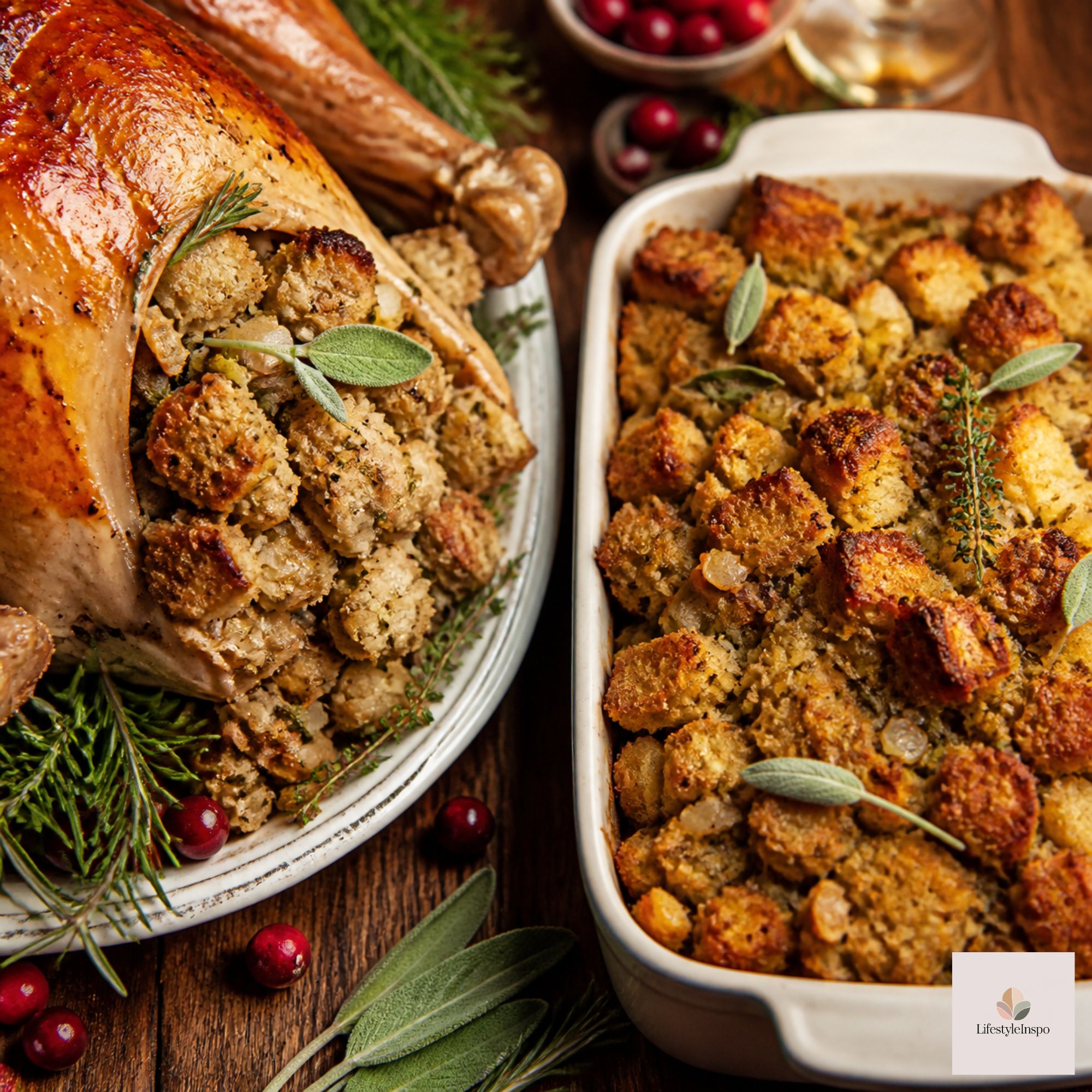
Kitchen Tools That Help
- A big baking sheet for toasting bread
- A Dutch oven or large skillet for cooking the aromatics
- A big mixing bowl for tossing gently
- A ceramic or glass baking dish, which holds heat well and looks pretty on the table. (For a small batch, a deep ceramic pie dish works too.)
- A roasting pan with rack, which lets you tuck a small dish of dressing underneath the rack to catch the turkey drippings if you like
If you’re building a bigger Thanksgiving library of recipes, a Thanksgiving cookbook is a smart investment for menu planning and new ideas.
Frequently Asked Questions
What’s the difference between stuffing and dressing? Stuffing is cooked inside the turkey; dressing is baked in a separate dish. Many people use the words interchangeably.
Can I cook stuffing inside the turkey? You can, but it must reach 165°F in the center. Baking it separately is safer and usually tastes better.
What bread is best for dressing? Sturdy bread like sourdough, French bread, or a dense white sandwich loaf, dried well before use.
How much dressing per person? Plan about ¾ to 1 cup per person, or more if it’s a favorite.
Can I freeze dressing? Yes. Freeze baked dressing in an airtight container for up to 3 months. Thaw overnight and reheat covered.
Why is my dressing soggy? The bread wasn’t dried enough, or there was too much liquid. Toast the bread and add broth gradually.
Why is my dressing dry? You may need more broth, or it baked too long uncovered.
Final Thoughts
Whether you call it stuffing, dressing, or “that thing I’m eating three plates of,” this dish is the savory soul of Thanksgiving. Bake it in a dish for safety and crisp edges, dry your bread, use plenty of herbs, and keep it moist with broth. And if someone insists on the name? Let them. Just pass the pan.
About the Author