
How to Transition Christmas Decor to Winter Decor (Easy Steps)
There’s a moment every year, usually around the second of January, when you stand in your living room and feel two things at once. One part of you is ready to reclaim the space. The other part looks at the bare mantel and the empty corner where the tree stood and feels a small pang. The house suddenly looks cold, and January is just getting started.
Here’s a gentle idea: you don’t have to go from full Christmas to bare walls overnight. With a few simple choices, you can keep the warmth, glow, and coziness of the season, and simply shift it into something that lasts through the winter.
This guide on how to transition Christmas decor to winter decor shows you what to pack away, what to keep, and how to refresh your spaces so your home stays inviting until spring. It’s a softer, smarter way to end the holidays.
Why a Gradual Transition Makes Sense
Taking everything down at once can feel jarring. Winter is long, dark, and cold, and the months after Christmas are when many people need coziness the most.
A gradual transition has several benefits.
- It eases the letdown. Your home doesn’t feel suddenly empty.
- It keeps the warmth. Lights, textures, and candles are just as welcome in January.
- It saves money. You reuse what you already own.
- It spreads the work. You’re not packing everything in one exhausting day.
- It feels intentional. Your home looks styled for the season, not stuck in the past.
Think of it as moving from “Christmas” to “cozy winter,” keeping the best parts of both.
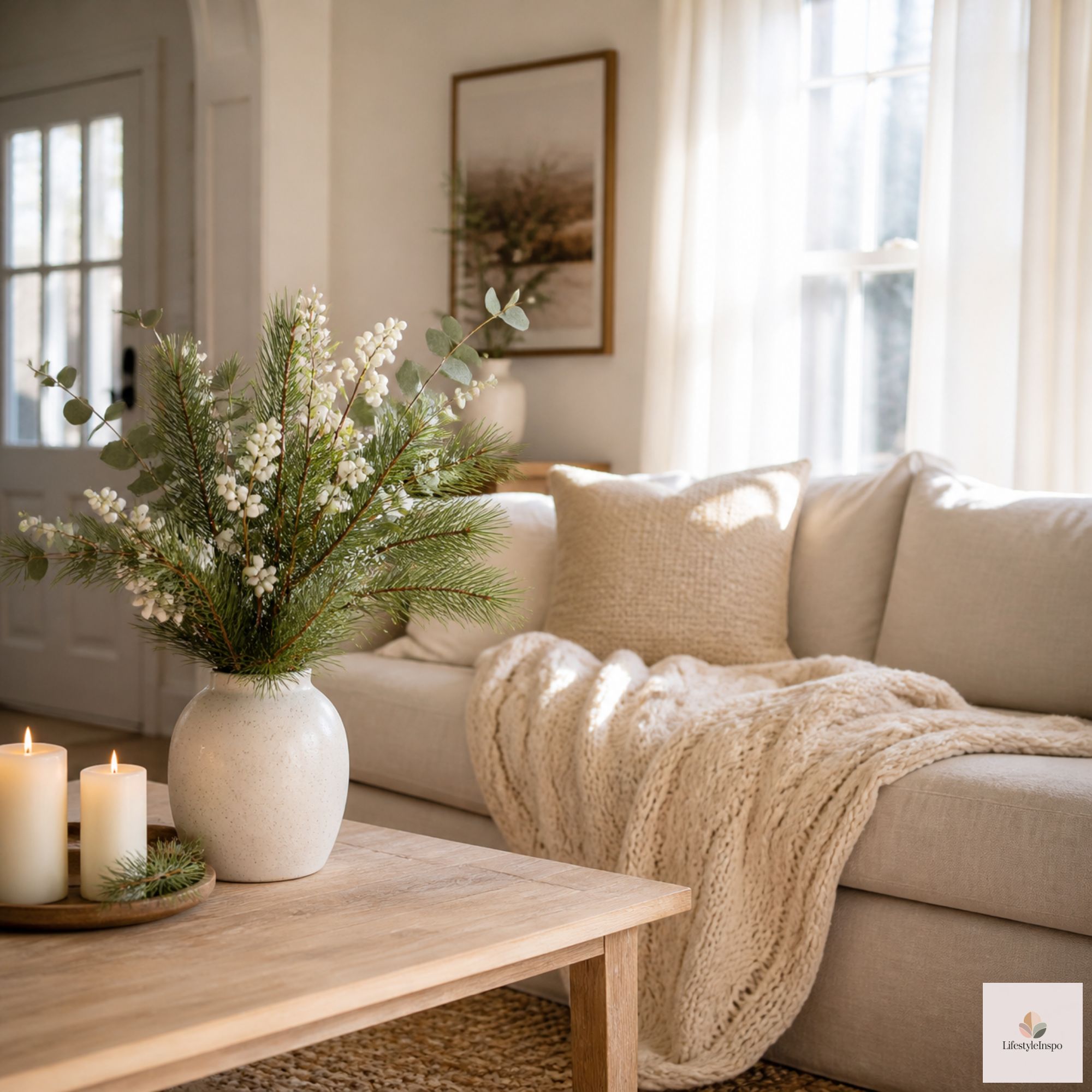
Step 1: Decide What Goes and What Stays
Start by sorting your decor into two groups.
Clearly Christmas (Pack It Away)
- The tree and ornaments
- Stockings
- Red and green accents
- Santa, reindeer, and overtly holiday figures
- Advent calendars and countdown decor
- Wrapping paper, bows, and gift tags
- “Merry Christmas” signs and banners
Winter-Friendly (Keep It Up)
- White lights and fairy lights
- Candles and lanterns
- Greenery and pinecones
- Neutral textures, like knits, wool, and faux fur
- Wood, burlap, and natural accents
- Snowflakes and winter scenes
- Plush animals and woodland figures
- Cozy blankets and pillows
A good test is this: does it say “Christmas,” or does it say “winter”? If it’s winter, it stays.
Step 2: Keep the Lights
Light is the single most important thing to keep. In January, the days are short and the evenings long, and a soft glow makes a house feel warm.
A strand of warm white fairy lights is perfect for this. Keep it on a window, a shelf, a mantel, or in a glass jar, and it will carry the cozy feeling right through winter. Use a timer so it turns on at dusk and off at bedtime.
→ Shop it: Warm white fairy string lights
Light ideas for winter:
- Line a windowsill with lights and candles
- Place lights in a large glass jar or hurricane
- Wrap a branch in lights, and put it in a vase
- Tuck a strand along a bookshelf
Warm white lights read as “winter” rather than “Christmas,” especially when you remove the red and green accents.

Step 3: Keep the Candlelight
Candles aren’t just for Christmas. They’re a perfect winter companion, and they bring the same flicker and glow.
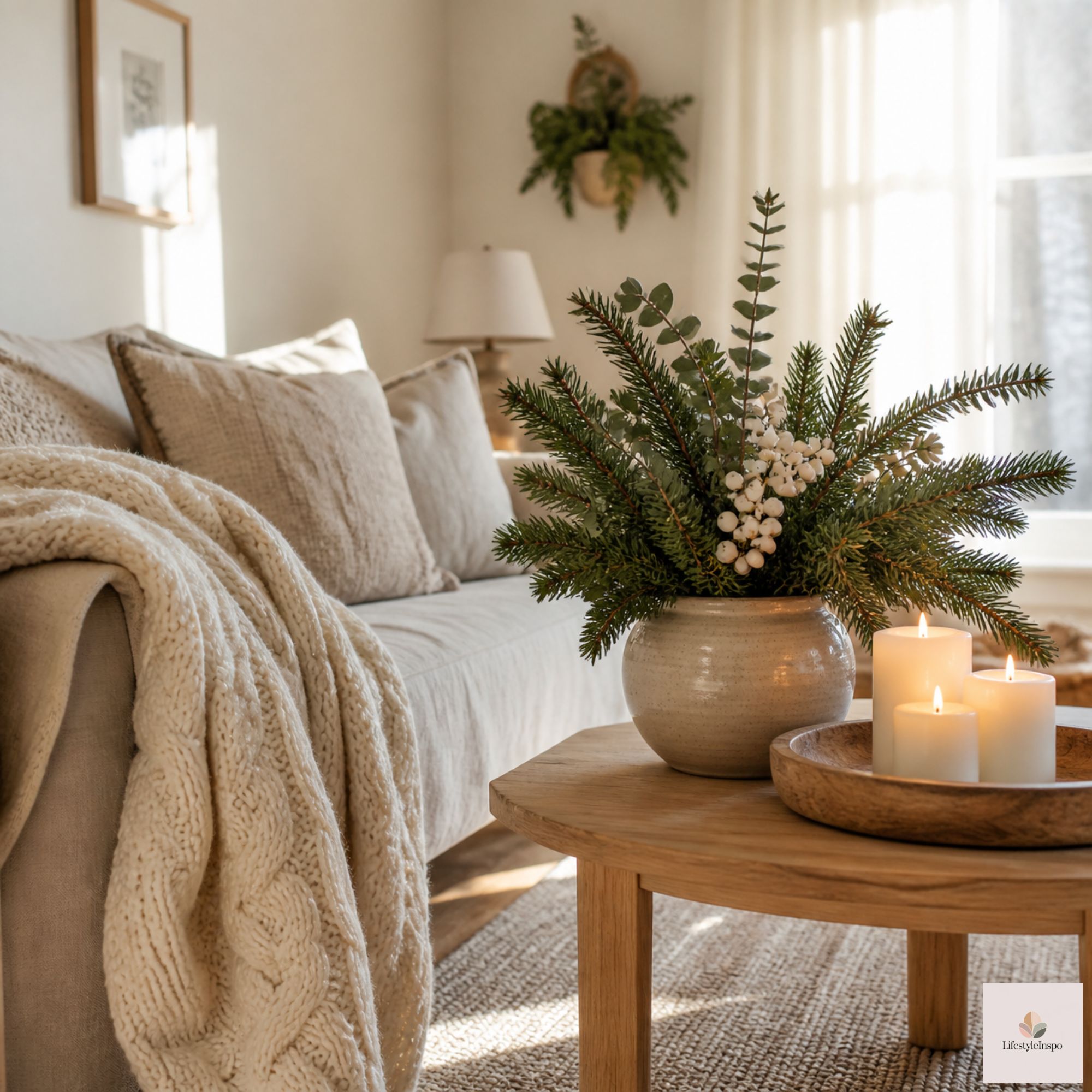
Flameless LED candles are great for keeping a cozy atmosphere without the worry of open flames, especially on shelves, mantels, and windowsills. Group them on a tray in neutral tones, and they look as good in January as they did in December.
→ Shop it: Flameless LED candles
Choose white, cream, or natural colors, and avoid anything that reads as overtly holiday, like red or green candles with seasonal patterns.
Step 4: Keep (and Re-Style) the Greenery
Greenery is a wonderful bridge between seasons. It brings freshness, texture, and a connection to nature, which is just what winter needs.
A Christmas garland can stay on a mantel or shelf, if you strip off the obvious holiday accents. Remove red ribbon, ornaments, and bows, and add natural touches, like pinecones, white berries, or a simple neutral ribbon. Suddenly, it’s a winter garland.
→ Shop it: Christmas garland pre-lit for mantel
Ways to re-style greenery:
- Replace red bows with cream or burlap ribbon
- Add white berries or silver-dusted branches
- Tuck in pinecones and dried elements
- Remove ornaments, and leave the greenery bare and natural
If your garland is pre-lit, you can keep the lights glowing, since the warm light works beautifully in winter.

Step 5: Re-Style the Wreath
A wreath doesn’t have to come down just because the holiday is over. With a quick change, it becomes a winter wreath.
Take your Christmas wreath and remove the obviously holiday elements, such as red bows, ornaments, and “Merry Christmas” accents. Replace the bow with a simple cream or burlap ribbon, and leave the greenery as is. It’s a quick way to extend the life of the wreath into January and February.
→ Shop it: Christmas wreath front door
Winter wreath ideas:
- A wreath with white berries and a neutral bow
- A simple, bare evergreen wreath
- A wreath with pinecones and twigs
- A wreath with a “Hello Winter” tag
If your wreath still looks too festive, it’s fine to store it and bring out a different one.
Step 6: Keep a Few Cozy Characters
Plush animals and woodland figures are perfect for the winter months.
A plush gnome can stay on a shelf or windowsill, if you swap its red hat for something neutral, or choose a gray, cream, or plaid one that doesn’t scream “Christmas.” Gnomes are rooted in cold-weather Nordic folklore, so they fit right in during winter.
→ Shop it: Christmas gnomes plush decor
Other winter-friendly characters include:
- Woodland animals, like deer, owls, and foxes
- Snowmen (without Christmas accessories)
- Penguins and polar bears
- Simple wooden figures
Group them on a shelf or a table, and add a candle and a bit of greenery for a cozy winter vignette.
Step 7: Add Winter Textures
Texture is the secret to a cozy winter home. With the Christmas decor gone, textiles take center stage.
- Chunky knit blankets in cream, gray, or oatmeal
- Faux fur throws for softness
- Wool or flannel pillows
- A cozy rug underfoot
- Linen or velvet in muted tones
- Heavier curtains for warmth
Choose neutral or cool tones, like cream, gray, blue, and soft green, and avoid red and green combos that suggest Christmas.

Step 8: Refresh Your Color Palette
A change of color is the clearest signal that the season has shifted.
Winter Palettes to Try
Snowy Neutrals: white, cream, and soft gray with natural wood.
Cool Blues: icy blue, silver, and white for a crisp, wintry look.
Cozy Woodland: forest green, brown, cream, and plaid.
Soft and Warm: oatmeal, camel, and soft gold with ivory.
Pick one, and gradually introduce it through pillows, throws, candles, and small accents.
Step 9: Add a Fresh Note
Finish the transition with a little something new. A small addition can make the room feel fresh, not leftover.
- Fresh flowers or branches in a vase, such as eucalyptus or evergreen
- A potted plant to bring life indoors
- A bowl of citrus, like lemons and oranges, for brightness
- A new scent, like eucalyptus, cedar, or lavender
- A piece of art or a framed print
These touches signal a new season, and they bring a little energy to a space that might otherwise feel flat.

Step 10: Pack the Rest With Care
For everything you do take down, pack it carefully so next year’s setup is easy.
- Wrap lights around cardboard to prevent tangles.
- Store ornaments in divided boxes.
- Remove batteries from candles and battery-powered lights.
- Label every bin, so you know what’s inside.
- Store in a cool, dry place.
- Take photos of your display for next year.
A few extra minutes now save you a lot of time later.
Room-by-Room Transition Ideas
Living Room
Take down the tree, keep the lights, and add a cozy throw and a few candles.
Mantel
Remove stockings and holiday accents, and keep the garland with neutral touches.
Entryway
Swap the red bow for a neutral ribbon, and keep the wreath.
Dining Room
Replace the holiday runner with a neutral linen one, and keep a simple candle centerpiece.
Bedroom
Keep the string lights, add a warm blanket, and bring in a fresh scent.
Kitchen
Remove holiday towels, and keep a bowl of citrus and a sprig of greenery.

When to Take Everything Down
There’s no right date. Many people take down Christmas decor between December 26th and early January, but there’s no rule against waiting a little longer.
- If you have a real tree, take it down before it dries out, since a dry tree is a fire hazard.
- If you have a real wreath or greenery, replace it when it becomes brittle.
- If your decor still makes you happy, it’s okay to enjoy it a bit longer, as long as it’s safe.
Ultimately, take it down when you’re ready, and be gentle with yourself.
Transition Mistakes to Avoid
- Packing everything away at once. Keep a few cozy items for warmth.
- Leaving obviously Christmas pieces up too long. Red bows and Santa figures can feel out of place by February.
- Forgetting about light. Winter needs a glow.
- Skipping the cleaning. Dust and wipe before you store.
- Storing wet or dirty items. Make sure everything is dry and clean.
- Not leaving a spot for new decor. Give yourself room to refresh.

Winter Decor After Christmas FAQ
What Christmas decorations can I leave up in January?
White lights, candles, greenery, pinecones, and neutral textures are all good. Remove obviously holiday items like stockings, Santa figures, and red-and-green accents.
How do I make my home cozy after Christmas?
Keep warm lighting, add chunky blankets, and bring in a new scent. A few candles and some fresh greenery go a long way.
Can I keep my Christmas tree up for winter?
A tree is clearly a Christmas symbol, but some people leave an artificial tree up with only white lights as a winter tree. If you do, remove the red and green decor and use neutral tones.
When should I take down my Christmas decorations?
Many people choose New Year’s Day or Epiphany on January 6th, but there’s no rule. Take down real trees and fresh greenery before they dry out.
Final Thoughts
The end of Christmas doesn’t have to mean the end of coziness. With a few warm lights, a handful of candles, a bit of greenery, and some soft textures, you can carry the glow right through winter.
Be gentle with the transition, keep what comforts you, and make room for something fresh. Save this guide for January, or share it with a friend who’s dreading a bare, empty living room.
About the Author