How to Thaw a Turkey Safely (Plus a Timing Chart and Last-Minute Fixes)
Here’s a Thanksgiving scenario we’ve all either lived or dreaded: it’s Wednesday night, you open the freezer, and the turkey is still a rock. Rock-solid. A frozen cannonball you’re supposed to serve to eight people tomorrow.
Thawing a turkey isn’t glamorous, but it’s one of the most important steps in the whole meal. Do it right and your bird cooks evenly and safely. Do it wrong and you risk uneven cooking at best, foodborne illness at worst. The good news is that it’s simple once you know the rules, and there’s a safe backup plan even if you’re running late.
Let’s walk through the safe thawing methods, how much time you need, and what to do in a pinch.
Why Thawing Matters
A turkey that’s still partly frozen in the center cooks unevenly. The outside can reach a safe temperature while the inside lingers in the danger zone. Thawing correctly also affects texture and seasoning. If you plan to brine or dry brine, the bird has to be fully thawed so the salt can absorb.
The key food safety concept is the danger zone: 40°F to 140°F. Bacteria multiply quickly in that range. A turkey left out on the counter for hours spends far too long there, which is why leaving it on the counter is never an option.
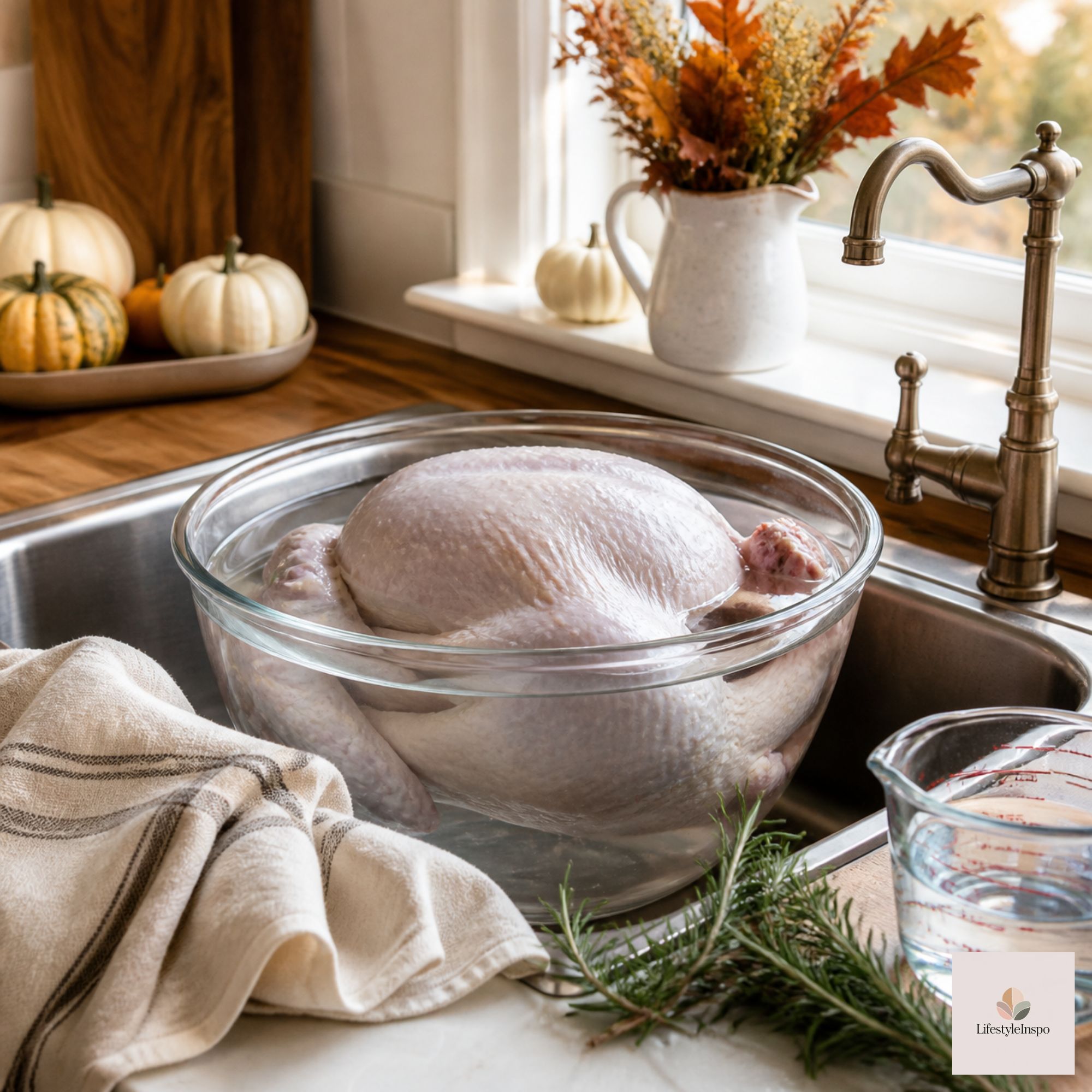
Three Safe Ways to Thaw a Turkey
There are three safe methods: in the refrigerator, in cold water, and in the microwave (only for small pieces). Here’s how each one works.
Method 1: Thaw in the Refrigerator (Best Method)
This is the safest and easiest approach. It just needs time.
How to do it:
- Leave the turkey in its original, unopened wrapper.
- Place it breast-side up on a rimmed baking sheet or in a large pan to catch any drips.
- Set it on the bottom shelf of the fridge so juices can’t drip onto other foods.
- Keep the fridge at 40°F or below.
- Wait. Allow about 24 hours for every 4 to 5 pounds.
Refrigerator thawing chart:
- 4 to 12 pounds: 1 to 3 days
- 12 to 16 pounds: 3 to 4 days
- 16 to 20 pounds: 4 to 5 days
- 20 to 24 pounds: 5 to 6 days
A turkey thawed in the fridge can safely stay there for 1 to 2 extra days before you cook it, which gives you a nice buffer. Build in that extra day, because turkeys in the middle of a packed holiday fridge often take longer than you’d expect.
Pro tip: Mark your calendar. For Thanksgiving on a Thursday, a 16-pound turkey should go into the fridge by the Sunday before, or even Saturday for safety.
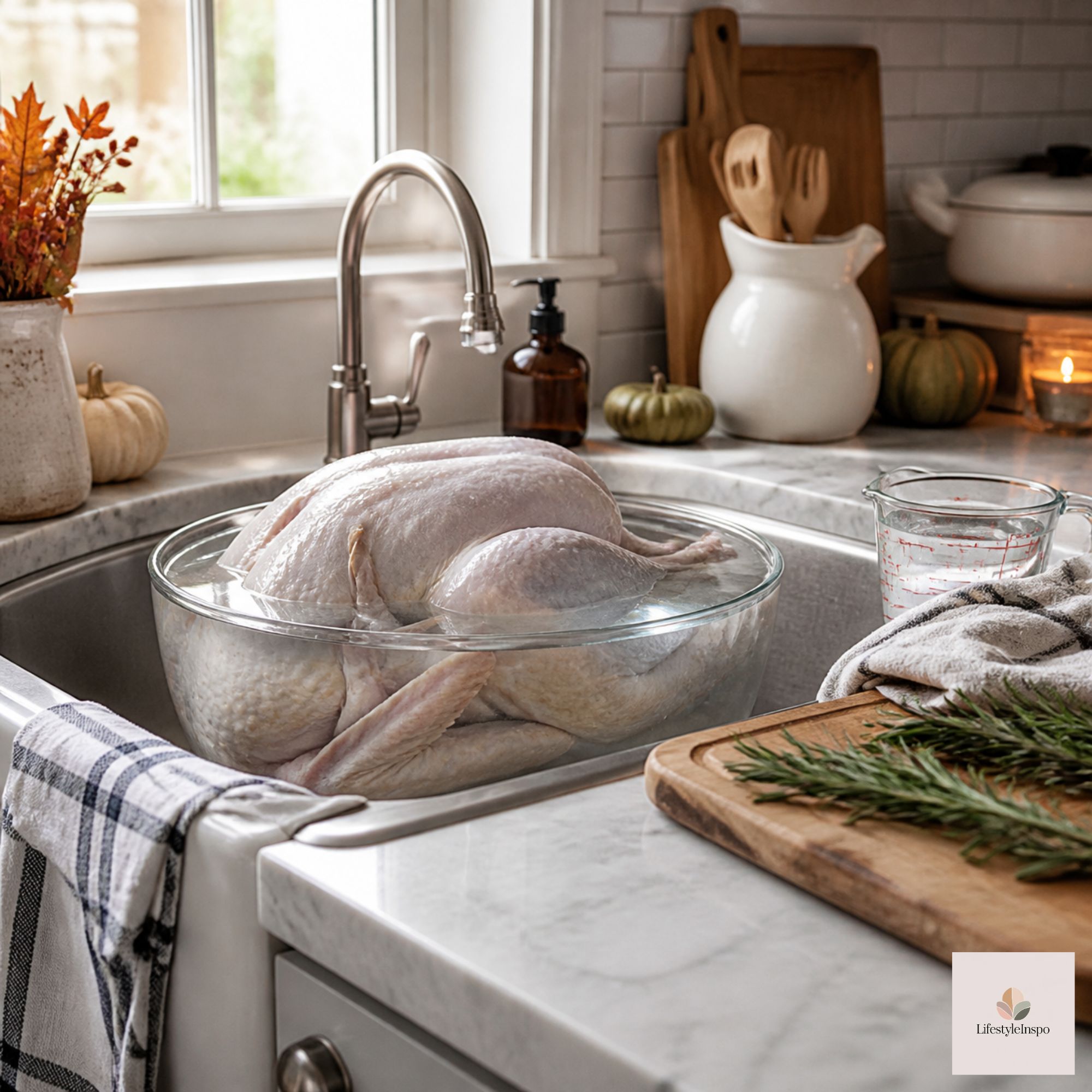
Method 2: Thaw in Cold Water (Faster, But Needs Attention)
Short on time? Cold water thaws a turkey much faster, but it takes active effort.
How to do it:
- Keep the turkey in its original, leak-proof packaging. If the wrapper is torn, put it in a sealed bag.
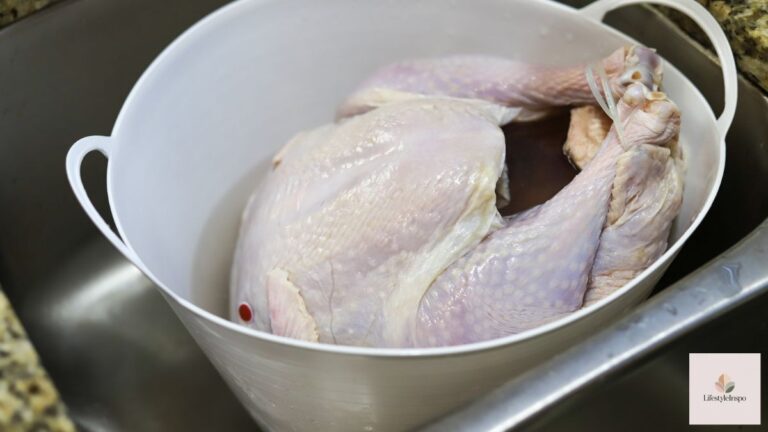
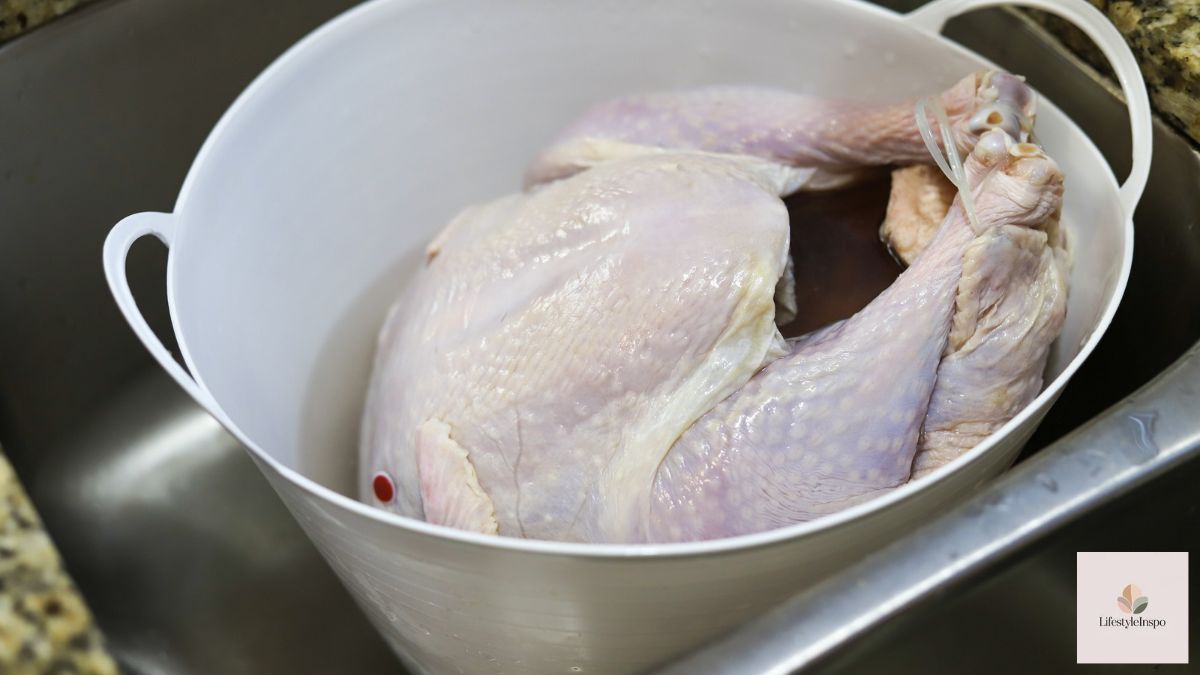
- Submerge it in a clean sink or large cooler filled with cold tap water. (Not warm or hot water!)
- Change the water every 30 minutes so it stays cold.
- Allow roughly 30 minutes per pound.
Cold water thawing chart:
- 8 to 12 pounds: 4 to 6 hours
- 12 to 16 pounds: 6 to 8 hours
- 16 to 20 pounds: 8 to 10 hours
- 20 to 24 pounds: 10 to 12 hours
Important: A turkey thawed in cold water must be cooked right away. Don’t put it back in the fridge for later. Also, clean and sanitize the sink and surrounding surfaces afterward, since raw poultry juices can spread bacteria.
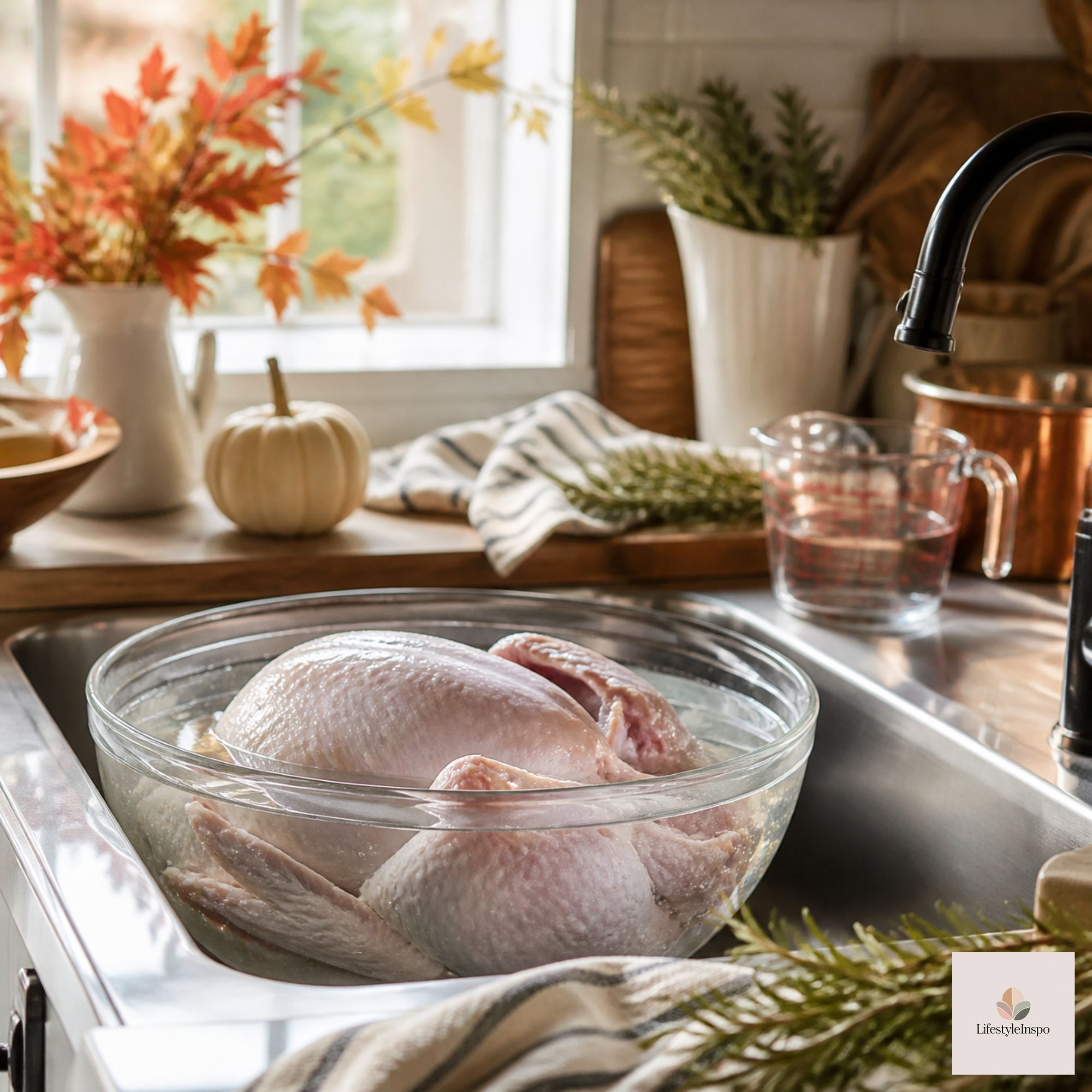
Method 3: Microwave (Only for Small Cuts)
A whole turkey won’t fit in a microwave, but a small turkey breast or portion might. Follow your microwave’s defrost instructions, and cook the turkey immediately after thawing, since parts of it may start to cook during the process.
What NOT to Do
- Don’t thaw on the counter. The outside warms into the danger zone while the inside is still frozen.
- Don’t use warm or hot water. It speeds up the process but also speeds up bacteria.
- Don’t thaw in a garage, porch, or car. Temperatures there are unpredictable.
- Don’t refreeze a turkey thawed in cold water or on the counter without cooking it first.
- Don’t rinse the raw turkey. Washing poultry splashes bacteria around your kitchen. Just pat it dry.
Emergency Plan: Can You Cook a Turkey From Frozen?
Yes! It’s safe to cook a frozen turkey in the oven. It’s just going to take longer, usually about 50% more time than a thawed bird of the same size.
How to do it:
- Preheat the oven to 325°F.
- Place the frozen turkey, breast-side up, on a roasting pan with a rack.
- Roast for about 1½ times the normal cooking time. A 14-pound turkey that would normally take around 3½ hours may need 5 to 5½ hours.
- After a couple of hours, once the turkey has thawed enough, remove the giblets and neck from the cavity.
- Check the temperature in the breast, thigh, and wing. All should read 165°F on an instant-read thermometer.
Drawbacks: You can’t brine or season under the skin until it softens, and the texture may not be quite as good. But it’s a perfectly safe plan B, and a good seasoning added midway through roasting helps.
A better emergency idea: Cut your frozen turkey into pieces (or buy a fresh turkey breast) and cook it in parts. It’s faster and less stressful. You can also check whether your grocery store has fresh turkeys available the day before.
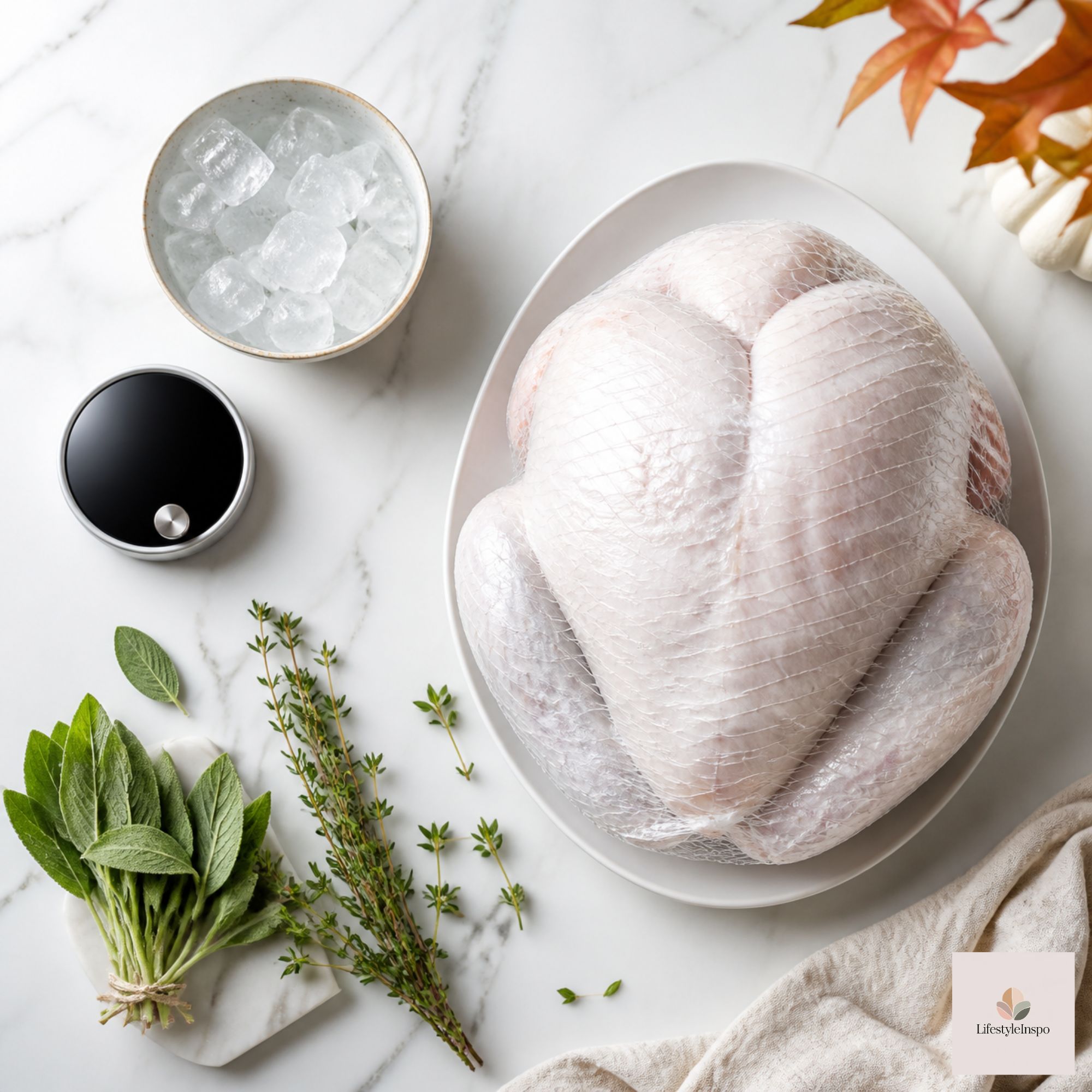
After the Turkey Is Thawed
Now that it’s ready to go:
- Remove the packaging, and take out the neck and giblet bag from both cavities. (Yes, there are two. People often forget the neck cavity!)
- Pat it completely dry with paper towels.
- Season it. Dry brine for up to 48 hours before roasting, or use a turkey brining bag for a wet brine.
- Add extra flavor with a flavor injector if you like.
- Roast. Take it out of the fridge about 45 minutes before cooking.
Fresh vs Frozen Turkeys
Fresh turkeys don’t need thawing, but they have a shorter shelf life. Buy one 1 to 2 days before cooking, and keep it in the coldest part of the fridge. Frozen birds are cheaper, available earlier, and perfectly delicious. Both work well, so choose the one that fits your schedule and budget.
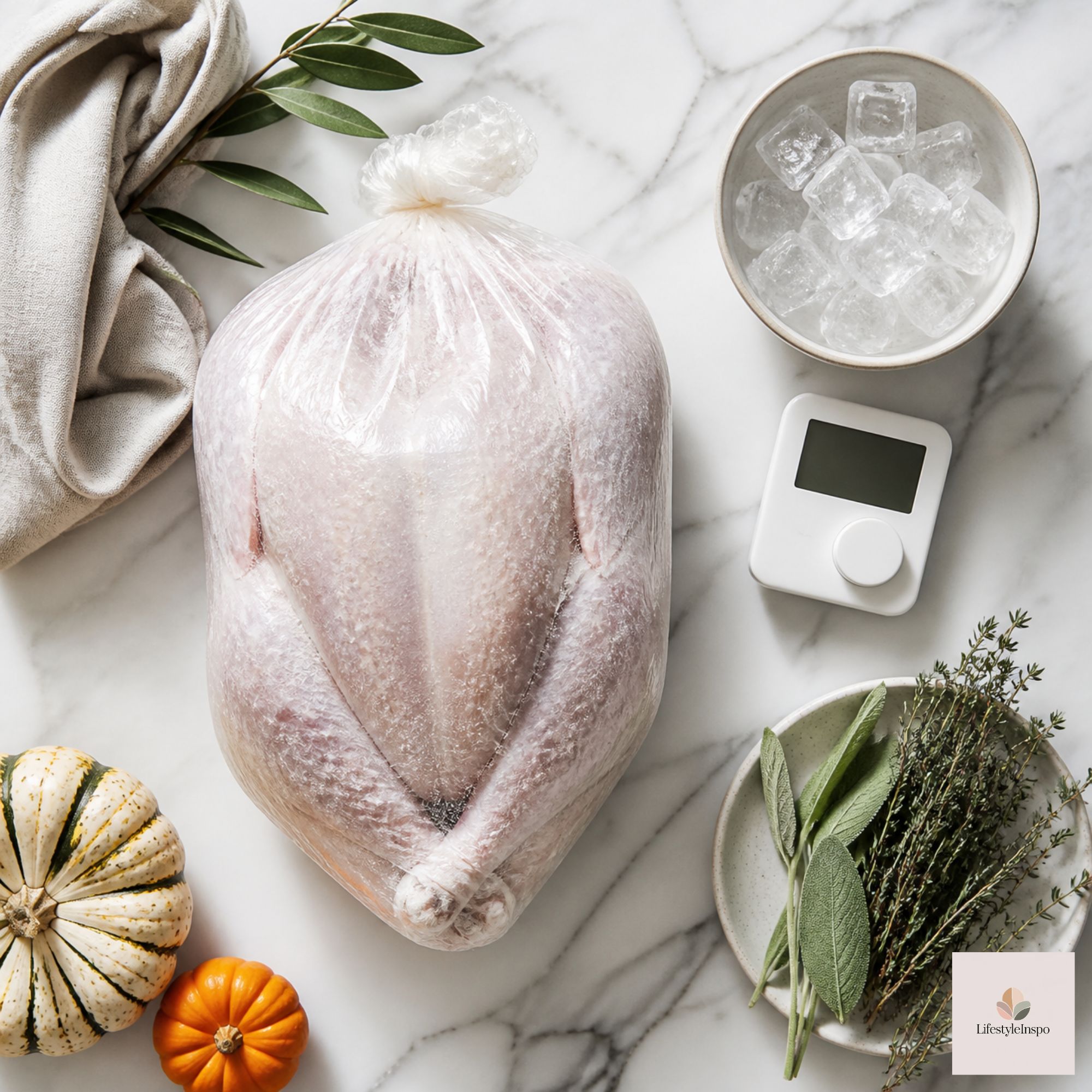
Turkey Thawing Timeline for Thanksgiving
If you’re cooking on Thursday, Nov. 26, 2026:
- Sunday, Nov. 22: Move a 14- to 16-pound turkey from freezer to fridge
- Tuesday, Nov. 24: Check if it’s thawed. If it is, start dry brining.
- Wednesday, Nov. 25: Final prep. Take it out and pat it dry.
- Thursday, Nov. 26: Roast!
For a 20- to 24-pound bird, move it to the fridge on Friday or Saturday the week before.
How to Tell If a Turkey Is Fully Thawed
- The turkey feels soft and flexible, with no hard or icy spots.
- The legs and wings move freely.
- The cavity has no ice crystals. Reach in carefully (or run cold water into the cavity) to check.
- The breast meat gives slightly when pressed.
If you find ice in the cavity, run cold water inside to loosen it, then drain thoroughly.
Storage Tips for Raw Turkey
- Keep raw turkey away from ready-to-eat foods.
- Use a dedicated cutting board and wash hands, utensils, and surfaces with hot, soapy water after handling.
- Store leftovers within 2 hours of cooking in glass food storage containers and use within 3 to 4 days.
Frequently Asked Questions
How long can a thawed turkey stay in the fridge? One to two days before you cook it, if it was thawed in the fridge.
Can I thaw a turkey in the sink overnight? Only if you change the water every 30 minutes, which makes overnight impractical. Use the fridge for an overnight thaw.
Can I refreeze a turkey? If you thawed it in the fridge and it never got above 40°F, you can refreeze it within a day or two, though quality may suffer. A turkey thawed in cold water must be cooked first.
What if my turkey is still icy on Thanksgiving morning? Use the cold-water method to finish the job fast, or roast it from frozen, adding extra time.
Is it safe to cook a partially frozen turkey? Yes, as long as you cook it until all parts reach 165°F. Just give it extra time.
How do I know when a turkey is done? Use a thermometer. The thickest part of the breast and thigh should hit 165°F.
Final Thoughts
Thawing a turkey is mostly a planning game: start early, use the fridge, and give yourself extra buffer time. If you’re behind, cold water or even cooking from frozen can save the day safely. Mark the date on your calendar now, and you’ll be calm, confident, and ready when Thursday comes.
About the Author