Turkey Gravy From Scratch: Silky, Flavorful, and Totally Lump-Free
If the turkey is the star of Thanksgiving, gravy is the supporting actor that steals the scene. It turns mashed potatoes into a dream, rescues a slightly dry slice of turkey, and makes stuffing taste even better. And yet, gravy is the thing most people fear making. It lumps. It’s too thin. It’s too salty. It’s ready when the turkey is, which is the exact moment you’re doing nine other things.
The good news? Gravy is actually simple. It’s just fat, flour, and flavorful liquid. Once you understand the basic ratio, you can make great gravy with or without drippings, and you can even do most of the work days ahead. Here’s how.
The Gravy Formula (Memorize This)
For a medium-thick gravy, use:
2 tablespoons fat + 2 tablespoons flour + 1 cup liquid
That’s the whole secret. Scale it up for a crowd:
- Serves 4 to 6: 4 tablespoons fat, 4 tablespoons flour, 2 cups liquid
- Serves 8 to 10: 8 tablespoons fat, 8 tablespoons flour, 4 cups liquid
- Serves 12 or more: 12 tablespoons fat, 12 tablespoons flour, 6 cups liquid
For a thinner gravy, use 1½ tablespoons each of fat and flour per cup of liquid. For a thicker gravy, go up to 3 tablespoons each.
The fat and flour cooked together are called a roux. It’s the thickener, and it needs to cook for a minute or two so the gravy doesn’t taste like raw flour.
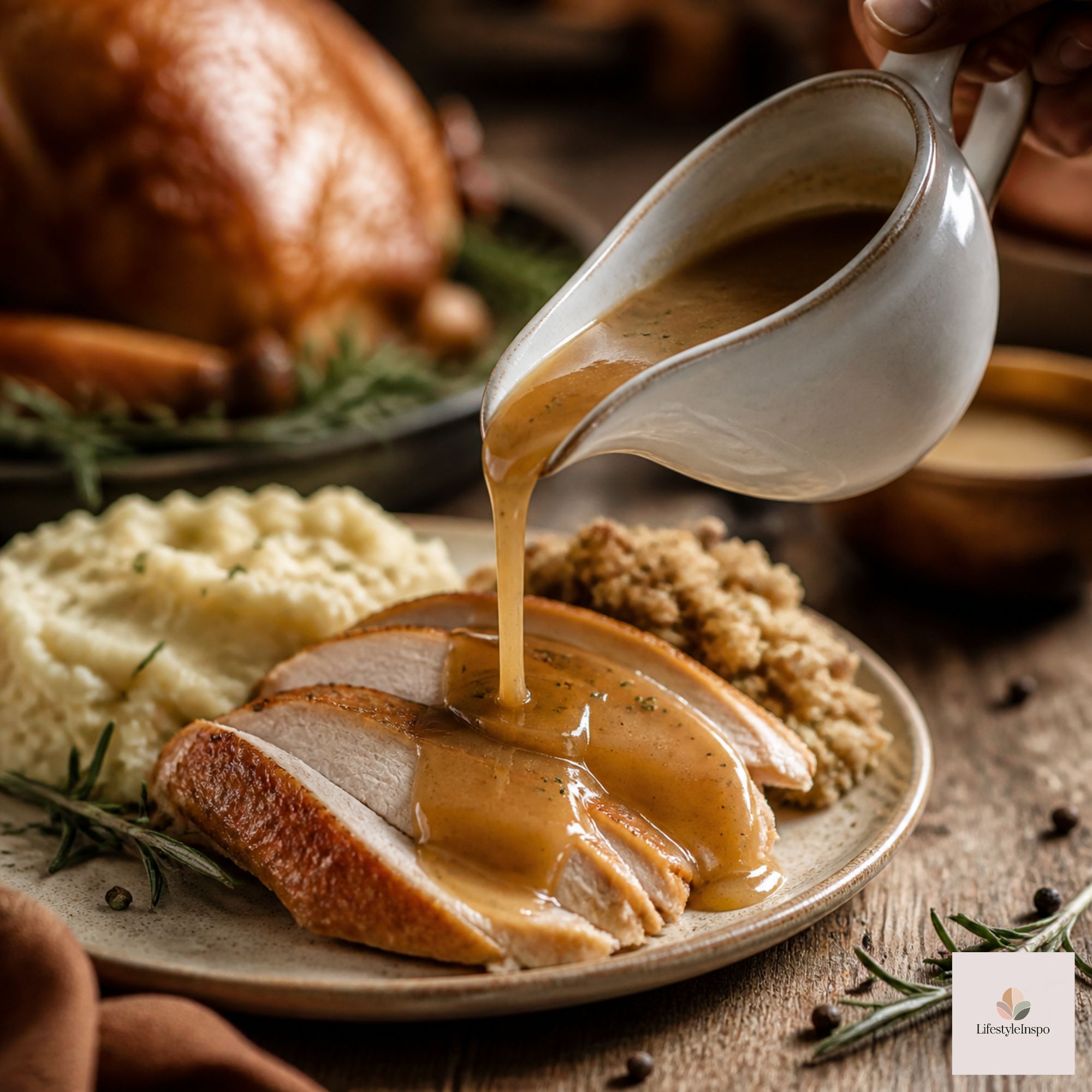
Two Ways to Make Gravy
Option 1: Classic Pan Drippings Gravy (Day-Of)
This method uses the juices and browned bits from your roasted turkey. It has the deepest flavor.
Ingredients:
- Pan drippings from your turkey
- Unsalted butter (if you need extra fat)
- All-purpose flour
- 3 to 4 cups warm turkey or chicken broth
- Salt and pepper
- Fresh thyme or sage (optional)
Steps:
- Move the turkey to rest. Transfer the turkey to a cutting board and tent with foil.
- Strain the drippings. Pour everything from the pan through a fine-mesh strainer into a fat separator or large measuring cup. Let the fat rise to the top.
- Measure the fat. Pour or spoon off the fat and measure out as many tablespoons as you need. If you’re short, add butter. Save the remaining juices (the dark liquid at the bottom), which are packed with flavor.
- Deglaze the pan. If you can, place the roasting pan over two burners on medium heat and pour in a splash of broth or white wine. Scrape up all the brown bits with a wooden spoon. Those bits are concentrated flavor.
- Make the roux. In a saucepan, heat the fat over medium heat. Whisk in the flour and cook for 1 to 2 minutes, stirring constantly, until it smells nutty and turns light golden.
- Add the liquid slowly. Whisk in the warm broth and reserved juices a little at a time, whisking constantly. Adding liquid slowly (and warm) is the best defense against lumps.
- Simmer. Bring to a gentle simmer and cook for 5 to 10 minutes, until the gravy coats the back of a spoon.
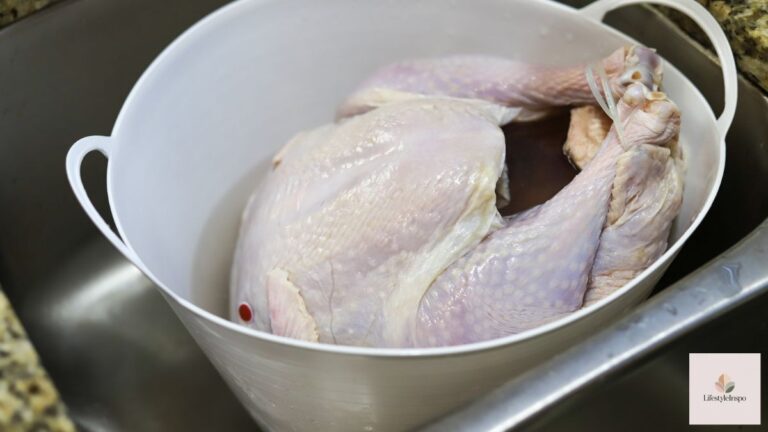
- Season. Taste before you add salt. Drippings from a brined turkey can already be very salty.
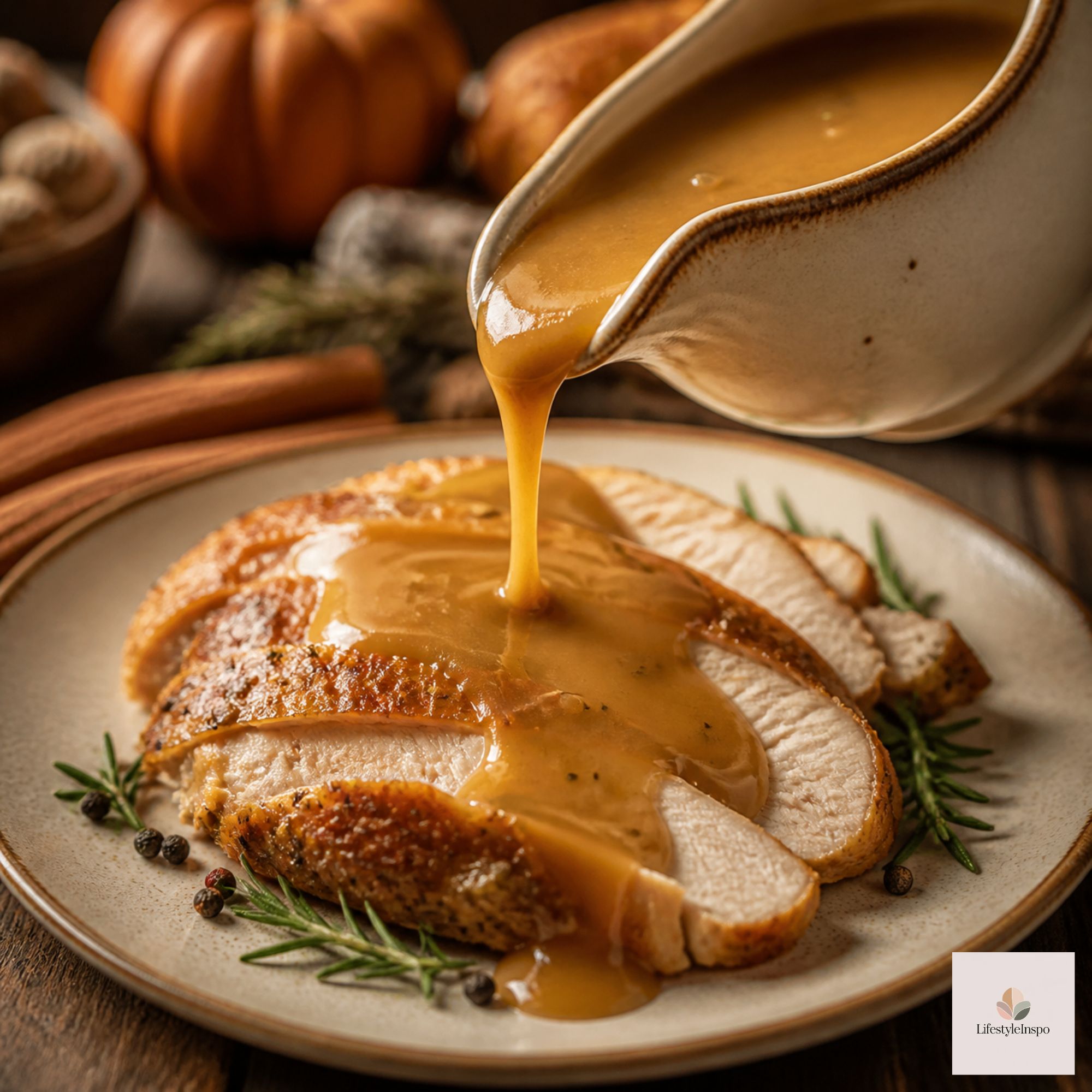
Option 2: Make-Ahead Gravy (No Drippings Needed)
This is the stress-free approach. You make it up to 3 days before Thanksgiving, then whisk in a splash of real drippings on the big day if you have them.
Ingredients:
- 2 pounds turkey wings, necks, or drumsticks
- 1 onion, quartered
- 2 carrots, chopped
- 2 celery stalks, chopped
- 2 tablespoons olive oil
- 6 cups low-sodium chicken broth or water
- 4 sprigs fresh thyme
- 2 bay leaves
- 6 tablespoons butter
- 6 tablespoons flour
- Salt and pepper
Steps:
- Roast. Toss the turkey parts and vegetables with olive oil and roast at 425°F for 45 to 60 minutes, until deeply browned.
- Simmer. Transfer everything to a large pot, scrape the pan with a splash of broth, and add the rest of the liquid, thyme, and bay leaves. Simmer for 1½ to 2 hours.
- Strain. Pour through a fine-mesh sieve, pressing on the solids. You should have about 4 cups of rich stock.
- Make the roux. Melt the butter, whisk in the flour, and cook for 2 minutes. Slowly whisk in the warm stock.
- Simmer and season. Cook for 10 minutes until thickened. Cool and refrigerate.
- On Thanksgiving: Reheat gently and whisk in any pan drippings. Thin with a little broth if needed.
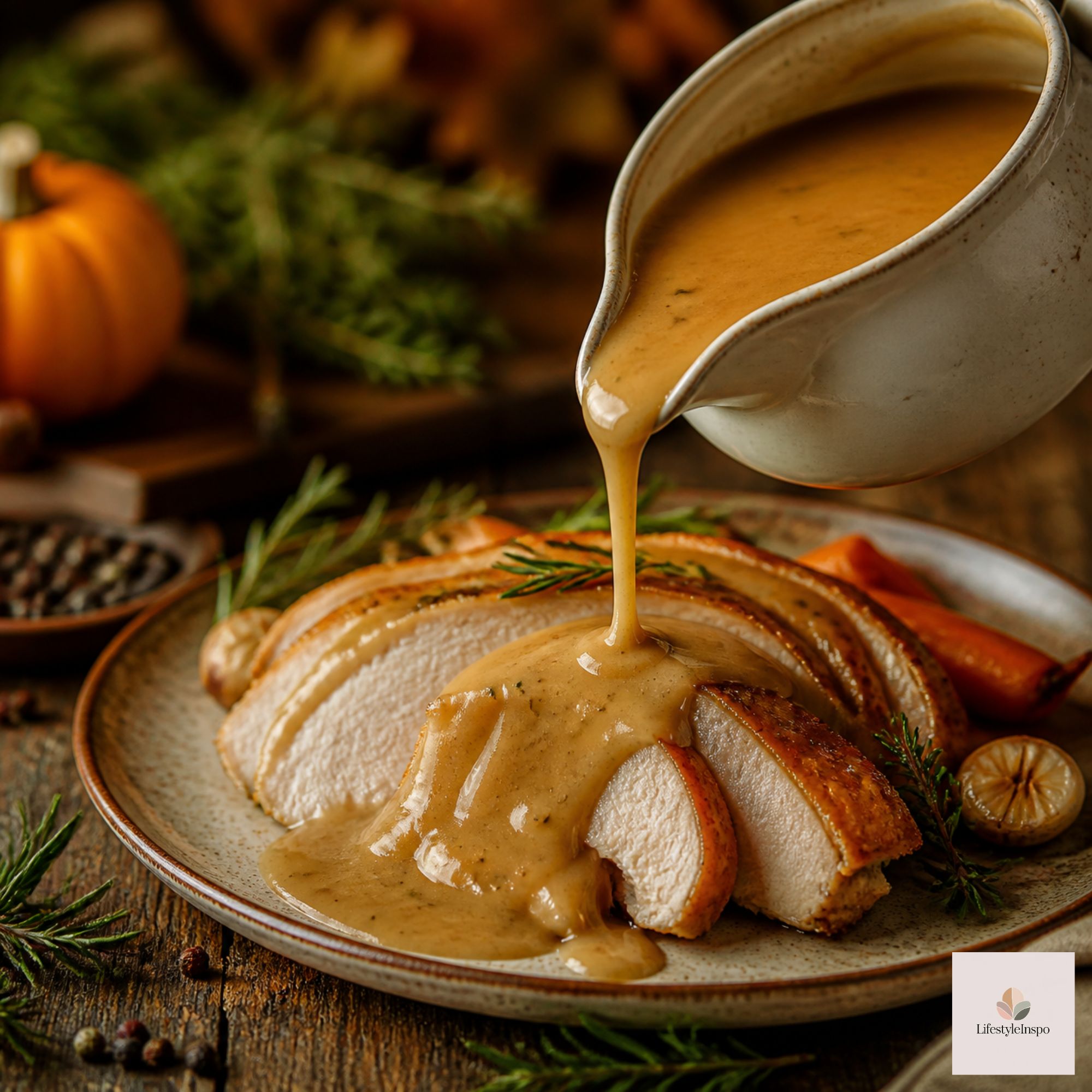
How to Avoid Lumpy Gravy
Lumps happen when flour clumps instead of dispersing. Prevent them with these tips:
- Use warm liquid. Cold liquid hitting a hot roux makes clumps.
- Add liquid slowly. Start with just a splash and whisk until smooth before adding more.
- Whisk constantly. Especially in the first minutes.
- Use a flat whisk or a regular balloon whisk that can reach the corners of the pot.
- Cook the roux briefly. It should look like wet sand, not a dry lump.
What If You Already Have Lumps?
Don’t panic. Fix them fast:
- Strain it. Pour the gravy through a fine-mesh sieve and press with a spoon.
- Blend it. Use an immersion blender for a few seconds. Be careful with hot liquids.
- Whisk hard. For a few small lumps, vigorous whisking often does the trick.
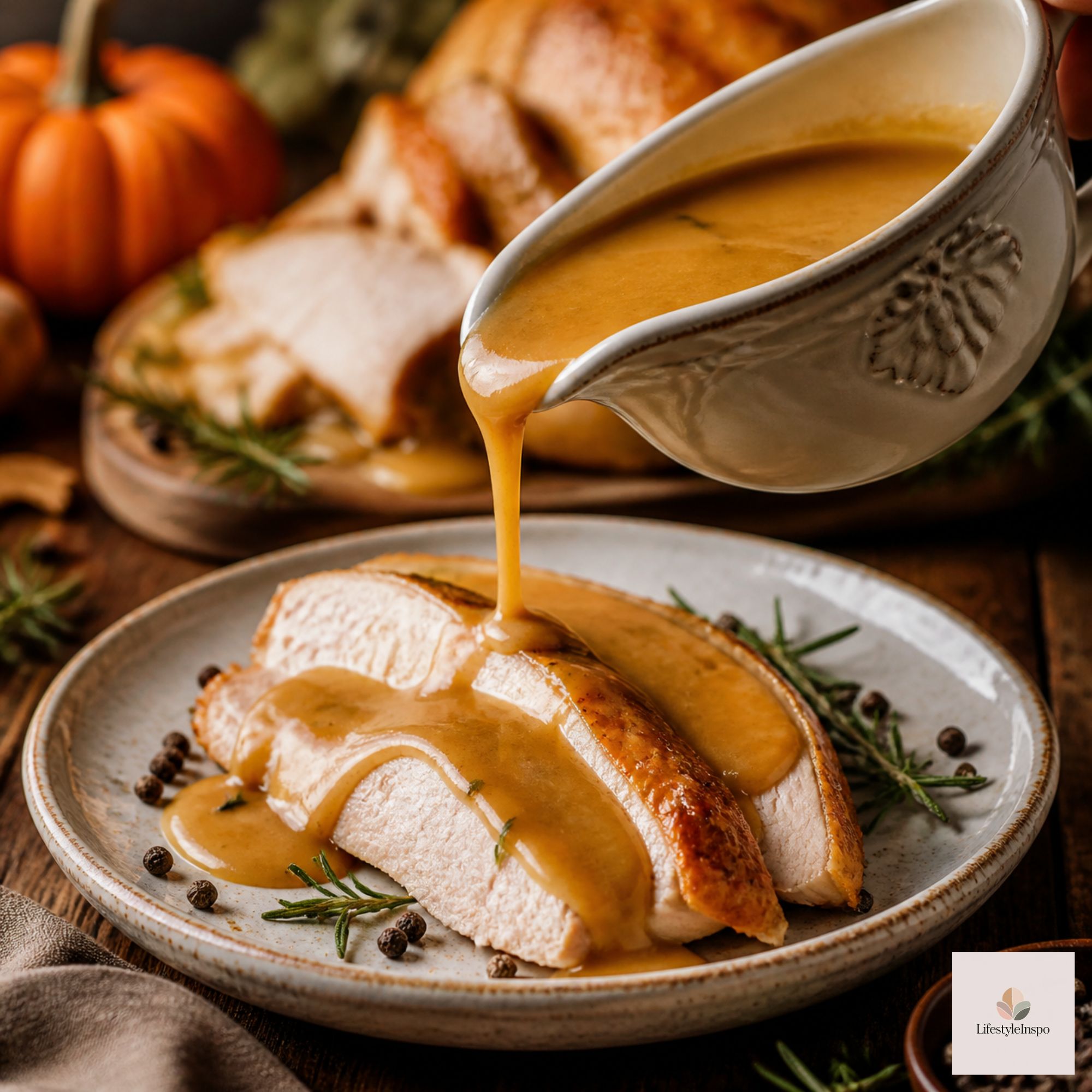
How to Fix Gravy Problems
Too thin? Simmer longer to reduce, or make a slurry: stir 1 tablespoon cornstarch into 2 tablespoons cold water, then whisk it into the simmering gravy. Cook for 1 to 2 minutes.
Too thick? Whisk in warm broth, a splash at a time, until it reaches the right consistency.
Too salty? Add more unsalted broth or water, and a splash of cream. A peeled potato simmered in the gravy can absorb a bit of salt, too. Taste before seasoning in the first place.
Bland? Add a splash of soy sauce, Worcestershire sauce, a pinch of poultry seasoning, a few fresh herbs, or a dab of Dijon. A small squeeze of lemon brightens flavors, too.
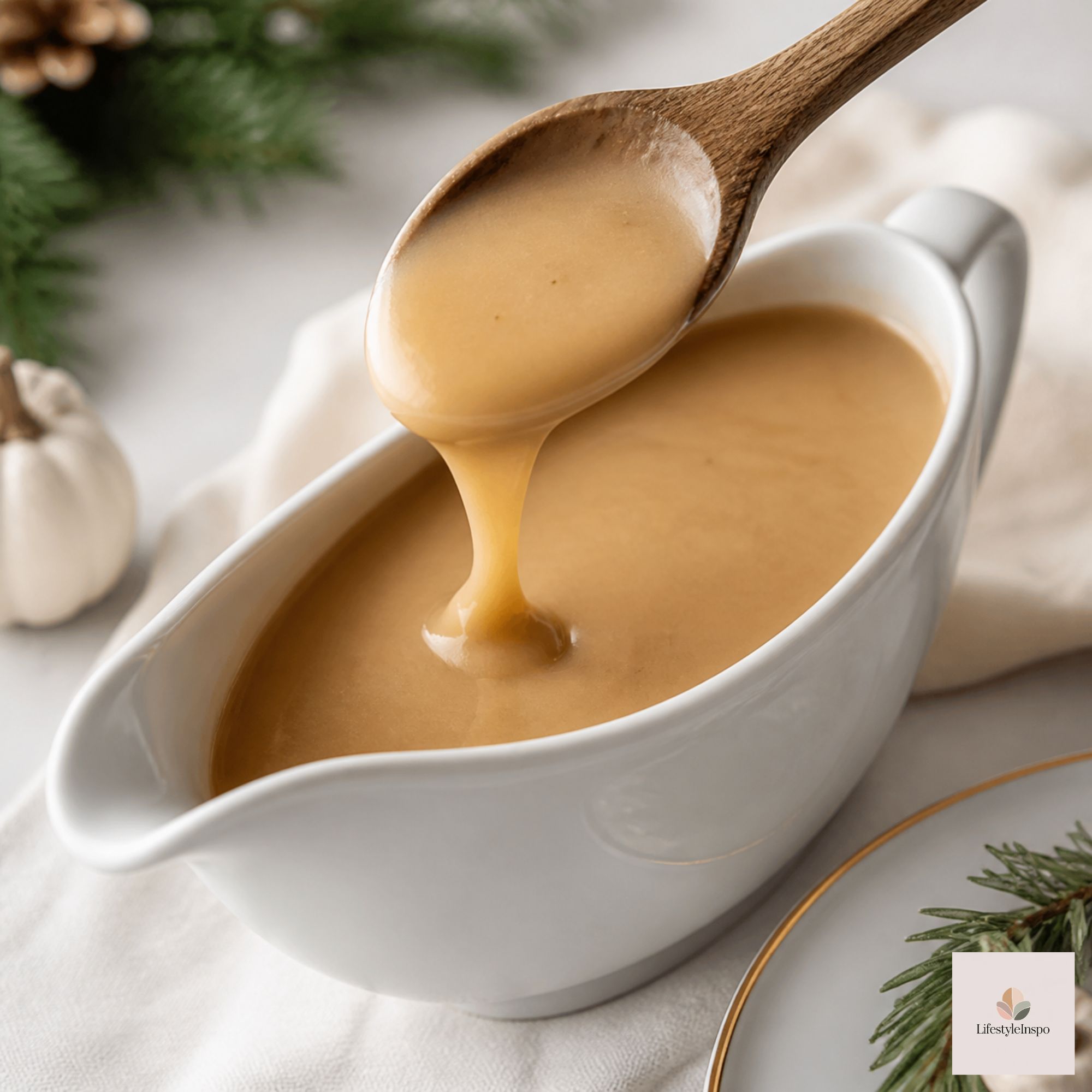
Pale in color? Cook the roux a little longer for a darker color, or add a drop of soy sauce or kitchen bouquet.
Flavor Variations
- Herb gravy. Stir in chopped fresh sage, thyme, and parsley at the end.
- Mushroom gravy. Sauté sliced mushrooms in butter until golden, then build the gravy from there.
- Giblet gravy. Simmer the giblets with the broth, chop the cooked meat, and add it to the finished gravy.
- Creamy gravy. Finish with a splash of heavy cream.
- Wine gravy. Deglaze with dry white wine or sherry.
- Vegetarian gravy. Use olive oil, vegetable broth, sautéed mushrooms, and a bit of soy sauce for depth.
Gluten-Free Gravy
Skip the flour roux and thicken with a cornstarch slurry instead. Simmer broth and drippings, then whisk in a mixture of 1 tablespoon cornstarch per cup of liquid, mixed with an equal amount of cold water. Simmer until thick and glossy. Sweet rice flour also works well.
Serving and Keeping Gravy Warm
Gravy cools quickly, so keep it warm until it hits the table.
- Stovetop. Keep it on the lowest heat, covered, and give it a stir now and then.
- Slow cooker. Set it to “warm” and ladle as needed.
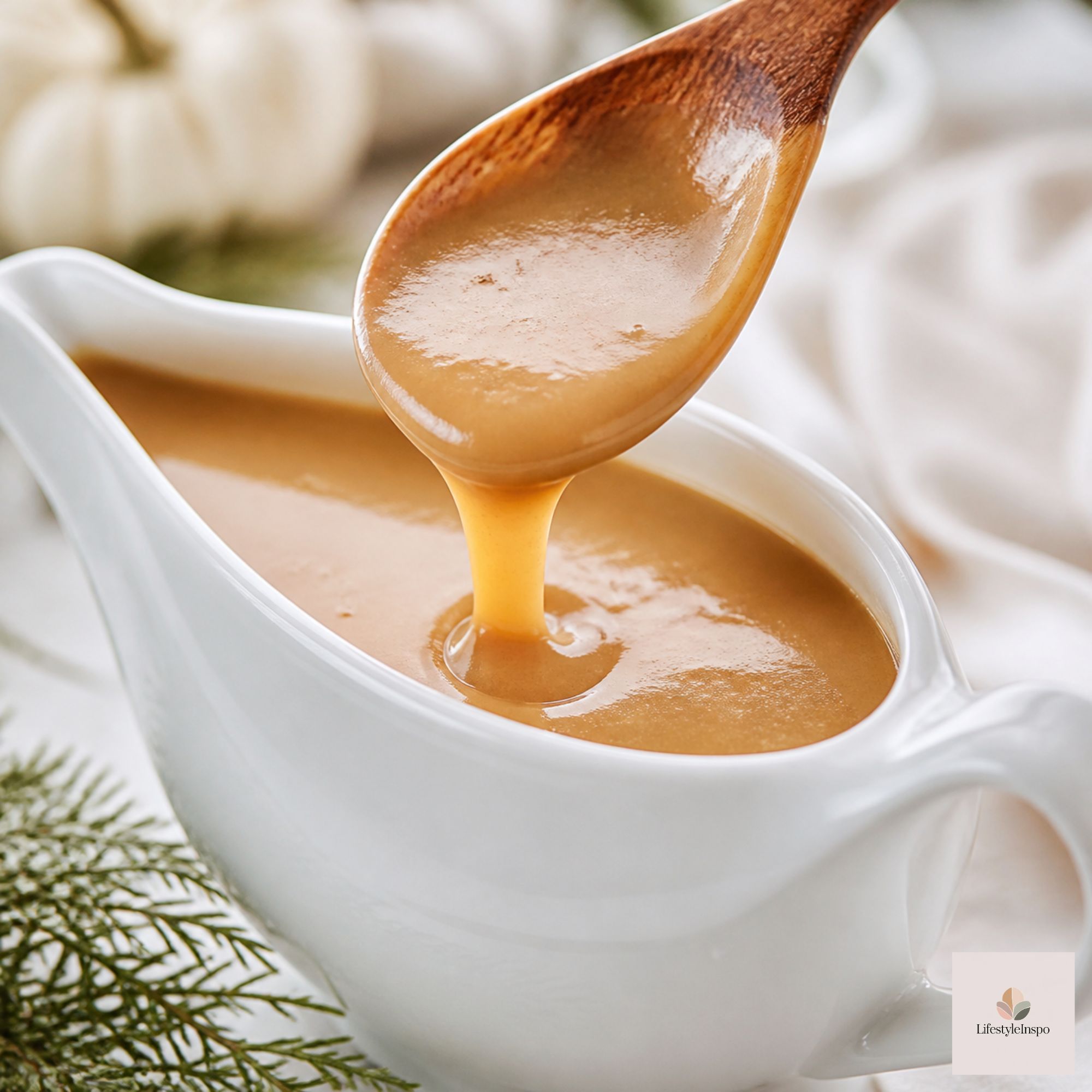
- Pre-warm the vessel. Rinse your gravy boat with hot water before filling so the gravy stays hot longer.
- Thermos trick. Pour hot gravy into a clean thermos and pour into the gravy boat at the last minute.
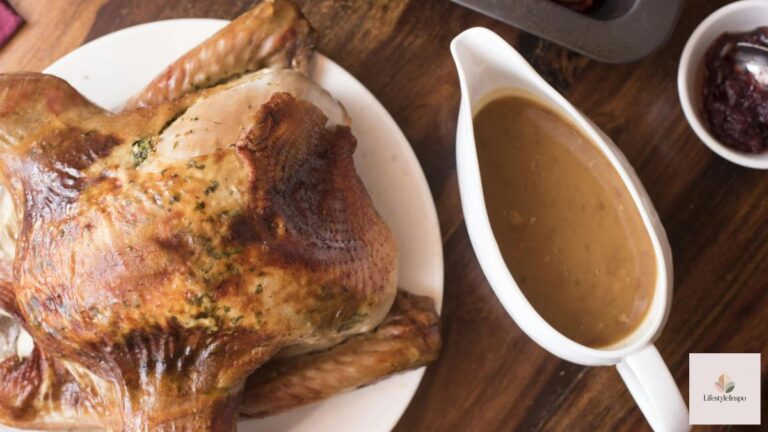
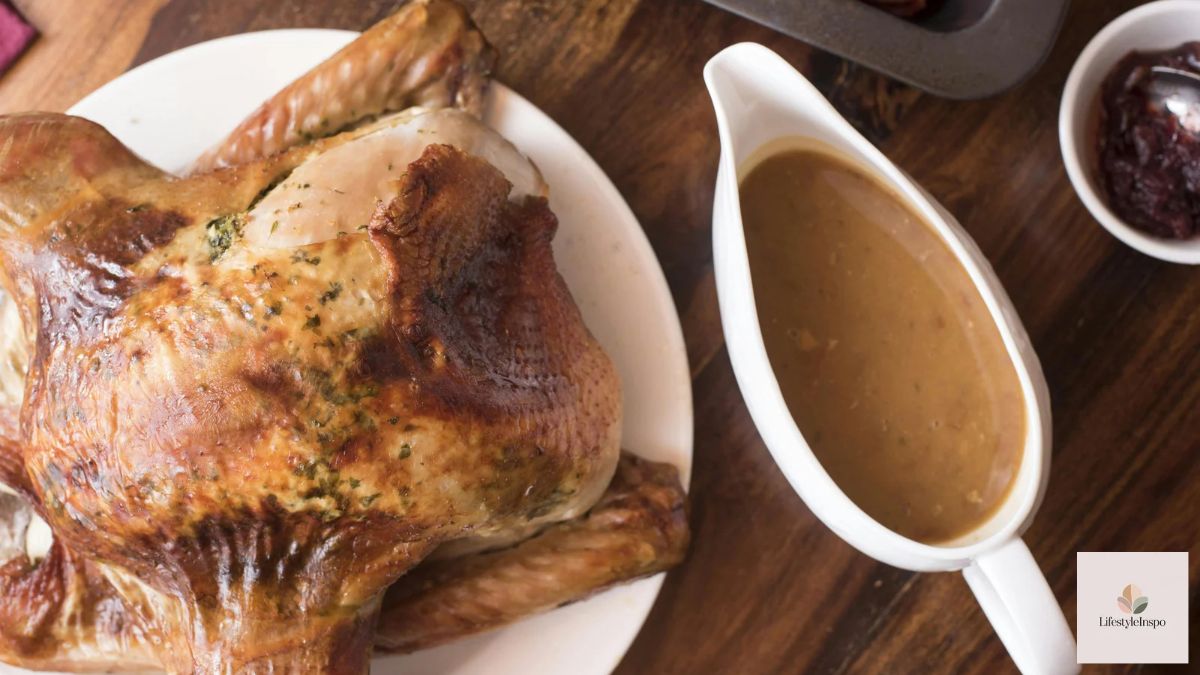
A good gravy boat has a spout that pours cleanly and a base that catches drips, which means no surprise stains on your tablecloth.
Tools That Make Gravy Easier
- A roasting pan that can go on the stovetop for deglazing
- A fat separator or a big glass measuring cup
- A fine-mesh strainer for smooth results
- An enameled Dutch oven for simmering stock, since it holds even heat and is perfect for long, low simmers
- Glass food storage containers for saving make-ahead gravy in the fridge
Make-Ahead and Storage
- Refrigerate: Gravy keeps for 3 to 4 days in an airtight container.
- Freeze: Pour it into freezer-safe containers (leave room to expand) and freeze for up to 3 months.
- Reheat: Warm over low heat, whisking and adding broth to thin as needed. Gravy thickens as it cools.
A Sample Gravy Timeline
- Monday or Tuesday: Roast turkey wings, make stock, and prepare the make-ahead gravy.
- Thanksgiving morning: Take the gravy out of the fridge to lose its chill.
- While the turkey rests: Strain the drippings, whisk them into the gravy, and simmer.
- Right before serving: Taste, adjust seasoning, and pour into a warm gravy boat.
Frequently Asked Questions
How much gravy do I need? Plan about ¼ to ⅓ cup per person, or closer to ½ cup if your crowd loves gravy. A good rule is 1 quart for 8 to 10 people.
Can I make gravy without pan drippings? Yes, with the make-ahead method above, or simply use butter and good-quality broth.
Why does my gravy taste like flour? The roux wasn’t cooked long enough. Cook it for at least 1 to 2 minutes, until it smells nutty.
Can I use cornstarch instead of flour? Yes. Mix 1 tablespoon cornstarch with 1 tablespoon cold water per cup of liquid and stir into simmering gravy.
What’s the best broth for gravy? Homemade turkey stock is ideal. Otherwise, choose low-sodium chicken or turkey broth so you can control the seasoning.
Final Thoughts
Good gravy isn’t about fancy technique. It’s about the ratio, a little patience, and warm liquid added slowly. Make a base ahead of time, finish it with your drippings, taste as you go, and pour it generously over everything on the plate. You’ll never fear gravy again.
About the Author