Halloween Food Coloring: 8 Colorful Recipes (Plus How to Get True Black)
There’s one ingredient that can turn ordinary food into Halloween magic, and it’s not chocolate or candy corn. It’s color.
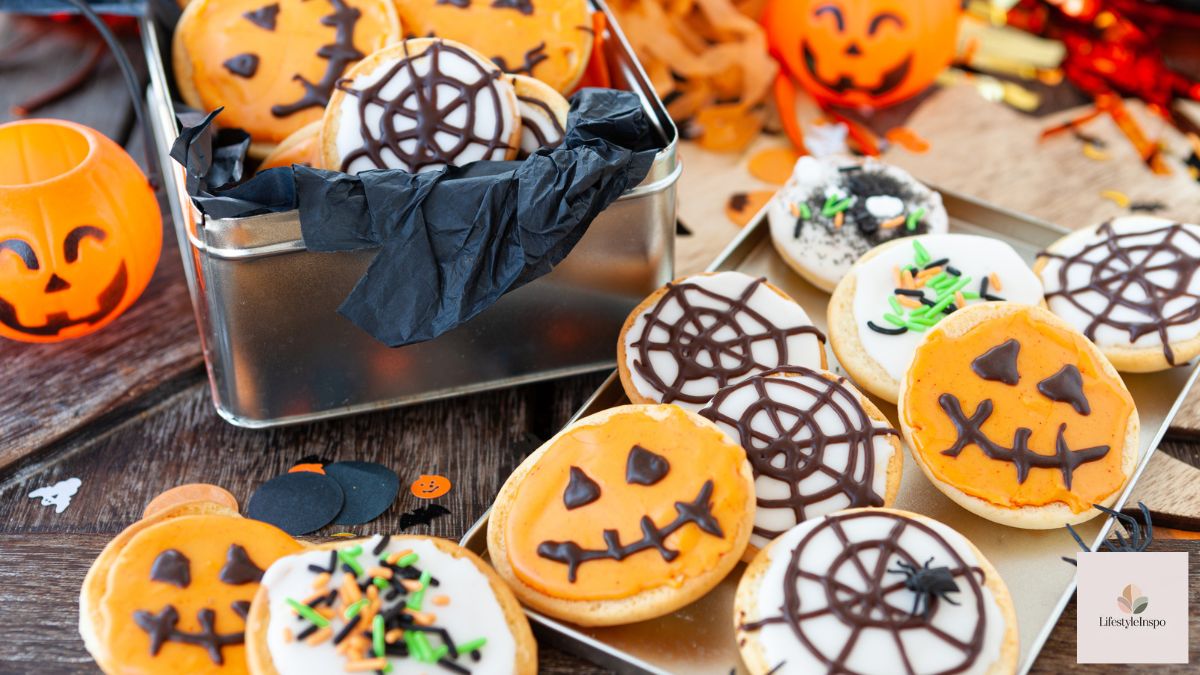
A drop of green here, a swirl of purple there, and suddenly your lemonade is “swamp water,” your frosting is “monster slime,” and your sugar cookies look like they came from a witch’s kitchen. Food coloring is the secret weapon of Halloween cooking, and with a little know-how, you can use it to do almost anything.
In this guide, I’ll cover the difference between types of coloring, how to mix the perfect Halloween shades, and eight easy recipes that put color to work.
Types of Food Coloring
Before you start, it helps to know what’s in the aisle.
Liquid food coloring: The classic grocery store drops. They’re affordable but thin, and you often need a lot to get a deep color. That can water down frosting and batter.
Gel food coloring: Thick, concentrated, and highly pigmented. A tiny dab goes a long way, and it won’t thin your recipes. A set of Halloween gel food coloring is ideal for frosting, icing, and batter.
Powder food coloring: Fantastic for dry mixes and chocolate, since it doesn’t add moisture.
Oil-based coloring: Best for candy melts and chocolate, where water-based coloring can cause seizing.
Natural colorings: Made from beets, spirulina, turmeric, or butterfly pea flower. They’re subtler and can change with heat or acidity, but are a good option if you want to avoid synthetic dyes.
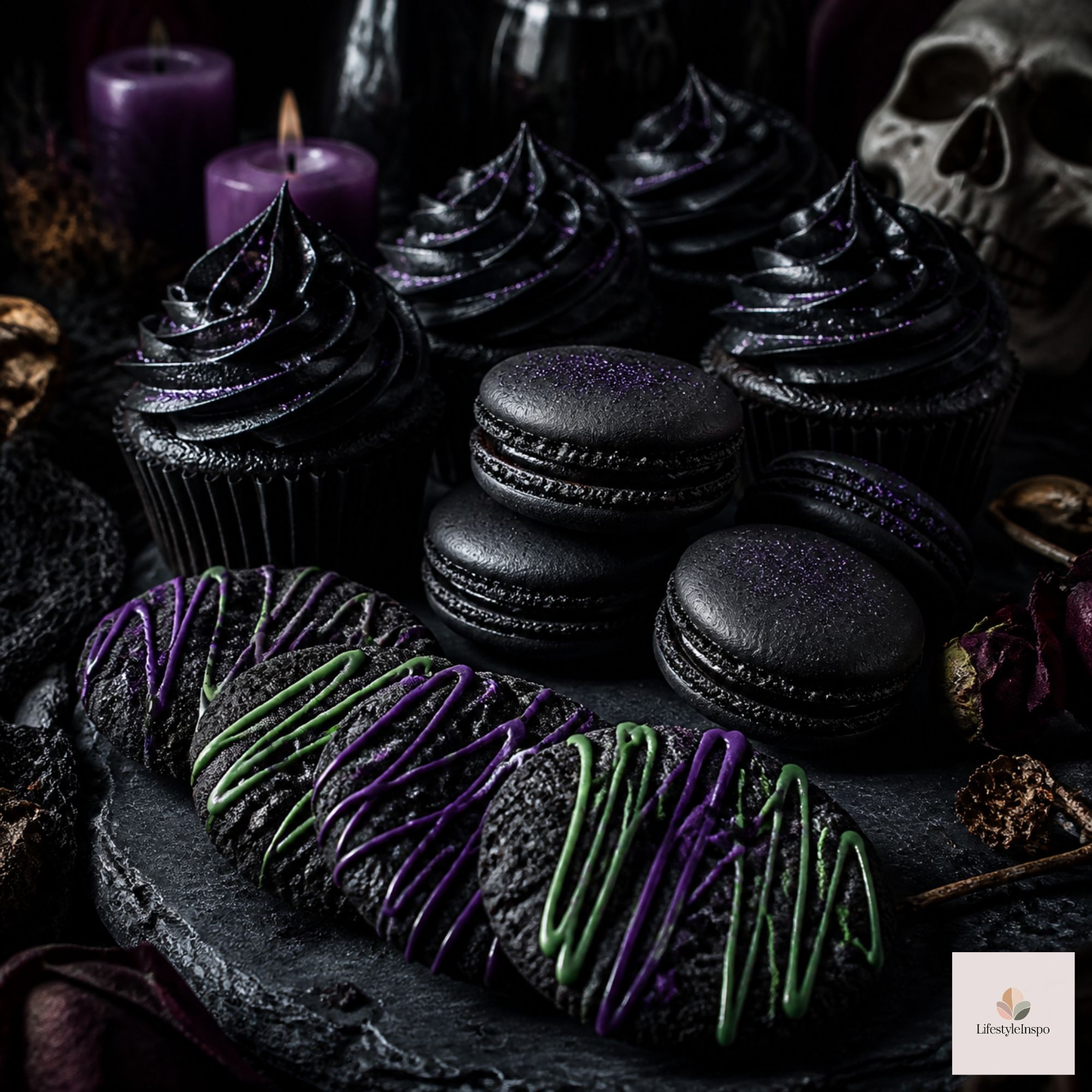
Color-Mixing Cheat Sheet for Halloween
You don’t need to buy every color. Learn to mix a few.
- Orange: Yellow + red (use more yellow than red)
- Purple: Red + blue (equal parts, then adjust)
- Green: Yellow + blue, or use leaf green
- Black: Start with a chocolate base, then add black gel. Or mix red, blue, and green
- Blood red: Red + a tiny touch of brown or green to deepen
- Spooky gray: A tiny dot of black in white icing
Tip: Colors deepen as they rest. Mix a shade a bit lighter than you want and let it sit for 30-60 minutes.
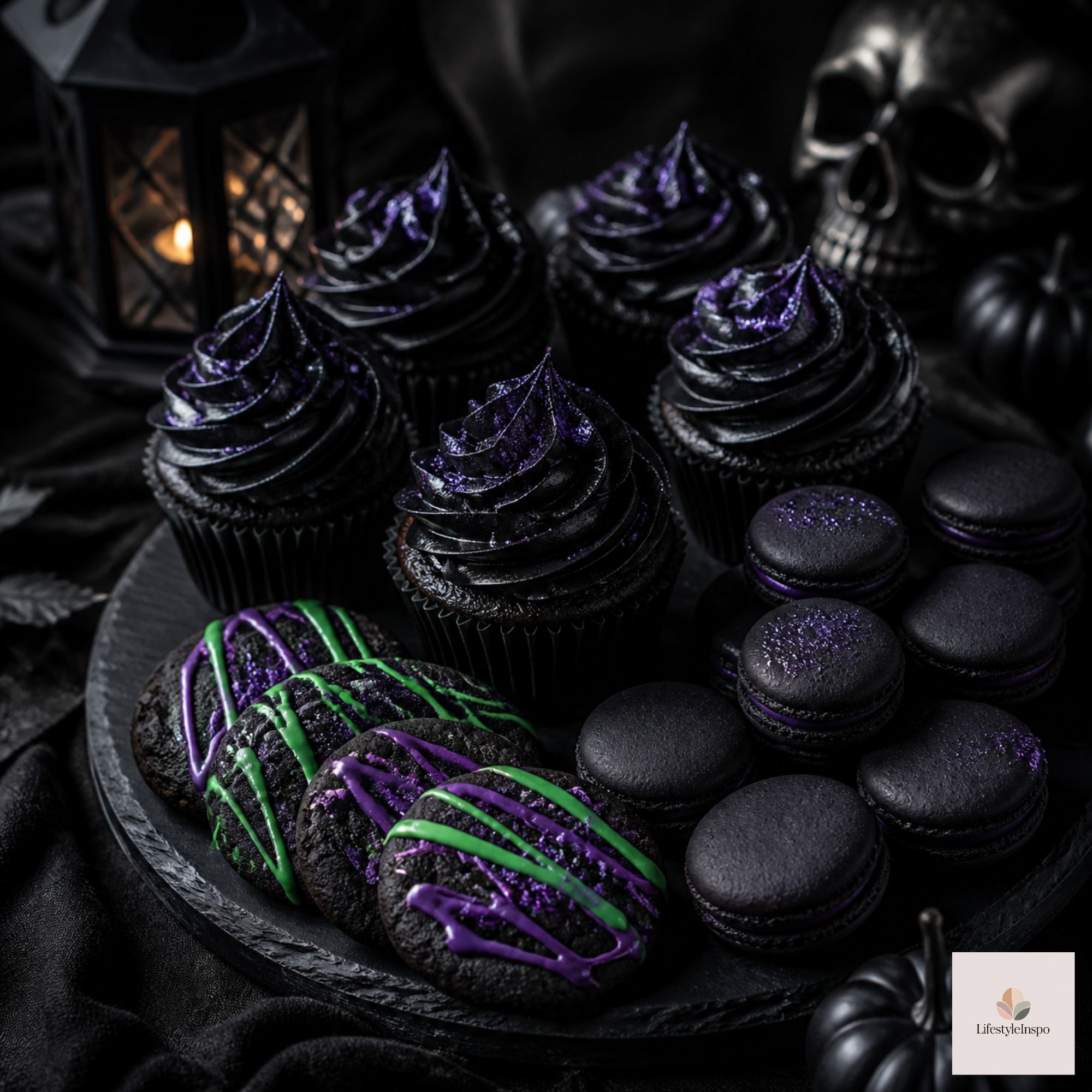
How to Make Black Frosting That Isn’t Gray
Black is the hardest color to achieve, and the reason most store-bought “black” frostings taste bitter. The trick is to start dark.
Method
- Make your favorite buttercream, and divide it into a bowl.
- Stir in unsweetened cocoa powder, about 3 tablespoons per cup of frosting, until you have a dark chocolate base.
- Add black gel coloring, a little at a time, mixing well.
- Cover and let it rest for at least 1-2 hours, or overnight in the fridge. The color will deepen significantly.
Using too much coloring can leave a bitter aftertaste, so starting with chocolate saves both color and flavor.
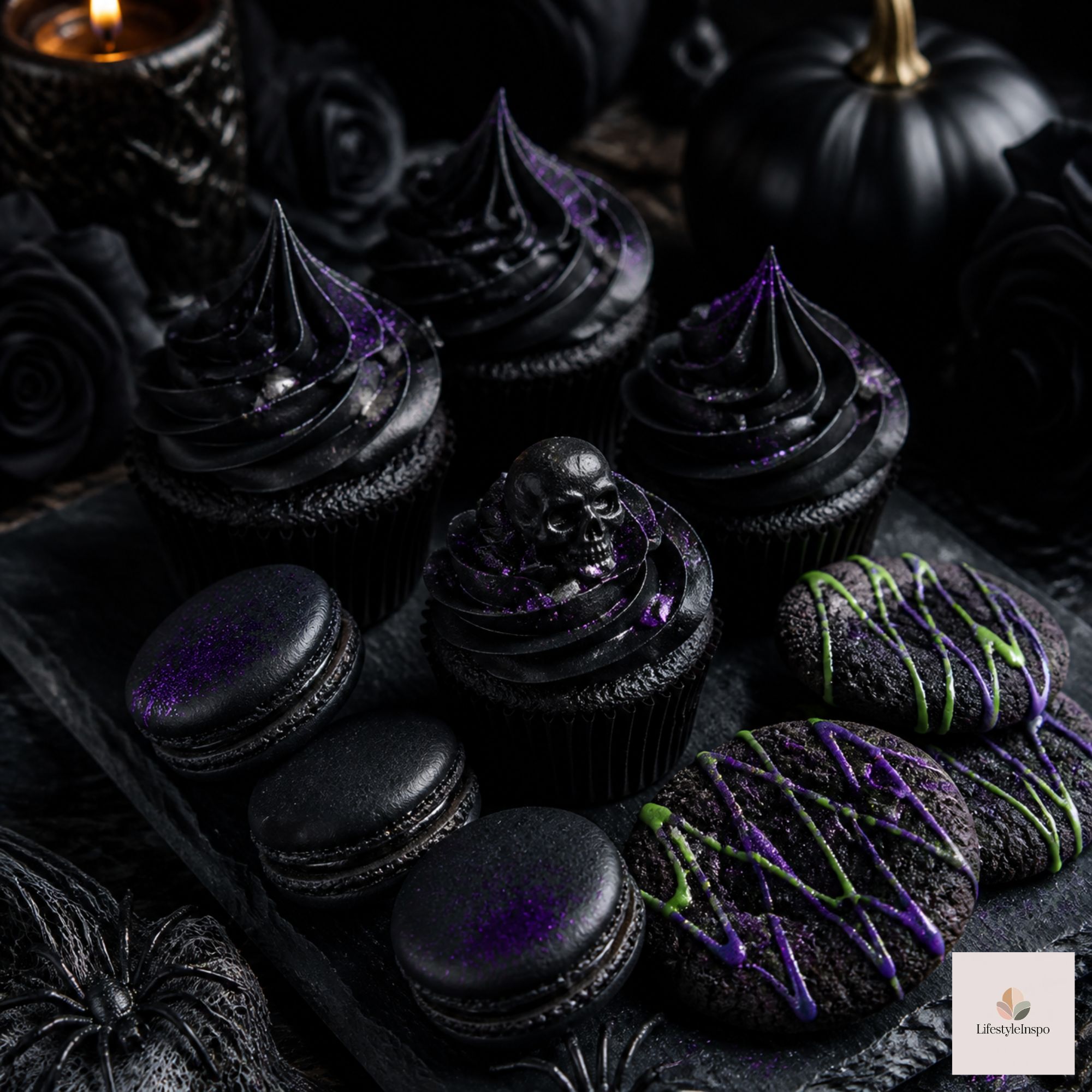
8 Colorful Halloween Recipes
1. Slime Green Jello Shots (Non-Alcoholic “Slime Cups”)
Ingredients:
- 1 box (3 ounces) lime gelatin
- 1 cup boiling water
- ½ cup cold water
- 2 drops green gel coloring (optional)
- Gummy worms
Instructions:
- Dissolve the gelatin in boiling water. Stir in the cold water.
- Add coloring if you want a brighter green.
- Pour into small cups, add a gummy worm, and refrigerate for 4 hours until set.
2. Purple Potion Frosting
Tint vanilla buttercream with violet gel coloring until you reach a rich purple. Pipe it onto cupcakes with a piping bag for a magical look. Our cupcake recipe is the perfect base.
3. Orange Pumpkin Pancakes
Whisk a few drops of orange gel coloring into pancake batter. Pour as usual, and decorate with chocolate chips to make jack-o’-lantern faces. See our Halloween breakfast ideas for more.
4. Monster Slime Lemonade
Add 2-3 drops of green gel to 6 cups of lemonade. Stir until you reach a bright green. Serve over skull ice cubes for extra fun.
5. Rainbow Monster Popcorn
Toss popcorn with melted white candy melts tinted with oil-based coloring. Spread on parchment and sprinkle with Halloween sprinkles. Let set and break into clusters.
6. Blood Red Velvet Cookies
Add 1-2 teaspoons of red gel coloring to your favorite sugar cookie dough. Bake and cut into Halloween shapes with a cookie cutter set. Gel color won’t alter the dough texture the way liquid will.
7. Black Cat Pasta
Squid ink makes naturally black pasta, but you can also dye cooked pasta with black gel coloring in a little water. Toss with garlic butter for a dramatic dinner. It pairs well with our Halloween dinner ideas.
8. Ombré Layered Drinks
Layer drinks in different colors, starting with the heaviest (sweetest) liquid on the bottom. For example, pour grenadine first, then orange juice, then sparkling water tinted blue. Pour slowly over the back of a spoon so the layers stay separate.
Tips for Working With Food Coloring
- Start small. You can always add more, but you can’t take it out.
- Use a toothpick to add gel coloring a bit at a time.
- Stir thoroughly. Streaks mean it’s not fully mixed.
- Wear gloves. Dark colors can stain hands and countertops.
- Protect your surfaces. Lay down parchment or a plastic cloth.
- Mix colors in a white bowl so you see the true shade.
- Let it sit. Color will develop over time, especially black, red, and purple.
- Check labels. Some natural colors fade in sunlight or turn brown with heat.
Troubleshooting
My frosting turned runny. Too much liquid coloring. Switch to gel, or thicken with extra powdered sugar.
My color looks pink instead of red. Add more gel and let it rest. Red develops slowly, so patience is required.
My candy melts seized. Water-based coloring was used. Use oil-based coloring and melt gently.
My colors are fading. Light exposure can dull dyes. Store colored foods in airtight containers away from sun.
My dough has speckles. The color wasn’t fully mixed. Knead or beat longer.
A Note on Food Dyes
Many people prefer to limit artificial dyes, especially for children. If that’s you:
- Try natural options like beet powder (pink/red), spirulina (green/blue), turmeric (yellow), and butterfly pea flower (blue/purple).
- Expect softer, earthier shades.
- Test small batches first, since natural colors can behave differently in baking.
Always check ingredient lists if anyone in your family has allergies or sensitivities.
Frequently Asked Questions
How much gel food coloring should I use? Start with a toothpick dab per cup of frosting. For deep shades, you may need more, but go slowly.
Will food coloring stain my teeth and mouth? Heavily dyed foods like black frosting can temporarily tint your tongue and teeth, but it washes off.
Can I use food coloring in chocolate? Only oil-based or powder coloring. Water-based dyes will cause seizing.
Is food coloring safe? Food coloring that’s approved for food use is considered safe in normal amounts. If you have concerns, talk to your doctor or choose natural options.
Does gel food coloring expire? It usually lasts a couple of years. If it dries out or smells off, replace it.
Final Thoughts
Food coloring is the easiest way to make Halloween food feel magical. With a few gel colors and a little patience, you can create everything from slime-green lemonade to inky-black frosting.
Play with colors, mix your own shades, and don’t be afraid of a little mess. The best Halloween creations are the ones that make you smile.
About the Author