Dutch Oven Mac and Cheese: Creamy, Cheesy, and Made in One Pot
Some families would riot if mac and cheese didn’t make an appearance at Thanksgiving. For others, it’s a delightfully non-traditional addition that sneaks onto the table and somehow becomes the star. Either way, a really good baked mac and cheese belongs in the holiday lineup.
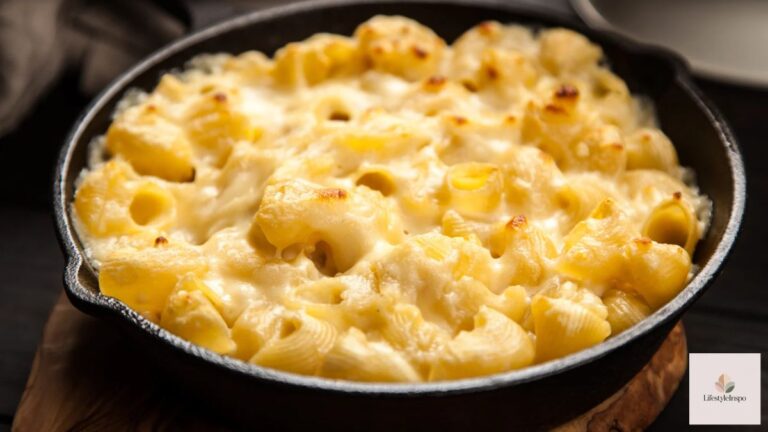
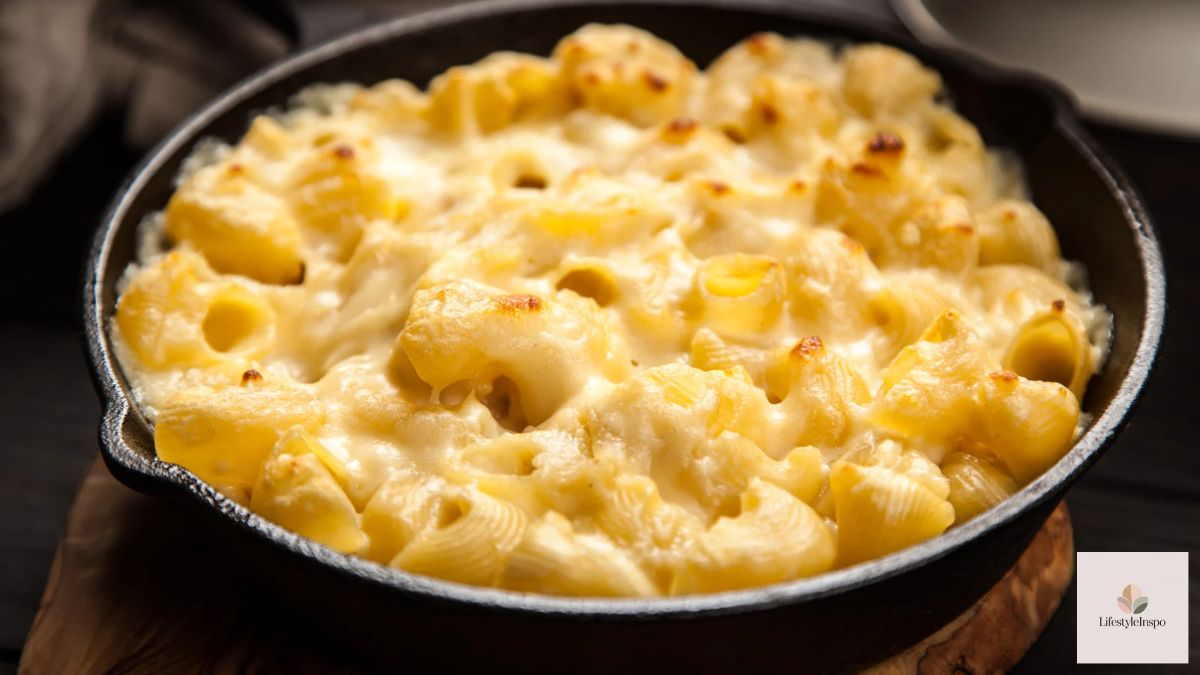
The best version is creamy and silky inside, with a golden, crunchy topping that crackles when your spoon hits it. And if you make it in a Dutch oven, you can do almost the whole thing in one pot: boil the pasta, make the sauce, stir it all together, and bake. Fewer dishes, more time at the table.
Here’s how to make mac and cheese that’s worth the calories.
Why Use a Dutch Oven?
A heavy enameled Dutch oven is a quiet superstar for this dish.
- Even heat. Thick walls spread heat gently, so the cheese sauce won’t scorch on the bottom.
- Stovetop to oven. You can build the sauce on the burner, then pop the whole pot in the oven.
- Holds heat. The mac stays warm on the table longer.
- One-pot cooking. Less cleanup.
- It looks good. You can bring it right to the table.
No Dutch oven? Use a large ovenproof skillet or a regular pot, then transfer to a baking dish.
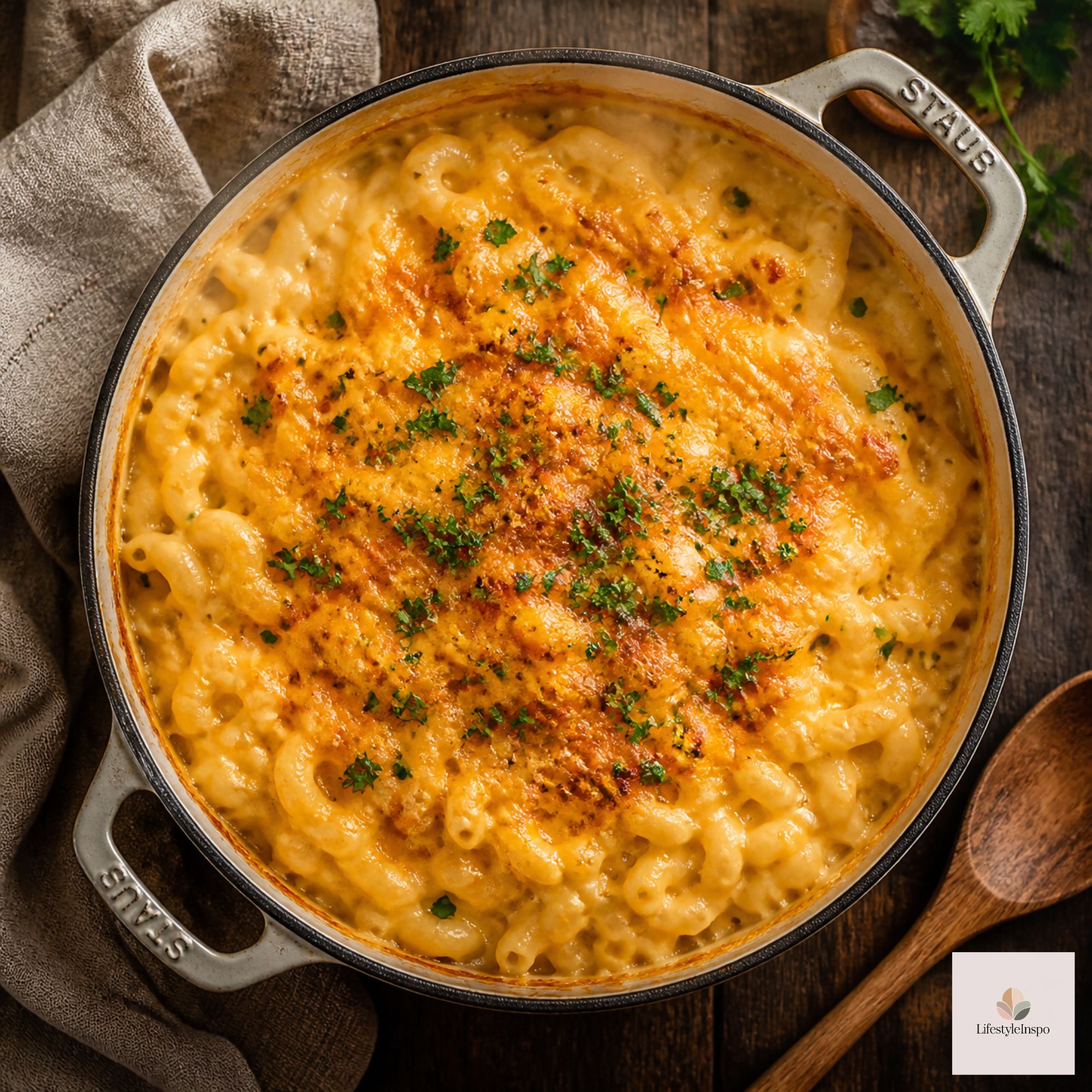
Ingredients
Serves 10 to 12:
For the pasta:
- 1 pound elbow macaroni (or cavatappi or shells)
- 2 tablespoons kosher salt, for the pasta water
For the cheese sauce:
- 6 tablespoons unsalted butter
- ½ cup all-purpose flour
- 4 cups whole milk, warmed
- 1 cup evaporated milk (or heavy cream)
- 1 teaspoon dry mustard powder
- ½ teaspoon garlic powder
- ¼ teaspoon smoked paprika
- Pinch of nutmeg
- 4 cups (about 16 ounces) sharp cheddar, freshly grated
- 2 cups (8 ounces) Gruyère or Monterey Jack, freshly grated
- 1 teaspoon kosher salt, plus more to taste
- ½ teaspoon black pepper
- Dash of hot sauce (optional)
For the topping:
- 1½ cups panko breadcrumbs
- 3 tablespoons melted butter
- ½ cup grated Parmesan
- 1 tablespoon chopped fresh thyme or parsley
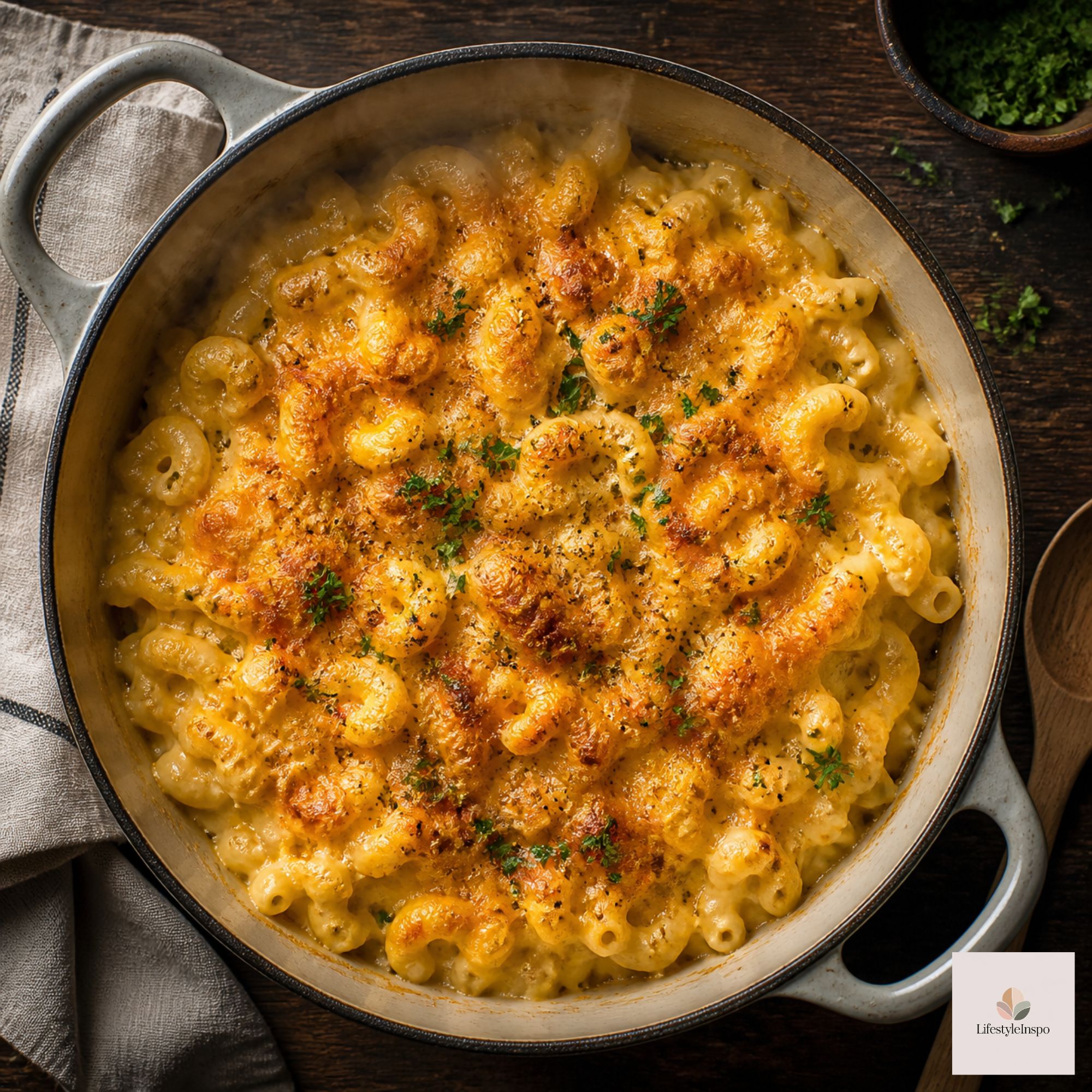
Step-by-Step Instructions
Step 1: Grate Your Own Cheese
This single step makes the biggest difference. Pre-shredded cheese is coated with starches that prevent clumping, but they also prevent smooth melting, which can leave you with a grainy sauce. Grate the cheese yourself from a block and let it come to room temperature while you cook the pasta.
Step 2: Cook the Pasta Slightly Underdone
Bring a large pot of generously salted water to a boil. Cook the macaroni for 2 minutes less than the package directions. It will keep cooking in the sauce and in the oven, so you want it firm to the bite. Drain, but do not rinse.
If you’re using your Dutch oven for the sauce, cook the pasta in a separate pot or do it first, then wipe out the Dutch oven.
Step 3: Make the Roux
In your Dutch oven over medium heat, melt the butter. Whisk in the flour and cook for 1 to 2 minutes, stirring constantly, until it smells nutty and looks like wet sand. Don’t let it brown too much.
Step 4: Build the Sauce
Slowly pour in the warm milk, whisking constantly to prevent lumps. Add the evaporated milk, mustard powder, garlic powder, paprika, and nutmeg. Bring to a gentle simmer and cook for 5 to 8 minutes, whisking often, until the sauce thickens enough to coat the back of a spoon.
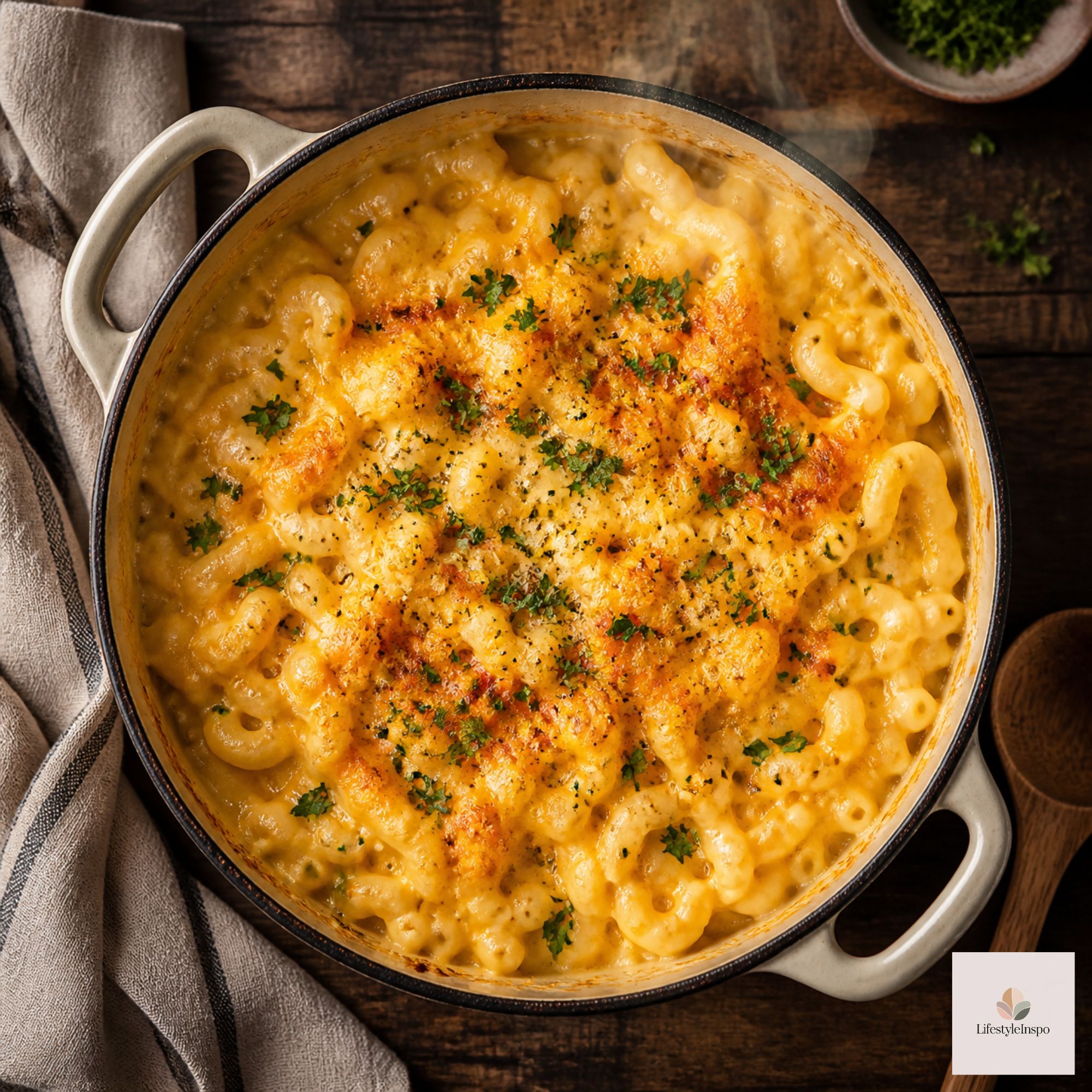
Step 5: Melt the Cheese Off the Heat
Remove the pot from the heat. Add the cheese a handful at a time, stirring until each addition melts before adding the next. Taking the pot off the heat keeps the cheese from breaking and turning oily. Season with salt, pepper, and a dash of hot sauce, then taste and adjust.
Step 6: Combine
Fold the drained pasta into the cheese sauce until every noodle is coated. The sauce should look a bit loose, since the pasta will absorb liquid in the oven.
Step 7: Add the Topping
Toss the panko with the melted butter, Parmesan, and herbs. Sprinkle evenly over the mac and cheese.
Step 8: Bake
Bake, uncovered, at 375°F for 25 to 30 minutes, until bubbling at the edges and golden on top. For a deeper crust, broil for 1 to 2 minutes at the end, watching closely. Let it rest 10 minutes before serving so it thickens up slightly.
The Best Cheese Combinations
You want a mix of cheeses: one for flavor, one for melt, and optionally one for creaminess.
- Sharp cheddar (flavor, tang)
- Gruyère (nutty, silky melt)
- Monterey Jack or Colby (mild, super-melty)
- Fontina (creamy, mild)
- Smoked gouda (smoky depth)
- Cream cheese (4 ounces stirred in for extra creaminess)
- Parmesan (salty finish, mostly for topping)
Avoid: Pre-shredded bags, very aged hard cheeses in large quantities (they don’t melt well), and processed cheese slices.
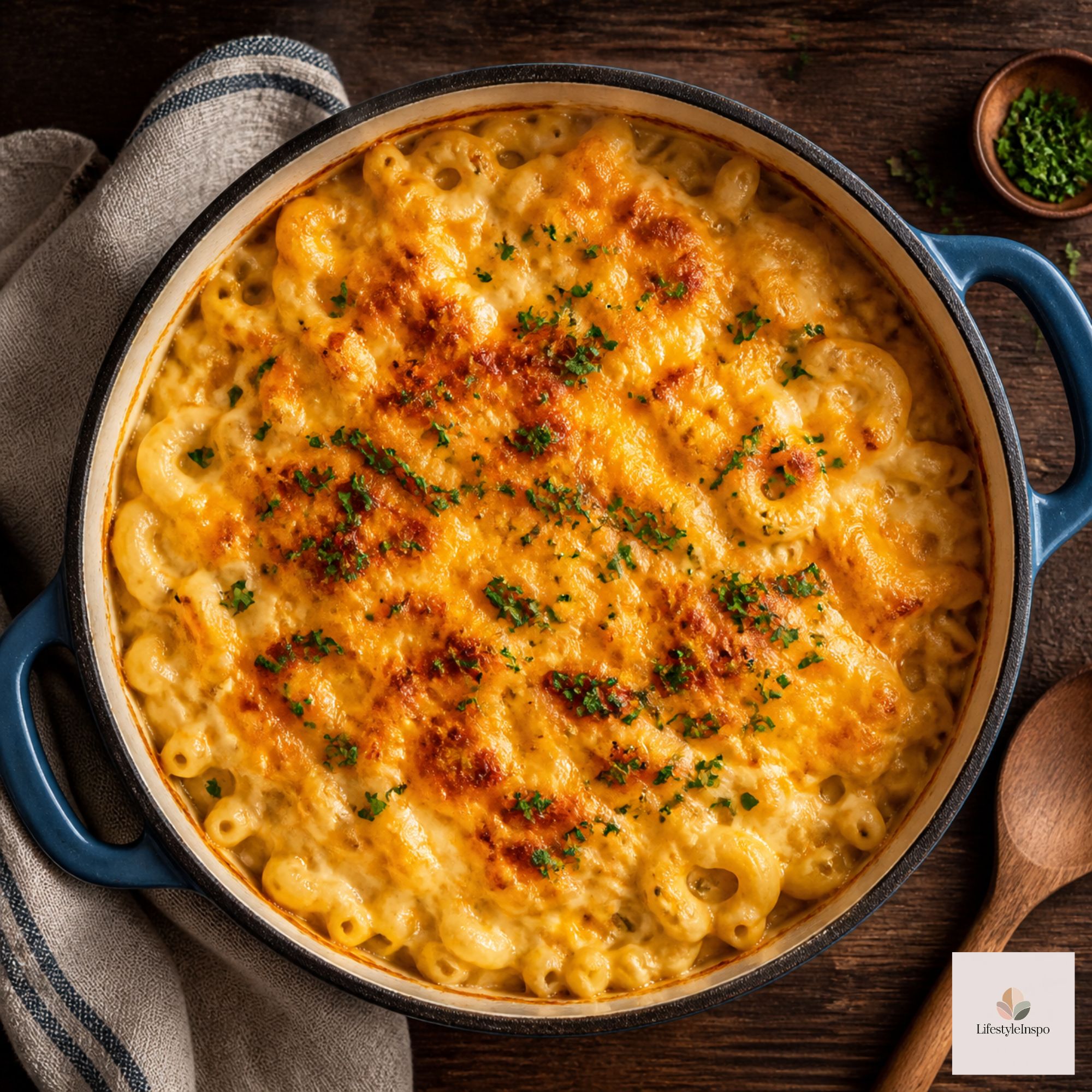
Make-Ahead Instructions
Mac and cheese can be assembled ahead, but it needs a little extra care to avoid drying out.
Up to 2 days ahead:
- Make the cheese sauce and cook the pasta slightly firmer than usual.
- Combine and transfer to a baking dish. Make the sauce a little looser, adding an extra ¼ cup of milk, since the pasta will absorb more liquid as it sits.
- Cool, cover, and refrigerate. Keep the topping separate.
Thanksgiving Day: 4. Let it sit out for 30 minutes. Stir in a splash of milk, add the topping, cover loosely with foil, and bake at 350°F for 30 minutes. Uncover and bake 15 to 20 minutes more until golden and hot.
Store the assembled mac in a glass food storage container or covered baking dish for easy transfer from the fridge to the oven.
Freezing: You can freeze the baked mac and cheese for up to 2 months. Thaw overnight, add a splash of milk, and reheat covered at 350°F.
How to Keep Mac and Cheese Creamy
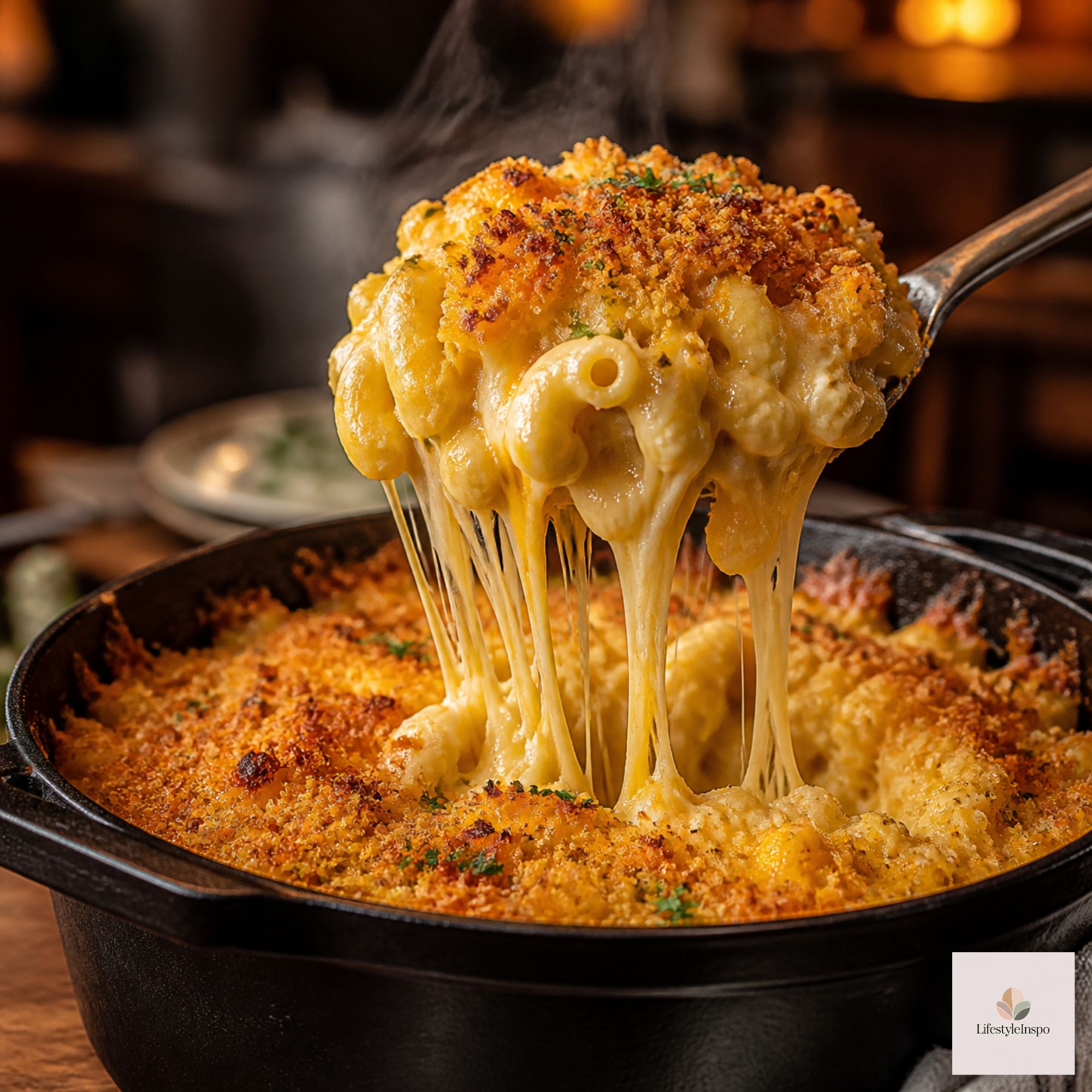
- Use evaporated milk or cream. It makes the sauce silkier and more stable.
- Don’t overcook the pasta. It should be slightly firm.
- Don’t overbake. Pull it when bubbling and golden.
- Stir in a splash of milk before reheating leftovers.
- Let it rest. Resting thickens the sauce.
- Keep the sauce loose. It will tighten as it bakes and cools.
Flavor Variations
- Bacon and jalapeño. Stir in crispy bacon and diced pickled jalapeños.
- Lobster mac. Fold in cooked lobster meat for a fancy touch.
- Caramelized onion. Cook onions slowly in butter, then stir them into the sauce.
- Roasted garlic. Mash a head of roasted garlic into the roux.
- Buffalo chicken. Add shredded chicken and hot sauce.
- Spinach and artichoke. Fold in thawed spinach and chopped artichoke hearts.
- Truffle. Drizzle with a bit of truffle oil.
- Four cheese. Mix cheddar, Gruyère, fontina, and Parmesan.
- Gluten-free. Use gluten-free pasta and flour blend.
Stovetop Version (Skip the Oven)
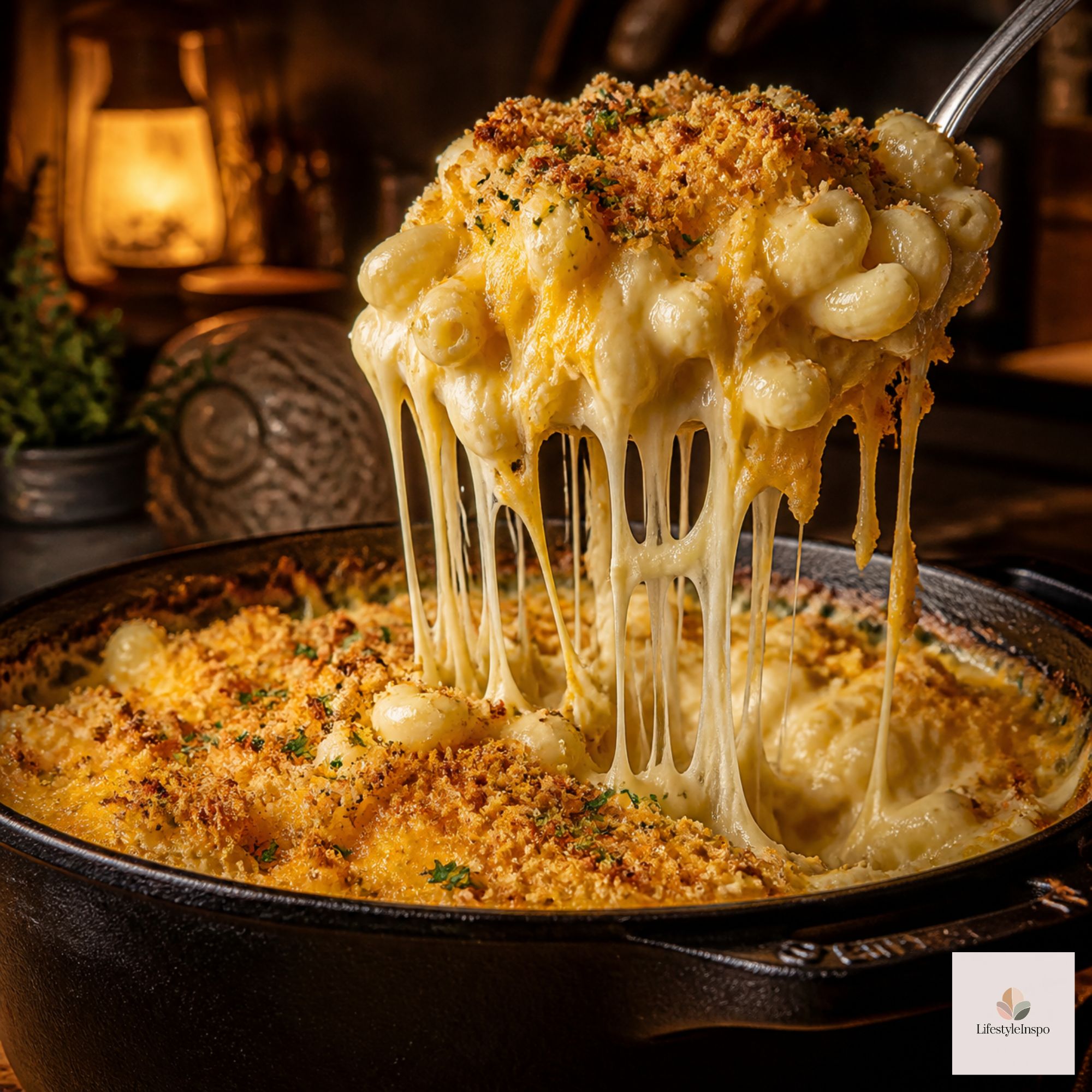
If your oven is full, make it entirely on the stovetop. Follow the steps through folding the pasta into the sauce, then serve immediately. It will be creamier and looser, without the crunchy topping. Sprinkle toasted breadcrumbs on top, which you can make in a skillet in a few minutes, or crush buttery crackers over it. This is the best way to save oven space on the big day.
Toasting Breadcrumbs on the Stovetop
- Melt 2 tablespoons butter in a skillet over medium heat.
- Add 1 cup panko and stir for 3 to 4 minutes until golden.
- Season with salt, pepper, and herbs.
- Sprinkle over mac and cheese just before serving.
Tips for Success
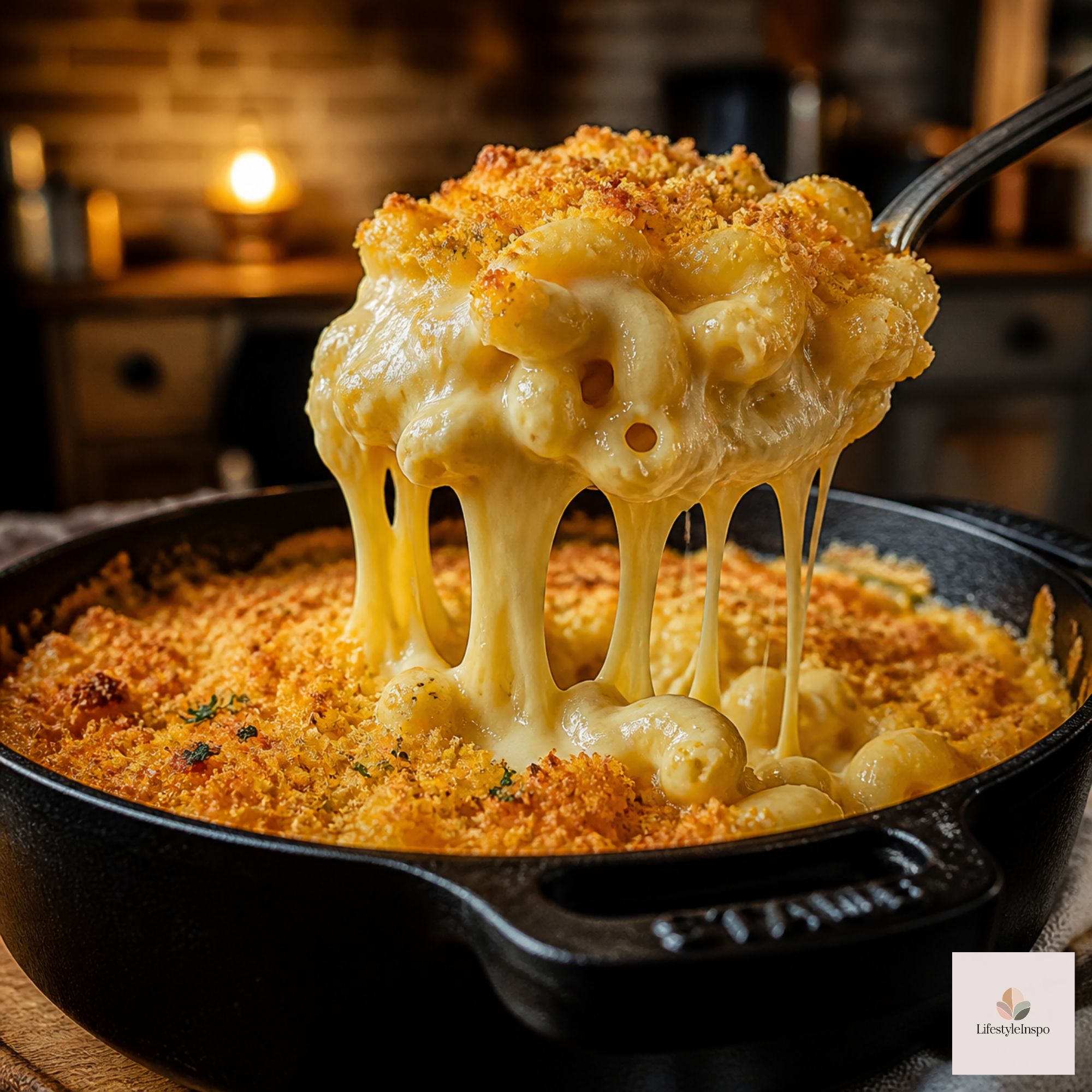
- Grate your own cheese. It’s the most important step.
- Warm the milk. Cold milk can cause lumps.
- Melt the cheese off the heat. Prevents graininess.
- Salt the pasta water well. The noodles need seasoning.
- Use a wide, shallow pan if you want more crispy topping.
- Taste before baking. Mac and cheese needs plenty of salt.
Troubleshooting
My sauce is grainy. The heat was too high, or you used pre-shredded cheese. Melt cheese off the heat, and grate your own.
It’s oily. The sauce broke from too much heat. Whisk in a splash of warm milk to bring it back together.
It’s dry. The pasta absorbed too much liquid. Add milk before baking or reheating.
It’s bland. Add more salt, mustard powder, hot sauce, or a pinch of cayenne.
The topping is soggy. Toss the breadcrumbs in melted butter, and bake uncovered.
Serving Ideas
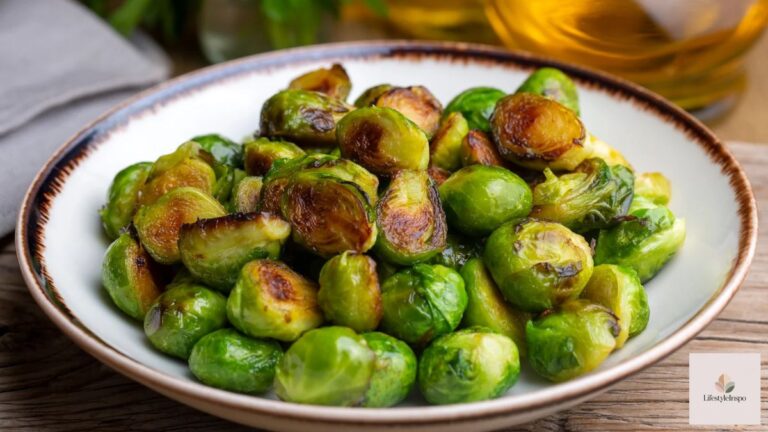
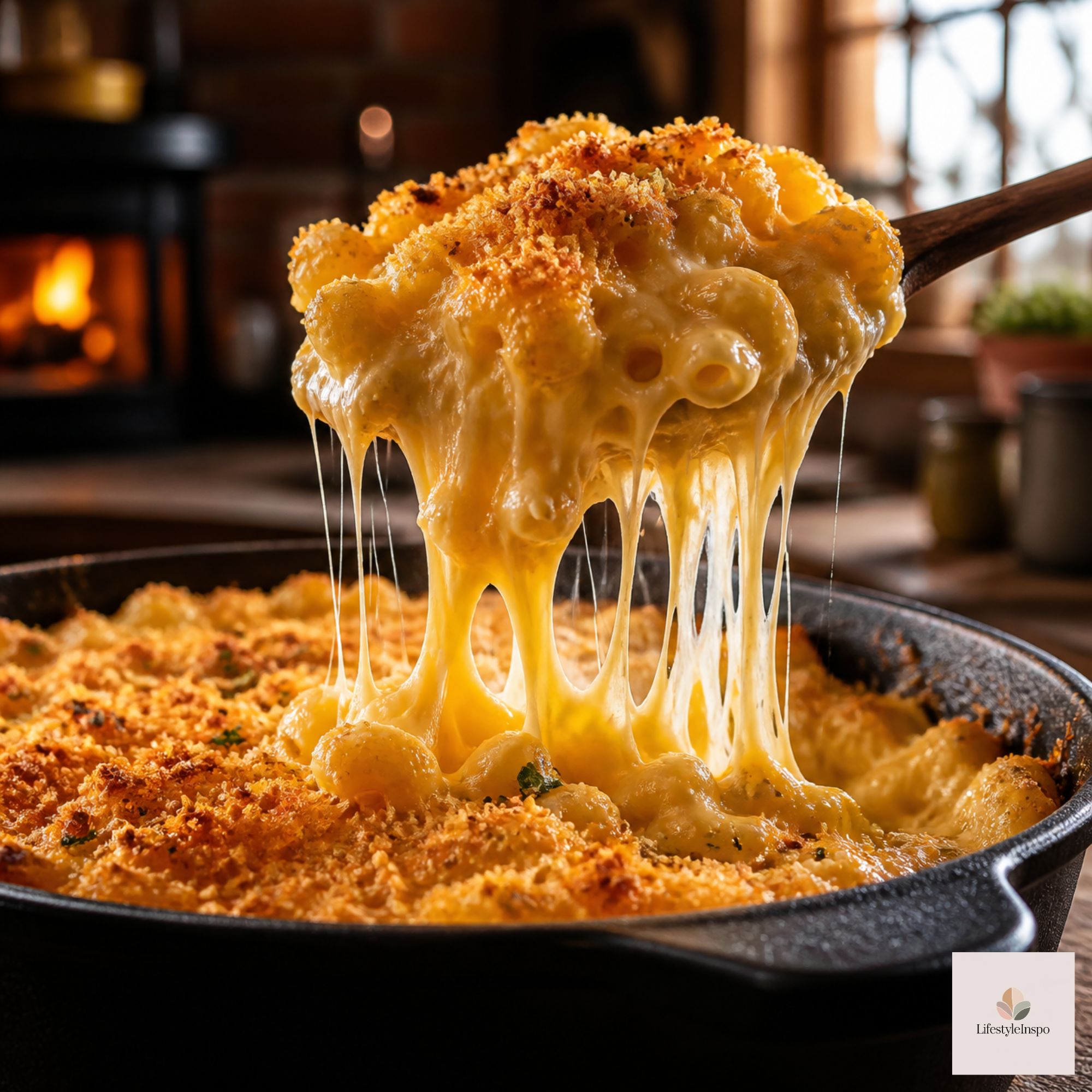
Serve mac and cheese in the Dutch oven itself for a rustic, cozy presentation, or spoon it into a pretty serving dish. It pairs well with roasted turkey, ham, crispy Brussels sprouts (roasted on a sturdy baking sheet), cranberry sauce, and collard greens, since the tart and bitter flavors cut through the richness.
If you love planning the whole spread, a Thanksgiving cookbook is useful for balancing flavors across your menu.
Frequently Asked Questions
Can I make mac and cheese without a roux? Yes. A stovetop version with evaporated milk, cheese, and a little cornstarch comes together fast, but a roux-based sauce is more stable for baking.
How much mac and cheese per person? Plan about ¾ to 1 cup per person as a side dish.
What pasta shape is best? Elbows are classic, but cavatappi, shells, and rigatoni hold sauce well.
Can I use a slow cooker? Yes, but the texture is softer and you won’t get a crispy top. Finish with toasted breadcrumbs.
Why did my mac and cheese turn out dry the next day? Pasta keeps absorbing sauce. Stir in milk or cream when reheating.
Can I make it without evaporated milk? Yes. Use heavy cream or half-and-half instead.
Final Thoughts
A great mac and cheese isn’t complicated, but it does reward a few smart steps: freshly grated cheese, a silky roux-based sauce, slightly undercooked pasta, and a golden, buttery crust. Make it in a Dutch oven for even heat and easy cleanup, and don’t be surprised when it’s the first thing gone.
About the Author